Key takeaways
- Keep equipment identity, part numbers and nominal versus actual filter dimensions together in a practical unused-filter storage ledger.
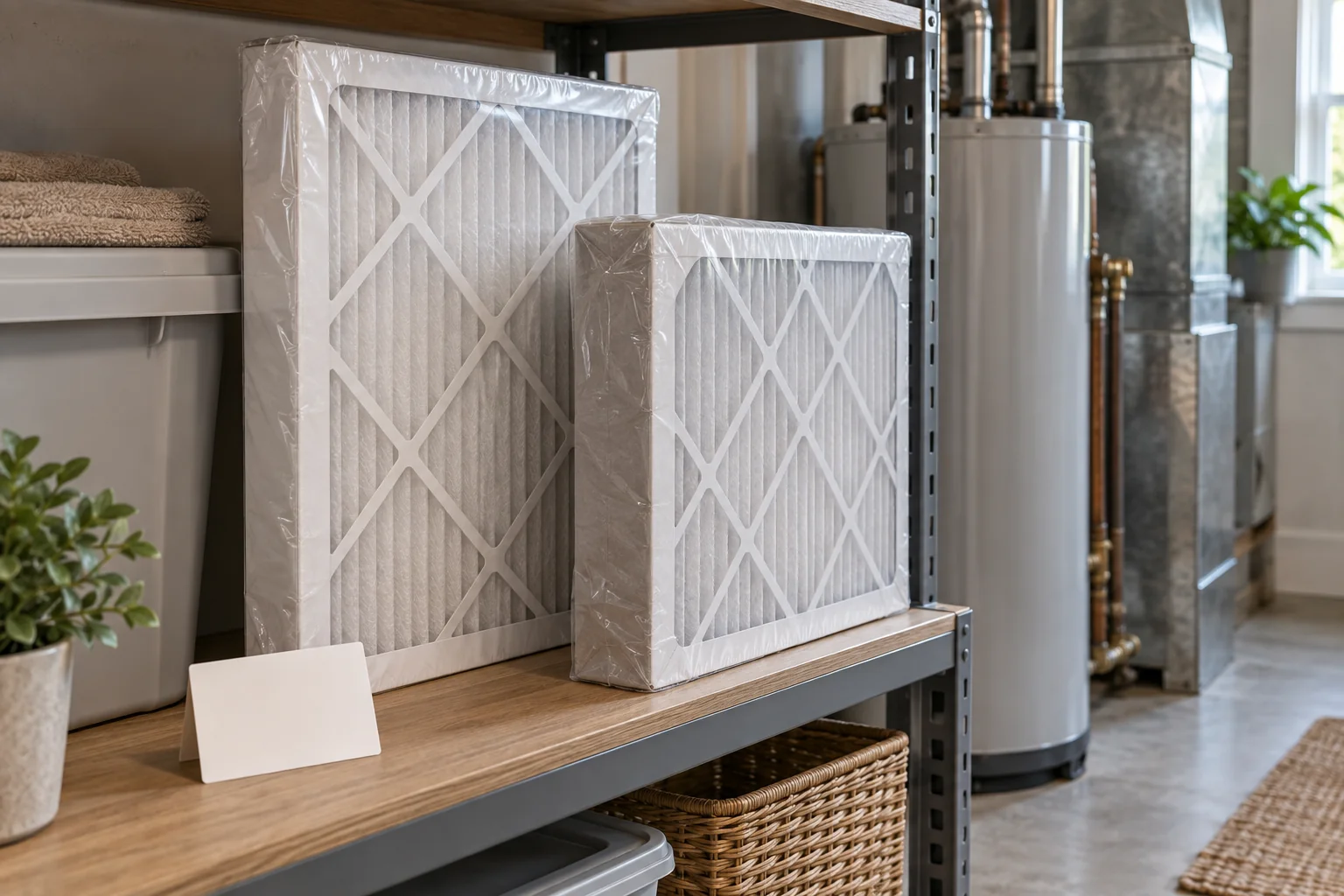
Organize replacement filters by the equipment they are confirmed to fit, preserving the full part number and both nominal and actual dimensions where provided. Do not combine filters because their large size labels look similar. A storage system should prevent an uncertain replacement from being mistaken for an approved one.
This guide concerns identification and storage of unused household replacement filters. It does not select a filtration rating, establish a replacement interval or authorize changes to an HVAC system. Water filters, purifier cartridges and furnace filters are different products, even if all arrive in a similar cardboard box.
Begin with equipment and replacement identity
Create one record for each device or system that uses a filter. Copy the accessible model information from the equipment record, manual or official parts page. Include the exact replacement part number and any listed variant restrictions. A household nickname such as “hall return” can help retrieval, but it should lead back to a real equipment identity.
Keep unused filters in their original protective packaging where practical and permitted by their storage instructions. Packaging often carries information absent from the filter itself. If the outer carton contains several individually wrapped replacements, preserve a readable copy of its identification with the group.
Do not open equipment or remove a working filter solely to complete this organizational exercise unless you can follow the applicable service instructions safely. Use existing records first. In a rental, check who is responsible for supply and replacement before ordering a stockpile.
Keep nominal and actual size in different columns
Air Filters Inc., a filter manufacturer, explains the distinction between rounded nominal sizing and the filter’s actual physical dimensions in its nominal-versus-actual size guide. Its own table lists a nominal 16 × 20 × 1 inch stock pleated filter with actual dimensions of 15½ × 19½ × ¾ inches. That is a specific catalog example, not a universal subtraction rule for every brand.
Copy both sets exactly when available. Do not round your actual measurement and then assume the resulting nominal label proves compatibility. Thickness matters along with length and width, and a matching outline does not confirm the correct media, seal or approved application.
For a shaped purifier cartridge, the replacement part identity may be more informative than three dimensions. Record its official compatibility statement rather than squeezing it into a rectangular HVAC size category. The worksheet can hold different filter types without treating them as interchangeable.
Build a replacement-filter ledger
| Equipment | Approved replacement | Nominal label | Actual dimensions or form | Stock status |
|---|---|---|---|---|
| System A | Exact confirmed part | Copy complete label | Copy catalog or package dimensions | Count unopened compatible units |
| Purifier B | Exact cartridge number | Not applicable if none | Model-specific cartridge | Separate shelf section |
| Unidentified package | Unconfirmed | Record visible wording | Do not infer fit | Separate pending-identification area |
| Obsolete replacement | Former equipment | Retain identification | Not assigned to current system | Remove from active stock |
Add the source URL and date checked beside each confirmed part. Keep quantities separate from replacement dates. Owning three spare filters does not mean the system needs one every month, and a generic calendar should not override the equipment’s maintenance instructions.
Design storage so the label stays attached to the group
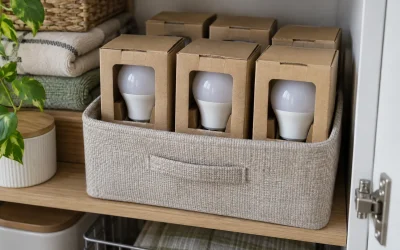
Assign a shelf section or suitable container to each confirmed replacement. Use a label holder or inventory card that identifies the equipment and part, while leaving the original markings readable. Do not write across filter media or remove a protective wrapper merely to make the storage look uniform.
Keep packages supported so they are not bent or crushed by heavier household supplies. Follow the maker’s storage conditions. If space is limited, buy an amount you can store properly instead of forcing a bulk pack into a damp or crowded corner.
Separate unused stock from removed filters. A used filter placed beside unopened replacements can create confusion about both identity and readiness. Handle and dispose of removed products according to the applicable instructions rather than returning them to the spare shelf.
Worked example: similar labels, different records
In this fictional household, two unopened packages show a large “16 × 20” label, but one includes a different thickness and neither has yet been matched to the current system. The owner records each complete label rather than stacking them under a single “house filters” sign.
The equipment documentation confirms one exact replacement. That package goes into active stock with its part number and dimensions recorded. The other remains unconfirmed while the owner checks its intended use. It is not forced into the slot or cut down to make it fit.
A separate purifier cartridge receives its own record even though it is stored on the same shelf. The result is a retrieval system that answers “which equipment is this for?” before anyone opens a package. No airflow, health or service-life result is claimed.
Update the ledger when equipment changes
When replacing an appliance or HVAC component, recheck spare stock against the new official requirements. Similar model names or the same nominal size are reasons to compare documentation, not reasons to skip it. Archive old records so leftover filters do not silently become approved replacements.
Before ordering, read the complete active entry: equipment, part number, dimensions where relevant and quantity already available. If the listing differs, resolve the mismatch first. The storage ledger is successful when it prevents a plausible-looking but unverified filter from entering the normal replacement routine.