Key takeaways
- Plan a maker-approved drying area for a removable cloth mop head, keeping nearby textiles and normal household access in view.
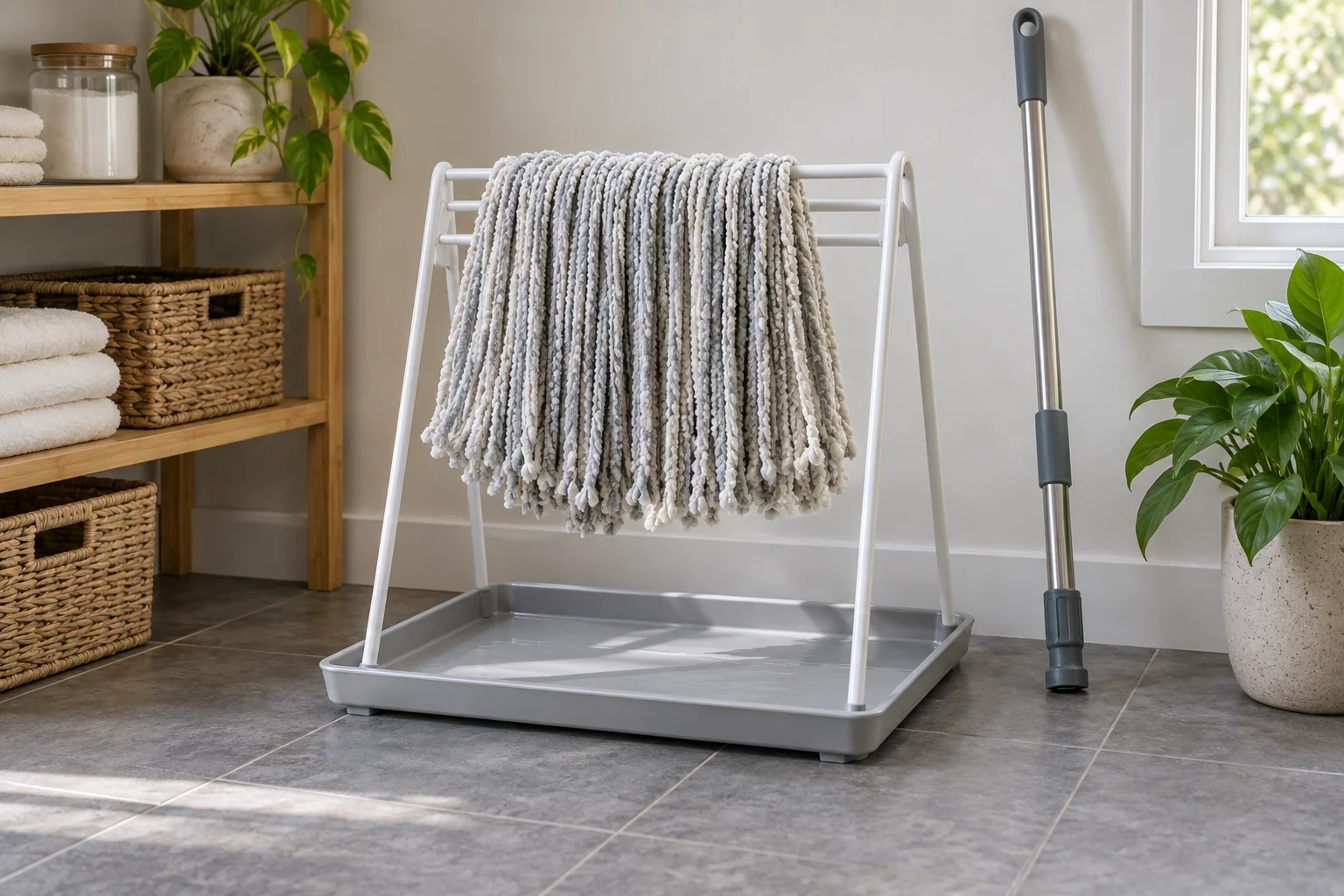
Give a damp mop head a drying location before giving it a permanent storage location. The drying area should follow the mop maker’s instructions, keep the head from touching nearby textiles and let you manage drips without creating a walking obstruction. A closed linen cupboard is not a useful default simply because the handle fits inside.
This guide concerns ordinary removable cloth mop heads. Powered steam mops, wet vacuums, spray mechanisms and their electrical components have separate instructions. Do not transfer a cloth-head drying method to an appliance or assume every mop can be dismantled in the same way.
Identify the head before designing the storage
Find the exact product name and its care instructions. Record whether the head is removable, which parts may be washed and what drying methods the maker permits. A handle, connector and textile head may need different treatment.
For a concrete example, O-Cedar’s Microfiber Cloth Mop care page permits laying the head flat or hanging it to dry. That is a model-specific starting point, not permission to tumble-dry, heat or bleach another product. The layout below helps organize the space around the method your own head allows.
Keep the care information with the mop rather than relying on a remembered routine for an older one. If the label is missing, ask the manufacturer using the product identification. The appearance of a microfiber material does not establish every part’s washing or drying compatibility.
Separate the wet route from clean-textile storage
Sketch the journey from the washing or rinsing point to the drying location. Note curtains, hanging coats, towels, laundry baskets and stored bedding along that route. The aim is to avoid brushing a damp head against them while carrying, placing or retrieving it.
Choose a location where drips can be contained on a suitable surface and promptly dealt with. Do not position a head above a basket of clean laundry. A tray can catch drips, but it should not turn into a closed container holding a wet textile. Empty and clean it as appropriate to the products and surface involved.
Check the normal room routine too. A drying rack that blocks the washing-machine door or the route to a sink will be moved repeatedly. If the household cannot leave the arrangement in place while the head dries, choose a different location or a smaller compatible arrangement.
Build a drying-and-storage worksheet
| Stage | Record | Reject the location if… |
|---|---|---|
| Care check | Model and permitted drying method | The method is guessed or conflicts with instructions |
| Transfer | Route from rinsing point | The head brushes clothing or household textiles |
| Drying | Support, drip control and available space | Textiles touch, drips are unmanaged or access is blocked |
| Inspection | Time checked and any remaining damp areas | Storage would enclose a still-damp head |
| Permanent storage | Head and handle locations | Clean textiles share direct contact with the mop |
Write the actual problem instead of a vague pass or fail. “Head touches the curtain when the door opens” suggests a different position. “Does not look tidy” is a styling preference that can be addressed after the functional arrangement works.
Try the permitted drying configuration
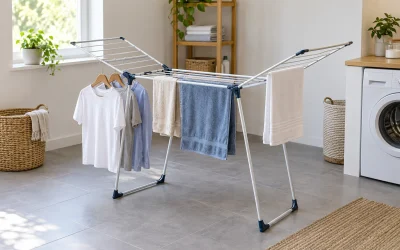
If the maker permits laying the head flat, give it an appropriate support instead of folding it into a small storage bin. If hanging is permitted, check how it is supported and whether that method strains a connector. Follow the product’s guidance rather than inventing a hook through the textile.
Keep the head separate from stored towels and clothing throughout drying. Check behind it as well as in front: a head hanging near a curtain may touch it when a window is opened or someone walks past. An apparently clear gap in a photograph can disappear during ordinary use.
Do not add a heater, hair dryer or other heat source to accelerate the process unless the product instructions specifically allow the method. There is no universal drying time for every head and room. Check the head’s actual condition and follow the maker’s care advice before moving it to enclosed storage.
Worked example: two possible places, one practical route
In this fictional utility room, a removable head has been washed according to its own instructions. The household considers hanging it inside the coat cupboard or laying it on a suitable rack over a drip tray beside the utility sink. The cupboard option places the damp head against coat hems and hides it behind a closing door.
The rack option keeps the head away from textiles and leaves the sink and doorway accessible. The household checks that the rack’s material and support suit the permitted method, then records where the tray will be emptied. No drying-time promise is made: the head is inspected before it returns to storage.
The handle has its own secure location, following its storage instructions. Keeping it separate during drying avoids treating the whole mop as one long object that must hang wherever a hook happens to fit. This is an illustrative layout, not a test of a named product.
Make the routine easy to repeat
Leave a short instruction where the mop is stored: the head’s model, its care-page location, the drying position and where it goes when dry. Keep the wording simple enough that another household member can follow it without guessing.
Recheck the setup when nearby textiles, furniture or the mop itself change. A new curtain or taller laundry basket can create contact that did not exist before. The finished arrangement should provide a clear sequence: clean as directed, dry by an allowed method away from textiles, inspect, then store.