Key takeaways
- Sort reusable shopping bags by opened shape, handle drop, folded size and the trips they suit, with a practical worksheet that separates volume from load.
What's inside
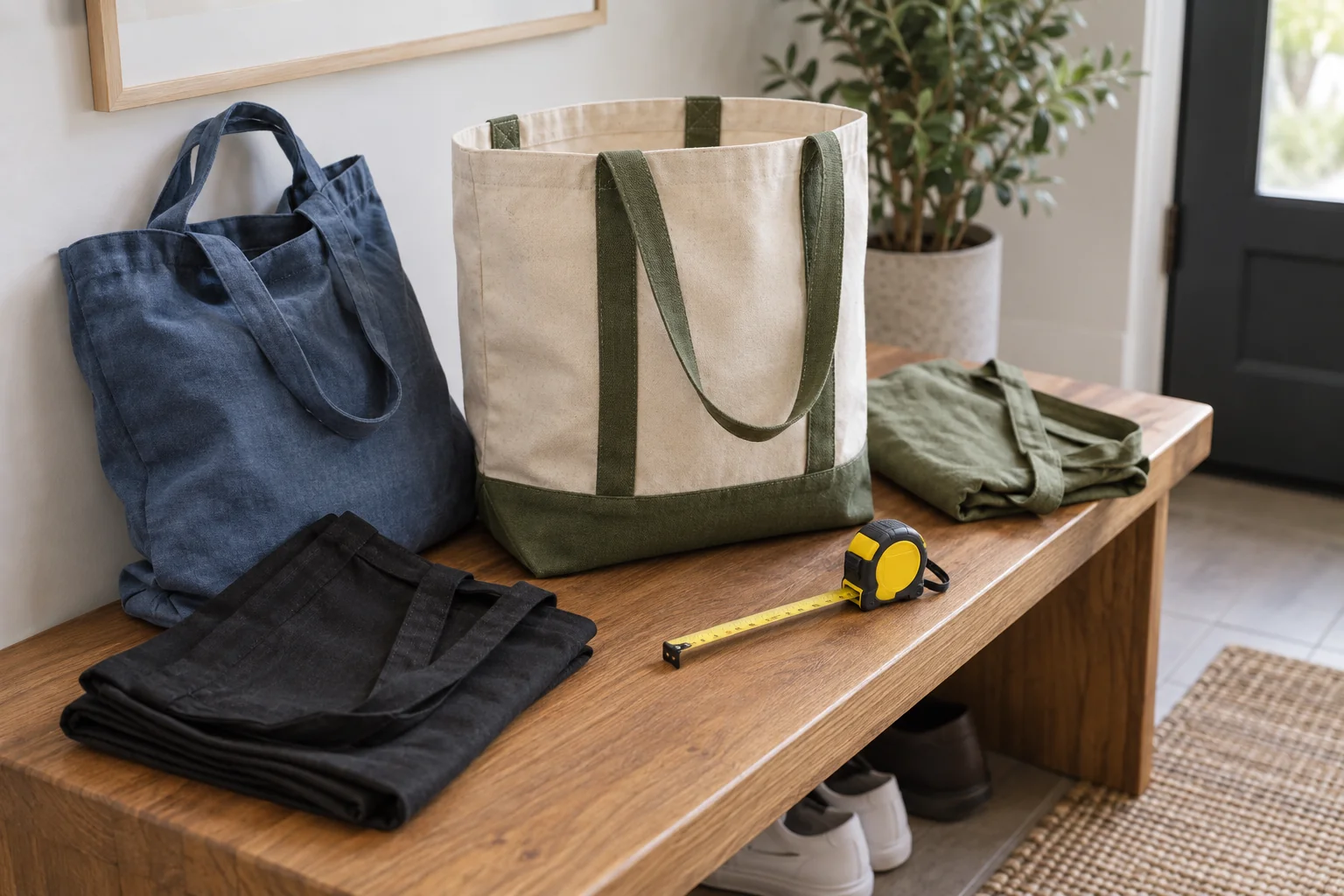
Organize reusable shopping bags by the trips they suit, using opened shape, handle drop and folded size as separate checks. A large advertised volume does not tell you whether a bag is comfortable to carry beside your leg, practical on a crowded bus or small enough to keep ready in your everyday bag.
Begin with bags you already own. The aim is a small, understandable selection for ordinary shopping trips, not a ranking of which fabric can hold the heaviest load. Follow each bag’s instructions and avoid deliberate overload trials.
Sort by carrying format before capacity
Lay the empty bags out and group them by the way you actually carry them: compact backup, hand-carried tote, shoulder-carried tote or a bag intended for a particular shopping trolley. A product with two handle lengths can belong to more than one format, but check each handle arrangement independently.
For each group, name the usual trip. A short walk for a few packaged items differs from a larger trip involving stairs, public transport and a door that requires a free hand. A bag that is useful from car to kitchen may be awkward for that entire walking route.
Keep specialist functions separate. An ordinary tote does not become an insulated carrier, leakproof container or food-contact surface because it has room left inside. Follow the intended use and handling guidance for both the bag and the purchases.
Record opened size, handle drop and folded size
Opened dimensions describe the body, while the handle drop describes the distance from the top of the opening to the part of the handle you hold. Record the handle drop for each usable set. Do not confuse the full handle-loop length with the amount the bag hangs below your hand.
Check the empty bag beside the intended user in the intended carrying position. Note whether its bottom approaches the floor, whether the body collides with the leg and whether a shoulder handle is usable over the clothing normally worn. These observations concern that person and setup, not a universal ergonomic rating.
Fold the bag according to its instructions and record where it will travel before use. A roomy bag that stays at home because its folded bundle is inconvenient may be less useful for an unplanned stop than a smaller backup.
Read load and volume as separate specifications
IKEA Ireland’s FRAKTA 606.111.11 listing presents dimensions, volume and maximum load separately and describes short and long handles. It also says the product is not approved for food contact. These fields demonstrate why a familiar name or liter figure should not replace the exact product’s instructions.
A stated maximum load is not a target you must carry. Your route and what you can comfortably manage may call for a much smaller load or another transport arrangement. Do not infer a load allowance for an unmarked bag from the rating of a visually similar one.
| Bag role | Shape and handles | Where it waits | Trip check |
|---|---|---|---|
| Compact backup | Opened size and grip option | Everyday bag or agreed pocket | Useful for an unplanned small purchase |
| Walking tote | Handle drop and body position | Ready bundle near departure point | Manageable through the real route |
| Shoulder tote | Opening and strap arrangement | Accessible without unfolding every bag | Works with usual outerwear |
| Special-purpose carrier | Exact product’s intended use | Separate from general backups | Appropriate for that purchase type |
Worked example: the larger bag stays behind
Imagine a fictional household choosing between a tall tote and a shorter, wider one for a walking trip. The tall bag has generous volume, but with its long handles in the user’s hand its base hangs close to the ground. The shorter bag leaves more practical clearance in that same carrying position.
The household assigns the tall bag to an appropriate shoulder-carry or other permitted use only if that arrangement is comfortable, and keeps the shorter one for the usual walk. It does not shorten the straps, knot a handle or declare the larger bag defective simply because one carrying position is unsuitable.
The example has no universal winning shape. Another person, coat or route may reverse the preference. The useful record names the carrying arrangement that was actually checked.
Make ready bundles easy to select
Keep only the bags needed for a typical trip in each bundle. Use a simple label such as “small walking trip” rather than a size word whose meaning changes between brands. Keep the handle and format notes with the inventory while the household learns the arrangement.
Inspect seams, handles and closures during normal use and follow the bag’s care instructions. Remove a damaged bag from the ready group until its status is resolved. Put bags away in an appropriate clean, dry condition rather than folding a problem out of sight.
After several trips, review which bags actually get chosen and why. The shared-entry daily-bag guide can help place the selected bundles. This selection process comes first: the entrance should hold bags that suit real journeys, not every reusable bag accumulated over time.