Key takeaways
- Thermoplastic Elastomer (TPE) and Food-Grade Silicone: These are the gold standards for in-tub safety and mold resistance. High-grade TPE and silicone are completely non-porous, BPA-free, and resistant to oil and soap scum degradation. They do not leach plasticizers, retain their flexibility in hot water (up to 140°F), and dry within 15 to 30 minutes when hung up.
- Natural Vulcanized Rubber: Offers superior floor grip and a heavy, weighted feel (often 1.8 to 2.5 pounds for a standard mat). Natural rubber resists mold well if cured correctly, but it can degrade and become tacky or brittle if exposed to chlorine bleach or harsh chemical cleansers.
- Polyvinyl Chloride (PVC / Vinyl): The most common budget material. While raw PVC does not host mold on its own, low-grade plasticized vinyl uses chemical fillers that degrade over time. Once the surface micro-scratches from foot friction, soap scum embeds in the grooves and provides food for mold colonies.
- Diatomaceous Earth (Mineral Stone): Best suited strictly for outside the tub. Composed of fossilized phytoplankton, these solid stone slabs absorb water into microscopic pores and disperse it across an ultra-high surface area, evaporating moisture within 60 to 120 seconds. Mold cannot establish itself because the surface remains dry.
- Closed-Cell Hydrophobic Foam: Modern technical foam mats shed water instead of soaking it up. Unlike memory foam (which is open-cell and traps water), closed-cell EVA or polyurethane foam repels liquids entirely.
The most common mistake homeowners make when combating bathroom mold is buying a thick, ultra-plush fabric mat under the assumption that high absorbency equals better hygiene. In reality, deep microfiber piles, memory foam cores, and heavy cotton weaves act like massive moisture sponges. When wet fibers stay saturated against a cool subfloor or slick tub surface in a warm room, they create an ideal microclimate for Aspergillus, Cladosporium, and black mold within 24 to 48 hours.
Another frequent misstep is relying on cheap synthetic vinyl mats treated with topical antimicrobial sprays. These chemical coatings rinse away after a dozen shower cycles, leaving porous plastic exposed to soap scum and trapped water. To keep your bathroom clean and allergen-free, you must look beyond marketing buzzwords and evaluate base polymers, structural drainage mechanics, and maintenance tolerances. Learning how to choose a bath mat material for mold requires balancing raw material porosity with how quickly water can escape the mat’s surface and underside.
Our top picks


As an Amazon Associate we earn from qualifying purchases at no extra cost to you.
Decide These 3 Things First
Before comparing materials, clarify your specific installation requirements, as placing a mat inside a wet shower enclosure requires an entirely different design than placing one on dry tile outside the tub.
- Inside-the-Tub vs. Splash Zone: Inside-the-tub mats must have non-porous surfaces, high-grip suction mechanisms, and rapid water evacuation channels to keep you from standing in pooling water. Outside-the-tub mats should focus on rapid evaporative drying (such as open-cell quick-dry polymers or solid mineral stone) rather than water retention.
- Bathroom Ventilation Capacity: If your bathroom has an exhaust fan running at 80 to 110 CFM (cubic feet per minute) and a functional window, you have more material flexibility. If your space is windowless or maintains relative humidity above 60% for hours post-shower, flexible silicone, TPE, or mineral diatomite are your only reliable options.
- Your True Maintenance Cadence: Every anti-mold mat requires some care. If you are unwilling to hang a mat over a curtain rod after showering, avoid suction-cup PVC mats entirely. If you want zero-effort drying, rigid diatomaceous earth or solid slatted wood should be your primary focus.
Material Composition: Porosity and Polymer Chemistry
The fundamental driver of mold colonization is polymer porosity. If moisture penetrates the internal matrix of the mat, microbial growth occurs from the inside out.
- Thermoplastic Elastomer (TPE) and Food-Grade Silicone: These are the gold standards for in-tub safety and mold resistance. High-grade TPE and silicone are completely non-porous, BPA-free, and resistant to oil and soap scum degradation. They do not leach plasticizers, retain their flexibility in hot water (up to 140°F), and dry within 15 to 30 minutes when hung up.
- Natural Vulcanized Rubber: Offers superior floor grip and a heavy, weighted feel (often 1.8 to 2.5 pounds for a standard mat). Natural rubber resists mold well if cured correctly, but it can degrade and become tacky or brittle if exposed to chlorine bleach or harsh chemical cleansers.
- Polyvinyl Chloride (PVC / Vinyl): The most common budget material. While raw PVC does not host mold on its own, low-grade plasticized vinyl uses chemical fillers that degrade over time. Once the surface micro-scratches from foot friction, soap scum embeds in the grooves and provides food for mold colonies.
- Diatomaceous Earth (Mineral Stone): Best suited strictly for outside the tub. Composed of fossilized phytoplankton, these solid stone slabs absorb water into microscopic pores and disperse it across an ultra-high surface area, evaporating moisture within 60 to 120 seconds. Mold cannot establish itself because the surface remains dry.
- Closed-Cell Hydrophobic Foam: Modern technical foam mats shed water instead of soaking it up. Unlike memory foam (which is open-cell and traps water), closed-cell EVA or polyurethane foam repels liquids entirely.
Drainage Architecture and Hole Density
A material can be inherently mold-resistant, but if it traps a layer of standing water between its underside and the shower floor, mold will thrive beneath it. As bathroom material science advances into 2026, structural drainage has become just as critical as polymer selection.
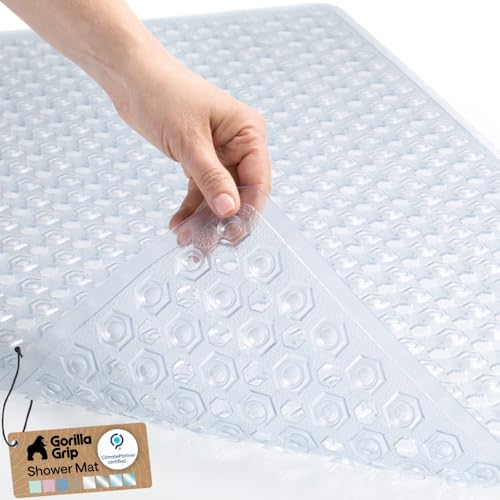
For in-tub mats measuring 35×16 inches to 40×16 inches, look for a minimum of 100 to 200 dedicated drainage perforations. Mats with integrated surface channels redirect running water toward these holes, preventing puddling around your feet. The underside must feature raised support ribs or standoff nubs (at least 0.08 to 0.12 inches high) surrounding the suction cups. This elevation breaks surface tension, allowing water to flow naturally toward the central tub drain rather than stagnating in vacuum-sealed rings.
Dimensions, Tub Contours, and Surface Coverage
An improperly sized mat bunched against tub curves traps standing water along its edges, accelerating mold growth.
- Standard Bathtub Dimensions (35×16 inches): Fits classic 60-inch alcove tubs, leaving adequate perimeter space (typically 2 to 3 inches on all sides) for unobstructed drainage along the tub floor.
- Extra-Long Coverage (40×16 inches to 40×19 inches): Designed for longer soaking tubs or walk-in shower pans. Ensure your tub drain location (front, center, or rear) aligns with the mat’s cutout pattern to prevent blocking the drain.
- Square Shower Stall Sizes (21×21 inches to 24×24 inches): Must feature a central drainage cutout (usually 4 to 6 inches in diameter) to sit flat over standard center-drain shower bases.
Suction Mechanics vs. Underside Air Circulation
Suction cups are necessary for slip resistance inside smooth porcelain or fiberglass tubs, but every suction cup is a potential mold incubator. Cup design dictates how much maintenance you will face:
Budget mats often utilize 100 to 150 large, deep suction cups. These create deep moisture cavities that trap body wash and skin cells. Higher-performing designs use 200 to 324 smaller, low-profile suction cups combined with radial drainage channels. The shallower the suction cup cup-depth, the less water it holds, and the faster it dries when stored vertically. Note that suction cups cannot form a vacuum seal on textured, tiled, or refinished tub floors; for these surfaces, choose an unbacked, open-weave PVC-loop mat designed for rapid flow-through.
Price Tiers and Expected Lifespan
Understanding what you get at each price point helps set realistic replacement cycles:
- Budget ($8 to $15): Basic PVC or light TPE mats (weighing 0.8 to 1.2 pounds). They offer standard slip prevention and moderate drain holes. Expected lifespan before soap scum buildup or discoloration occurs is 6 to 12 months with regular machine washing.
- Mid-Range ($16 to $30): Heavy-duty, BPA-free TPE, premium silicone, or dense natural rubber (weighing 1.5 to 2.4 pounds). These feature 150+ drain holes, antimicrobial formulation mixed directly into the polymer, and reinforced suction cups. Expected lifespan is 18 to 36 months.
- Premium ($35 to $75): Natural diatomaceous stone slabs, solid harvested teak/bamboo duckboards, or high-grade medical silicone. Stone and wood options sit outside the tub and can last 3 to 5+ years when sanded or oiled periodically.
Cleaning Protocols and Machine Washability
Even the best mold-resistant mat accumulates biological matter (skin lipids, hair, shampoo surfactants) over time. If a mat cannot be cleaned efficiently, it will eventually support surface mold growth.
Ensure the mat is explicitly rated for cold or warm machine washing (gentle cycle, max 104°F). Machine-washable TPE and PVC mats should be washed every two to three weeks with a mild laundry detergent and a couple of bath towels to provide scrubbing friction. Never place rubber, TPE, or vinyl mats in a tumble dryer, as heat breaks down the polymers, warps suction cups, and destroys surface tension resistance. Air-dry only on a ventilated drying rack or shower bar.
Spec Checklist
| Specification | Budget ($8–$15) | Mid-Range ($16–$30) | Premium ($35–$75) |
|---|---|---|---|
| Primary Material | Standard PVC / Vinyl | High-Density TPE / Silicone | Diatomite Stone / Natural Teak |
| Drainage Design | 50–100 small round holes | 150–300+ holes with channels | Instant porous dry / Slatted run-off |
| Mold Defense | Surface topical wash | Non-porous solid-state resin | Rapid moisture evaporation (<60s) |
| Attachment Method | 100–150 standard suction cups | 200–320+ micro suction cups | Non-slip rubber pad base |
| Cleaning Method | Hand scrub or delicate wash | Machine washable (Cold/Warm) | Wipe down / Surface sanding |
| Expected Lifespan | 6 to 12 months | 18 to 36 months | 3 to 5+ years |
Red Flags
- “100% Anti-Mold Forever” Claims Without Care Instructions: Any brand promising complete mold immunity without requiring hang-drying or cleaning is misleading. Mold grows on soap residue left on top of the mat, regardless of the underlying polymer.
- Solid Undersides Without Drainage Perforations: Mats without through-holes trap an uninterrupted film of stagnant water against the tub basin, guaranteeing pink bacterial slime (Serratia marcescens) within a week.
- Pungent Chemical Odors (Off-Gassing): Strong plastic smells out of the box indicate high levels of volatile plasticizers and low-purity PVC, which degrade quickly and create a porous, pitted surface where mold takes root.
- Non-Removable Fabric Outer Covers with Rubber Cores: Layered constructions that fuse a woven upper to a dense foam or rubber base prevent airflow between the layers, trapping water inside where it cannot be dried.
- Oversized, Deep Suction Cups with Thick Rims: Heavy, stiff suction cups that hold puddles of water even when the mat is hung up create permanent moisture pockets.
Frequently Asked Questions
How often should a mold-resistant bath mat be washed?
In-tub mats should be pulled up and hung over a railing or curtain rod after every single shower to let the underside dry. Run the mat through a gentle washing machine cycle with mild detergent once every two to three weeks. Outside-the-tub stone mats only require a surface rinse or light scrub once every two to three months.
Can you put a mold-resistant rubber bath mat in the washing machine?
Most modern synthetic rubber and TPE mats are machine-washable on a gentle cycle using cold water. However, natural vulcanized rubber should be hand-washed with mild soap and warm water, as repeated machine agitation can cause natural rubber edges to tear or warp.
What is the single best bath mat material for high-humidity, windowless bathrooms?
For inside the shower, medical-grade silicone or high-density TPE with over 200 drain holes is the best choice because both materials are non-porous and dry quickly. For outside the shower floor, a solid diatomaceous earth (mineral stone) mat is superior because it disperses water instantly rather than staying damp like woven textiles.
Why does black mold still grow under suction cup bath mats?
Black mold feeds on dead skin cells, body oils, and soap scum that wash down during your shower. Even if the mat’s material is non-porous, moisture and organic residue settle around the suction cups. If the mat is left suctioned to the tub floor 24/7, moisture cannot evaporate, giving mold spores the exact environment they need to multiply.