Key takeaways
- Your Pet’s Specific Mess Profile: Do you have an aging dog prone to frequent urinary accidents, a high-energy retriever who tracks in wet mud daily, or a long-haired cat who struggles with hairballs? If moisture and liquid accidents are your primary concern, you need a non-porous, highly washable synthetic or a specialized quick-drying microfiber chenille. If shedding is the main issue, a low-pile, low-friction surface that releases hair easily under a vacuum is your best bet.
- The Placement Zone and Foot Traffic: An entryway rug requires entirely different specifications than a bedroom area rug. For high-traffic entry points, small, ultra-absorbent barrier mats (typically measuring 30 by 19 inches or 47 by 20 inches) are essential for catching mud at the door. For living rooms, larger area rugs (such as 5 by 7 feet or 8 by 10 feet) need to offer both structural stability and comfort for lounging animals.
- Your Maintenance and Washing Reality: Be honest about your cleaning routine. Are you willing to spot-clean a rug by hand using enzyme cleaners, or do you require a rug that can be tossed directly into a standard 4.5-cubic-foot home washing machine? If you prefer machine washing, you must restrict your search to lightweight, low-pile synthetics with integrated, flexible backings that won’t crack or crumble in the spin cycle.
Every year, thousands of pet owners make the same costly mistake: they fall in love with a gorgeous, plush rug in a showroom, bring it home, and watch it slowly disintegrate under the realities of pet ownership. Within weeks, sharp claws snag the delicate fibers, muddy paws leave permanent tracks, and an inevitable house-training accident turns an expensive investment into a source of constant stress. The mistake isn’t having pets; the mistake is choosing a rug based purely on aesthetics while ignoring fiber science and construction.
When you share your home with dogs or cats, your flooring choices must balance durability, cleanability, and comfort. A rug that cannot handle a cycle in a washing machine or withstand the abrasive scraping of a cat’s claws will quickly end up in a landfill. To find a rug that keeps both your home looking sophisticated and your pets comfortable, you must understand how different materials react to moisture, friction, and biological stains. Here is exactly how to navigate the marketplace to find a rug that actually lasts.
Our top picks


As an Amazon Associate we earn from qualifying purchases at no extra cost to you.
Decide These 3 Things First
Before you begin browsing colors and patterns, you must establish three baseline parameters based on your household’s specific dynamics. Skipping these steps usually leads to buying a rug that is either too difficult to clean or too fragile for your pet’s daily habits.
- Your Pet’s Specific Mess Profile: Do you have an aging dog prone to frequent urinary accidents, a high-energy retriever who tracks in wet mud daily, or a long-haired cat who struggles with hairballs? If moisture and liquid accidents are your primary concern, you need a non-porous, highly washable synthetic or a specialized quick-drying microfiber chenille. If shedding is the main issue, a low-pile, low-friction surface that releases hair easily under a vacuum is your best bet.
- The Placement Zone and Foot Traffic: An entryway rug requires entirely different specifications than a bedroom area rug. For high-traffic entry points, small, ultra-absorbent barrier mats (typically measuring 30 by 19 inches or 47 by 20 inches) are essential for catching mud at the door. For living rooms, larger area rugs (such as 5 by 7 feet or 8 by 10 feet) need to offer both structural stability and comfort for lounging animals.
- Your Maintenance and Washing Reality: Be honest about your cleaning routine. Are you willing to spot-clean a rug by hand using enzyme cleaners, or do you require a rug that can be tossed directly into a standard 4.5-cubic-foot home washing machine? If you prefer machine washing, you must restrict your search to lightweight, low-pile synthetics with integrated, flexible backings that won’t crack or crumble in the spin cycle.
1. Rug Material: Synthetic vs. Natural Fibers
The fiber content of your rug determines how it handles stains, odors, and physical wear. In 2026, the home textile market has shifted heavily toward advanced synthetics engineered specifically for active households, though certain natural fibers still hold value.
Polypropylene (Olefin): This is the gold standard for pet-friendly synthetic rugs. Polypropylene is solution-dyed, meaning the color is locked into the fiber during manufacturing rather than printed on top. This makes it highly resistant to fading and allows you to clean it with mild bleach solutions without stripping the color. It absorbs virtually no moisture, meaning pet urine cannot penetrate the fiber core, preventing permanent odor retention.
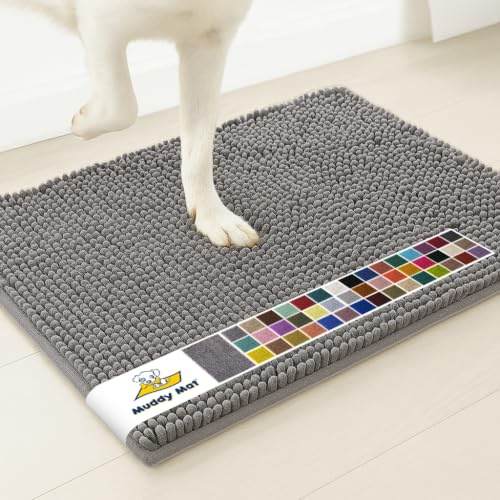
Polyester and Microfiber: Polyester offers a softer feel underfoot than polypropylene. Microfiber chenille, a specialized form of polyester, is exceptionally good for entryways. High-density chenille piles utilize thousands of thick, velvety strands that act as sponges. These mats can absorb up to seven times their weight in water, pulling mud and moisture directly out of wet paws on contact. A standard 30″x19″ microfiber mat priced around $22 to $25 is an incredibly cost-effective tool for protecting the rest of your home’s flooring.
Wool: If you insist on natural fibers, wool is the only viable option for pets, but it comes with caveats. Wool contains natural lanolin, which repels liquids and stains for a short window, giving you time to blot up accidents. However, wool is highly porous. If pet urine dries inside a wool rug, the proteins bind to the fibers, making the odor nearly impossible to remove without professional immersion washing, which can cost $3 to $5 per square foot.
Fibers to Avoid: Absolutely avoid silk, viscose, rayon, and tencel. These cellulosic fibers are incredibly delicate. A single pet accident or even clean water can permanently warp the fibers, ruin the pile texture, and cause yellow rings that cannot be cleaned.
2. Pile Height and Construction: Loop vs. Cut Pile
How a rug is woven is just as important as what it is made of. The primary rule of pet-friendly rugs is simple: avoid loop pile construction at all costs.
The Danger of Loop Piles (Berber): Loop pile rugs, including traditional Berber and many hand-hooked designs, feature intact loops of yarn. When a dog or cat runs across these rugs, their claws act like fishhooks. A single caught claw can pull a loop, causing a long, unsightly run across the face of the rug. Not only does this ruin the rug’s appearance, but it can also painfully snag and tear your pet’s nails.
The Safety of Cut Piles: Cut pile rugs feature yarns that are cut at the ends, leaving no loops for claws to catch. If your pet scratches a cut pile rug, the fibers simply move aside without unraveling. For maximum durability, look for flat-woven rugs or ultra-low cut piles with a height of 0.25 inches or less. Low-pile rugs also prevent pet hair, dander, and dirt from sinking deep into the backing, making vacuuming significantly more effective.
3. Size, Weight, and Washability
If you choose a washable area rug, you must match the physical size and weight of the rug to your home laundry appliances. Attempting to cram a rug that is too heavy or too stiff into a residential washer will damage both the rug and your machine’s drum suspension.
For a standard 4.5 to 5.0 cubic foot front-load home washing machine, the maximum rug size you can safely wash is typically 5 by 7 feet, provided the rug is lightweight (under 10 pounds). A typical 5’x7′ flat-woven, pet-friendly polyester rug weighs around 6 to 8 pounds and folds easily, allowing water and detergent to circulate freely through the fabric.
If you step up to an 8 by 10-foot area rug, the weight often jumps to 15 to 22 pounds. To clean a rug of this size, you will need to use a high-capacity commercial washing machine (typically 60 to 80 pounds capacity) at a local laundromat, or opt for a multi-piece rug system where a thin, washable cover detaches from a stationary underpad.
4. Backing and Slip Resistance
A pet-friendly rug must stay firmly anchored to the floor. Dogs sprinting through hallways or jumping off sofas can easily send an unbacked rug sliding, leading to joint injuries for older pets or slips for human family members.
Look for rugs with integrated Thermoplastic Rubber (TPR) or premium latex backing. TPR is highly flexible, durable, and slip-resistant. Unlike cheap PVC backings, high-quality TPR will not degrade, crack, or yellow your underlying hardwood floors when exposed to moisture or repeated wash cycles. For small entryway mats, a heavy-duty, non-slip backing is non-negotiable; it ensures the mat remains flat and in place even when a large, 80-pound dog vigorously wipes its paws.
5. Price Tiers and Realistic Lifespans
Understanding what you get at different price points helps prevent buyer’s remorse. Here is what the market looks like for pet-optimized rugs:
- Budget ($20 – $50): This tier consists of highly functional utility mats and small area rugs, such as 30″x19″ to 47″x20″ microfiber chenille door mats, or very thin 5’x7′ printed polyester rugs. These products are designed for high utility, easy machine washability, and rapid drying. Expect a lifespan of 1 to 3 years of heavy daily use before the backing or fibers begin to show wear from frequent washing.
- Mid-Range ($60 – $200): Here you will find medium-sized area rugs (5’x7′ to 8’x10′) made of durable, power-loomed polypropylene or thin, stain-resistant polyester with integrated non-slip backings. These rugs offer excellent stain resistance and can handle heavy traffic. They are typically spot-cleaned or washed in commercial machines. Expect a lifespan of 3 to 6 years.
- Premium ($250 – $800+): This tier includes high-end, low-pile wool rugs or heavy-duty, modular washable rug systems with separate cushion pads. These rugs provide maximum underfoot comfort, sophisticated designs, and excellent structural integrity. With proper professional cleaning and care, a premium low-pile wool rug can easily last 10 to 15+ years, even in homes with pets.
6. Delivery, Off-Gassing, and Setup
When your rug arrives, the initial setup process can affect your pets. Many synthetic rugs are shipped tightly rolled or folded in boxes. Folded rugs will have visible creases upon arrival. It typically takes 48 to 72 hours of flat laying, light vacuuming, or gentle steaming for these creases to relax completely.
Furthermore, synthetic materials can undergo “off-gassing”—the release of volatile organic compounds (VOCs) trapped during manufacturing. While harmless to humans in small quantities, pets have highly sensitive olfactory systems and spend their time close to floor level. To ensure your pet’s comfort, unroll new rugs in a well-ventilated room or porch for 24 to 48 hours before placing them in your main living spaces.
Spec Checklist
Use this reference table to compare specifications across the three main price tiers to find the right balance for your home.
| Specification | Budget Tier ($20 – $50) | Mid-Range Tier ($60 – $200) | Premium Tier ($250 – $800+) |
|---|---|---|---|
| Primary Materials | Microfiber Chenille, Thin Polyester | Power-Loomed Polypropylene, Low-Pile Polyester | Low-Pile Wool, High-Density Nylon, Modular Systems |
| Common Sizes | 30″x19″, 47″x20″, up to 5’x7′ (thin) | 5’x7′ to 8’x10′ | 8’x10′ to 9’x12’+ |
| Pile Height | Flat-weave to 0.15 inches (or ultra-plush 1-inch chenille strands) | 0.15 to 0.25 inches | 0.20 to 0.35 inches |
| Backing Type | Integrated TPR or Slip-Resistant Latex | Lightweight TPR, Woven Felt, or Unbacked | Heavy-Duty Premium Rubber Pads or Durable Cotton Canvas |
| Washability | 100% Home Machine Washable | Machine Washable (Large/Commercial) or Easy Spot Clean | Spot Clean, Detachable Cover Wash, or Professional Clean Only |
| Best Suited For | Muddy Entryways, Mudrooms, Kitchens | Living Rooms, Playrooms, Dining Rooms | Primary Bedrooms, Formal Living Rooms |
Red Flags
When shopping for a pet-friendly rug, immediately walk away if you spot any of the following product characteristics:
- “Viscose,” “Rayon,” “Bamboo Silk,” or “Modal” on the Fiber Label: These materials are highly sensitive to moisture. A single pet accident will permanently destroy the fiber structure, leaving a stiff, discolored, and unfixable patch.
- Thick, Exposed Jute or Sisal Backing on Lightweight Rugs: While natural, rough jute backings can act like sandpaper against your hardwood floors when a heavy pet runs over the rug. Additionally, raw jute absorbs liquids like a sponge and will rot or mildew if a pet accident goes unnoticed.
- “Dry Clean Only” on Large Area Rugs: If a 8’x10′ rug cannot be spot-cleaned with water-based enzyme cleaners or washed, it does not belong in a pet household. The cost of professional dry cleaning will quickly outpace the original purchase price of the rug.
- Loose, Shag, or High-Loop Piles: Shag rugs are essentially giant traps for pet dander, dirt, dried mud, and pests like fleas or ticks. They are incredibly difficult to vacuum effectively and are prime targets for chewing and scratching.
FAQ
Can I use a wool rug if I have pets?
Yes, but only if it is a high-quality, low-pile, cut-pile wool rug. Wool naturally repels dirt and resists crushing, making it highly durable. However, you must act quickly when liquid accidents occur. If urine penetrates deep into the wool fibers and dries, it requires professional immersion cleaning to remove the biological odor completely.
How do I remove dried pet urine odors from synthetic rugs?
Do not use standard household detergents or ammonia-based cleaners, as ammonia smells like urine to a dog and may encourage them to soil the spot again. Instead, use a dedicated enzymatic cleaner. Saturate the area thoroughly so the enzymes can break down the urea and proteins. Let it sit for 15 minutes, blot dry with a clean towel, and let it air dry completely.
Will a washable rug ruin my home washing machine?
Only if you overload the machine. Small utility mats (under 5 pounds) are completely safe for home washers. For larger area rugs (5’x7′ or larger), ensure the rug is designated as “lightweight” and check your washer’s manual for weight limits. If the rug is too stiff to bend easily or weighs more than 10 pounds when dry, take it to a commercial laundromat to protect your home appliance’s suspension.
Which rug material is best for cats that love to scratch?
Low-pile, tight, flat-woven polyester or polypropylene rugs are best for cats. Since there are no loops to catch their claws, cats cannot get the satisfying “grip” they crave for scratching, which naturally deters them from using the rug as a scratching post. Avoid woven sisal or jute rugs, as their texture mimic scratching posts and will actively encourage your cat to shred them.