Our Top Picks
 Best Soft Budget OptionBedsure PureWoven 100% Rayon Derived from BambooQueen13 x 2 x 1 inches5 poundsCheck on Amazon
Pros & cons
BAMPURE 100% Rayon from Bamboo Sheets, Queen.
The best sheet material for hot sleepers is cotton percale for most people, linen for humid rooms, Tencel lyocell for a cool and silky feel, and a Coolmax-style performance fabric for heavy sweaters, while bamboo-derived rayon sits in between and cotton sateen is the warmest of the group. Our top pick is the RUVANTI 100% Cotton Percale Queen Sheet Set because percale is the lowest-risk fabric for the widest range of sleepers, with the Shilucheng Tencel eucalyptus lyocell set as the runner-up for people who want a smoother, more absorbent sheet.
Instead of ranking brands, this guide ranks materials, and uses one real, currently sold set to represent each so you can see what the fabric looks like in a real listing. Each material is judged on four things: first-touch coolness, overnight airflow, moisture handling and durability. We also say who each fabric is wrong for, because choosing the wrong material is the most common reason people say cooling sheets did not work.

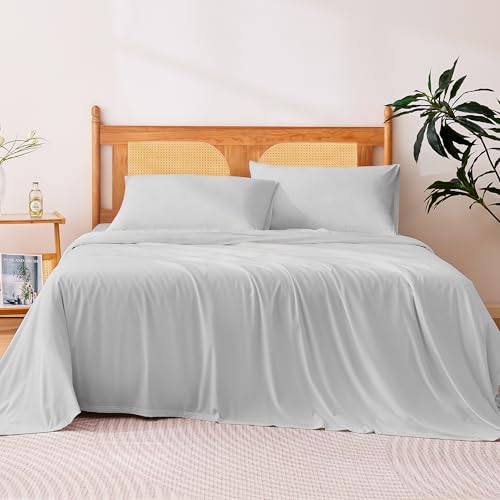
Cooling Sheets Set Queen Size, Viscose Derived from Bamboo for Hot Sleepers | Deep Pocket Up to 16 Inch | Silky Soft & Breathable Bedding - 4PC (Queen, Navy)
Chosen because it specifies Viscose Derived from Bamboo for Hot Sleepers and Deep Pocket Up to 16 Inch.
View on AmazonBedsure PureWoven 100% Rayon Derived from Bamboo, Queen Sheets, 4 Pieces | Featured in Forbes Vetted, Cooling Sheets for Hot Sleepers, Breathable & Silky Soft, 16" Deep Pocket Bedding, Dark Grey
Chosen because it specifies Queen Sheets and 4 Pieces.
View on Amazon
Love's cabin 100% Rayon Derived from Bamboo, Queen Sheets, 4 Pieces, Beige | Cooling Sheets for Hot Sleepers, Breathable & Silky Soft, 16" Deep Pocket, Hotel Luxury Bedding Set
Chosen because it specifies Queen Sheets and 4 Pieces.
View on Amazon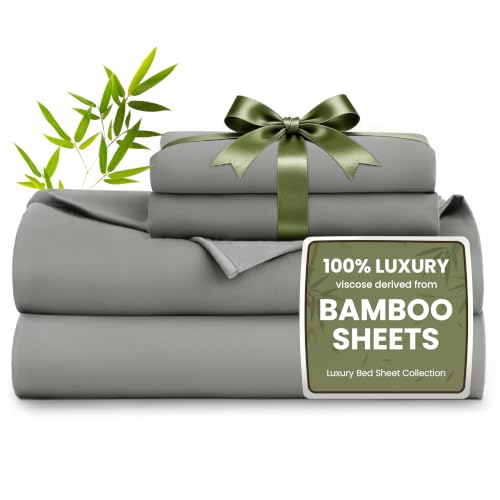
Love's cabin 100% Rayon Derived from Bamboo, Queen Sheets, 4 Pieces, Grey | Cooling Sheets for Hot Sleepers, Breathable & Silky Soft, 16" Deep Pocket, Hotel Luxury Bedding Set
Chosen because it specifies Queen Sheets and 4 Pieces.
View on AmazonWe did not personally use these products. This guide is based on manufacturer listings, fiber-industry references and published buying guides, and any spec not stated in the short listing title is marked “not listed”.
Top Picks at a Glance
- Best Overall Material: Cotton percale – RUVANTI 100% Cotton Percale Queen Sheet Set
- Best for Humid Rooms: Linen – LBRO2M 100% French Pure Linen Sheet Set
- Best Silky and Absorbent: Tencel lyocell – Shilucheng Tencel Sheets, 100% Eucalyptus Lyocell
- Best for Heavy Sweaters: Coolmax performance fabric – Comfort Spaces Coolmax Moisture Wicking Cooling Sheet Set
- Best Soft Budget Option: Bamboo-derived rayon – BAMPURE 100% Rayon from Bamboo Sheets, Queen
- Warmest of the Six: Cotton sateen – California Design Den 100% Cotton Sateen Queen Sheets, 400 Thread Count
Sheet Material Comparison Table
| Product | Best for | Key specs | Watch for | Price tier |
|---|---|---|---|---|
| Cotton percale – RUVANTI Percale (Queen) | Most hot sleepers | 100% cotton percale, 16 in. pocket, 4 pieces | Crisp, wrinkles | Budget to mid-range |
| Linen – LBRO2M French Pure Linen (Queen) | Humid or very hot rooms | 100% French linen, 16 in. pocket, 4 pieces | Rough at first | Premium |
| Lyocell – Shilucheng Tencel (4 Piece) | Cool, silky feel | 100% eucalyptus lyocell, 4 pieces | Gentle wash; size not in short title | Premium |
| Coolmax – Comfort Spaces Coolmax (Queen) | Heavy sweaters | Moisture-wicking Coolmax, up to 16 in. mattress | Synthetic feel | Budget |
| Bamboo-derived rayon – BAMPURE (Queen) | Soft, drapey feel | 100% rayon from bamboo, 4 pieces | Needs gentle care | Mid-range |
| Cotton sateen – California Design Den (Queen) | Smooth feel, mild heat | 100% cotton sateen, 400 thread count | Warmer weave | Mid-range |
The table orders materials roughly from best all-round to most specialized, with sateen included deliberately as the warm end of the scale so you can see what to avoid. If you are very hot at night, skip the last row. If you are only mildly warm and love softness, it can still be a reasonable choice.
Prices are tiers. Linen and lyocell cost the most because of fiber and processing; Coolmax and percale cost the least.
1. Cotton Percale: RUVANTI 100% Cotton Percale Queen Sheet Set: Best all-round material
- Fiber: 100% cotton
- Weave: percale, crisp and cooling per the listing
- Pocket: 16 in. deep, per the listing
- Pieces: 4-piece queen set
- Colors: many prints and solids
Best for: Hot sleepers who want a reliable, easy-care sheet without special treatment.
Skip if: You want a silky surface.
Cotton percale is the benchmark for cool sheets. The plain weave leaves open gaps for air, cotton absorbs moisture without feeling clammy, and the fabric tolerates frequent washing. It scores well on airflow and durability, medium on first-touch coolness, and medium to good on moisture handling.
RUVANTI’s 16 in. pocket makes the set a good fit for thicker mattresses. As with any percale, expect a crisp feel at first and some wrinkling.
If you remember only one rule from this guide, it is this: when in doubt, start with percale.
Pros
- Breathable open weave
- Durable and easy care
- Deep pocket per the listing
Cons
- Dry, crisp hand
- Wrinkles
2. Linen: LBRO2M 100% French Pure Linen Sheet Set (Queen): Best for humid rooms
- Fiber: 100% French pure linen, natural flax
- Pocket: 16 in. deep, per the listing
- Pieces: 4-piece queen set
- Weight: not listed
- Care: machine washable
Best for: Sleepers in hot, humid climates, or anyone who wants maximum airflow.
Skip if: You dislike texture and wrinkles.
Linen is the airiest of the six. Flax fibers are thicker and less uniform than cotton, so the fabric has many tiny air channels, and linen can hold a lot of moisture before it feels wet. It scores highest on airflow and durability, medium on first-touch coolness and good on moisture handling.
The trade-off is texture. New linen is coarse and wrinkled, and it takes four to six washes to soften. Many owners say it becomes their favorite after that.
It also tolerates hot washing and long use, so a good linen set can be the last sheet set you buy for years.
Pros
- Highest airflow
- Quick drying
- Very durable
Cons
- Coarse at first
- Premium price
3. Tencel Lyocell: Shilucheng Tencel Sheets, 4 Piece, 100% Eucalyptus Lyocell: Best silky and absorbent
- Fiber: 100% eucalyptus lyocell, per the listing
- Pieces: 4-piece set
- Size: not specified in the short title
- Thread count and depth: not listed
- Care: cool or warm wash, low heat dry
Best for: People who want a cool, silky sheet that also handles sweat.
Skip if: You are on a budget or you cannot follow gentle care rules.
Lyocell is made from wood pulp, often eucalyptus, using a closed-loop process. The fibers are smooth and absorbent, so the fabric feels cool on contact and manages moisture well. It scores highest on first-touch coolness, good on airflow, and high on moisture handling, with good durability if washed properly.
The main downsides are price and care. Wash gently, skip softener and dry on low.
The listing is short, so confirm size options and pocket depth on the full page.
Pros
- Cool first touch
- Strong moisture handling
- Silky drape
Cons
- Premium price
- Gentle care required
4. Coolmax Performance Fabric: Comfort Spaces Coolmax Moisture Wicking Cooling Sheet Set (Queen): Best for heavy sweaters
- Fabric: Coolmax moisture-wicking polyester, per the listing
- Pocket: up to 16 in. mattress, per the listing
- Pieces: 4-piece queen set
- Finish: wrinkle-free, per the listing
- Care: machine washable
Best for: People who wake damp and want a fast-drying sheet.
Skip if: You want natural fibers only.
Coolmax fibers are engineered to move moisture away from the skin. The fabric dries quickly and rarely wrinkles. It scores highest on moisture handling and drying speed, medium on airflow, medium on first-touch coolness, and medium on durability.
It can feel less luxurious than natural fibers and can hold odor if not washed properly. Use full-strength detergent and skip softener.
It makes a good summer set in a two-set rotation.
Pros
- Best wicking in the group
- Fast drying
- Budget friendly
Cons
- Synthetic feel
- Can hold odor
5. Bamboo-Derived Rayon: BAMPURE 100% Rayon from Bamboo Sheets, Queen: Best soft, drapey option
- Fiber: 100% rayon from bamboo
- Pieces: 4-piece queen set
- Positioning: cooling and breathable, per the listing
- Thread count: not listed in the short title
- Care: gentle wash
Best for: Sleepers who want a very soft feel with a cool first touch.
Skip if: You sweat heavily in humid rooms or want hard-wearing sheets.
Bamboo-derived rayon, also called viscose, is smooth and absorbent. It scores high on first-touch coolness, medium on airflow, good on moisture absorption and medium on durability, because rayon weakens when wet.
It suits mild to moderate heat. Very heavy sweaters often prefer percale, linen or Coolmax.
Wash cool or warm, avoid bleach and softener and dry on low.
Pros
- Soft, silky feel
- Cool first touch
- Mid-range price
Cons
- Gentle care needed
- Can cling when damp
6. Cotton Sateen: California Design Den 100% Cotton Sateen Queen Sheets, 400 Thread Count: The warm end of the scale
- Fiber: 100% cotton
- Weave: sateen
- Thread count: 400
- Pieces: 4-piece queen set
- Positioning: soft, smooth cotton
Best for: Mildly warm sleepers who prioritize softness.
Skip if: You wake hot or soaked.
Sateen uses a satin weave in which more thread floats on the surface. The fabric is smooth, soft and slightly lustrous, but it is denser and holds more heat than percale. It scores high on first-touch coolness, low on airflow, medium on moisture handling and good on durability.
We include it because many shoppers search for soft cotton sheets and assume they will be cool. They are cooler than microfiber or flannel, but not as cool as percale.
If you like sateen, use it in spring and autumn and swap to percale in summer.
Pros
- Soft, smooth feel
- Wrinkle resistant
- Moderate price
Cons
- Warmer weave
- Not ideal for heavy sweaters
Also Consider
OnlySet 100% Organic Linen Sheets Queen
A linen alternative with French flax from Normandy per the listing.
Bedsure PureWoven 100% Rayon Derived from Bamboo Sheets
A mainstream bamboo-derived set, also sold in king.
Brooklinen Percale 4-Pc Sheet Set for Hot Sleepers
A premium long-staple cotton percale in white.
Bedsure Queen Sheet Set – 4 Pieces Soft, Breathable, Cooling
A low-cost set with a cooling label; fiber details are not in the short title.
How We Chose
We evaluated fabrics on first-touch coolness, overnight airflow, moisture handling and durability using fiber-industry references, manufacturer listings and published buying guides. We then picked one real, currently sold set to represent each fabric. We did not personally use these products; this guide is research-based.
References include Cotton Incorporated, Lenzing, Invista and the European Flax and Hemp Confederation, plus bedding guides from Wirecutter and Good Housekeeping. The ratings in the text are qualitative descriptions, not measured scores.
Buying Guide
The Four Properties That Matter
First-touch coolness is how cool the sheet feels when you get in. Airflow is how well air passes through the fabric. Moisture handling is how well it absorbs or wicks sweat. Durability is how long it lasts. No fabric wins all four, so decide which two matter most.
Matching Material to Problem
If you feel hot as you fall asleep, choose first-touch coolness: lyocell, bamboo-derived or sateen. If you overheat at 3 a.m., choose airflow: percale or linen. If you wake damp, choose moisture handling: Coolmax, lyocell or linen. If you want a sheet for ten years, choose durability: linen or long-staple percale.
Weave Matters As Much As Fiber
Percale is open and crisp; sateen is dense and smooth. Two cotton sets can feel completely different. Always look for the weave name in the listing.
Fit and Care
Pocket depth should be at least 2 inches deeper than your mattress with topper. Wash natural fibers warm and synthetic fibers cool. Skip fabric softener for all cooling fabrics.
Blends and Mixed Strategy
Blends such as cotton-linen or bamboo-lyocell combine properties. They can soften linen or strengthen rayon. A mixed bed also works: percale sheets with lyocell pillowcases, or Coolmax sheets with a linen duvet cover.
Material Mistakes Hot Sleepers Make
The first mistake is picking a material for its softness alone. The second is believing a single fabric is best for everyone. The third is choosing sateen because it is cotton. The fourth is paying for a fiber name without checking weave. The fifth is ignoring the rest of the bed.
A last mistake is judging a fabric after one night. Give each set three washes.
Scorecard: How Each Material Rates
| Material | First-touch cool | Airflow | Moisture handling | Durability |
|---|---|---|---|---|
| Cotton percale | Medium | High | Good | High |
| Linen | Medium | Highest | Good | Highest |
| Tencel lyocell | Highest | Good | High | Good |
| Coolmax | Medium | Medium | Highest | Medium |
| Bamboo-derived rayon | High | Medium | Good | Medium |
| Cotton sateen | High | Low | Medium | Good |
These are qualitative ratings based on fiber and weave behavior, not lab results. Individual products vary with weight and finishing.
Choose by Climate and Bedroom
In a hot, dry climate, lyocell, bamboo-derived rayon and percale all work well. In a hot, humid climate, linen and percale are better, because smooth fabrics can feel clammy. In an air-conditioned bedroom, almost any material works, so choose by feel. In a loft or top-floor bedroom with poor airflow, choose linen or Coolmax and add a fan.
If you have a memory foam mattress, favor open weaves like percale and linen, because the mattress already holds heat. If you have an innerspring or latex mattress, you have more freedom to choose silky fabrics.
Hybrid Strategies That Work
You do not need to use one material for the whole bed. Hot sleepers often get better results mixing: Coolmax or percale fitted sheet, lyocell pillowcases for head and neck, and a linen or waffle blanket on top. Another option is seasonal: percale in summer, bamboo-derived or sateen in the shoulder seasons, and flannel only in the coldest months.
Start with one change, compare, then add another. This avoids spending on materials that do not help and shows which layer made the difference.
Care Rules by Material
Percale and linen: warm wash, medium dry, no softener. Lyocell and bamboo-derived rayon: cool or warm wash, gentle cycle, low dry. Coolmax: warm wash with full detergent, low or medium dry. Sateen: warm wash, medium dry, remove promptly. Never use bleach on colored sets, and avoid overloading the machine.
Fabric Myths That Send Hot Sleepers to the Wrong Sheets
Myth one: higher thread count means better sheets. In practice, thread count above roughly 400 in cotton usually reflects plied yarn rather than more fabric, and it can reduce airflow. Myth two: bamboo is always coolest. Bamboo-derived rayon feels cool at first touch but is not always the coolest overnight. Myth three: cooling means ice-cold all night. No sheet stays cold; the goal is to avoid trapping heat and moisture.
Myth four: synthetic always means hot. Performance synthetics such as Coolmax are designed for moisture management and can feel drier than cotton for heavy sweaters, while cheap brushed polyester or flannel really does trap heat. Myth five: Egyptian cotton is cooler. It is a fiber label; the weave decides how it sleeps.
Myth six: you need to buy the most expensive set. A well-chosen budget percale can be cooler than an expensive sateen. Price tracks fiber, finishing and brand, not temperature.
Understanding Weight and Density
Sheet fabric weight is often given in grams per square meter, or GSM. Lighter sheets, around 100-130 GSM for percale and 130-160 GSM for linen, feel airier and dry faster. Heavier sheets, around 170-200 GSM or more, feel substantial and can hold more heat. Many listings omit GSM, so look at descriptions like lightweight or airy. A heavy linen can sleep warmer than a light percale.
Density affects airflow. The more tightly packed the threads, the less air passes. This is why very high thread count sateens feel warm. If you can hold a sheet to a window and see a fine grid of light, that is a good sign for breathability. If you see none, the fabric is dense.
None of the product listings above give GSM in the short titles, so check the full page, and treat any missing number as unknown rather than assuming.
Trying a Fabric Before You Commit
The cheapest way to learn which material suits you is to buy a pair of pillowcases before buying a full set. Pillowcases cost little, they touch the part of your body that sweats most, and they reveal how a fabric feels against your skin. Try one material for a week, note how you feel in the morning, and then decide.
Another option is a half-and-half approach: change only the fitted sheet or only the top sheet. Many hot sleepers skip the top sheet entirely in summer and use a light blanket. If you do that, the fitted sheet does all the work and deserves the best fabric.
Whatever you do, keep a short log with the date, room temperature, material and how you felt on waking. After a few weeks, the pattern is usually clear.
Material Pairings for the Rest of the Bed
Fabric works as a system. A percale sheet under a polyester comforter feels hot. A linen sheet under a lightweight cotton blanket feels excellent. Lyocell sheets with a breathable mattress protector work well, while the same sheets over a plastic-backed protector lose much of their advantage. Choose a pillow filling that breathes too: latex, shredded foam with vents, or down alternatives, rather than dense memory foam.
If you add one thing besides sheets, make it a breathable top layer. A waffle-weave cotton blanket or a linen duvet cover over a light insert changes how the bed feels more than most people expect.
Sustainability and Skin Considerations by Material
If sustainability matters, the fabrics differ. Organic cotton and linen are grown with fewer inputs, linen needing little water and few pesticides compared with conventional cotton. Lyocell is made in a closed-loop process that recovers most of its solvent. Bamboo-derived rayon uses a chemical process that varies by maker, so look for third-party certifications. Coolmax and other polyesters are petroleum-based and shed microfibers in the wash, so use a washing bag or filter if you choose them.
For sensitive skin, smooth fabrics like lyocell and bamboo-derived rayon tend to feel gentlest, while new linen can feel scratchy until broken in. Oeko-TEX and GOTS labels indicate screening for harmful substances, though they do not guarantee that a fabric will suit every skin type. If you have a skin condition, ask a dermatologist before changing your bedding.
Frequently Asked Questions
What is the coolest sheet material?
Tencel lyocell is coolest at first touch, and linen is coolest in airflow overnight. Cotton percale is the best all-round choice.
Is cotton or bamboo better for hot sleepers?
Cotton percale breathes better. Bamboo-derived rayon feels smoother and cooler at first. Heavy sweaters often prefer percale or linen.
Is linen too rough for sheets?
It starts rough but softens after several washes.
Are microfiber sheets hot?
Brushed microfiber can trap heat. Performance fabrics like Coolmax are designed to wick moisture.
Is sateen bad for hot sleepers?
Sateen is the warmer cotton weave. It is fine for mildly warm sleepers but not ideal for heavy sweaters.
What is Tencel?
Tencel is a brand of lyocell fiber made from wood pulp. It is smooth and absorbent.
Does thread count matter?
Less than weave and fiber. Roughly 200-400 for percale is typical.
Which One Should You Buy?
If you want one answer, choose cotton percale. If you live in a humid place, choose linen. If you want a silky, absorbent fabric, choose Tencel lyocell. If you wake damp, choose Coolmax. If softness comes first, choose bamboo-derived rayon, and keep sateen for cooler seasons.
Match the fabric to your problem, check pocket depth, and give the sheets three washes before deciding.
Keep a simple log for the first month, and remember that the right material is the one that solves your specific problem, whether that is heat at bedtime, sweat at 3 a.m. or both.
Sources
- Cotton Incorporated fabric and weave guides
- Lenzing information on Tencel lyocell
- Invista Coolmax fiber information
- European Flax and Hemp Confederation information on linen
- Manufacturer listings for each set named above
Last updated: October 2026