Key takeaways
- Significant Energy Savings: By reducing solar heat gain in summer and trapping drafts in winter, they can noticeably lower your monthly utility bills.
- Complete Light Control: High-quality options block up to 100% of incoming sunlight, which is essential for night-shift workers, infants, and home theater setups.
- Reduced Echo and Reverberation: They soften the indoor acoustic environment, making rooms feel cozier and quieter by absorbing interior noise.
- UV Protection: They prevent expensive hardwood floors, carpets, and upholstery from fading due to direct sunlight exposure.
- Affordable Home Upgrade: Compared to replacing old windows, installing a $12 to $30 set of blackout panels is an incredibly low-cost insulation upgrade.
The Short Answer
Yes, blackout curtains really block heat, but they only muffle noise rather than block it entirely. However, this performance comes with one crucial condition: they must be installed with a generous overlap. For blackout curtains to effectively control room temperature and dampen sound, they must extend at least 3 to 6 inches beyond your window frame on all sides, or be paired with a wraparound ceiling-mount or magnetic return rod that seals the fabric flush against the wall. Without this tight seal, heat and sound waves will simply bypass the fabric through the gaps.
What You Actually Get
When shopping for window treatments, it is easy to get swept up in marketing promises. To understand if these curtains are right for your home, we have to look at the physics of how fabric interacts with light, thermal energy, and acoustic waves.
Our top picks

As an Amazon Associate we earn from qualifying purchases at no extra cost to you.
If you are asking yourself, do blackout curtains really block heat and noise, the honest answer requires separating these two features:
1. How They Block Heat (Thermal Insulation)
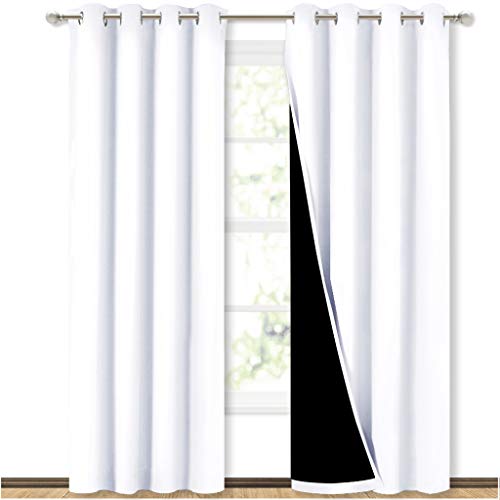
Blackout curtains are highly effective at thermal regulation. In the summer, they prevent solar radiation from entering your home. Sunlight passing through glass creates a greenhouse effect, heating up your floors and furniture. A heavy, multi-layered curtain—especially one with a white or reflective backing—acts as a shield. It reflects the light back out the window before it can warm the room. Options like the NICETOWN White 100% Blackout Curtains (priced around $23.99 for a pair of 84-inch panels) use a dual-layer design to achieve this thermal barrier without requiring a stiff, industrial-looking backing.
In the winter, the mechanism shifts. The curtains trap a layer of still air between the cold window glass and the warm interior of your room. Because air is a poor conductor of heat, this stagnant air pocket acts as an insulating buffer, reducing heat loss by up to 25%. For smaller windows, such as those in kitchens or bathrooms, smaller panels like the RYB HOME Grey Blackout Curtains (costing around $12.56) offer a compact, budget-friendly way to seal off drafty panes.
2. How They Muffle Noise (Acoustic Dampening)
This is where many buyers feel misled. No fabric curtain can truly soundproof a room. True soundproofing requires density, mass, and airtight sealing—qualities that flexible fabric panels simply cannot provide.
What heavy blackout curtains actually do is improve the acoustics of your room. They are made of thick, porous materials (often woven polyester, velvet, or triple-weave microfibers) that absorb sound waves instead of letting them bounce off hard glass and drywall surfaces. This dampens echo and reduces high-frequency noises, such as distant traffic, rustling leaves, or neighborhood chatter. However, low-frequency noises—like the deep rumble of a diesel engine, heavy construction, or a neighbor’s subwoofer—will pass through the fabric and glass almost entirely unaffected.
Pros
- Significant Energy Savings: By reducing solar heat gain in summer and trapping drafts in winter, they can noticeably lower your monthly utility bills.
- Complete Light Control: High-quality options block up to 100% of incoming sunlight, which is essential for night-shift workers, infants, and home theater setups.
- Reduced Echo and Reverberation: They soften the indoor acoustic environment, making rooms feel cozier and quieter by absorbing interior noise.
- UV Protection: They prevent expensive hardwood floors, carpets, and upholstery from fading due to direct sunlight exposure.
- Affordable Home Upgrade: Compared to replacing old windows, installing a $12 to $30 set of blackout panels is an incredibly low-cost insulation upgrade.
Cons
- Heavy Structural Load: Thick thermal curtains can weigh anywhere from 3 to 8 pounds per pair. They require a sturdy, well-anchored curtain rod (ideally secured into wall studs or using heavy-duty drywall anchors).
- Aesthetic Trade-offs: True 100% blackout curtains can sometimes feel stiff or heavy, lacking the airy, breezy drape of linen or sheer cotton.
- Dust and Allergen Accumulation: The dense, textured fabrics tend to attract dust, pet dander, and pollen, requiring regular vacuuming or dry cleaning.
- Light and Heat Leaks: If hung on a standard straight rod, light and air will escape through the top, bottom, and sides, reducing their overall efficiency.
Who Should Buy It
You should invest in thermal blackout curtains if you are a night-shift worker who needs to sleep during midday, a parent trying to establish a consistent nap schedule for a toddler, or someone living in an older home with drafty, single-pane windows. They are also ideal for urban apartments where streetlights and moderate pedestrian noise disrupt your sleep. If you have a standard bedroom window, a pair of 84-inch panels like the NICETOWN White Blackout Curtains ($23.99) provides the perfect balance of length, weight, and light-blocking capability.
Who Should Skip It
You should skip these if your primary goal is to silence loud, low-frequency outdoor sounds like nearby highway traffic, trains, or construction sites; for those issues, you need double-pane acoustic windows or exterior storm windows. You should also skip them if you prefer a bright, minimalist aesthetic with lightweight, translucent window treatments, or if you already live in a modern home with high-efficiency triple-pane windows, where the thermal benefit of heavy drapery will be negligible.
Cheaper Alternatives
As we look at home improvement and energy efficiency trends heading into 2026, budgets remain top of mind. If you are not ready to purchase full-length heavy drapery, consider these alternative solutions:
| Option | Estimated Cost | Trade-off |
|---|---|---|
| Static-Cling Window Heat Film | $15.00 – $30.00 per roll | Excellent summer heat rejection, but does not block light completely and offers zero noise reduction. |
| Weatherstripping & Foam Tape | $5.00 – $12.00 per roll | Highly effective at blocking drafts and physical wind noise, but does not block light or radiant heat from the sun. |
| RYB HOME Small Tier Curtains | $12.56 per set | Extremely budget-friendly for small windows, but leaves larger window areas exposed to heat and noise. |
| DIY Foam Board Inserts | $8.00 – $15.00 (materials) | Blocks almost all light and heat when wedged into the frame, but completely ruins your view and looks unattractive from both inside and outside. |
FAQ
Do blackout curtains block cold air in the winter?
Yes. Blackout curtains act as an insulator by trapping a layer of cold air between the window pane and the heavy fabric. To maximize this effect, make sure the curtains touch the windowsill or floor, creating a sealed pocket that prevents cold drafts from spilling into the living space.
Is there a difference between “blackout” and “thermal” curtains?
While the terms are often used interchangeably, they are slightly different. Blackout curtains focus primarily on light prevention, often using a tightly woven fabric or a thin backing. Thermal curtains are specifically engineered with multiple layers—including foam, high-density core fibers, or reflective backings—designed specifically to resist heat transfer, though they usually block light as a byproduct.
How do I hang blackout curtains to get the best noise reduction?
To reduce noise, you must minimize the gaps where sound waves can travel. Hang the curtains as high above the window frame as possible (ideally 4 to 6 inches) and let them pool slightly on the floor. Use a wraparound curtain rod (often called a French return rod) so the fabric curves and touches the wall, sealing off the sides of the window.
Can light-colored blackout curtains really block 100% of light and heat?
Yes, but only if they feature a multi-layer design. In the past, you needed dark fabric to block light. Today, products like the white NICETOWN panels use a triple-weave technology or a black liner sandwiched between two layers of white fabric. This allows you to enjoy a bright, clean aesthetic on the inside while still achieving total darkness and excellent heat reflection.