Key takeaways
- For a 4×6-inch print: Use an 8×10-inch frame with a mat opening of 3.5×5.5 inches (to prevent the print from falling through the opening).
- For an 8×10-inch print: Use an 11×14-inch frame with a mat opening of 7.5×9.5 inches.
- For an 11×14-inch print: Use a 16×20-inch frame with a mat opening of 10.5×13.5 inches.
We have all been there: you spend hours curating the perfect collection of prints, order a set of frames online, hang them up, and step back only to realize the entire arrangement looks like a scattering of postage stamps on a massive empty wall. Or worse, the frames are so overwhelmingly large that they crowd out your furniture, making your living room feel cramped and claustrophobic.
The most common mistake people make when learning how to choose frame size for gallery wall art is focusing entirely on the size of the artwork prints rather than the overall footprint of the frames and the negative space around them. A standard 8×10-inch print does not equal an 8×10-inch frame once you add matting and the width of the frame profile itself. In 2026, as home design moves away from cluttered, chaotic spaces and embraces intentional, museum-quality curation, understanding the precise math behind frame sizing is what separates a professional-looking display from a chaotic DIY mishap.
Our top picks



As an Amazon Associate we earn from qualifying purchases at no extra cost to you.
To get your gallery wall right on the first try, you need to look past the print sizes and calculate the outer dimensions, profile weights, and spacing requirements of your frames. This editor’s guide will break down the exact formulas, materials, and specifications you need to build a flawless gallery wall.
Decide These 3 Things First
Before you click “add to cart” on any frame set, you must establish the structural blueprint of your wall. Answering these three foundational questions will instantly narrow down your sizing options:
- Grid vs. Salon (Eclectic) Layout: Are you aiming for a clean, symmetrical grid (e.g., a 3×3 layout of identical square frames) or an organic, eclectic salon style (varying frame sizes and materials)? Symmetrical grids require highly precise, matching frame dimensions, whereas salon layouts give you the flexibility to mix smaller 5×7-inch frames with large 16×20-inch focal pieces.
- The 60-75% Rule: Measure the width of the furniture piece your gallery wall will sit above (such as a sofa, console table, or bed). To look balanced, the total width of your gallery wall—including the frames and the gaps between them—should occupy between 60% and 75% of that furniture’s width. For example, if you have an 80-inch-wide sofa, your gallery wall footprint should measure between 48 and 60 inches wide.
- Matted vs. Full-Bleed (No Mat): Matting (the cardboard border surrounding the art) adds an instant gallery-grade aesthetic, but it significantly increases the required frame size. Deciding whether you want a clean, modern full-bleed look or a traditional matted look determines whether you need to buy frames that match your print size or frames that are one to two sizes larger than your prints.
Frame Size and Matting Dimensions
The biggest point of confusion when learning how to choose frame size for gallery wall art is the difference between print size, mat opening size, and outer frame size. When a manufacturer lists a frame as “11×14 inches,” they are referring to the interior opening of the frame (the glass size), not the outer edges of the frame border.
To achieve a balanced look, refer to these standard sizing conversions:
- For a 4×6-inch print: Use an 8×10-inch frame with a mat opening of 3.5×5.5 inches (to prevent the print from falling through the opening).
- For an 8×10-inch print: Use an 11×14-inch frame with a mat opening of 7.5×9.5 inches.
- For an 11×14-inch print: Use a 16×20-inch frame with a mat opening of 10.5×13.5 inches.
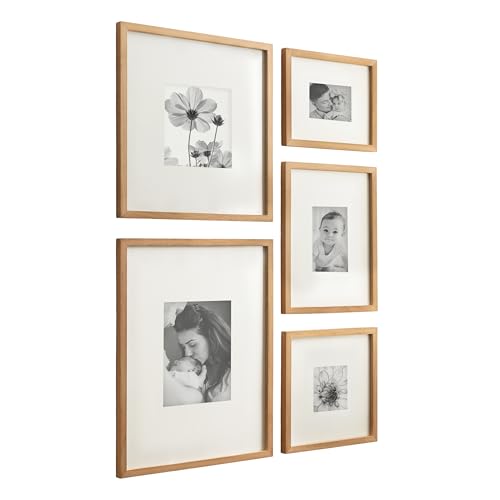
If you are buying pre-curated sets, pay close attention to the mix of sizes. A balanced, multi-size set—such as a 5-piece or 8-piece set—typically features one large anchor frame (11×14 or 16×20 inches), two to three medium frames (8×10 inches), and a few smaller accent frames (5×7 inches). This variation prevents visual fatigue and guides the viewer’s eye naturally across the wall.
Frame Material and Weight
The material of your frames dictates both their structural longevity and how they hang on your wall. Heavier materials require robust wall anchors, while lighter materials can often be hung with heavy-duty adhesive strips.
- Solid Wood (Oak, Walnut, Pine): Solid wood frames offer unmatched durability and clean, seamless mitered corners. However, they are heavy. A single 16×20-inch solid oak frame can weigh between 3.5 and 5 lbs. If you are hanging an 8-piece solid wood set, your wall must support 20 to 30 lbs of total weight.
- MDF (Medium-Density Fiberboard): The industry standard for mid-range gallery sets, MDF frames are wrapped in a laminate or wood-grain veneer. They offer a uniform look with no natural wood knots, weighing about 30% less than solid wood (typically 1.5 to 2.5 lbs for a 16×20-inch frame).
- Polystyrene (Plastic): Common in budget-friendly, high-piece-count sets (such as 12-piece or 16-piece collage kits), polystyrene is ultra-lightweight (under 1 lb for a 12×12-inch frame). While highly affordable, plastic frames are prone to scratching, and the corners can split under tension.
- Aluminum/Metal: Highly durable and modern, aluminum frames feature ultra-thin profiles (often just 0.25 inches wide) while remaining incredibly rigid. They are excellent for clean, minimalist grids and weigh roughly 2 lbs for a mid-sized frame.
Construction, Backing, and Glazing
What holds the frame together is just as important as how it looks from the front. Poorly constructed frames will warp over time, causing your artwork to sag.
First, evaluate the glazing (the clear protective layer). Real glass is scratch-resistant, heavy, and offers classic clarity, but it is highly reflective and prone to shattering during shipping. High-grade acrylic (plexiglass) is shatterproof, lightweight, and ideal for homes with children or pets. However, avoid cheap, thin plastic sheets (under 1mm thick) as they warp easily, creating a “funhouse mirror” distortion across your gallery wall. Look for acrylic that is at least 1.5mm to 2mm thick.
Next, check the backing board and securing hardware. Budget frames often use thin cardboard backing secured by bendable metal tabs. Over time, these tabs break off if you change the art frequently. Mid-to-premium frames utilize thick MDF backing boards secured by rotating turn buttons, which provide uniform pressure, keeping the artwork flat and sealed against dust.
Visual Weight and Profile Width
The “profile” refers to the width and depth of the frame’s front border. The profile width directly affects the visual weight of your gallery wall.
Thin profiles (0.25 to 0.5 inches) offer a sleek, contemporary, and unobtrusive look. They are perfect for dense layouts or large grids where you want the focus entirely on the art. Thick profiles (1.25 to 2.5 inches)—often found in rustic wood or ornate baroque frames—add significant visual weight.
If you choose a set with varying sizes and thick profiles (such as rustic brown wood sets), you must space the frames further apart (3 to 4 inches) to keep the wall from feeling congested. If you choose a set with thin, minimalist profiles, you can space them closer together (1.5 to 2 inches) for a cohesive, modern collage effect.
Price Tiers
When shopping for gallery wall frame sets, pricing is heavily determined by the material, the number of frames included, and the quality of the matting and glazing.
- Budget ($40 – $70): Typically includes large multi-pack sets of 8 to 16 pieces (such as the ArtbyHannah or Anerza sets). These are usually constructed from lightweight polystyrene or thin MDF, featuring thin acrylic glazing and standard paper mats. They are excellent for dorms, apartments, or fast-decor updates.
- Mid-Range ($75 – $150): Usually consists of curated 3-piece to 5-piece sets (like Kate and Laurel sets) made of high-quality MDF or pine wood. They feature real glass or thick, non-glare acrylic, bevel-cut acid-free mats, and sturdy turn-button backings.
- Premium ($150 – $400+): Professional-grade or custom-framed sets of 3 to 10 frames. These feature solid hardwoods (ash, walnut, oak), UV-protective museum glass, extra-thick 4-ply acid-free matboards that won’t yellow over time, and heavy-duty wire hanging systems.
Shipping, Packaging, and Assembly Templates
Do not overlook how your frames are shipped and how they are meant to be mounted. Shipping a box of glass-front frames is a high-risk endeavor. Look for manufacturers that use drop-tested packaging with thick styrofoam corner guards.
Furthermore, hanging a multi-frame gallery wall can be a geometric nightmare. Premium and mid-range sets frequently include 1:1 scale hanging templates. These are large paper sheets that you tape to your wall first. They show exactly where each frame goes and where to drive the nails. This eliminates the need for complex math and prevents your walls from looking like Swiss cheese after multiple hanging attempts.
Spec Checklist
Use this quick reference table to compare specifications across the three main market tiers before making your purchase:
| Specification | Budget Tier ($40 – $70) | Mid-Range Tier ($75 – $150) | Premium Tier ($150+) |
|---|---|---|---|
| Frame Material | Polystyrene or low-density MDF | High-density MDF or Pine wood | Solid Hardwoods (Oak, Ash, Walnut, Metal) |
| Glazing Type | Thin plastic/acrylic (< 1.0mm) | Real glass or thick acrylic (1.5mm+) | Tempered glass or UV-filtering acrylic |
| Matboard Quality | Standard paper mat (may yellow) | Acid-free white core matboard | 4-ply museum-grade conservation matboard |
| Hanging Hardware | Basic sawtooth hangers (unattached or loose) | Pre-installed D-rings or sturdy sawtooths | Heavy-duty D-rings, wire, or metal cleat systems |
| Included Extras | Basic prints, small level | Curated art prints, hanging template paper | Premium wall anchors, precision hanging templates |
Red Flags
When shopping for gallery wall frame sets online, keep an eye out for these warning signs that indicate poor quality:
- Warping Acrylic: If product reviews mention that the protective plastic “bends,” “warps,” or “creates a glare like a funhouse mirror,” the acrylic is too thin (usually under 1mm). It will ruin the look of your art.
- Non-Acid-Free Mats: If the description does not explicitly state “acid-free” or “white core,” the matboard contains lignin. Over time, light exposure will cause the mat edges to turn an ugly yellow-brown, which can chemically burn and stain your prints.
- No Hanging Templates Included for Large Sets: If you are buying a complex, multi-size set of 8 or more frames and it does not come with a paper hanging template, prepare for hours of frustrating measurements and crooked frames.
- Visible Corner Gaps: In low-quality frames, the 45-degree mitered corners are often glued poorly, leaving visible gaps where raw light-colored wood or plastic shows through.
FAQ
How much space should I leave between frames on a gallery wall?
The industry standard is to leave 2 to 3 inches of space between each frame. If you are hanging a tight, modern grid of identical frames, you can drop down to 1.5 to 2 inches. For large, eclectic, or rustic frames with thick profiles, increase the spacing to 3 to 4 inches to give each piece breathing room.
Should I choose real glass or acrylic plexiglass for my frames?
For large gallery walls, high-quality acrylic (at least 1.5mm thick) is generally preferred because it is shatterproof and dramatically reduces the overall weight on your drywall. However, for smaller grids (such as a 3-pack of 8×10-inch frames), real glass is excellent because it resists scratching and wipes clean easily without static buildup.
Can I mix different frame colors and materials in one gallery wall?
Yes, but you need a unifying element to keep it cohesive. If you are mixing black, gold, and wood frames, keep the art style consistent (e.g., all black-and-white photography) or make sure all the frames use the exact same color matboard. This provides a visual thread that ties the eclectic layout together.
How do I calculate the total wall space a frame set will occupy?
To find the total width, add up the outer widths of the frames that will sit side-by-side, then add 2 to 3 inches of gap space for each interval between them. For example, three side-by-side frames that are each 14 inches wide, with two 2.5-inch gaps between them, will require a total wall width of 47 inches (14 + 14 + 14 + 2.5 + 2.5).