If you have ever stared at a blank wall wondering how to choose canvas wall art color scheme decor, you are not alone. Most homeowners approach art shopping with a simple but flawed mindset: they find a piece they like on a screen, order it, and hang it up. Then, they wonder why their brand-new canvas looks completely out of place.
The most common mistake is the “matchy-matchy” trap. People often try to match their canvas art perfectly to their dominant wall color or sofa. If you have a navy blue sofa and you buy a solid navy blue abstract print, the art disappears into the furniture, flattening the room’s visual depth. Another frequent misstep is ignoring color undertones. Hanging a crisp, blue-toned white abstract canvas on a warm, creamy beige wall will instantly make the wall look dirty and the canvas look cheap and clinical.
Our top picks
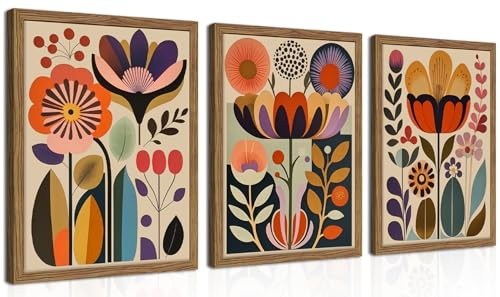 Framed Colorful Floral Wall Art Set of
- 【Framed Colorful Floral Wall Art Set of 3】Enhance…
- 【Abstract Scandinavian Flower ArtworkInspired by Scandinavian simplicity and…
- 【Mid Century Modern Botanical Wall Decor】Designed as coordinated…


As an Amazon Associate we earn from qualifying purchases at no extra cost to you.
In 2026, interior design is moving decisively away from sterile, gray-on-gray minimalism toward highly personalized, color-drenched spaces. Art is no longer an afterthought; it is the anchor of the room. To get your space right, you must understand how color, scale, and material quality work together to create a cohesive home.
Decide These 3 Things First
Before browsing online marketplaces or looking at price tags, you need to establish a strategic blueprint for your wall. Answering these three questions first will save you from returns and buyer’s remorse:
- Identify Your Wall’s Undertone: Look at your wall in natural daylight. Is it a cool white (with blue or gray undertones) or a warm white (with yellow, peach, or beige undertones)? Warm walls pair beautifully with earth tones, terracotta, mustard yellows, and rich forest greens. Cool walls demand slate grays, crisp teals, deep blues, and bright magentas.
- Determine the Color Role (The 60-30-10 Rule): In interior design, 60% of a room is the dominant color (usually walls and large rugs), 30% is the secondary color (furniture and curtains), and 10% is the accent color (pillows, throws, and decor accessories). Decide if your canvas art will blend into the 30% secondary color scheme or act as the vibrant 10% accent pop.
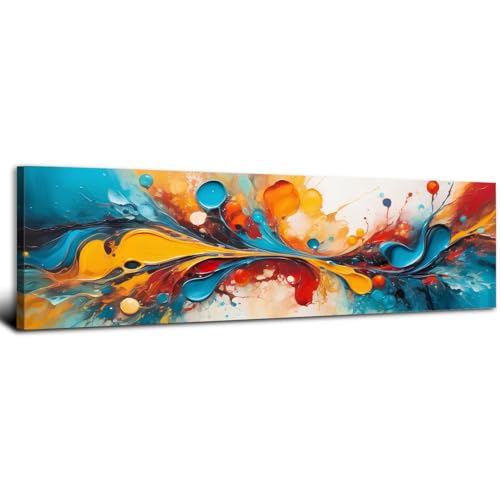
- Choose Your Format (Statement vs. Grid): Decide whether your wall needs a single focal point or a curated grouping. A large, horizontal 20×40-inch abstract canvas creates a clean, modern statement. On the other hand, a set of three 12×16-inch botanical prints or a grid of four 12×12-inch watercolor splashes offers a more dynamic, gallery-style feel that draws the eye across the wall.
Size and Scale Ratios
The scale of your canvas is just as important as its color. If a piece of art is too small, it looks like an afterthought; if it is too large, it overwhelms the room. To find the perfect size, use the two-thirds rule. When hanging canvas art over a piece of furniture (like a sofa, console table, or headboard), the total width of the artwork should measure between 60% and 75% of the furniture’s width.
For example, if you are hanging art over a standard 72-inch console table, your artwork should be between 43 and 54 inches wide. You can achieve this with a single 14×48-inch panoramic canvas, or by hanging a set of three 12×16-inch frames side-by-side with 2-inch gaps between them (totaling 40 inches in width). Always leave 6 to 8 inches of breathing room between the bottom of the canvas frame and the top of your furniture.
Canvas Material and Weight
Not all canvases are created equal. The weight and composition of the canvas fabric dictate how well it holds color over time and whether it will sag in humid environments. Canvas weight is measured in grams per square meter (GSM).
Budget-tier wall art typically uses lightweight polyester canvas ranging from 220 to 260 GSM. While highly affordable, pure polyester can have a shiny, plastic-like sheen that reflects glare from overhead lights. For a professional look, seek out poly-cotton blends or 100% cotton canvas weighing between 300 and 400 GSM. Cotton fibers have a natural, matte texture that absorbs inks deeply, resulting in rich, velvety blacks and vibrant color saturation that looks hand-painted rather than printed.
Construction and Framing Methods
The internal support system of a canvas is called the stretcher bar. Cheap canvases are often stretched over thin, 0.5-inch MDF (medium-density fiberboard) or composite wood frames. These frames are highly susceptible to warping when exposed to temperature changes or indoor humidity.
For longevity, look for kiln-dried pine stretcher bars with a depth of at least 1.25 to 1.5 inches. Kiln-drying removes moisture from the wood, preventing it from bowing or twisting over time. Standard “gallery wraps” feature the artwork wrapped around the sides of the frame, which is ideal for a clean, modern look. If you prefer a more traditional or high-end look, opt for a floating frame. A floating frame leaves a 0.25-inch gap between the canvas edge and the outer wooden or polystyrene frame, giving the illusion that the artwork is suspended in mid-air.
Color Performance and Ink Quality
The longevity of your color scheme depends entirely on the type of ink used during the printing process. Low-cost manufacturers use solvent-based dye inks. While bright at first, dye-based inks break down quickly when exposed to ultraviolet (UV) light, causing your blues to fade into dull grays and your yellows to disappear within 12 to 18 months.
To ensure your colorful abstract teal, orange, or multi-color graffiti prints stay vibrant, look for giclée printing using archival pigment-based inks (such as Epson UltraChrome or Canon LUCIA PRO). Pigment inks consist of tiny, solid color particles suspended in a liquid carrier. They bind deeply to the cotton fibers and resist UV fading for 75 to 100 years under normal indoor lighting conditions. Additionally, look for canvases finished with a protective UV-resistant matte varnish to eliminate glare and protect against dust.
Price Tiers and What You Get
Understanding what goes into the cost of canvas wall art will help you budget effectively for your home makeover:
- Budget ($20 to $35): At this price point, you will find multi-piece sets of smaller sizes, such as a 4-pack of 12×12-inch watercolor prints or a 3-pack of unframed 12×16-inch canvases. These are almost always printed on lightweight polyester canvas (under 260 GSM) using dye-based inks. They are excellent for temporary apartments, kids’ rooms, or high-traffic kitchens where you want quick, low-stakes decor updates.
- Mid-Range ($35 to $80): This tier offers the best balance of quality and value. Here, you will find medium-to-large single pieces (like a 20×40-inch abstract or a 14×48-inch panorama) and framed multi-piece sets. These feature thicker 280 to 320 GSM poly-cotton canvases, pine stretcher bars, pigment-based inks, and sturdy frames. They look expensive from a distance and hold up well over years of display in living rooms and master bedrooms.
- Premium ($100 to $300+): Premium canvases feature 100% archival cotton canvas (380+ GSM), thick 1.5-inch gallery-depth wood frames, hand-painted acrylic brushstroke embellishments over the print to add physical texture, and high-end wooden floating frames. These are collector-grade pieces designed to serve as the main focal point of a home.
Hanging Hardware and Delivery Safety
A canvas print is only as good as its arrival condition and ease of installation. Standard wrapped canvases are incredibly lightweight, typically weighing between 1.5 and 5 pounds depending on size. This makes them much easier to hang than heavy, glass-fronted frames.
When purchasing, check if the canvas includes pre-installed hanging hardware. Sawtooth hangers are standard for smaller pieces, while heavy-duty D-rings or wire hangers are preferred for wider, panoramic canvases. For delivery, ensure the manufacturer ships the art with protective plastic corner guards, vacuum-sealed shrink wrap to prevent moisture damage during transit, and thick, multi-layer corrugated cardboard boxes to prevent punctures.
Spec Checklist
Use this quick-reference table to compare technical specifications across the three major market tiers before making your purchase:
| Specification | Budget Tier | Mid-Range Tier | Premium Tier |
|---|---|---|---|
| Average Price Range | $15 – $35 | $35 – $90 | $100 – $300+ |
| Canvas Material | 100% Polyester | Poly-Cotton Blend | 100% Archival Cotton |
| Canvas Weight | 220 – 260 GSM | 280 – 320 GSM | 350 – 400+ GSM |
| Frame Depth & Material | 0.5″ to 0.75″ MDF / Plastic | 1.2″ to 1.25″ Kiln-Dried Pine | 1.5″ to 2.0″ Solid Hardwood |
| Ink & Print Tech | Standard Dye Ink (DPI varies) | Pigment Ink / Giclée Print | Archival Pigment / Hand-Painted Texture |
| UV & Fade Resistance | Low (Fades in 1-2 years of sun) | High (Rated for 50+ years) | Museum Quality (100+ years) |
Red Flags
When shopping for canvas wall art online, keep an eye out for these warning signs that indicate a low-quality product:
- Vague Material Descriptions: If a listing simply says “high-quality cloth” or “waterproof fabric” without specifying cotton, polyester, or GSM weight, it is almost certainly cheap, ultra-thin polyester that will stretch out of shape.
- Photoshopped Scale Mockups: Be wary of product images that show a canvas looking massive over a giant sofa. Sellers often overlay a small 12×12-inch print onto a stock photo of a living room, making it look four times larger than its actual dimensions. Always read the written measurements in inches.
- No Mention of Ink Type: If a manufacturer does not proudly state they use pigment-based, UV-resistant, or archival inks, assume they are using cheap dye inks that will quickly fade under direct daylight.
- Chemical Odor Complaints: Read customer reviews carefully. If multiple buyers mention a strong, lingering chemical or plastic smell upon unboxing, the seller is using low-grade solvent inks that off-gas VOCs (volatile organic compounds) into your home.
FAQ
How do I match canvas art to my existing living room color scheme?
To match your art successfully, do not pick a canvas that is the exact same color as your walls or sofa. Instead, use the 60-30-10 rule. Look at the minor accent colors in your room—such as the gold in your lamps, the rust orange in your throw blankets, or the teal in your accent pillows—and find a canvas that incorporates those colors as its primary tones. This creates a cohesive, layered look that pulls the room together without feeling overly coordinated.
What is the best canvas size to hang above a queen-size bed?
A standard queen-size bed frame is 60 inches wide. To follow the two-thirds rule of interior design, your canvas art should be between 36 and 45 inches wide overall. A horizontal panoramic print measuring 14×48 inches is a perfect single-piece option. Alternatively, hanging a set of three 12×16-inch vertical canvases spaced 2 inches apart will give you a total display width of 40 inches, which balances the bed beautifully.
Is canvas art suitable for humid areas like kitchens and bathrooms?
Yes, but you must choose your materials carefully. For high-humidity areas, avoid 100% cotton canvas, as natural cotton fibers absorb moisture and can develop mold or mildew. Instead, opt for a high-quality polyester or poly-cotton blend canvas printed with waterproof, UV-resistant pigment inks. Additionally, ensure the back of the canvas is sealed and that the frame is made of moisture-resistant composite materials or sealed pine rather than untreated MDF, which swells when wet.
How do I clean and maintain colorful canvas prints without fading the ink?
Never use liquid cleaners, glass sprays, damp cloths, or chemical solvents to clean a canvas print, as these can dissolve the ink and strip away the protective UV coating. To clean your canvas, simply use a dry, soft, anti-static microfiber cloth or a clean feather duster to gently sweep away surface dust once a month. To prevent premature fading, try to hang your canvas out of the path of direct, intense afternoon sunlight.