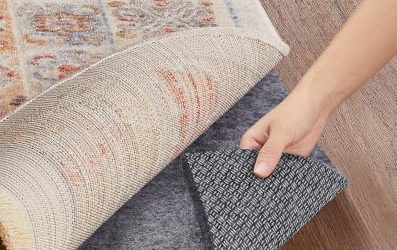
Choosing a rug color feels simple until you unroll it and realize it clashes with your walls, furniture, or flooring. The right color does more than match your decor — it anchors the room, controls how large or cozy the space feels, and ties disparate elements together. In 2026, with warmer neutrals and saturated earth tones trending alongside classic grays and blues, understanding color strategy is more important than chasing a single trend.
This guide gives you a practical framework for selecting a rug color with confidence. You will learn how to work with your existing palette, account for light and room size, choose colors for mood and function, and avoid common matching mistakes — so your rug looks intentional from day one.
Our top picks


 Ophanie Round Washable Rugs 5Ft Ivory Circle
- Ultra Soft & Non-slip: Featuring a shaggy carpet…
- The Style That Works: This rug is well-suited…
- Safe Materials: This very soft, velvety carpet is…


As an Amazon Associate we earn from qualifying purchases at no extra cost to you.
⚡ Save on Your Next PC — Amazon Prime
Prime members get fast free shipping on the systems above, plus early access to Prime Day & Black Friday PC deals. New members get a 30-day free trial.
Watch: How to Choose the Right Rug Color for Your Decor — Video Review
1. Start With Your Existing Palette: Use the 60-30-10 Rule
Designers rely on the 60-30-10 rule to create balance: 60% dominant color (walls and large furniture), 30% secondary color (upholstery, curtains, bed linens), and 10% accent color (pillows, art, decor). Your rug should support this ratio, not fight it.
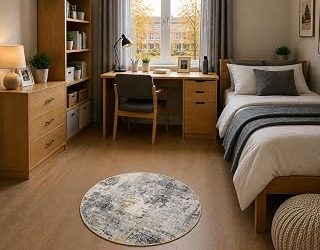
- For a subtle, cohesive look: Choose a rug in your secondary or dominant color family, but 2-3 shades lighter or darker. For example, if your sofa is light gray and walls are white, a soft ivory option like the Ophanie 5Ft Ivory Round Washable Rug adds warmth without introducing a new hue.
- For contrast and definition: Use your accent color in the rug. In a neutral beige living room, the RELEANY Washable Area Rug in Brick/Brown/Green pulls in terracotta and olive accents to energize the space without overwhelming it.
- For grounding dark furniture: If you have a charcoal sectional or espresso wood, a rug that is slightly lighter than the furniture prevents the room from feeling heavy. The Tepook 4×6 Soft Fluffy Rug in Black works best when you have light walls and at least 40% light-colored textiles to balance it.
2. Account for Light, Room Size, and Undertone
Color looks different depending on lighting and scale. A rug that appears warm beige in a showroom can read pink or yellow at home.
- Natural light direction matters: North-facing rooms cast cool, bluish light and benefit from warm rug colors (cream, camel, brick, chocolate). South-facing rooms bring warm light and can handle cool tones like blue and gray. The Ophanie 4Ft Blue Round Rug, for instance, stays crisp in a bright, south-facing kids room but can look icy in a dim north-facing space.
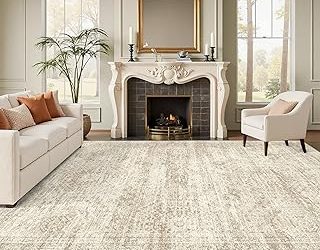
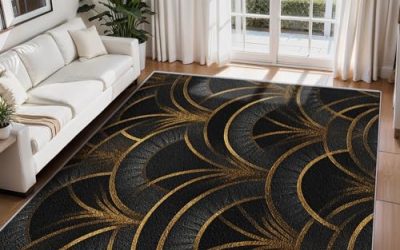
- Room size and color depth: Light rugs (ivory, light gray, soft beige) reflect 70-80% more light and make a 10×12 room feel 15-20% larger. Dark rugs (black, chocolate, charcoal) absorb light and create intimacy — ideal for large open-plan areas. The 8×10 Washable Abstract Rug in Black Grey Gold adds drama to a spacious living room but may shrink a small 8×10 bedroom visually.
- Check the undertone: Hold the rug swatch next to your flooring and wall paint. Wood floors with orange undertones clash with rugs that have pink-beige undertones. Look for a shared undertone. The QDUIDU Modern Geometric Patchwork Rug in Chocolate has warm brown undertones that pair cleanly with honey oak or walnut hardwood, not ashy gray floors.
3. Match Color to Room Function and Mood
Color psychology is practical, not just aesthetic. Different rooms benefit from different temperatures and saturation levels.
- Living room — versatile and forgiving: Medium-value, multi-tone rugs hide daily wear best. A geometric patchwork like the QDUIDU 4’x6′ rug in Chocolate/Brown blends browns and creams to camouflage foot traffic, making it ideal for entryways, offices, and family living rooms.
- Bedroom — calm and restful: Low-contrast, low-saturation colors promote relaxation. Soft neutrals, dusty blues, and warm grays lower visual stimulation. A plush option such as the Tepook Soft Fluffy Rug in Black should only be used in bedrooms if you want a high-contrast, hotel-like statement; otherwise opt for ivory or light gray for better sleep ambiance.
- Kids room and nursery — cheerful yet adaptable: Saturated blues and creams add personality without locking you into a theme. The Ophanie 4Ft Blue Round Rug is perfect for a boy’s room or play area, while the Ophanie 5Ft Ivory Round Rug offers a gender-neutral base that lets wall color and art do the storytelling as tastes change.
- High-traffic or dining areas — practical color: Choose mottled or abstract patterns with 3+ colors. The 8×10 Washable Abstract Rug in Black Grey Gold uses a black, grey, and gold blend that disguises crumbs and spills far better than a solid cream rug.
4. Coordinate Patterns and Scale Without Clashing
If your rug has pattern, treat its colors as a palette to coordinate the rest of the room.
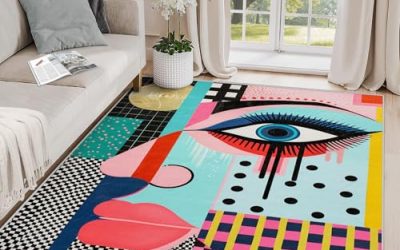
- Scale rule: Pair a large-scale rug pattern with small-scale patterns elsewhere. If your rug is a bold abstract (like the 8×10 Black Grey Gold design), keep throw pillows and curtains to subtle textures or micro-patterns.
- Color extraction: Pull 1-2 colors from the rug for decor. If your rug contains brick, brown, and green as the RELEANY Small 2’x3′ rug does, repeat the brick in a throw pillow and the green in a plant pot — leave the third color as the rug’s unique contribution.
- Shape matters too: Round rugs, such as the Ophanie 4Ft Blue and 5Ft Ivory options, soften angular furniture. Center a round rug under a circular coffee table or in a nursery to create a focal point; use rectangular rugs (like the Tepook 4×6 or QDUIDU 4’x6′) to echo the lines of sofas and beds.
5. Test Before You Commit
Never choose a rug color from a phone screen alone. Lighting, pile height, and texture shift color perception by up to 30%.
- Sample with textiles: Order swatches or use a pillowcase closest to the rug color and view it against your sofa and floor at three times of day — 9 a.m., 3 p.m., and after sunset under artificial light (2700K warm white vs 4000K cool white bulbs will change how gray or beige appears).
- Use painter’s tape to map size: Tape out the rug dimensions on the floor. A 4×6 rug needs at least 12-18 inches of floor visible around it in a bedroom; a 5-foot round rug needs 24 inches clearance from walls to breathe.
- Consider washability for light colors: In 2026, most families prioritize washable construction for rugs under 6×9 feet. If you love ivory or cream but have pets or kids, prioritize a washable choice like the Ophanie 5Ft Ivory or RELEANY 2’x3′ to maintain a light palette without anxiety.
Tips
- Lay the rug first, then pick wall art. It is 3x easier to match a $30 print to a rug than to find a rug that matches a specific painting.
- If your flooring is busy (reclaimed wood, patterned tile), choose a solid or low-contrast rug. If flooring is plain, a patterned rug like the QDUIDU Geometric Patchwork adds needed movement.
- Keep at least one repeating neutral across rooms for flow. Using ivory or warm gray in both living and sleeping areas creates cohesion even when accent colors change.
- Vacuum texture direction matters — high-pile shag rugs like the Tepook and Ophanie fluffy styles look a shade darker when pile is brushed one way. View from your main doorway to judge true color.
Frequently Asked Questions
Should my rug match my curtains or my sofa?
Match neither exactly. Aim for the same color family with a different value. If your sofa is medium gray, a rug in light gray or charcoal creates depth. Exact matching makes the room look flat and dated. Use curtains to echo the rug’s accent color instead.
What rug color makes a small room look bigger?
Light, low-contrast colors with a subtle pattern. Ivory, soft beige, light gray, or pale blue reflect light and reduce visual boundaries. Keep the rug within 1-2 shades of your floor for a seamless expansion effect and leave 18-24 inches of floor exposed around the edges.
Are dark rugs harder to maintain?
Dark rugs like black or chocolate show lint, pet hair, and dust more than medium tones, while light rugs show stains more. Medium-value mottled rugs in the gray-brown-gold range offer the best camouflage. If you prefer a solid dark or light rug, choose a washable, low-shedding polyester pile and vacuum 2 times per week.
How do I choose a rug color if my walls are white or rental beige?
White and rental beige are flexible — treat them as a blank canvas. Decide on mood: warm and cozy (choose brick, chocolate, gold), cool and modern (choose blue, gray, black), or soft and airy (choose ivory, cream). Anchor with one large patterned rug that contains your desired accent colors, then build pillows and throws from that pattern.
Conclusion
The best rug color is the one that respects your light, scale, and existing palette while supporting how you live in the room. Start with the 60-30-10 balance, verify undertones against your floor, and let function guide saturation — calm neutrals for bedrooms, forgiving multi-tones for high traffic, and joyful color for kids spaces. Test your choice in your own lighting and you will avoid the most common regret: a rug that looked perfect online but feels off at home. With these rules, your next rug will feel like it was made for the room.