
Key takeaways
- Look for absorbent, not tacky: Polyurethane and open-cell surfaces pull sweat away from the contact point and grip harder as they dampen. Closed-cell PVC and TPE feel grippier when dry but lose traction fast once wet.
- Plan for a towel either way: Even the best hot yoga mats benefit from a microfibre towel on top. It is far easier to wash a towel after every session than to deep-clean a mat that often.
- Check the length against your height: Standard mats run 68 inches. Anyone over about five foot ten will find their hands or feet off the mat in extended poses, which is exactly where a slip happens. Look for 72 inch versions.
- Consider closed-cell for hygiene: Open-cell surfaces grip better when wet but absorb sweat and oil into the material. If you share the mat or practise daily, a closed-cell mat plus a washable towel is the more hygienic system.
- Weigh thickness against stability: Thicker mats are kinder to knees but less stable in standing balance poses. For hot flows with a lot of standing work, 4 to 5 mm is usually the better compromise than 6 mm or more.
Dry grip and wet grip are two different properties, and most yoga mats only have the first. A rubber or TPE surface that feels tacky in a cool living room can turn into a skating rink twenty minutes into a heated class, because a film of sweat sits between your palm and the mat and hydroplanes. That is why people who practise hot yoga end up with a drawer full of mats that were fine everywhere except the one place they bought them for.
What actually works in the heat is a surface that absorbs rather than repels — a polyurethane top layer, an open-cell texture, or a microfibre towel laid over the mat. Absorbent surfaces get grippier as they get damp, which is the opposite behaviour to a closed-cell PVC mat. The tradeoff is that absorbent materials also soak up everything else, which means a real cleaning routine rather than an occasional wipe. Below are the mats and towels worth considering for sweaty practice, with the honest limitations of each.
Our top picks


As an Amazon Associate we earn from qualifying purchases at no extra cost to you. Ratings are shown as listed on Amazon.
Quick Comparison
| Product | Best For | Standout Feature | Watch Out For |
|---|---|---|---|
| Gaiam Dry-Grip Mat | Serious hot yoga | Grip improves as it gets damp | Absorbs oils, needs regular cleaning |
| Gruper Non-Slip Mat | Mixed practice styles | Textured surface plus carry strap | Grip drops off when heavily wet |
| Breling Suede Yoga Towels | Adding grip to any mat | Highly absorbent suede, 3-pack | Slides until it is damp |
| Gruper Eco Yoga Mat | Everyday flows | Eco material with good dry traction | Less effective in high humidity |
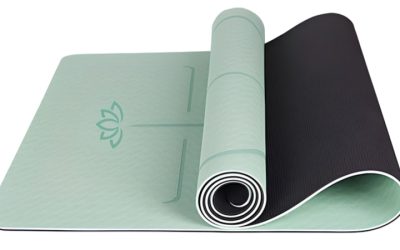
| Heathyoga TPE Mat | Cushioned hot practice | Thick TPE with alignment marks | TPE is closed-cell, holds moisture on top |
| IUGA Anti-Tear Mat | Durability under stress | 72 in length, tear-resistant build | Needs a towel for very sweaty flows |
How to Choose
- Look for absorbent, not tacky: Polyurethane and open-cell surfaces pull sweat away from the contact point and grip harder as they dampen. Closed-cell PVC and TPE feel grippier when dry but lose traction fast once wet.
- Plan for a towel either way: Even the best hot yoga mats benefit from a microfibre towel on top. It is far easier to wash a towel after every session than to deep-clean a mat that often.
- Check the length against your height: Standard mats run 68 inches. Anyone over about five foot ten will find their hands or feet off the mat in extended poses, which is exactly where a slip happens. Look for 72 inch versions.
- Consider closed-cell for hygiene: Open-cell surfaces grip better when wet but absorb sweat and oil into the material. If you share the mat or practise daily, a closed-cell mat plus a washable towel is the more hygienic system.
- Weigh thickness against stability: Thicker mats are kinder to knees but less stable in standing balance poses. For hot flows with a lot of standing work, 4 to 5 mm is usually the better compromise than 6 mm or more.
Top Picks Reviewed
Best for Hot Yoga: Gaiam Dry-Grip Yoga Mat
This is the mat built specifically for the problem. The 5 mm construction gives useful cushioning, and the top surface is designed to become more secure as moisture builds rather than less — which is exactly backwards to how a standard mat behaves, and exactly what a heated room requires.
The absorbency that makes it work also makes it a magnet for skin oils. Without a wipe-down after each session it develops a slick film and a smell, so this mat comes with a maintenance obligation rather than being a set-and-forget purchase.
Best All-Rounder: Gruper Non-Slip Yoga Mat
A textured surface with genuinely good dry traction, a comfortable thickness and an included carry strap makes this the most versatile option here. For a practice that mixes heated classes with ordinary home flows, it handles both reasonably.
In a properly hot room it does eventually lose grip. Once sweat pools on the surface rather than being absorbed, traction drops off, so pair it with a towel for the hottest sessions.
Best Grip Upgrade: Breling Suede Yoga Towels
A suede microfibre towel over any mat is the most cost-effective solution to sweaty-hand slipping. As it absorbs moisture the suede nap grips harder, and having three in rotation means you always have a clean one ready.
The awkward part is the beginning of a session. A dry suede towel slides on a mat surface until it picks up moisture, so the first few minutes can feel less secure than no towel at all. A light spray of water before you start solves it.
Best for Everyday Practice: Gruper Eco Yoga Mat
For flows at room temperature, this offers solid traction, a comfortable surface and eco-conscious materials at a sensible price. It is a good general-purpose mat that happens to also cope with mild sweating.
High humidity is where it reaches its limit. In a genuinely heated studio-style session it behaves like most standard mats — grippy until it is not — so it is better suited to home practice than to hot classes.
Best Cushioning: Heathyoga TPE Yoga Mat
The thicker TPE construction is noticeably kinder to knees and wrists, and the alignment markings are a genuinely useful feature for practising at home without an instructor correcting your positioning.
TPE is a closed-cell material, so sweat sits on top of it rather than being absorbed. In a hot session this mat effectively requires a towel, and without one the surface becomes slippery faster than the marketing suggests.
Best Durability: IUGA Anti-Tear Yoga Mat
At 72 inches long with a tear-resistant construction, this holds up to repeated rolling, transport and toe-pressure in poses like crescent lunge, where thinner mats develop holes. The extra length also matters for taller practitioners.
Its grip strategy is texture rather than absorption, so heavy sweating overwhelms it. Treat it as a durable base layer and put a towel on top for hot sessions.
Frequently Asked Questions
Why do yoga mats get slippery when I sweat?
Most mats rely on surface tack, which a film of sweat defeats by separating your skin from the material. Mats that absorb moisture rather than repelling it behave differently and actually improve as they dampen.
Do I need a yoga towel if I have a hot yoga mat?
Not strictly, but it makes maintenance far easier. Washing a towel after every session is simpler than deep-cleaning a mat that frequently, and it extends the mat’s usable life considerably.
How do I clean an absorbent yoga mat?
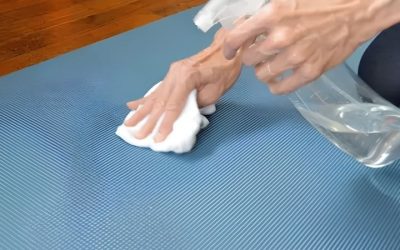
Wipe it after every session with a diluted mild soap solution or a dedicated mat spray, then air-dry it fully before rolling. Never leave a damp absorbent mat rolled up, which is how mats develop persistent odour.
What thickness is best for hot yoga?
Around 4 to 5 mm is the usual sweet spot. Thinner mats give better stability in standing balances; thicker ones are kinder to knees but feel unstable when you are already fighting for grip.
Final Thoughts
For a dedicated hot practice, the Gaiam Dry-Grip Yoga Mat is the one designed around the actual problem and the only mat here that gets better as you sweat. If you already own a mat you like, the Breling Suede Yoga Towels are the cheapest way to fix its wet-grip weakness. And for a home practice that is warm rather than genuinely hot, the Gruper Non-Slip Yoga Mat covers both worlds without demanding a cleaning ritual.
Write Your Review
No reviews yet. Be the first to share your experience!