
Key takeaways
- Age Range Description: Adult
- Mount Type: Doorway Mount
- Item Dimensions W x H: 37"W x 20.2"H
Most people who buy a pull-up bar cannot do a pull-up. That is not a criticism — it is the entire market. The problem is that the equipment which makes zero-to-one possible is not always the equipment that stays useful at rep fifteen, and buying twice is expensive. A bar that accepts a resistance band, has room for a knee to rest during negatives, and is rated well above your bodyweight plus a loaded vest covers the whole arc.
The progression itself is well established: dead hangs, then band-assisted reps, then slow negatives from the top, then singles, then volume, then added weight. Each stage asks something slightly different from the hardware. The six options below — a doorway bar rated to 440 lb, two freestanding towers, a rack, a Smith machine, and a 2000 lb cage — are assessed against where they help and where they run out of road.
Our top picks
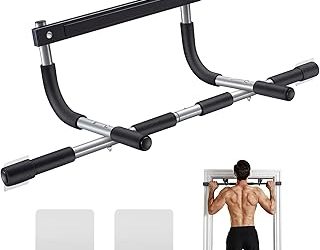
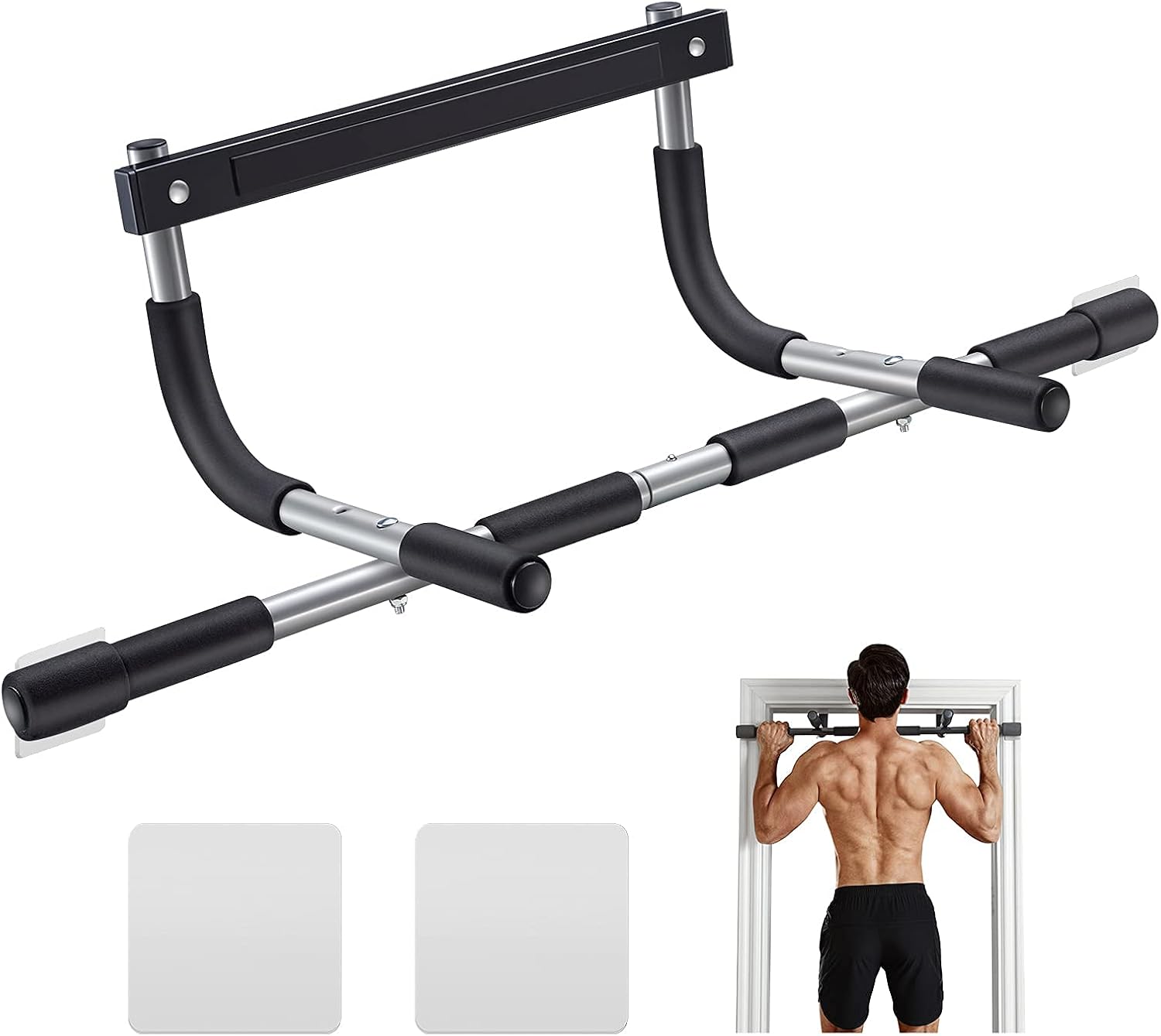 Ally Peaks Pull Up Bar for Doorway
- Age Range Description: Adult
- Mount Type: Doorway Mount
- Item Dimensions W x H: 37"W x 20.2"H
 Pooboo Power Tower Dip Station Pull Up
- Maximum Weight Recommendation: 450 Pounds
- Warranty Type: Manufacturer
- Material: Alloy Steel
 CAP Barbell Power Racks and Attachments
- Item Package Dimensions L x W x H: 47 x 12 x 6 inches
- Package Weight: 29.94 Kilograms
- Item Dimensions LxWxH: 45.67 x 50.79 x 85.43 inches
| Product | Key specs | Amazon rating | |
|---|---|---|---|
| Ally Peaks Pull Up Bar for Doorway | Age Range Description: Adult Mount Type: Doorway Mount Item Dimensions W x H: 37"W x 20.2"H | 4.4★ | Check price |
| Pooboo Power Tower Dip Station Pull Up | Maximum Weight Recommendation: 450 Pounds Warranty Type: Manufacturer Material: Alloy Steel | 4.7★ | Check price |
| CAP Barbell Power Racks and Attachments | Item Package Dimensions L x W x H: 47 x 12 x 6 inches Package Weight: 29.94 Kilograms Item Dimensions LxWxH: 45.67 x 50.79 x 85.43 inches | 4.4★ | Check price |
 Sunny Health & Fitness Power Tower Dip Sunny Health & Fitness Power Tower Dip | Maximum Weight Recommendation: 330 Pounds Warranty Type: Manufacturer Material: Alloy Steel | 4.2★ | Check price |
 Mikolo Smith Machine with Weight Stack Mikolo Smith Machine with Weight Stack | Warranty Description: 2 Year Tension Supported: 264 lbs Strap Type: Cable/Pulley straps | 4.7★ | Check price |
 pooboo Multi-Functional Machine Power Cage pooboo Multi-Functional Machine Power Cage | Warranty Description: 2 Year Warranty Time Material Type: Alloy Steel, Plastic Tension Supported: 2000 pounds | 4.8★ | Check price |
 48'' Joist Mounted Pull Up Bar with 48'' Joist Mounted Pull Up Bar with | Age Range Description: Adult Mount Type: Wall Mount Material: Alloy Steel | 5.0★ | Check price |
 Sportsroyals Power Tower Pull Up Bar Station Sportsroyals Power Tower Pull Up Bar Station | Warranty Description: 2-Year Warranty Maximum Weight Recommendation: 360 Pounds Warranty Type: No Warranty | 4.4★ | Check price |
As an Amazon Associate we earn from qualifying purchases at no extra cost to you. Ratings are shown as listed on Amazon.
Quick Comparison
| Product | Best For | Standout Feature | Watch Out For |
|---|---|---|---|
| Ally Peaks Doorway Bar | First pull-up attempts | Multi-grip, 440 lb rating | No room for band under bar |
| Pooboo Power Tower | Band-assisted work | 450 lb frame, height options | Occupies a fixed area |
| CAP Barbell Power Rack | Weighted progression | Rack for rows and presses too | Long build time |
| Sunny Health Power Tower | Full upper-body progress | Dips and knee raises included | Bar height not adjustable |
| Mikolo Smith Machine | Assisted to unassisted path | Lat pulldown builds the pattern | Large and costly |
| pooboo Power Cage | Advanced training | 2000 lb capacity, pulleys | Overkill for beginners |
How to Choose
- Buy for rep fifteen, not rep zero: The gear that gets you to a first pull-up is cheap. Make sure the same purchase still works when you are adding a 30 lb vest, or plan on replacing it.
- Band assistance needs clearance: Looping a band over the bar and standing in it requires space below and around. Doorway bars mounted tight to a frame often leave no room for the band or your knee.
- Lat pulldowns build the movement: If you are far from a first rep, a pulldown station lets you train the exact pattern at a load you can control, which transfers directly. That is a real argument for a stack machine early on.
- Grip variety accelerates progress: Chin-up (palms toward you), neutral, and wide grips load the arms and back differently. A multi-grip bar effectively gives you three exercises and lets you train around soreness.
- Check the added-weight headroom: Bodyweight plus vest plus dynamic force should sit comfortably inside the rating. A 440 lb bar gives most people years of margin; anything close to bodyweight does not.
Top Picks Reviewed
Best Starting Point: Ally Peaks Doorway Bar
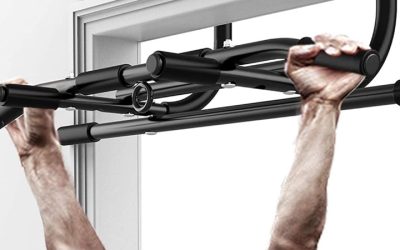
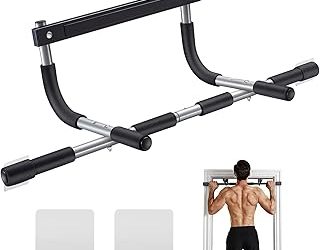
Cheap enough to buy on a whim, rated to 440 lb, and offering several grip positions, this covers dead hangs, negatives, and eventually weighted reps. Being able to take it down between sessions removes the psychological weight of a permanent installation.
Clearance is the catch for beginners. Mounted in a standard doorway there is often not enough room below the bar to stand in an assistance band comfortably, which is exactly the tool most useful in the first months.
Best for Assisted Reps: Pooboo Power Tower
Open space beneath the bar makes band-assisted pull-ups straightforward, and the 450 lb capacity plus adjustable height means the frame remains appropriate as you progress to weighted work. The dip station adds pressing volume that supports overall upper-body strength.
It stays where you put it. In a shared room, a permanent tower is a bigger commitment than the price alone suggests.
Best Complete Progression: Sunny Health Power Tower
Pull-ups, dips, and hanging knee raises in one frame gives you the three movements that build a strong upper body from a low starting point, with room underneath for band assistance throughout.
The fixed bar height suits average ceilings and average users; very tall trainees in low rooms will feel cramped at the top of the rep.
Best for Weighted Work: CAP Barbell Power Rack
Once you can do sets of ten, progress means adding load — and a rack gives you the bar for weighted pull-ups plus barbell rows and presses that build the same muscles. It is the natural home for someone past the beginner phase.
Assembly is a serious afternoon and the footprint is permanent. It is the right second purchase rather than the right first one.
Best for Building the Pattern: Mikolo Smith Machine
The lat pulldown station is what makes this interesting for someone who cannot yet do a pull-up: you train the identical movement at a controllable load and increase it weekly until your bodyweight is within reach.
It is a large, expensive machine to buy purely as a stepping stone. It makes sense if you want the whole gym, not just the bar.
Best Long-Term Frame: pooboo Power Cage
With a 2000 lb rating, LAT pulldown, and dual pulley crossover, this handles assisted pulldowns early and heavy weighted pull-ups later, all from one frame with safety bars for solo barbell training.
For someone working toward a first rep it is far more machine than the goal requires, and the ceiling height demand rules out many rooms.
Frequently Asked Questions
How do I get my first pull-up?
Combine three things: dead hangs for 20 to 30 seconds, band-assisted reps in the five-to-eight range, and slow negatives taking five seconds to lower. Three sessions a week for six to eight weeks gets most people there.
Are negatives really effective?
Yes — lowering under control builds the same muscles as the concentric with a higher tolerable load. Two or three sets of three to five negatives per session is plenty, since they are demanding to recover from.
When should I start adding weight?
Once you can perform three sets of eight to ten strict reps. Start with a 10 lb vest or dumbbell between the feet and progress in small jumps; elbows and shoulders need time to adapt.
Do chin-ups count?
They do, and they are easier because the biceps contribute more. Using chin-ups to build volume while working toward pull-ups is a sensible strategy rather than a shortcut.
Final Thoughts
For anyone starting from zero, the Sunny Health Power Tower offers the best combination of band-assistance clearance and complementary stations, while the Ally Peaks Doorway Bar remains the cheapest way to begin if your space rules out a frame. Lifters already doing sets of ten should skip ahead to the CAP Barbell Power Rack, where weighted progression is straightforward.

Write Your Review
No reviews yet. Be the first to share your experience!