
Key takeaways
- Item Dimensions L x W x H: 6.5"L x 12"W x 6.5"H
- Maximum Weight Recommendation: 440 Pounds
- Material: Plastic, Rubber, Stainless Steel
An ab wheel costs less than two months of most gym memberships and stores in the space a pair of running shoes takes up, which is why it has outlived nearly every fitness gadget trend since the 1980s. The mechanics are unglamorous: you kneel, you roll out, and the entire front of your torso fights to stop your lumbar spine from sagging into a hammock. Electromyography studies comparing core exercises consistently place the rollout near the top for rectus abdominis and external oblique recruitment — well above the standard crunch — and anyone who has attempted ten honest reps understands why. It is an anti-extension plank that happens to travel.
The catch is that not every wheel delivers that stimulus cleanly. Loose bearings stutter mid-rep, skinny handles torque the wrists, and narrow hard-plastic wheels carve tracks into carpet instead of gliding over it. I evaluated these picks on wheel width and tread material, bearing smoothness under load, handle diameter and grip texture, stated weight capacity, and whether the unit tracks straight when your arms start shaking at rep eight. What follows ranges from a spring-assisted premium model to a sub-$30 workhorse that has quietly become the default recommendation in most home-gym threads.
Our top picks
 VINSGUIR Ab Roller Wheel
- Item Dimensions L x W x H: 6.5"L x 12"W x 6.5"H
- Maximum Weight Recommendation: 440 Pounds
- Material: Plastic, Rubber, Stainless Steel
 Abiarst Ab Roller Wheel
- Item Dimensions L x W x H: 6.5"L x 12"W x 6.5"H
- Maximum Weight Recommendation: 226 Kilograms
- Material: Stainless Steel Plastic Rubber
 2026 Upgraded Ab Roller Wheel with Knee
- Item Dimensions L x W x H: 9.84"L x 4.13"W x 18.11"H
- Maximum Weight Recommendation: 400 Pounds
| Product | Key specs | Amazon rating | |
|---|---|---|---|
| VINSGUIR Ab Roller Wheel | Item Dimensions L x W x H: 6.5"L x 12"W x 6.5"H Maximum Weight Recommendation: 440 Pounds Material: Plastic, Rubber, Stainless Steel | 4.6★ | Check price |
| Abiarst Ab Roller Wheel | Item Dimensions L x W x H: 6.5"L x 12"W x 6.5"H Maximum Weight Recommendation: 226 Kilograms Material: Stainless Steel Plastic Rubber | 4.6★ | Check price |
| 2026 Upgraded Ab Roller Wheel with Knee | Item Dimensions L x W x H: 9.84"L x 4.13"W x 18.11"H Maximum Weight Recommendation: 400 Pounds | 4.3★ | Check price |
 Vinsguir Ab Roller Wheel Vinsguir Ab Roller Wheel | Item Dimensions L x W x H: 7"L x 11"W x 7"H Maximum Weight Recommendation: 300 Pounds Material: Alloy Steel | – | Check price |
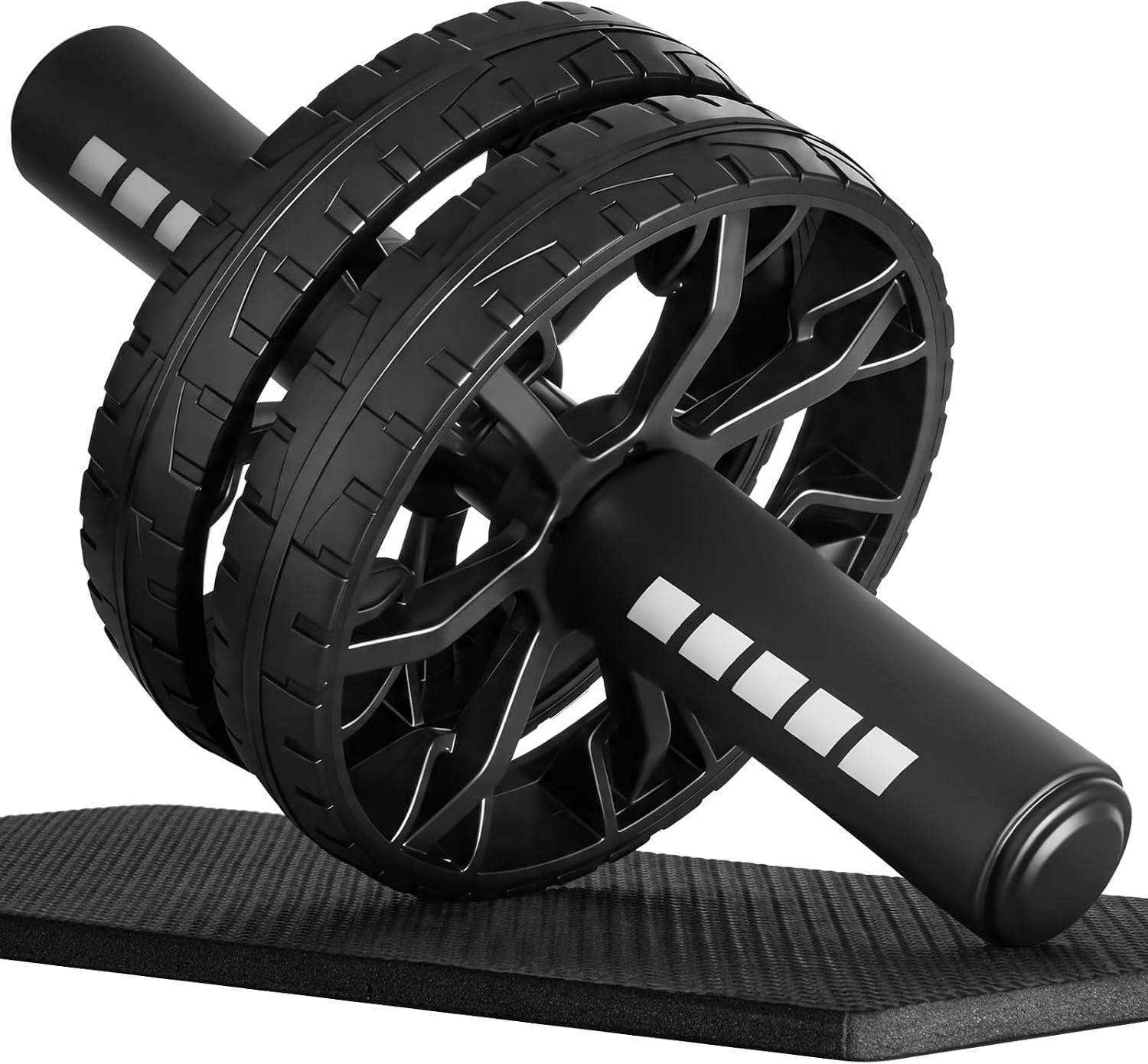 Upgraded Ab Roller Wheel Upgraded Ab Roller Wheel | Tension Supported: Abdominal Core Workout Equipment Item Dimensions L x W x H: 11.8"L x 2.76"W x 6.1"H Maximum Weight Recommendation: 500 Pounds | 4.6★ | Check price |
 2026 Upgraded Ab Roller Wheel with Knee 2026 Upgraded Ab Roller Wheel with Knee | – | Check price | |
 Perfect Fitness Ab Carver Roller Wheel With Perfect Fitness Ab Carver Roller Wheel With | Item Dimensions L x W x H: 16"L x 8"W x 9"H Maximum Weight Recommendation: 4.6 Pounds Material: Carbon Steel | 4.6★ | Check price |
 Ab Roller Wheel Ab Roller Wheel | Amps up Your Ab Workout: With its uniquely… Sturdy & Durable: The ab roller for abs… Perfect for Home Gyms: Beyond core strengthening, the… | 4.6★ | Check price |
As an Amazon Associate we earn from qualifying purchases at no extra cost to you. Ratings are shown as listed on Amazon.
As an Amazon Associate we earn from qualifying purchases.
Quick Comparison
| Model | Wheel Design | Best For | Standout Feature |
|---|---|---|---|
| Perfect Fitness Ab Carver Pro | Single wide contoured wheel | Best overall | Internal carbon spring assists the return |
| Vinsguir Ab Roller Wheel | Single wide rubberized wheel | Best value | Thick knee pad included, ~440 lb rating |
| Elite Sportz Equipment Ab Wheel | Dual-track wheel | Beginners and stability | Broad footprint resists side-to-side wobble |
| Live Infinitely Ab Roller Set | Single wheel plus accessories | Full home-core kit | Bundled bands and mat for progressions |
| Valeo Ab Roller Wheel | Compact dual wheel | Travel and small spaces | Splits down for a gym bag |
How to Choose
- Wheel width and tread. Anything under about three inches wide behaves like a unicycle. Wide rubberized treads track straighter, roll over carpet nap, and spare hardwood from scuffing.
- Bearing quality. Sealed steel bearings should spin silently for several seconds after a flick. Bushings and unsealed bearings grind once dust and sweat get in, and that hitch shows up exactly when you’re at full extension.
- Handle diameter and grip. Look for roughly 1.25 to 1.5 inches of diameter with foam or knurled rubber. Angled or ergonomic grips take pressure off the wrist extensors, which matters more than most buyers expect on longer sets.
- Load rating and frame. A steel axle with a 400-pound-plus rating isn’t marketing fluff — rollouts load the wheel dynamically, and plastic axles are the single most common failure point in budget units.
- Accessories you’ll actually use. A dense knee pad earns its keep immediately. Resistance bands and push-up bars are nice, but don’t pay a premium for a bundle if the wheel itself is the weak link.
Top Picks Reviewed
Perfect Fitness Ab Carver Pro — Best Overall
The Carver Pro’s contoured wheel is its real trick: the tread is domed rather than flat, so tilting your hands lets you roll on an arc and bias one oblique at a time. Inside the axle sits a carbon steel spring that stores a little energy at extension and gives you back roughly the last few degrees of the return, which is the difference between finishing a set and collapsing onto your forearms. The wheel is wide enough to stay planted on low-pile carpet, and the wrist-friendly angled grips are the most comfortable in this group. It costs two to three times what a basic wheel does, and it’s worth it if you plan to keep rolling for years.
Vinsguir Ab Roller Wheel — Best Value
This is the wheel I recommend when someone wants to know whether they even like rollouts. The tread is a wide rubber compound that rolls quietly on tile and laminate, the sealed bearing is smooth out of the box, and the steel core is rated around 440 pounds. The included knee pad is thicker than the flimsy foam strips most competitors ship. Grips are straight foam rather than ergonomically angled, so wrist comfort is merely fine rather than excellent — but at this price the ratio of performance to cost is hard to argue with. Assembly takes about ninety seconds with no tools beyond your hands.
Elite Sportz Equipment Ab Wheel — Best for Beginners
Instead of one wide wheel, this uses a dual-track design that spreads contact across a broader base. The practical result is that it barely wobbles laterally, which is precisely what new users struggle with — most beginners lose the rep sideways before they lose it forward. That stability makes it easier to learn a braced, ribs-down position without the wheel wandering. The tradeoff is less freedom for oblique-biased arcing once you’re advanced. Build quality is solid, the grips are comfortably padded, and the unit rolls smoothly on both hard floors and short carpet.
Live Infinitely Ab Roller Wheel Set — Best Complete Kit
Buy this one if the wheel is meant to anchor a broader floor routine rather than stand alone. The set pairs a wide-tread roller with resistance bands, a knee mat, and push-up handles, which covers the ramp-up work most people need before full kneeling rollouts are realistic — banded dead bugs, planks, and partial-range reps. The core wheel is competent rather than remarkable: smooth bearing, decent grips, adequate width. The value is in having every regression and accessory in one box instead of ordering three items and hoping they arrive the same week.
Valeo Ab Roller Wheel — Best Compact Pick
The Valeo is deliberately minimal — a compact dual-wheel head, molded foam grips, and a bar that separates for storage. It disappears into a suitcase or a desk drawer, which makes it the practical choice for travelers or anyone training in a studio apartment. The narrower wheels prefer hard flooring; on thick carpet they bog down noticeably. Bearings are adequate rather than glassy, and there is no knee pad, so plan on using a folded towel or yoga mat. For portability at a low price, it does exactly what it promises and nothing more.
Frequently Asked Questions
Will an ab roller hurt my lower back?
It shouldn’t, but it will if you let your hips drift ahead of your shoulders and your lumbar spine extends. The safe pattern is a tucked pelvis, ribs pulled down, and glutes lightly squeezed for the entire rollout. Start with a range you can control — often only twelve to eighteen inches — and expand it as your bracing holds. If you feel it in your low back rather than your abs, you’ve rolled past your current limit.
How often should I train with one?
Two or three sessions weekly is plenty for most people. Rollouts are a high-tension, eccentric-heavy movement, and the abdominal wall responds to progressive load the way any other muscle does, including the need for recovery. Three to four sets of five to twelve controlled reps beats daily high-rep grinding.
Should I be doing standing rollouts?
Eventually, maybe — standing rollouts from the toes demand extraordinary anti-extension strength and shoulder stability, and attempting them early is how people end up with strained backs. Master full-range kneeling reps, then progress by elevating your hands slightly less, not by jumping straight to standing.
Can a wheel flatten my stomach?
It builds and thickens the muscle underneath, which improves posture, trunk stiffness for lifting, and how your midsection looks once body fat drops. Visibility itself is governed by nutrition and overall energy balance. Treat the roller as strength work, not a fat-loss tool.
Final Thoughts
Most people are best served by the Perfect Fitness Ab Carver Pro if they want one purchase that keeps working as they get stronger, or the Vinsguir if they’d rather spend under thirty dollars to find out how they feel about rollouts in the first place. Beginners who struggle with wobble should take the Elite Sportz dual-track, and frequent travelers will appreciate how completely the Valeo disappears into a bag. Whichever you pick, the equipment is not the variable that determines results — consistent, controlled reps with your ribs down and your pelvis tucked will do more for your midsection than any feature on a spec sheet.
Best Affordable Yoga Mat: 6 Picks Ranked by Cost Per Year
Best affordable yoga mat is a question of arithmetic rather than taste....
8 Best Rated Ab Rollers: 6 Wheels Compared for Home Workouts
An ab wheel makes two sounds, and in an apartment both of...
Best In House Pull Up Bar: 6 Picks for Small Home Setups
Small rooms have no visual slack. In a large open living space...
Best At Home Pull Up Bar: 6 Picks for Renters and Owners
In a shared apartment, gym equipment is a negotiation. A bar wedged...
Best Home Pull-Up Bar: 7 Top Picks for Doorways & Walls
There is a version of this decision that has nothing to do...
8 Best Abs Workout at Home Without Equipment: Kit Optional
Best abs workout at home without equipment is a genuine category rather...
8 Best Pull Up Bars for Doorway Frames: Measure Before You Buy
In an apartment, a pull-up bar is an acoustic decision as much...
8 Best Door Pull Up Bar Picks Rateds on Fit and Frame Safety
A doorway pull-up bar lives or dies on one detail nobody...
8 Best Pull Up Bars: Top Picks Reviewed (2026)
Most people who buy a pull-up bar cannot do a pull-up. That...
8 Best Foam Rollers: Top Picks Reviewed (2026)
A foam roller is the rare piece of fitness gear that...
Write Your Review
No reviews yet. Be the first to share your experience!