
Key takeaways
- Warranty Description: 2 Year
- Tension Supported: 264 lb
- Strap Type: Cable/Pulley straps
A spare bedroom that measures 9 by 10 feet sounds like plenty of space until you set a bench in the middle of it and try to press a dumbbell overhead without knocking the lampshade off the nightstand. That gap between floor area and usable training space is where most home gym plans quietly fail. The equipment fits; the movement doesn’t. A bench occupies about 4 square feet on paper and closer to 30 once you account for the arc of your elbows, the room you need to load a bar, and the walking lane you still want between the door and the closet.
The six picks below are chosen on that basis: each one either folds, stacks, hangs, or replaces three other things. None of them require bolting into a joist, and all of them work in a room that also has to serve as an office, a nursery, or a place guests sleep twice a year. The order is deliberate — if you buy only the first two, you can already train every major muscle group with real load.
Our top picks
 Mikolo Smith Machine with Weight Stack
- Warranty Description: 2 Year
- Tension Supported: 264 lb
- Strap Type: Cable/Pulley straps
Dual 128-pound stacks let two people train at the same time
Combines power rack, lat pulldown, and cable crossover in one footprint
Machine is backed by a 2-year warranty
Dual steel uprights and stacks take up real floor space
Bundled bench and cable attachments need assembly before use
 NICEPEOPLE Adjustable Weight Bench for Home Gym
- Item Dimensions D x W x H: 46"D x 16.7"W x 17.2"H
- Material: Superior Alloy Steel
| Product | Key specs | |
|---|---|---|
| Mikolo Smith Machine with Weight Stack | Warranty Description: 2 Year Tension Supported: 264 lb Strap Type: Cable/Pulley straps | Check price |
| NICEPEOPLE Adjustable Weight Bench for Home Gym | Item Dimensions D x W x H: 46"D x 16.7"W x 17.2"H Material: Superior Alloy Steel | Check price |
 Ropeless Battle Ropes for Home Gym Ropeless Battle Ropes for Home Gym | Check price | |
 XT Trainer XT Trainer | Check price | |
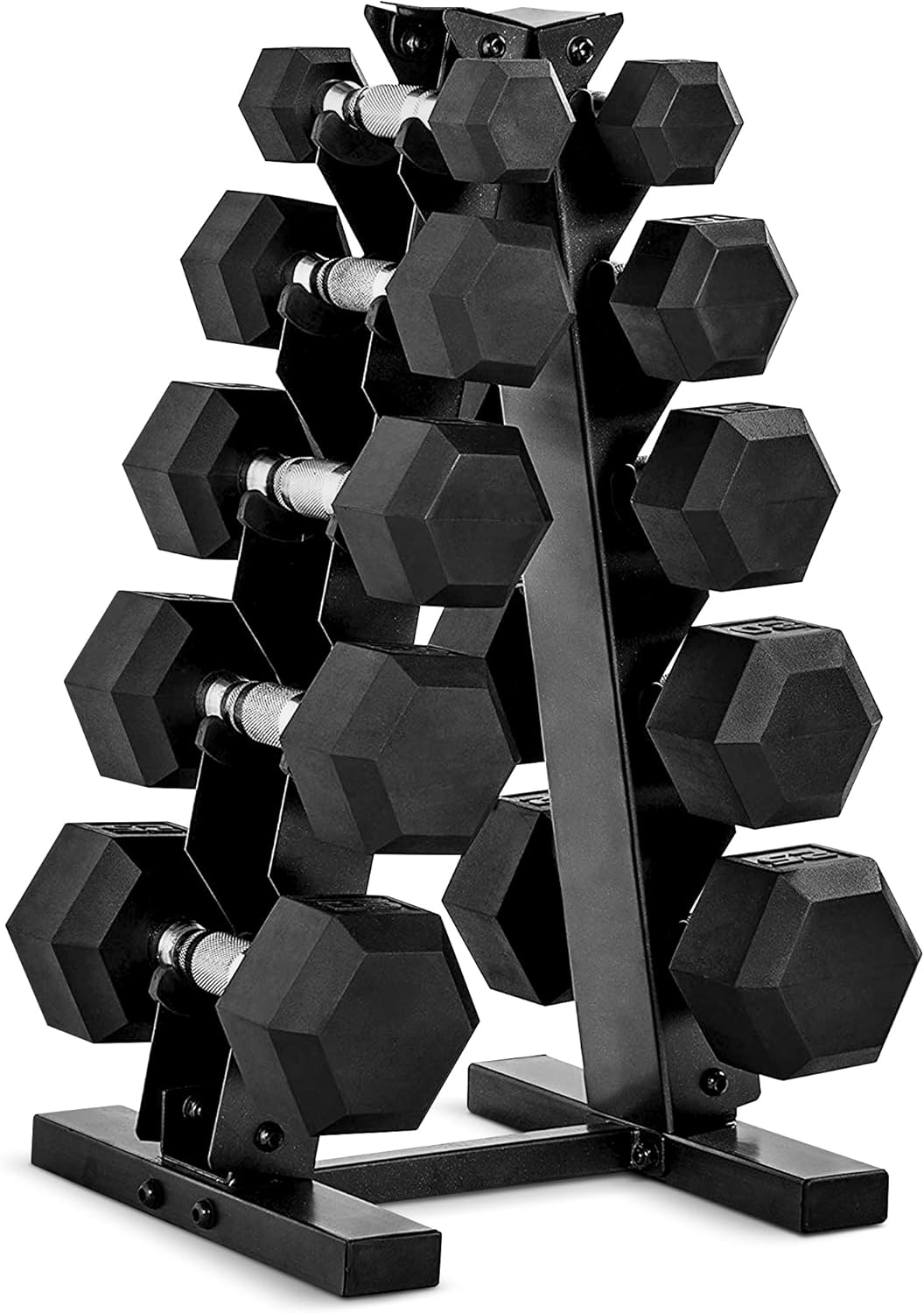 CAP Rubber Coated Hex Dumbbell Set with CAP Rubber Coated Hex Dumbbell Set with | Frame Type: A-Frame Material: Metal Item Dimensions D x W x H: 12.8"D x 14.37"W x 25.98"H | Check price |
 18 Pcs EVA Foam Floor Tiles 18 Pcs EVA Foam Floor Tiles | Check price | |
 SincMill Home Gym Multifunctional Full Body Workout SincMill Home Gym Multifunctional Full Body Workout | Warranty Description: 10 Years Tension Supported: 148 pounds Handle Type: Pulldown, Strap | Check price |
 MQRW Push Up Board MQRW Push Up Board | Maximum Weight Recommendation: 600 Pounds Warranty Type: Push up board Assembly Instructions Description: No assembly required | Check price |
As an Amazon Associate we earn from qualifying purchases at no extra cost to you.
As an Amazon Associate we earn from qualifying purchases.

Quick Comparison
| Pick | Best for | Stowed footprint | Typical price band |
|---|---|---|---|
| Dial-style adjustable dumbbells | Replacing an entire rack | Two cradles, roughly 2 ft × 1 ft | $$$ |
| Folding flat-to-incline bench | Pressing, rows, step-ups | Upright against a wall, ~1 ft deep | $$ |
| Doorway pull-up bar | Vertical pulling with zero install | Hangs on the frame or lifts off | $ |
| Suspension trainer | Rows, single-leg work, travel | Fits in a shoebox | $ |
| Folding magnetic exercise bike | Quiet cardio and warm-ups | Folds to roughly 1.5 ft × 2 ft | $$ |
| Interlocking rubber floor tiles | Protecting floors, damping noise | Stacks flat in a closet | $ |
How to Choose
- Measure the working envelope, not the product. Add three feet on every side you’ll move through. A bench pushed against a wall is a bench you can’t row from.
- Check your ceiling before buying anything overhead. Standing press and jump rope both want about 8 feet of clearance, and a doorway bar puts your head near the frame. An 84-inch basement ceiling rules out several categories entirely.
- Spread load across the floor. Concentrated weight on hardwood or a laminate seam dents it permanently. Tiles or a horse-stall mat under the bench solve this for less than the cost of one refinished board.
- Favor adjustable over plentiful. One pair of dumbbells covering 5 to 50 pounds per hand removes fifteen separate objects from the room. Adjustability is the whole small-space strategy in one sentence.
- Weigh noise the way your neighbors do. Magnetic resistance is nearly silent; belt-driven fans and dropped weights are not. If you share a wall or a ceiling, buy the quieter mechanism even if it costs more.
Top Picks Reviewed
1. Dial-Style Adjustable Dumbbells
The single highest-leverage purchase for a small room. Turning a dial to jump from 15 to 40 pounds takes about four seconds and replaces a rack that would eat an entire wall. The tradeoffs are real and worth knowing: the handles are longer than fixed dumbbells, which feels awkward on close-grip work, and most designs should not be dropped. Look for a range that tops out above your current heaviest press with headroom to grow, and confirm the cradles sit low enough that you can pick the weights up from the floor rather than a shelf.
2. Folding Flat-to-Incline Bench
A bench turns dumbbells from an accessory into a full program — pressing, supported rows, hip thrusts, split squats. The folding kind stands upright in a closet or behind a door and takes maybe 12 inches of depth. Prioritize a stable four-post base over a flashy adjustment range, and check the pad gap at the seat-to-back junction, since a wide gap digs into your spine on heavy incline sets. A rated capacity of at least 600 pounds gives you a margin that doesn’t wobble under load.
3. Doorway Pull-Up Bar
Nothing else trains vertical pulling with this little commitment. The leverage-mount style hooks over the trim and tightens against the frame, so there are no holes and no landlord conversation. Two cautions: inspect your door trim first, because thin decorative molding can crack, and use the padded contact points that come in the box. If your frame is questionable, a doorway-mounted band anchor plus a suspension trainer covers similar movement patterns at lower risk.
4. Suspension Trainer
Two straps and a door anchor give you inverted rows, chest presses, hamstring curls, and assisted single-leg squats from something that stores in a drawer. Load scales by changing your foot position rather than adding plates, which makes it genuinely useful for beginners and for anyone training in a hotel room. The limitation is honest: past a certain strength level, bodyweight rows stop being challenging. Until then it’s the best value per cubic inch in this list.
5. Folding Magnetic Exercise Bike
Treadmills need a long run of floor and a lot of ceiling; a folding bike needs a corner. Magnetic resistance is quiet enough for an apartment at seven in the morning, and the fold mechanism drops the footprint to roughly the size of a bedside table. Check the seat post adjustment range against your inseam before ordering — undersized frames are the most common complaint — and look for a flywheel heavy enough to keep the pedal stroke smooth rather than choppy.
6. Interlocking Rubber Floor Tiles
The least exciting purchase and the one you’ll appreciate most. Half-inch tiles protect the subfloor, cut impact noise for anyone below you, and give your bench a non-sliding base. They lift out in sections when the room goes back to being a guest room. Rubber outperforms foam here: foam compresses under a bench leg and tears. Cover the training zone plus a foot in each direction rather than the whole floor.
Frequently Asked Questions
How much space do I actually need?
A clear rectangle of about 6 by 6 feet handles dumbbell work, bench pressing, and suspension training. Add a corner for cardio. You can train in less, but you’ll spend time shuffling equipment between sets, and that friction is what stops people from showing up.
Should I buy a squat rack instead of a bench?
In a small room, usually not. A rack plus barbell plus plates needs 7 feet of width, ceiling clearance, and permanent floor space. Heavy dumbbells cover squats, presses, and rows well enough that most people should exhaust that path first.
Do I need to worry about my floor if I train upstairs?
Yes, on two fronts. Dents come from concentrated point loads, which tiles fix. Noise travels through the structure, which tiles only partly fix — so lower weights rather than dropping them, and skip plyometrics if the room sits above someone’s bedroom.
What order should I buy things in?
Bands or a suspension trainer first if you’re starting out, since they’re cheap and reveal what you’ll actually use. Then adjustable dumbbells, then the bench, then flooring, then cardio. Buying the expensive item first is how gear ends up on the secondhand market.
Final Thoughts
Small-room training rewards restraint more than budget. A pair of adjustable dumbbells, a folding bench, and a patch of rubber tiles will out-train a garage full of single-purpose machines, mostly because the setup takes under a minute and you’ll keep using it. Buy the two or three pieces that let you press, pull, and hinge with real load, live with them for a couple of months, and let the gaps in your training tell you what to add next. The equipment that stays useful is the equipment that never made the room feel unusable.
Best Portable Jump Starters: 10 Car Battery Boosters Compared by Engine Size and Extras
Best portable jump starters compared: 10 listings with stated engine sizes, air compressor combos, safety checks, a worked sizing example and use-case picks.
Best Squat Racks for Home Gyms and Small Spaces
Best Squat Racks for Home Gyms and Small Spaces The best squat...
Best Functional Trainer Machines for Home Gyms
The best functional trainer machines for most home gyms are dual-adjustable cable...
8 Best Gym Mats for Home: Rubber vs Foam Picks for Any Floor
Best gym mat for home choices come down to material density and...
8 Best Rowers for Home Gym: Air, Magnetic and Water Compared
Best rowers for home gym shortlists usually collapse once someone measures the...
8 Best Weight Home Gyms: 6 All-in-One Machines for Small Rooms
Best weight home gym decisions come down to two numbers before brand...
8 Best Home Gym Equipment for Beginners: The Starter Setup
Best home gym equipment for beginners is not a machine – it...
Best Treadmills for Home Gym: 5 Picks by Deck and Motor
Best treadmills for home gym decisions come down to two specifications and...
8 Best Home Gym Compact Setups: 6 Space-Saving Picks Ranked
Best home gym compact claims usually quote a stored footprint and stay...
Best Adjustable Bench for Home Gym: 5 Picks Ranked by Use
Best adjustable bench for home gym decisions turn on three numbers most...
Write Your Review
No reviews yet. Be the first to share your experience!