
Key takeaways
- Warranty Description: 1 year
- Tension Supported: 150LBS
- Item Dimensions D x W x H: 74.8"D x 38.5"W x 79.9"H
Run the arithmetic before you run the circuit. A mid-tier gym membership at $45 a month costs $1,620 over three years, and that is before parking, fuel, or the twenty minutes each way you will never get back. A multi-station home gym with a 150 lb stack sits in a fraction of that range as a one-time outlay, holds a modest resale value, and never raises its price in January. The catch is that the savings only materialise if you actually use it — an unused machine has an infinite cost per session.
So the useful question is not “what is the cheapest home gym,” it is “which machine will still be earning its purchase price in year three.” That points toward stack weight you will not outgrow, cables and pulleys that survive daily use, and a layout that makes a 40-minute session frictionless. The six options below are assessed on exactly that basis, from compact 150 lb stations to a 200 lb configurable frame and a folding bench for people who already own dumbbells.
Our top picks
 JELENS Home Gym
- Warranty Description: 1 year
- Tension Supported: 150LBS
- Item Dimensions D x W x H: 74.8"D x 38.5"W x 79.9"H
 Mikolo Home Gym
- Tension Supported: Weight Stack 154lbs (12 Levels)
- Item Dimensions D x W x H: 75"D x 36.3"W x 80"H
- Maximum Weight Recommendation: 300 Pounds
 SincMill Home Gym Multifunctional Full Body Workout
- Warranty Description: 10 Years
- Tension Supported: 148 pounds
- Handle Type: Pulldown, Strap
| Product | Key specs | Amazon rating | |
|---|---|---|---|
| JELENS Home Gym | Warranty Description: 1 year Tension Supported: 150LBS Item Dimensions D x W x H: 74.8"D x 38.5"W x 79.9"H | 4.1★ | Check price |
| Mikolo Home Gym | Tension Supported: Weight Stack 154lbs (12 Levels) Item Dimensions D x W x H: 75"D x 36.3"W x 80"H Maximum Weight Recommendation: 300 Pounds | 4.5★ | Check price |
| SincMill Home Gym Multifunctional Full Body Workout | Warranty Description: 10 Years Tension Supported: 148 pounds Handle Type: Pulldown, Strap | 4.5★ | Check price |
 Marcy Multifunctional Workout Station 100lbs to 200lbs Marcy Multifunctional Workout Station 100lbs to 200lbs | This home gym system is made with heavy-duty… This gear comes with a 150-pound selectorized weight… Designed with dual action press arms, this versatile… | 4.4★ | Check price |
 XGSW Multi-Function Home Gym Workout Station XGSW Multi-Function Home Gym Workout Station | Material: steels Tension Level: Heavy Duty (> 300 lbs) | 4.8★ | Check price |
 YOLEO Adjustable Weight Bench for Home Gym YOLEO Adjustable Weight Bench for Home Gym | Item Dimensions D x W x H: 41"D x 12.6"W x 42.5"H Material: Alloy Steel | 4.6★ | Check price |
 SunHome Multifunction Home Gym Equipment Workout Station SunHome Multifunction Home Gym Equipment Workout Station | Warranty Description: 2 Year Tension Supported: 138 pounds Handle Type: Fixed Handle | 4.6★ | Check price |
 MQRW Push Up Board MQRW Push Up Board | Maximum Weight Recommendation: 600 Pounds Warranty Type: Push up board Assembly Instructions Description: No assembly required | 4.5★ | Check price |
As an Amazon Associate we earn from qualifying purchases at no extra cost to you. Ratings are shown as listed on Amazon.
Quick Comparison
| Product | Best For | Standout Feature | Watch Out For |
|---|---|---|---|
| JELENS H11 Home Gym | First serious purchase | 150 lb stack in a small frame | Slow cable assembly |
| Mikolo Home Gym Station | Best value per station | 152 lb stack, four-plus stations | Large clearance needs |
| SincMill Home Gym | Lowest-fuss option | Simple, quick-to-learn layout | Limited add-on potential |
| Marcy Workout Station | Longest useful life | Stack options to 200 lb | Heavy and bulky |
| XGSW Multi-Function Gym | Arm and leg specialisation | Pulley plus dedicated trainers | Slower station changes |
| YOLEO Adjustable Bench | Smallest budget | 827 lb rating, mostly pre-built | Weights sold separately |
How to Choose
- Cost per session, not sticker price: Divide the purchase by 150 sessions a year over three years. A machine at three times the price of another is cheaper per session if it survives twice as long and you enjoy using it.
- Buy your future strength: The most expensive mistake is a stack you outgrow in a year. Pulling movements outpace pressing, so if you are already rowing meaningful weight, start at the 200 lb end of the range.
- Check spare parts availability: Cables, pulleys, and pop pins are consumables. Brands with a long track record and a parts line — Marcy is the obvious example — cost less to keep running than an unbranded frame with no support.
- Count what you will not need to buy: A station with a built-in leg developer, preacher pad, and pulldown saves you three separate purchases. Add those up before declaring a cheaper machine the better deal.
- Factor in your own honesty: If you have abandoned two home workout purchases already, start with a folding bench and dumbbells. A hundred-dollar experiment beats a thousand-dollar clothes rack.
Top Picks Reviewed
Best Value Overall: Mikolo Home Gym Station
On a per-station basis this is the strongest deal in the group. One 152 lb stack drives a pulldown, seated row, chest press, and leg extension, which covers the four movements most home programmes are built around. The cable action is smooth enough that you are not fighting the machine mid-set.
It demands real space to deliver that value. You need clearance behind the stack and in front of the seat, so if you are squeezing it into a room that also stores things, you may end up not using half the stations.
Best Entry Point: JELENS H11 Home Gym
The H11 gets you into guided resistance training with a 150 lb stack and a footprint that fits a bedroom corner. For someone leaving a gym membership behind, it recovers its cost inside a couple of years and needs no ongoing subscription.
Assembly eats an afternoon, mostly in cable routing, and the cables want a tension check after the first few weeks. Budget the time honestly so the box does not sit unopened.
Best Long-Term Buy: Marcy Workout Station
If you intend to train seriously for years, the 100 to 200 lb configurations make this the cheapest option measured across a decade. Marcy has supported this category long enough that replacement cables and pins are findable, which quietly matters more than any spec on the box.
The trade-off is bulk and weight. It is the least portable machine here and the hardest to reposition once built, so commit to a location before you start assembling.
Best for Focused Arm Work: XGSW Multi-Function Gym
The dedicated arm trainer and leg trainer plus a pulley system deliver clean isolation angles that cheaper combo machines approximate badly. For anyone whose goals lean toward arm development or controlled rehab work, that specificity is where the money goes.
Switching between the pulley and the attachment arms takes a couple of minutes, which drags on a circuit-style session. Group your exercises by station to work around it.
Best Simple Machine: SincMill Home Gym
Fewer stations, less to adjust, faster to learn. For a straightforward push-pull routine three or four times a week, the SincMill removes the decision fatigue that makes people skip sessions, and there is less hardware to loosen over time.
It does cap your options. With limited anchor points, expanding into cable variations later means buying separate accessories rather than bolting them on, so factor that into the lifetime cost.
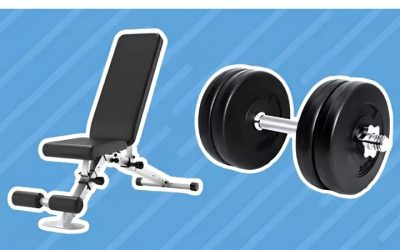
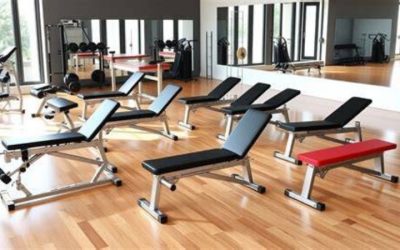
Best Budget Route: YOLEO Adjustable Bench
Rated to 827 lb under ASTM testing and shipping 98% assembled, this bench costs a fraction of any station here and unlocks incline pressing, supported rows, and step-ups the moment you own dumbbells. Folded away, it costs you nothing in floor space either.
The honest limitation is that the real expense moves to the weights. A decent adjustable dumbbell pair often costs more than the bench, so plan the total, not just the first purchase.
Frequently Asked Questions
Does a home gym machine actually save money versus a membership?
Typically yes within 18 to 30 months, assuming consistent use. The break-even shifts if you were paying for classes or a pool you genuinely used, since a stack machine replaces neither.
What wears out first on these machines?
Cables and pulley bushings, followed by upholstery seams. None are expensive to replace, but availability varies sharply by brand, which is worth checking before purchase rather than after a cable frays.
Can I resell a home gym later?
Used stack machines sell locally at a meaningful fraction of retail because buyers avoid shipping costs. Keep the manual and hardware bag; a machine that can be dismantled and rebuilt is far easier to sell than one that cannot.
Is 150 lb enough weight to build muscle?
For most people, yes — hypertrophy responds to effort near failure across a wide load range, and cable resistance feels heavier than the same number on a barbell. Strong pullers will find rows and pulldowns limiting first.
Final Thoughts
Measured on cost per session, the Mikolo Home Gym Station is the best all-round buy for anyone with the room, while the Marcy Workout Station is the smarter long-game purchase if you expect your strength to keep climbing. If money is tight or your consistency is unproven, start with the YOLEO Adjustable Bench and a dumbbell pair, then upgrade once the habit is real.

Write Your Review
No reviews yet. Be the first to share your experience!