Key takeaways
- Separate spare and daily key sets with private reference codes, authorized handover records and a return check without address labels.
What's inside
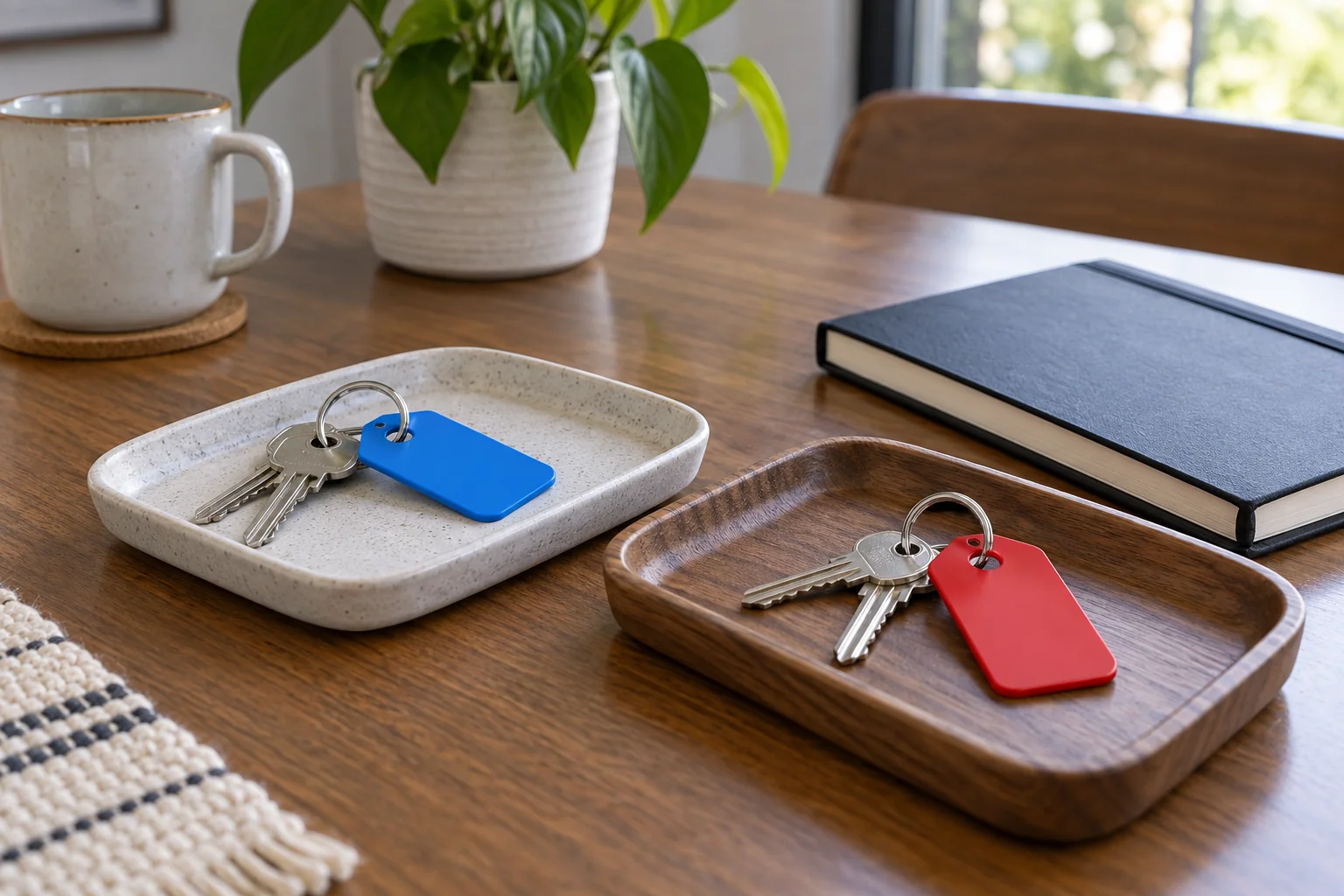
Keep spare keys separate from the keys used every day, label them with a private reference code rather than an address, and record who currently holds each authorized spare. The useful distinction is between a key that should be ready for a planned handover and a daily key that returns to its normal place after every trip.
A small inventory helps prevent lending the wrong key, forgetting a return or accumulating unidentified copies. It is an organizing record, not a substitute for appropriate locks, secure storage or a building’s rules about access.
Start with a known set, not every key in the drawer
Gather only keys you own or are authorized to manage. Separate known active keys from unknown, obsolete and borrowed keys. Do not assume that two matching-looking blanks open the same door, and do not test unidentified keys in doors you are not authorized to access.
Ask the responsible household member to identify a key while its purpose is still known. If identification remains uncertain, put it in a clearly separated “unconfirmed” group. Do not quietly add it to the usable spare set just because it resembles another key.
West Yorkshire Police’s home-protection guidance advises against putting an address on a key tag, recommends entrusting spares only to trusted people, and warns against obvious outdoor hiding places such as flowerpots or doormats. It also advises keeping keys out of reach of windows and letterboxes. Those limits should shape the organizer’s location and labels.
Use separate identities for daily and spare sets
Assign each physical set a short code such as K03. Keep the detailed meaning in a separate private record accessible to the people authorized to use it. Avoid putting a full address, unit number and access instructions on the same tag as the key. A color or tactile tag can help household members distinguish sets without revealing their purpose to everyone who sees them.
Give the daily set and spare set different identifiers even when they open the same door. Otherwise a note saying “key returned” cannot tell you which copy came back. If a set contains several keys, record their count so a missing small key is noticeable.
Choose a secure indoor storage arrangement that suits the household. A tray can sort keys during inventory, but an exposed entryway tray is not automatically a suitable permanent place for spares. Keep the private index separate from the physical keys and avoid including detailed key-cut photographs in shared folders.
Build a handover record with a return step
| Field | Example format | Check |
|---|---|---|
| Set ID | K03 | Matches the tag |
| Authorized purpose | Private description in this record | Not printed as an address on the tag |
| Key count | Two keys | Count before and after handover |
| Current holder | Authorized person | Consent and current arrangement confirmed |
| Handover | Date and agreed purpose | Recipient confirms receipt |
| Return plan | Agreed date or event | Responsible person named |
| Status | Stored, on loan, returned or unresolved | Updated when the physical state changes |
Keep only information needed to manage the keys. Do not put visitors’ identity documents or unrelated personal details into a household inventory. If several people can update the record, agree on one current version so a returned key does not remain marked as borrowed in another notebook.
A spare permanently entrusted to a relative is different from a short loan. Record that distinction explicitly. The absence of a return date should reflect an agreed arrangement rather than an unfinished task.
Worked example: separating two similar sets
In a fictional household, the daily set D01 and spare set K03 each contain two keys. K03 is handed to an authorized relative for a planned visit. The keeper records the handover and an agreed return on Sunday. D01 continues returning to its usual daily storage location.
On Sunday, the relative returns one loose key. The count check shows that the full spare set has not been returned. The record remains “return incomplete” while the household resolves the missing item. It does not become “returned” merely because something metal was placed in the spare tray.
If the relative instead needs to retain the whole set for an ongoing arrangement, the keeper updates the purpose and holder after agreement. This example illustrates accountability, not a recommendation to give keys to a particular person or a guarantee against unauthorized copying.
Review changes without turning it into a daily chore
Update the record when a key is handed over, returned, replaced or reported missing. Review it when household membership or authorized access changes. Do not rely on a calendar reminder alone when the physical key has already changed hands.
For a lost key, uncertainty about copies or an access problem, contact the property’s responsible person or an appropriate locksmith instead of treating a tidier inventory as the solution. Follow rental or building procedures before ordering replacements. Keep unidentified and obsolete keys apart until their status is resolved.
Once the inventory is correct, the daily routine can stay simple: daily keys return to their assigned place; spares move only through the recorded handover process. Clear separation matters more than an elaborate wall display.