Key takeaways
- Create plant IDs, location notes and a shared observation log that separates checking moisture from watering and documents changes.
What's inside
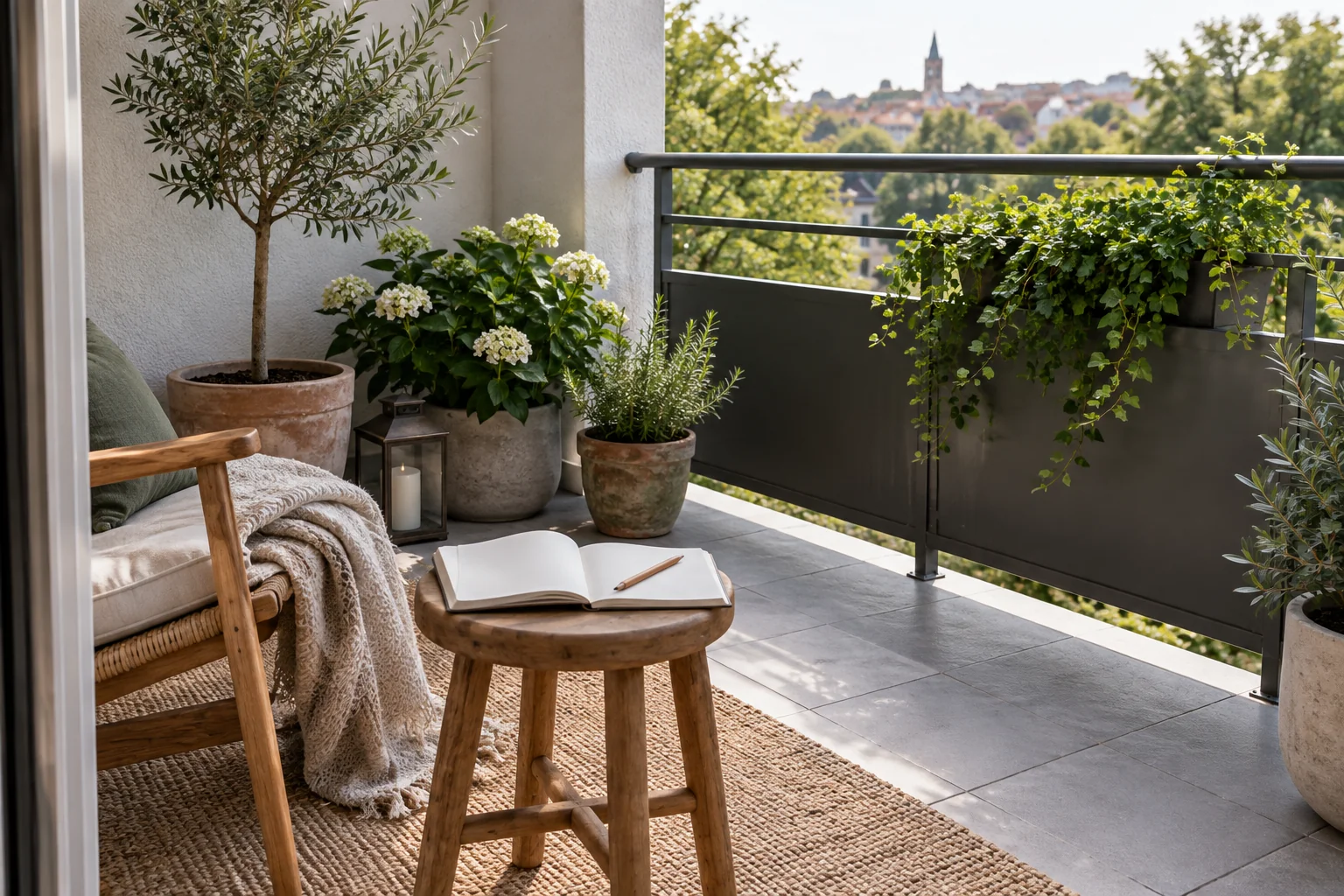
Organize balcony plant-care records around individual plants, their current containers and the conditions you observe. A useful record tells another household member what was checked and what was done. It should not turn an old watering interval into a permanent instruction after the season, pot or location changes.
You can use a notebook, a shared document or simple cards stored indoors. The important part is a consistent plant identifier and a short observation log. Start with the plants already present rather than building a complicated database that takes longer to maintain than the balcony itself.
Give each plant a stable identity
Assign a short identifier such as B01 and photograph the whole plant beside its nursery label. Record the botanical name and cultivar if known, purchase date, source and any supplied care instructions. If identification is uncertain, write that uncertainty down instead of filling the field with a guess from a similar-looking photograph.
Keep the identifier when the plant moves to a new pot. Describe the current container separately: material, approximate size, drainage arrangement, potting mix and repotting date. A new pot is a change in the plant’s history, not a reason to lose the previous observations.
Map locations in ordinary language
Use names a helper can recognize: “inside left corner by the door” or “middle shelf against the wall.” Avoid relying only on a compass direction if nobody remembers it. Add a small sketch and photograph showing the current positions, keeping exits and required access clear.
Observe when direct sun reaches each position and whether an overhang shelters it from rain. Record the date of the observation. A sunny winter afternoon and a summer afternoon do not necessarily describe the same exposure, especially with nearby buildings or changing shade.
Separate checking from watering
University of Maryland Extension’s container-gardening guidance advises checking moisture before watering rather than relying on a fixed schedule. It identifies container size and material, sun, wind, plant growth and weather as factors that affect drying. For vegetable and herb containers, this supports keeping an observation record instead of a universal daily dose.
In your log, “checked, still moist, no water added” is a complete entry. It prevents a second person from assuming the plant was forgotten. Record the check method described in the relevant plant guidance, and use the same description consistently. Do not treat a single wilted leaf as a diagnosis.
| Record field | Example entry | Why keep it? |
|---|---|---|
| Plant and location | B01, door-side pot | Identifies the exact plant |
| Date and conditions | Tuesday morning, windy since yesterday | Provides context for change |
| Observation | Moisture checked using plant’s care guidance | Separates evidence from assumptions |
| Action and person | No water added; initials | Prevents duplicate care |
| Follow-up | Check again after changed conditions | Sets a check, not an automatic dose |
If you measure the amount of water used, identify the container or jug used for that measurement. The amount is a historical observation. It is not automatically the correct amount next time or for the neighboring pot.
A worked handover for two household members
In this illustrative household, Alex and Sam share care of three balcony plants. Previously, Alex watered before work and Sam sometimes watered again after seeing dry-looking surface material. They introduce plant identifiers, a shared log and one named person responsible for each morning check.
On Monday, Alex records that B01 was checked and watered according to its care instructions, while B02 was checked and left alone. On Tuesday, Sam notices the wind has increased and records a new check rather than copying Monday’s actions. The record does not prescribe identical treatment for the two plants.
After a pot is moved behind a screen, they record the move and update the location photograph. They no longer compare its subsequent drying pattern with the old location without noting the change. The benefit is a clearer account of what happened, not a claim that recordkeeping guarantees healthy growth.
Keep product use and observations distinct
If a fertilizer or other plant-care product is used, save its label and record the exact product, date and application details actually followed. Do not convert a remembered capful into a measured dose. Follow the label and plant-specific guidance; the log is documentation rather than permission to mix products or increase an application.
Photograph a developing problem from the same angle and distance where practical. Note what is visible, such as leaf color or where damage appears, without labeling it a deficiency or pest before identification. A nursery or local extension adviser can use a dated sequence more effectively than an isolated description of a “sad plant.”
Make a short absence card
Before going away, give the helper the current plant map, the relevant care instructions, the last completed entries and a contact for questions. Mark which checks they are expected to make. Explain where water and ordinary supplies are kept and how to avoid runoff affecting neighbors or walkways.
Keep the handover brief enough to use on the balcony, with detailed labels and receipts available indoors. After returning, review what changed and archive the completed period. A small, current record is more useful than a large spreadsheet containing several contradictory instructions for the same pot.