Key takeaways
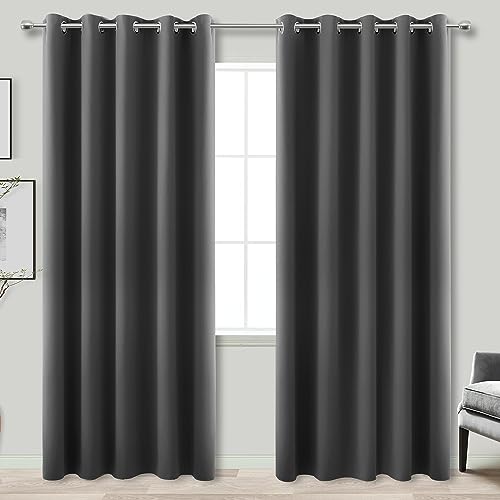
- Triple-weave polyester: a black yarn layer sandwiched between two colored layers. Blocks 95 to 100 percent of light and gives moderate sound softening. This is the most common budget-to-mid option and the KOUFALL 72 x 84 inch grey set at around $40 for two panels is a typical example of the extra-wide version.
- Linen-look blackout: a textured polyester face bonded to a blackout liner. The MIULEE 52 x 90 inch natural beige panel around $30 falls here. It looks softer and more residential but the sound benefit comes almost entirely from the liner, so it performs similarly to triple-weave of the same weight.
- Quilted acoustic or moving-blanket style: layers of cotton-poly batting stitched between woven faces. Far better at soaking up mid and high frequencies, but they look like what they are. Best for studios, garages, media rooms, and laundry areas.
Most people who buy “soundproof” curtains end up disappointed, and it is rarely the curtain’s fault. The usual mistakes: buying panels that are too narrow to overlap the wall, assuming a blackout curtain is automatically a sound-dampening curtain, hanging a heavy panel on a flimsy rod that sags within a week, or expecting a fabric panel to block a jackhammer. Fabric curtains do not soundproof a room. What they do well is absorb echo, soften high-frequency noise like voices and traffic hiss, and cut the sharp edge off outdoor sound when they are dense enough and hung correctly. This guide walks through what actually changes the result so you can spend your money where it matters.
Decide These 3 Things First
1. What noise are you fighting? High-frequency sound (voices, dogs barking, tire hiss) responds well to dense fabric. Low-frequency sound (bass from a neighbor, truck engines, HVAC rumble) barely notices a curtain. If your problem is low rumble, you will get more from sealing window gaps and adding a second glazing layer than from any curtain.
Our top picks


As an Amazon Associate we earn from qualifying purchases at no extra cost to you.
2. Living space or workspace? Bedroom and living room panels need to look like curtains: triple-weave polyester, linen-look blends, pleated headers. Studio or home-office panels can be industrial moving-blanket style, where a quilted cotton-polyester blanket with grommets, roughly 80 x 48 inches, sells for about $26 and absorbs echo better than most decorative options.
3. How much wall do you have to cover? Sound leaks around edges. You need panels wide enough to extend 4 to 6 inches past each side of the window frame and long enough to reach the floor or a sill with an overlap. Measure before you shop, because the wrong size undoes everything else.
Size and Coverage
Coverage is the single biggest factor most buyers get wrong. For sound and light control, the total flat width of your panels should be 2 to 2.5 times the width of the area you are covering, not just the window. A 48-inch window that you want to cover with 6 inches of overlap on each side is really a 60-inch span; you need about 120 to 150 inches of total fabric width. That means two 52-inch panels (104 inches total) are tight, and a pair of 72-inch-wide panels (144 inches total) is comfortable.
Length matters just as much. Standard lengths are 63, 84, 90, 96, and 108 inches. A 63-inch panel suits an apartment window with a radiator beneath it; 84 and 90 inches reach the floor from a rod mounted just above a standard window; 96 to 108 inches handle rods mounted near a 9-foot ceiling. For sound, go floor-length whenever possible and mount the rod 4 to 8 inches above the frame so the fabric overlaps the top gap, too.
Weight is a rough proxy for density. Decorative blackout panels typically weigh 1.5 to 3 pounds each; a triple-weave 52 x 90 inch panel often lands around 2 pounds. Purpose-built acoustic panels and moving-blanket style curtains run 4 to 8 pounds each. Heavier is usually better for absorption, but check your rod and brackets first.
Material and Weave
Look for one of three constructions:
- Triple-weave polyester: a black yarn layer sandwiched between two colored layers. Blocks 95 to 100 percent of light and gives moderate sound softening. This is the most common budget-to-mid option and the KOUFALL 72 x 84 inch grey set at around $40 for two panels is a typical example of the extra-wide version.
- Linen-look blackout: a textured polyester face bonded to a blackout liner. The MIULEE 52 x 90 inch natural beige panel around $30 falls here. It looks softer and more residential but the sound benefit comes almost entirely from the liner, so it performs similarly to triple-weave of the same weight.
- Quilted acoustic or moving-blanket style: layers of cotton-poly batting stitched between woven faces. Far better at soaking up mid and high frequencies, but they look like what they are. Best for studios, garages, media rooms, and laundry areas.
Fabric GSM (grams per square meter) is a useful number when a listing shows it. Standard sheer curtains run 80 to 120 GSM; decent blackout runs 230 to 300 GSM; heavy acoustic fabrics start around 350 GSM and go past 600. If a listing calls itself soundproof but weighs under 200 GSM, it is a light-blocking curtain with an optimistic label.
Construction Details That Change Performance
Header type. Grommets are the most common and the easiest to slide, with 8 grommets on a 52-inch panel being standard and 1.6-inch inner diameter fitting rods up to 1.5 inches. Grommets do leave a small light and sound gap at the top where the fabric folds. Back-tab or rod-pocket headers hug the rod more tightly and reduce that gap. Pinch-pleat with a wraparound rod gives the tightest top seal but costs more.
Layer count. A single dense layer is good; two separate layers with an air gap are better. Hanging a lightweight liner behind a heavy face panel on a double rod adds noticeable softening for about $15 to $30 in extra hardware.
Hem weight. A 3 to 4 inch bottom hem with weights or a chain keeps the panel flat against the wall, which closes the gap at the floor where sound and light sneak in.
Side wraps. A wraparound rod (one with curved returns) lets the outer edge of each panel touch the wall. This closes the side gaps that flat rods leave open and is one of the cheapest upgrades you can make for both sound and light.
Performance You Can Realistically Expect
Be skeptical of specific decibel claims. Manufacturers rarely test in a way that translates to your window, and the number depends entirely on frequency, room size, and how well the edges are sealed. As a general expectation, a properly hung set of dense blackout panels with good overlap takes the harshness off traffic noise and reduces echo so voices in the room sound less hollow. A quilted acoustic panel set does noticeably more for echo and for high-frequency intrusion. Neither will make a bedroom next to a train line quiet. If a listing promises to block 90 percent of noise, treat that as marketing.
Thermal performance is a real side benefit. The same dense weave that softens sound also slows heat transfer, which is why many of these panels are marketed as thermal-insulated. In a drafty room you can feel the difference in winter within the first week.
Price Tiers
Prices below are for a pair of panels in typical sizes unless noted.
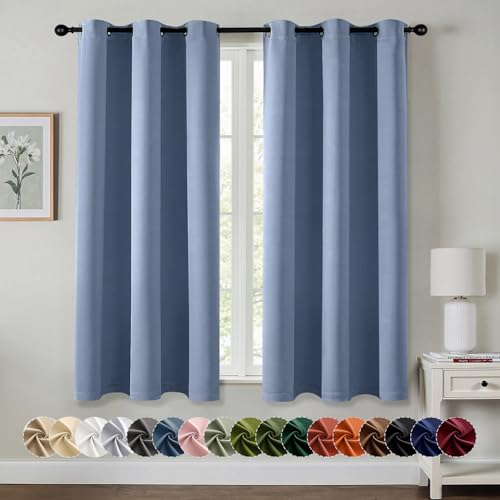
- Budget ($20 to $40 per pair): triple-weave polyester blackout, 40 to 52 inches wide, 63 to 90 inches long. The MIULEE two-pack of 40 x 63 inch denim blue panels at about $26 sits at the low end of this range and is a fair example of what to expect: real light blocking, modest sound softening.
- Mid ($40 to $90 per pair): extra-wide or extra-long triple-weave, linen-look blackout with bonded liners, or a single industrial quilted blanket panel. Better weight, better hems, more sizes.
- Premium ($90 to $250+ per pair): purpose-built acoustic curtains with 400+ GSM fabrics, pleated headers, and dedicated liner layers. Custom-sized options live here too.
Warranty, Care, and Hardware
Most curtain warranties cover manufacturing defects for 30 to 90 days; a one-year policy is a good sign that the seller expects the fabric and grommets to hold up. Check that the panels are machine washable in cold water and can be tumble dried low, because dry-clean-only heavy curtains become a chore fast. Quilted acoustic blankets usually need spot cleaning only.
Hardware is where heavy curtains fail. A standard 5/8-inch rod bows under two 4-pound panels. For anything over 3 pounds per panel, use a 1-inch or 1.25-inch diameter rod, a center support bracket on spans over 60 inches, and brackets anchored into studs or with heavy-duty drywall anchors rated for at least 50 pounds. Budget $25 to $60 for a rod and bracket set that will not sag.
Spec Checklist
| Spec | Budget | Mid | Premium |
|---|---|---|---|
| Price per pair | $20 to $40 | $40 to $90 | $90 to $250+ |
| Fabric weight | 200 to 260 GSM | 260 to 350 GSM | 350 to 600+ GSM |
| Panel weight (each) | 1.5 to 2.5 lb | 2.5 to 4 lb | 4 to 8 lb |
| Construction | Triple-weave polyester | Bonded liner or extra-wide triple-weave | Quilted acoustic or multi-layer with liner |
| Width per panel | 40 to 52 in (102 to 132 cm) | 52 to 72 in (132 to 183 cm) | 72 to 100+ in (183 to 254+ cm) |
| Length options | 63, 84, 90 in | 63 to 108 in | Any, including custom |
| Header | Grommet | Grommet or back-tab | Pinch-pleat or back-tab with wraparound rod |
| Bottom hem | 2 to 3 in, unweighted | 3 to 4 in | 4 in with weights or chain |
| Light blocking | 85 to 99% | 99 to 100% | 100% |
| Care | Machine wash cold | Machine wash cold | Spot clean or dry clean |
| Warranty | 30 days | 90 days to 1 year | 1 year or longer |
Red Flags
- “Soundproof” with no weight or GSM listed. If the seller will not tell you how heavy the fabric is, assume it is a standard blackout panel.
- Precise decibel reductions (for example “blocks 30 dB”). Fabric performance varies wildly by frequency and installation. A single number is a sales line, not a spec.
- Only one narrow width available. A 42-inch panel cannot overlap a 48-inch window on both sides. Look for 52-inch minimum, 72-inch for wide windows.
- Grommets smaller than 1.5 inches. They will not fit the sturdy 1-inch rod you should be using for heavy panels.
- Photos that show light glowing through the fabric edge. Real blackout fabric looks flat and opaque even when backlit.
- No return window. Color and density are hard to judge from a screen. Fourteen days minimum is reasonable.
FAQ
Do soundproof curtains actually block noise?
They reduce it rather than block it. Dense curtains absorb echo inside the room and soften high-frequency sound coming through the window, which makes traffic and voices less intrusive. They do very little for low bass or structural noise. Pairing curtains with sealed window gaps gives a much bigger improvement than curtains alone.
Are blackout curtains the same as soundproof curtains?
Not exactly, but there is overlap. Blackout refers to light blocking, which comes from a tightly woven or bonded layer. That same density gives modest sound softening, so most blackout panels of 250 GSM or more will help with noise a little. True acoustic curtains are heavier, usually 350 GSM and up, and often quilted.
How many panels do I need for one window?
Add 8 to 12 inches to your window width for overlap, then multiply by 2 to 2.5 for fullness. For a 48-inch window that gives roughly 120 to 150 inches of total fabric, which is two panels of 60 to 72 inches each or three 52-inch panels. Wider always beats narrower for sound.
Can I hang heavy soundproof curtains on my existing rod?
Only if it is at least 1 inch in diameter, has a center bracket on spans over 60 inches, and is anchored into studs or rated anchors. A typical 5/8-inch tension or cafe rod will bow or pull out under panels heavier than about 3 pounds each. Upgrading hardware costs $25 to $60 and is worth doing before the first panel goes up in 2026 or any year after.