Key takeaways
- Match cushion covers and inserts, preserve care labels, and use a seasonal storage register that makes every piece easy to return.
Label balcony cushions with three pieces of information: where each cushion belongs, which cover and insert go together, and where the set is stored. Keep care instructions in the same record, but leave the original care labels attached. A good seasonal system should let someone rebuild the seating arrangement without opening every bag or guessing which similar-looking pad fits which chair.
Map the seats before removing the cushions
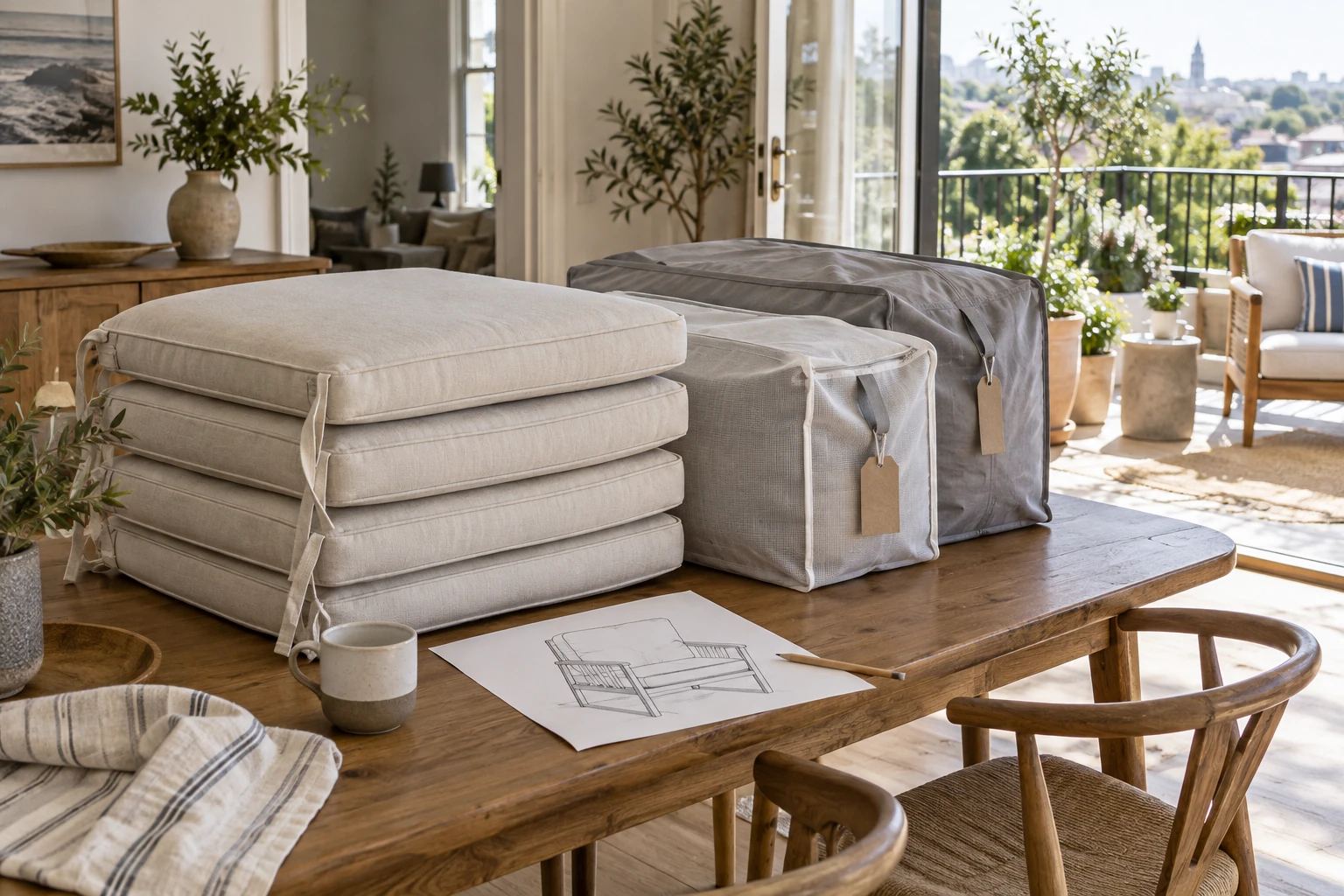
Draw the balcony from the doorway looking outward. Give each furniture position a short name, such as left chair, right chair or bench. If the furniture moves frequently, identify the actual furniture piece instead of its temporary location. Add a small photograph of the assembled arrangement to your inventory.
Assign separate codes to a seat cushion and a back cushion. For example, LC-S and LC-B can mean left-chair seat and left-chair back. Do not rely on color alone: two beige covers can have different sizes, zipper positions or attachment ties. A code works even if colors fade or a cover is replaced.
Measure only what helps distinguish items. A width and depth, shape description and product number may be enough. Note unusual features such as an angled corner or ties along one edge. Mark orientation on the sketch rather than writing permanent directions onto visible fabric.
Preserve the cover-to-insert relationship
Before removing a washable cover, photograph its original label and its matching insert together. Record their product names separately. An insert can have different care instructions from the outer fabric; a removable cover does not establish that the entire cushion is washable.
IKEA’s outdoor cushion care guide, for example, lists different instructions for FRÖSÖN covers and DUVHOLMEN inner cushions, with the latter marked not to wash. It also says cushions should be completely dry before closed storage. Apply the instructions for your exact product, not those for a visually similar cushion.
Put removable inventory labels on storage containers or a suitable separate tag. Do not cover the maker’s label, write over cleaning symbols or attach adhesive to delicate upholstery without knowing it is suitable. Keep ties and other loose accessories with the corresponding set so they do not become an unidentified bag of parts.
| Code | Belongs to | Cover and insert | Status | Storage address |
|---|---|---|---|---|
| LC-S | Left chair seat | Record both identifiers | Ready, drying or needs attention | Bag A, shelf 2 |
| LC-B | Left chair back | Record both identifiers | Same status choices | Bag A, shelf 2 |
| BN-S | Bench seat | Record dimensions and label photo | Same status choices | Bag B, shelf 2 |
Use status labels before location labels
Separate “identified” from “ready to store.” A cushion can have a complete record while still awaiting cleaning, drying or a repair decision. Give those items a temporary status rather than putting them into a finished storage bag because the labeling task is complete.
Use plain words instead of a complicated color system. “Drying; do not pack” is more useful to another household member than an unexplained yellow sticker. Date a status change only when you have actually completed it. Avoid pre-printing a future cleaning date as though the work already happened.
Choose an indoor storage location appropriate to the product instructions. Check that the container can be retrieved without pulling down unrelated items. Do not force cushions into a shape or compression method the maker does not permit merely to fit an existing bag.
Worked example: six pieces, two bags
Consider an illustrative balcony with two chairs, each with a seat and back cushion, plus a bench with two seat pads. The household assigns LC-S, LC-B, RC-S, RC-B, BN-1 and BN-2. This is an example organization system, not a product set we compared.
Bag A contains the four chair pieces; Bag B contains the two bench pads. A card on Bag A lists all four codes and the seating-photo filename. The register says Bag A belongs on the upper indoor closet shelf and Bag B on the lower shelf. Before closing either bag, the household checks each piece against its recorded care and storage status.
If RC-B is still drying, Bag A’s card reads “three pieces packed; RC-B pending” rather than claiming the bag is complete. When that cushion is ready, the card and register are updated together. This prevents a missing cushion from being mistaken for a lost one months later.
Make reopening part of the system
At the start of the next season, open one set at a time and compare the contents with its card. Inspect the items and follow their care instructions before use. Put the cushions back according to the photograph, then record any fit problem or damaged attachment discovered during setup.
If a cover has been replaced, change the cover identifier while keeping the furniture-location code. Retire the old photograph or mark it obsolete so it does not compete with the new record. The location code should remain useful even when the physical cushion changes.
Finally, store empty bags and their cards together. The next packing session should start with an existing map and known storage addresses, not a fresh sorting exercise. The goal is a repeatable handoff between seasons, with care information kept intact and every piece accounted for.