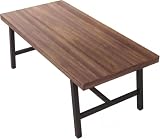
Shopping for a large dining table requires a careful balance of aesthetic appeal, spatial geometry, and everyday durability. Whether you are outfitting a dedicated formal dining room or a sprawling open-concept living space, investing in a statement piece that accommodates your household and guests is a major decision. Far beyond simply measuring the floor space, choosing the right oversized table means understanding how construction methods, leg configurations, and materials impact longevity and daily comfort.
Modern dining tables blend high-capacity engineering with refined design, making it easier than ever to find a surface that handles both bustling holiday dinners and quiet family breakfasts. However, the sheer variety of options on the market can easily overwhelm even the most seasoned home renovator. To cut through the marketing noise, you need to focus on structural integrity, ergonomic clearances, and how the table actually integrates with your lifestyle.
As an Amazon Associate we earn from qualifying purchases at no extra cost to you.
Room Clearance and Spatial Geometry
The single biggest mistake buyers make is measuring only the table top while forgetting the space required for human movement. A large dining table demands adequate clearance on all sides to prevent the room from feeling cramped or inaccessible. As a general rule of thumb, you should leave at least thirty-six to forty-eight inches of clearance between the edge of the table and any surrounding walls or large furniture pieces. This ensures that diners can pull their chairs out comfortably, stand up, and walk around seated guests without disrupting the flow of the room.
When mapping out your space, use painter’s tape on the floor to outline the exact footprint of the table. Walk around the taped perimeter while imagining chairs pulled out to their maximum functional distance. This physical rehearsal often reveals that a table you thought would fit comfortably actually chokes off a vital walking path in your open-plan living area.
Leg Placement and Seating Capacity
Manufacturers often advertise that a table seats ten or twelve people, but the physical reality of leg placement can tell a completely different story. Traditional four-leg designs positioned at the extreme corners of the table often trap diners between the legs, severely limiting legroom and reducing the practical seating count. If you plan on maximizing your seating capacity, look for trestle bases, pedestal mounts, or inset legs that leave unobstructed paths for chairs to slide all the way around the perimeter.
Consider the width of the chairs you intend to pair with the table as well. Bulky upholstered armchairs take up significantly more linear space than sleek, armless side chairs. Always calculate the usable perimeter by dividing the total circumference or side length by the average width of your preferred seating style.
Material Selection for Heavy Daily Use
A large surface area means a large visual and physical footprint, making your choice of material paramount. Solid wood remains the gold standard for durability and repairability, offering timeless character that handles daily wear and tear with grace. Hardwoods like white oak, walnut, and maple provide exceptional resistance to dents and scratches, though they require periodic conditioning to prevent drying and cracking in fluctuating indoor climates.
Engineered woods with high-grade wood veneers offer a stable, warp-resistant alternative that often comes at a more accessible price point. Meanwhile, stone surfaces like marble or engineered quartz provide striking modern aesthetics and unmatched heat resistance, but they are exceptionally heavy and can be prone to staining if acidic liquids are left unattended. Match your material choice directly to your household habits—if you have young children or host chaotic craft sessions, avoid high-maintenance surfaces that require constant sealing.
Extension Mechanisms vs. Fixed Tops
Deciding between a fixed top and an expandable mechanism depends entirely on how often you host large gatherings. Fixed tops offer ultimate structural stability because they lack moving parts, joints, or seams that can sag or warp over time. If you have the permanent floor space to accommodate an eight-to-ten-person table year-round, a fixed top is usually the more robust, long-lasting investment.
Conversely, extension tables with butterfly leaves, drop-in panels, or sliding ends give you the best of both worlds. They allow you to reclaim floor space during daily routines while expanding effortlessly when guests arrive. When evaluating extension tables, inspect the hardware tracks carefully. Look for heavy-duty steel ball-bearing slides and secure locking latches that prevent the table halves from separating under pressure or uneven weight distribution.
Weight Capacity and Structural Stability
Large dining tables bear significant weight, from heavy serving platters and cast-iron cookware to leaning elbows and children climbing into seats. A poorly constructed large table will develop an unsettling wobble over time, particularly at the joints where the legs meet the apron. Look for tables that utilize mortise-and-tenon joinery or heavy metal brackets rather than simple glued dowels or lightweight screws.
Run your hand underneath the table to inspect the apron and stretcher design. A substantial wooden apron or a reinforced metal sub-frame prevents the long expanses of wood from sagging under their own weight. This hidden structural support is the primary indicator of whether a table will remain rigid and level after five or ten years of heavy use.
Common Buying Mistakes to Avoid
Beyond misjudging room dimensions, many buyers fail to verify delivery logistics. A massive, one-piece solid wood table may look incredible on paper, but if it cannot navigate your building’s elevator, tight apartment hallways, or sharp staircase turns, it becomes an expensive logistical nightmare. Always check the packaged dimensions and opt for tables with knock-down construction or removable legs if access is tight.
Another frequent misstep is ignoring the visual scale of the room. A massive, dark mahogany table can easily overpower a small or low-ceilinged dining space, making the entire room feel heavy and claustrophobic. Balance the visual weight of the table with lighter surrounding elements, such as open-backed chairs, large area rugs, and ample natural lighting.
When to Spend More on a High-End Piece
Dining tables vary wildly in price, ranging from budget flat-pack options to bespoke artisan creations. You should consider spending more when you prioritize heirloom-quality craftsmanship, sustainably sourced rare hardwoods, or complex custom finishes that cannot be replicated by mass-market manufacturers. High-end tables often feature hand-planed surfaces, specialized multi-step catalyzed finishes that resist moisture rings, and superior joinery that can be disassembled and reassembled through multiple house moves.
Investing more upfront also buys peace of mind regarding safety and environmental standards, such as low-VOC finishes that do not off-gas harmful chemicals into your primary living space. If the dining table is destined to be the emotional and physical heart of your home where decades of memories will unfold, stretching your budget for superior construction is a worthwhile investment.
Related Guides
To explore specific product recommendations and expert evaluations that match your spatial requirements, check out our comprehensive Best Large Dining Table in 2026 guide, which analyzes top-performing models for every style and budget.
FAQ
How much clearance do I need around a large dining table?
You should maintain a minimum of thirty-six to forty-eight inches of clearance between the table edge and walls or other furniture. This ensures chairs can be pulled out easily and guests can walk past comfortably.
Are extension tables less sturdy than fixed tables?
Not necessarily, provided they feature high-quality steel tracks and robust locking mechanisms. However, fixed tables generally offer simpler construction with fewer potential points of mechanical wear.
What is the best wood for a heavy-use family dining table?
Dense hardwoods like white oak, walnut, and maple offer exceptional durability and resistance to everyday impacts. They can also be sanded and refinished multiple times over the decades.
How do I prevent a large table from sagging in the middle?
Look for tables that incorporate sturdy aprons, hidden metal sub-frames, or central trestle supports. These structural elements evenly distribute weight and prevent long wooden spans from bowing over time.