Key takeaways
- In Summer: Closing thermal panels on sun-facing windows (south and west exposures) blocks direct solar radiation. High-density blackout fabrics block up to 99% of visible light and significantly reduce radiant heat transfer, keeping room temperatures 3°F to 8°F cooler without adjusting your thermostat.
- In Winter: Pulling thermal drapes shut at night traps a layer of room-temperature air between the fabric and the cold glass. This stagnant air pocket acts as an additional insulating layer, reducing cold drafts and slowing down conduction heat loss.
- The Financial Impact: If your air conditioner or heat pump uses 800 to 1,500 kilowatt-hours (kWh) per month during extreme seasons, a 7% reduction saves roughly 56 to 105 kWh monthly. At average residential electricity rates ranging from $0.15 to $0.28 per kWh, that yields a monthly bill savings of $8.40 to $29.40.
The Short Answer
Yes, thermal blackout curtains are worth it for your electricity bills, provided your home has single-pane or older double-pane windows and you actively open and close the drapes according to the weather. By creating a trapped air pocket between the glass and your living space, heavy thermal panels can reduce seasonal heat loss and solar heat gain by 10% to 25%. This translates to a direct reduction of 5% to 12% on your monthly heating and cooling energy usage. For a standard two-bedroom apartment or medium-sized home, a modest upfront investment of $40 to $100 in quality thermal drapes can pay for itself within three to eight months of peak summer or winter weather.
What You Actually Get
Understanding whether thermal blackout curtains will lower your electric bill requires looking at how window insulation works. Standard glass is a poor insulator. Windows account for roughly 25% to 30% of residential heating and cooling energy loss, according to general energy efficiency standards. When sunlight hits a windowpane during hot summer months, radiant energy enters your home as shortwave radiation, turns into heat, and forces your air conditioner to run longer cycles.
Our top picks

As an Amazon Associate we earn from qualifying purchases at no extra cost to you.
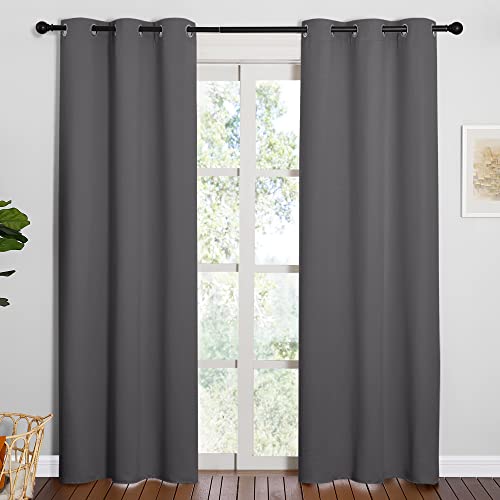
Thermal blackout curtains address this issue through heavy-weight fabric engineering. Most thermal drapes utilize either a triple-weave construction—intertwining dense dark yarns between decorative face fabrics—or an acrylic foam backing applied directly to the cloth. High-quality options usually weigh between 230 and 320 grams per square meter (gsm), compared to standard decorative curtains that often weigh under 150 gsm.
Here is what happens when you install them across your windows:
- In Summer: Closing thermal panels on sun-facing windows (south and west exposures) blocks direct solar radiation. High-density blackout fabrics block up to 99% of visible light and significantly reduce radiant heat transfer, keeping room temperatures 3°F to 8°F cooler without adjusting your thermostat.
- In Winter: Pulling thermal drapes shut at night traps a layer of room-temperature air between the fabric and the cold glass. This stagnant air pocket acts as an additional insulating layer, reducing cold drafts and slowing down conduction heat loss.
- The Financial Impact: If your air conditioner or heat pump uses 800 to 1,500 kilowatt-hours (kWh) per month during extreme seasons, a 7% reduction saves roughly 56 to 105 kWh monthly. At average residential electricity rates ranging from $0.15 to $0.28 per kWh, that yields a monthly bill savings of $8.40 to $29.40.
Consider a practical setup: equipping a main bedroom with a pair of standard 42 x 84-inch thermal panels costs around $20 to $35. Smaller accent windows can be covered for as little as $8 to $15 per panel (such as compact 35 x 48-inch drapes). Because the initial purchase price is low, the return on investment happens faster than almost any other energy-saving home improvement, including replacing windows or installing smart thermostats.
Pros
- Immediate Energy Savings: They lower HVAC workload instantly upon installation, saving measurable kilowatt-hours during scorching afternoons and freezing nights.
- Exceptional Light Blocking: Beyond thermal benefits, high-density weaves block 85% to 99% of incoming light, making them ideal for shift workers, nurseries, and home theaters.
- Acoustic Dampening: The dense material absorbs sound waves, dampening outside street noise and interior echoes by an estimated 10% to 20% compared to thin sheers.
- Low Cost Entry Point: Priced anywhere from $9 for single small windows to $45 for thick double-panel sets, thermal drapes offer high financial payback relative to cost.
- HVAC Longevity: Reducing the runtime of your air conditioner or heat pump lowers mechanical wear and tear, potentially extending the lifespan of expensive compressor units.
Cons
- Requires Manual Operation: Thermal curtains only save money if you close them during high-sun hours in summer and draw them shut at night in winter. Leaving them open negates all energy benefits.
- Weight and Hardware Demands: Dense fabrics weigh between 3 and 7 pounds per set. Cheap tension rods or flimsy curtain poles will sag, requiring sturdy wall anchors and brackets.
- Light Leaks Without Proper Sizing: If curtains do not overlap the window frame by at least 2 to 4 inches on all sides, convection currents will pull warm air over the top and out the sides, reducing insulation value.
- Aesthetic Stiff Structure: Acrylic-backed thermal curtains can feel stiff or rubbery compared to natural linen or soft cotton, hanging with slightly rigid folds.
Who Should Buy It
You should buy thermal blackout curtains if you live in a climate with intense summer sun or severe winter cold and your home features single-pane or clear double-pane glass. In 2026, as utility companies adjust peak-hour energy tariffs upward, reducing baseline electricity demand during hot afternoons is one of the most effective ways to avoid expensive surge pricing. They are an absolute necessity for renters who cannot modify windows or install permanent window films, as well as shift workers who need deep darkness to sleep during daylight hours.
Who Should Skip It
You should skip thermal drapes if your home is already equipped with modern, low-emissivity (Low-E) triple-pane windows, as the thermal resistance added by fabric panels will yield negligible electricity bill reductions. Similarly, if you rely on natural daylight throughout the day and refuse to keep drapes drawn across south-facing windows during peak sunshine hours, you will not realize the thermal benefits necessary to lower your electric bills.
Cheaper Alternatives
If you want to reduce window heat loss or solar gain on an ultra-tight budget, several low-cost alternatives exist. While some lack the aesthetic appeal of full-length drapery, they offer varying levels of thermal defense.
| Option | Cost | Trade-off |
|---|---|---|
FAQ
How much can thermal curtains lower electricity bills?
For most households, thermal blackout curtains lower total electricity bills by 5% to 12% during months with extreme weather. The exact dollar amount depends on your local electricity rates, window orientation, and overall climate. On a $200 summer cooling bill, a 10% reduction saves roughly $20 per month, allowing a $40 set of curtains to pay for itself in two months.
Do thermal curtains work better in summer or winter?
Thermal curtains perform exceptionally well in both seasons, but they deliver more immediate cooling savings in the summer by blocking direct solar radiation before it hits your living space. In winter, they act as a physical barrier against air currents, though they require meticulous positioning around window frames to prevent cold air from cascading into the room.
How long should thermal curtains be to effectively block drafts?
To maximize energy efficiency, thermal curtains should extend beyond the window frame. Ideally, panels should hover roughly 1/2 inch above the floor or puddle slightly on the flooring, extending 3 to 6 inches beyond the sides of the window casing. Mounting the curtain rod 4 to 6 inches above the trim prevents air from escaping over the top of the window.
Do I need special heavy-duty curtain rods for thermal drapes?
You do not necessarily need industrial hardware, but standard lightweight tension rods are usually insufficient. A double-panel set of 42 x 84-inch thermal curtains typically weighs between 3.5 and 5 pounds. Use steel or thick wood curtain rods with a minimum diameter of 3/4 inch, secured into wall studs or heavy-duty drywall anchors, to prevent sagging over time.