Key takeaways
- Move delicate objects, cushions, and small accessories away from the area below the fan.
- Place a drop cloth or old sheet beneath the fan if the blades are heavily coated.
- Open a window if practical, but avoid creating a strong draft that spreads loose dust.
- Check that your duster handle is locked securely before raising it overhead.
What's inside
A ceiling fan can be one of the most useful pieces in a room—and one of the easiest to overlook when dusting. Its blades collect a surprisingly thick layer of lint, pollen, and household dust, then scatter it through the room when the fan starts. From an interior-styling perspective, a clean fan also makes the whole ceiling feel sharper: finishes look brighter, lines look more intentional, and the room feels better maintained.
This guide explains the best way to dust a ceiling fan without sending debris onto your furniture or floor. You’ll learn which tools are worth buying, how to choose between a handheld and extended duster, how to protect the motor and light fixture, and when a simple dry dusting should be followed by a deeper clean.
As an Amazon Associate we earn from qualifying purchases.



🛒 Best Price Today on Amazon
Prime members get fast, free shipping on everything above, plus member-only deals. New members get a 30-day free trial — cancel anytime.
1. Choose the Right Duster
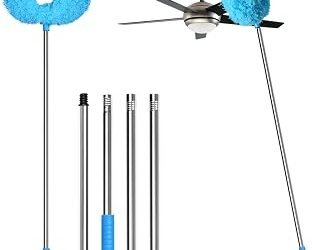
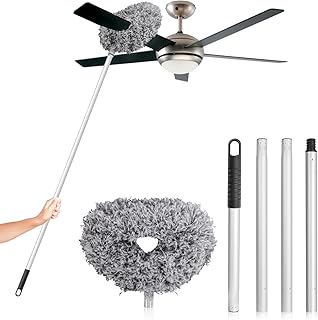
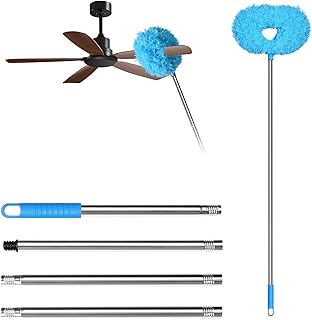
The best tool is one that captures dust rather than merely pushing it around. A washable microfiber head is the most versatile choice for routine cleaning because its fibers hold fine particles and usually slide gently across painted, wood-look, or metal blades. Look for a removable head, a lightweight handle, and enough reach to clean the fan while keeping both feet safely on the floor.
For standard-height ceilings, an adjustable duster such as the DRQ Ceiling Fan Cleaner Duster or FONUNO Ceiling Fan Cleaner Duster offers useful reach without feeling cumbersome. The Storystore Ceiling Fan Cleaner Duster is another practical option if you want a multi-surface tool for walls, doors, and cobwebs as well as fan blades.
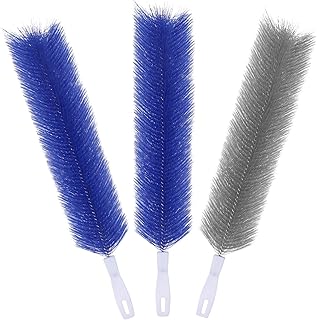
For taller ceilings, prioritize balance over maximum length. The Eyliden 68″ Adjustable Ceiling Fan Duster is designed for ladderless cleaning and has a dual-sided microfiber head. A bendable tool, such as the 3 Pcs Fan Cleaning Brush Bendable Cobweb Duster, can be helpful around blade edges, vents, curtains, and awkward corners, though it may offer less control on very broad blades.
2. Prepare the Room and Fan
Turn the fan off and wait until every blade has stopped moving. If the controls are accessible, switch the fan off at the wall; for a more thorough clean, turn off power at the circuit breaker, especially if you’ll be wiping near a light kit or removing components. Never clean a moving fan, and don’t rely on a remote control alone if someone could accidentally switch it back on.
- Move delicate objects, cushions, and small accessories away from the area below the fan.
- Place a drop cloth or old sheet beneath the fan if the blades are heavily coated.
- Open a window if practical, but avoid creating a strong draft that spreads loose dust.
- Check that your duster handle is locked securely before raising it overhead.
If you are using a ladder, have another adult steady it and keep your body centered between the rails. In many homes, an extended duster is the safer and more convenient solution.
3. Dust from the Top Down
Start with the upper surfaces of the blades, working from the center of the room outward. Fit the microfiber head over one blade near the motor housing, then guide it slowly toward the tip. Use gentle pressure: pressing too hard can flex the blade, loosen a fitting, or release a larger cloud of dust.
After each pass, inspect the microfiber head. If it looks loaded with debris, pause and shake it outdoors or use a second clean head. Avoid sweeping repeatedly over the same area with a saturated duster, since that simply redistributes the dust. Rotate the fan by hand only when the power is off, and clean each blade in turn.
A slim duster head is useful for narrow gaps and blade brackets, while a broader head covers the main surface more efficiently. If your tool has a flexible joint, keep it nearly parallel to the blade rather than bending it sharply against the surface.
4. Follow with a Damp Wipe When Needed
Dry microfiber is usually enough for weekly or biweekly maintenance. If the blades have sticky residue from cooking oils, smoke, or humid air, follow with a barely damp cloth. Spray cleaner onto the cloth—not onto the fan—and use a mild, non-abrasive solution. Excess moisture can seep into the motor housing, electrical connections, or blade seams.
Wipe in the direction of the blade’s length, then use a separate dry cloth to remove remaining moisture. Check the manufacturer’s care instructions before using cleaner on natural wood, unfinished surfaces, specialty coatings, or painted blades. Do not soak removable microfiber heads and reinstall them while damp; wash and dry them completely according to their care label.
5. Clean the Surrounding Details
Once the blades are clean, finish the motor housing, pull chains, light globe, and nearby ceiling area. Use a dry microfiber cloth on the housing and a soft brush around vents or decorative grooves. If the fan has a glass shade, remove it only after power is off, support it with both hands, and wash it separately if the manufacturer permits.
Take a final look from several angles. Dust often remains on the blade brackets, the top of the motor casing, and the ceiling medallion. Cleaning these small details is worthwhile in a carefully styled room because dark buildup around the fixture can make an otherwise polished space appear dull.
Tips
- Dust ceiling fans before vacuuming or mopping so fallen debris is removed at the end.
- Keep one microfiber head reserved for ceiling fixtures and wash it separately from greasy cleaning cloths.
- Use a pillowcase over each blade for very dusty fans: slide it on gently, wipe the top, and pull it off so debris stays contained inside.
- Do not bend, lean on, or hang anything from fan blades while cleaning; they are not designed to support body weight.
Frequently Asked Questions
How often should I dust a ceiling fan?
For most homes, every two to four weeks is a good routine. Dust more often in bedrooms, homes with pets, during pollen season, or when the fan runs frequently. A quick dry pass is easier than waiting until the blades develop a thick, visible layer.
Should I dust a ceiling fan while it is running?
No. A running fan can catch the duster, throw debris across the room, or cause an injury. Turn it off completely and wait for the blades to stop before cleaning.
Is a ceiling fan duster better than a vacuum?
A microfiber fan duster is often better for routine care because it is quiet, lightweight, and less likely to scratch a finish. A vacuum with a soft brush attachment can work well for loose dust if you can control the hose safely, but keep the nozzle from striking the blades or housing.
What should I do if the fan still looks dirty after dusting?
Try a second pass with a barely damp microfiber cloth and a mild cleaner approved for the blade material. Persistent marks, wobbling, unusual noise, or loose fittings may indicate a maintenance issue rather than surface dirt; stop cleaning and consult the fan’s instructions or a qualified professional.
Conclusion
The best way to dust a ceiling fan is slow, dry, and controlled: switch off the power, use a washable microfiber duster, work blade by blade, and keep moisture away from the motor. Choose a lightweight tool with enough reach for your ceiling height, then make fan care part of your regular room-cleaning rhythm. The result is more than a cleaner fixture—it is a fresher, more finished-looking interior.