Key takeaways
- Start with a dry pass. Place the microfiber head over the top of one blade and draw it slowly from the center toward the tip. Use light pressure so dust is captured instead of pushed onto the floor.
- Support the blade when needed. If the blade flexes, use your free hand to steady it from a safe position. Do not pull, twist, or lean your body beneath an unstable ladder.
- Rotate the fan by hand. With the power off, gently turn the blades to bring the next one into position. Clean one complete blade at a time rather than spinning the fan continuously.
- Clean the lower surface. The underside often appears cleaner but can still hold dust. Use the same slow strokes, keeping the duster head aligned with the blade.
- Wipe the surrounding fixture. Finish with the motor housing, downrod, light cover, and pull chain using a separate dry microfiber cloth. This prevents dirty residue from being transferred back onto the blades.
What's inside
Ceiling fans are excellent at keeping a room comfortable, but their upper surfaces quietly collect dust, pet hair, and cooking residue. When the fan starts, that buildup can scatter across furniture, flooring, and freshly made beds. A clean fan also suits a well-finished interior: spotless blades let the fixture recede into the room instead of drawing attention for the wrong reason.
The best way to clean ceiling fan blades is a controlled, low-mess method that protects the motor, finish, and surrounding décor. This guide explains how to prepare the room, choose the right duster or cloth, clean safely at height, handle stubborn grime, and keep the blades cleaner for longer.
As an Amazon Associate we earn from qualifying purchases.


🛒 Best Price Today on Amazon
Prime members get fast, free shipping on everything above, plus member-only deals. New members get a 30-day free trial — cancel anytime.
Choose the Right Fan-Cleaning Tool
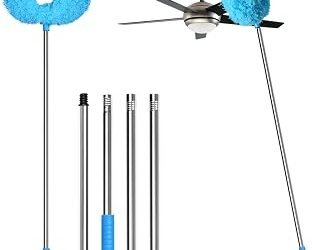
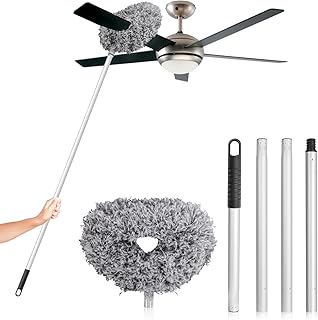
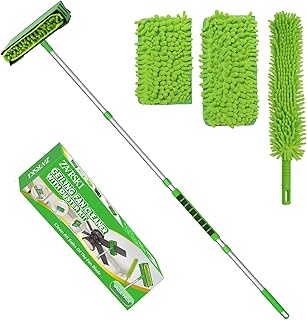
For routine dusting, a washable microfiber fan duster with an adjustable handle is usually the most practical choice. Microfiber attracts loose dust rather than simply pushing it around, while a shaped or bendable head can follow the curve of a blade. An extension pole also lets you work from the floor, which is safer and more convenient than balancing on a chair.
The DRQ Ceiling Fan Cleaner Duster and SetSail Ceiling Fan Cleaner Duster both use a removable microfiber head and an extension range suited to many standard-height ceilings. The similarly designed Ceiling Fan Cleaner Duster with adjustable 13 to 49.7-inch pole is another option for shoppers who want a compact handle that can be stored easily.
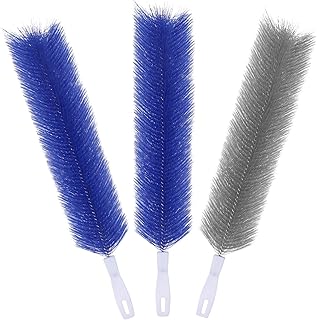
For taller rooms, look for additional reach. The FONUNO Ceiling Fan Cleaner Duster extends to about 50 inches, while the 6 Ft/72-inch Ceiling Fan Cleaner Duster is intended for higher ceilings and broader household jobs such as baseboards, blinds, molding, and cobwebs. A 3 Pcs Fan Cleaning Brush Bendable Cobweb Duster set can be useful when you want separate tools for fan blades, vents, curtains, and other delicate surfaces.
Prepare the Room and Fan
Turn the fan off at the wall switch and wait until every blade has stopped. For extra peace of mind, switch off the fan’s circuit at the breaker, particularly if you plan to wipe near the light kit or use a damp cloth. Never clean a moving fan, and do not spray cleaner directly onto the fixture.
Move lightweight furniture out of the work area and cover nearby upholstery, a dining table, or a bed with a clean sheet if the blades are visibly dusty. Open a window if the room is well ventilated, but avoid creating a strong draft that could send loosened dust across the space. If the fan has a remote, remove its batteries or place it out of reach while cleaning.
How to Clean Ceiling Fan Blades Without a Mess
- Start with a dry pass. Place the microfiber head over the top of one blade and draw it slowly from the center toward the tip. Use light pressure so dust is captured instead of pushed onto the floor.
- Support the blade when needed. If the blade flexes, use your free hand to steady it from a safe position. Do not pull, twist, or lean your body beneath an unstable ladder.
- Rotate the fan by hand. With the power off, gently turn the blades to bring the next one into position. Clean one complete blade at a time rather than spinning the fan continuously.
- Clean the lower surface. The underside often appears cleaner but can still hold dust. Use the same slow strokes, keeping the duster head aligned with the blade.
- Wipe the surrounding fixture. Finish with the motor housing, downrod, light cover, and pull chain using a separate dry microfiber cloth. This prevents dirty residue from being transferred back onto the blades.
When Blades Need More Than Dusting
Kitchen fans and fixtures near open windows may develop a sticky film. In that case, use a barely damp microfiber cloth with warm water and a small amount of mild dish soap. Wring the cloth thoroughly before touching the blade; excess moisture can run toward the motor or leave streaks on painted and wood-look finishes.
Clean a small, inconspicuous area first, especially on real wood, woven material, specialty paint, or a decorative metallic finish. Avoid abrasive sponges, strong degreasers, furniture polish, and ammonia-based products unless the manufacturer specifically approves them. Dry each blade immediately with a clean cloth, and leave the fan off until all surfaces are fully dry.
Safety and Buying Considerations
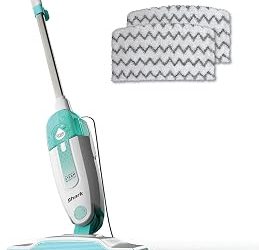
Choose a tool that matches both the ceiling height and your reach. A pole that is too short encourages stretching, while an unnecessarily long pole may be harder to control. A flexible head is helpful around blade angles, but it should remain firm enough to maintain contact. Washable, removable pads are preferable to disposable dusters for regular upkeep and can be stored in a labeled basket with other cleaning essentials.
If you must use a ladder, place it on a level, dry surface and have another adult stabilize it. Even then, a floor-operated extension duster is generally the better option for routine cleaning. Check the fan’s manual before removing blades, light covers, or other components.
Tips
- Dust ceiling fan blades before vacuuming or mopping so fallen particles can be removed afterward.
- Clean from the room’s perimeter inward, beginning with the highest or dirtiest fixture.
- Wash microfiber pads separately from lint-producing towels, and skip fabric softener to preserve absorbency.
- Schedule a quick dry dusting every two to four weeks, adjusting the interval for pets, allergies, or an open-kitchen layout.
Frequently Asked Questions
Can I use a pillowcase to clean ceiling fan blades?
Yes. A clean cotton pillowcase can slide over a blade and trap loose dust as you pull it toward the tip. It is useful for a quick clean, although a purpose-made microfiber duster is usually easier to control and may reach more comfortably from the floor.
Should I clean the top or bottom of the blades first?
Start with the top, where dust typically settles. Then clean the underside and the blade edges. Working in this order reduces the chance of transferring loosened dust onto a surface you have already finished.
How do I clean a ceiling fan without a ladder?
Use a duster with a stable extension pole long enough to reach the blades while you remain upright. Work slowly, keep the head flat against the blade, and stop if you cannot maintain clear control. For very high ceilings, professional cleaning may be the safest choice.
Can I spray cleaner directly onto the fan?
No. Spray a small amount onto a cloth instead, and make sure the cloth is only slightly damp. Direct spray can enter the motor, stain the ceiling, or leave a slippery residue on the blades.
Conclusion
The cleanest, safest approach is simple: switch the fan off, use a dry microfiber duster with suitable reach, work blade by blade, and reserve a barely damp cloth for stuck-on residue. With a washable tool stored alongside your regular cleaning supplies and a short maintenance routine every few weeks, ceiling fans stay quieter-looking, more hygienic, and better integrated into the room’s overall design.