
Key takeaways
- Set an honest session target: Below two sessions a week, buy the least expensive capable unit. Above four, the quieter and better-built machines justify themselves because you will notice their advantages every day.
- Count the accessories you already own: If you have resistance bands, a bundled set adds little. If you do not, an included band kit meaningfully changes what the machine can do and is worth paying a bit more for.
- Weigh noise as a cost: A loud plate is used at inconvenient times or not at all. Quiet operation is not a luxury feature; it is what allows the machine to fit into a normal evening, which drives frequency, which drives value.
- Beware of paying for level counts: The jump from 99 speeds to 130 changes nothing about the experience. Spend the difference on build quality, deck size or a proper mat instead.
- Include the mat in the budget: Isolation matting protects the floor, cuts noise, stops creeping and extends the machine’s life. It costs a fraction of the plate and prevents the problems that lead to abandonment.
Here is an uncomfortable question to ask before buying a vibration plate: how many sessions will you realistically do, and what is each one worth to you? The category has an unusually poor adherence record. People buy in with high expectations for body composition, get a sensation rather than a result, and stop. A plate used twelve times costs more per session than a month of gym membership, and it still has to be stored somewhere afterwards.
That does not mean nobody should own one. It means the price should be matched to a realistic use case. If it is going to be a ten-minute daily standing habit for someone with a desk job, even a mid-priced unit pays back quickly in accumulated movement minutes. If it is a curiosity purchase, the cheapest capable unit is the rational choice. The six machines below span that range, and the differences between them are worth understanding before deciding how much to commit.
Our top picks


As an Amazon Associate we earn from qualifying purchases at no extra cost to you. Ratings are shown as listed on Amazon.
Quick Comparison
| Product | Best For | Standout Feature | Watch Out For |
|---|---|---|---|
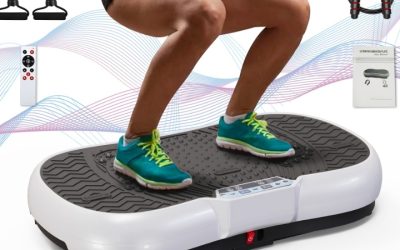
| 130-Level Vibration Plate | Trying the category without overspending | Broad speed range at a modest price | Lighter build limits heavy dynamic use |
| Renoj 3D Vibration Platform | Moderate budget with recovery focus | Multi-plane motion at a mid price point | More mechanism to eventually wear out |
| Lifepro Waver | Getting the most workout per dollar | Bands included turn it into full-body work | Value depends on actually using the bands |
| MERACH CV30 Pro Curved | Long-term daily users | Quiet operation supports frequent sessions | Premium price for comfort, not capability |
| SEDOZIK Vibration Plate | Households sharing one machine | 450 lb capacity suits multiple users | Paying for features you may never open |
| HVX Vibration Platform | Committed home gym builds | Built to absorb years of regular use | Poor value if used only occasionally |
How to Choose
- Set an honest session target: Below two sessions a week, buy the least expensive capable unit. Above four, the quieter and better-built machines justify themselves because you will notice their advantages every day.
- Count the accessories you already own: If you have resistance bands, a bundled set adds little. If you do not, an included band kit meaningfully changes what the machine can do and is worth paying a bit more for.
- Weigh noise as a cost: A loud plate is used at inconvenient times or not at all. Quiet operation is not a luxury feature; it is what allows the machine to fit into a normal evening, which drives frequency, which drives value.
- Beware of paying for level counts: The jump from 99 speeds to 130 changes nothing about the experience. Spend the difference on build quality, deck size or a proper mat instead.
- Include the mat in the budget: Isolation matting protects the floor, cuts noise, stops creeping and extends the machine’s life. It costs a fraction of the plate and prevents the problems that lead to abandonment.
Top Picks Reviewed
Lowest Risk Entry: 130-Level Vibration Plate
If you are unsure whether you will use a plate at all, this answers the question at the lowest cost. The speed range is more than adequate for standing sessions and calf work.
It is not built for aggressive dynamic loading. Do heavy squats on it several times a week and you will find its limits sooner than you would like.
Best Value for Full-Body Work: Lifepro Waver
The bundled bands are what convert a passive platform into something resembling a workout. Rows, presses and pulls from a vibrating base give you a reason to use it that standing alone never provides.
That value only materializes if you use them. Plenty of owners leave the bands in the box, in which case the extra cost bought nothing.
Best for Daily Habits: MERACH CV30 Pro Curved
Quiet operation and a comfortable curved deck are exactly the qualities that get a machine used every evening rather than twice a month. For a daily user the price spreads out fast.
You are paying for refinement, not extra capability. A cheaper plate does the same mechanical job; it is just less pleasant to live with.
Best Shared Purchase: SEDOZIK Vibration Plate
A 450-pound rating means several people of different sizes can use it without stressing the machine, which spreads the cost across a household.
The connectivity features add price without adding much function. If nobody in the house will open the app, that portion of the spend is wasted.
Best Long-Term Investment: HVX Vibration Platform
Built to take years of frequent use, with a deck wide enough that it will not limit your routine as your training develops. For a serious home gym it amortizes well.
Bought for occasional use, it is the worst value here: expensive, heavy, and taking up floor space that could hold something you use more often.
Best Mid-Range Compromise: Renoj 3D Vibration Platform
A reasonable price for multi-directional movement, light enough to move and store, and pleasant enough for regular short recovery sessions.
More complex mechanisms have more to wear. Over a long ownership period expect it to develop looseness sooner than a simpler, heavier design.
Frequently Asked Questions
How many sessions justify a mid-priced plate?
At three sessions a week, most mid-range units drop below a dollar per use within the first year. Below one session a week, almost nothing in this category represents good value.
Is a more expensive plate more effective?
Not mechanically. Higher-priced units are quieter, sturdier and more comfortable, which increases how often you use them, but the underlying stimulus is broadly similar across the range.
Do I need the bands and accessories?
If you want the plate to be a workout rather than a sensation, yes. Bands are the difference between passive standing and actual resistance training on a moving surface.
What resale value do these hold?
Poor, generally. The secondhand market is full of lightly used plates from people whose expectations were not met, which is worth remembering as an argument for buying carefully the first time.
Final Thoughts
Match spending to realistic frequency. Buy cheap to test the habit, buy mid-range with bands if you intend to train on it, and buy heavy and quiet only if you know you will step on it most days. Add a rubber mat regardless, and be honest that this is a tool for accumulating movement minutes rather than a shortcut to anything.

Write Your Review
No reviews yet. Be the first to share your experience!