
Key takeaways
- Target Use Body Part: Ankle, Wrist
- Target Audience: men, teenager, women
- Specific Uses For Product: Physical Therapy, Strength Training
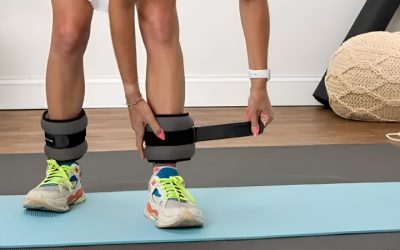
The complaint that ends most ankle weight habits is not fatigue. It is a red stripe across the ankle bone, or a strap edge sawing at the Achilles for the last ten minutes of a session. Loaded fabric pressed against a joint that moves several thousand times an hour is a friction problem first and a training tool second, and the products that solve it well do so through specific choices: where the closure sits, how wide the load is spread, what the inside face is made of, and whether the cuff can be tightened without cranking it down.
Fit is the other half. An ankle cuff needs enough strap to overlap generously on your leg, but a cuff sized for a 12-inch calf circumference wrapped around a slim ankle leaves a long tail that slaps the opposite leg. Too short, and you tighten it past comfortable just to make it hold. The options below are compared on skin contact, pressure distribution and closure behaviour — the details that decide whether you finish the set or spend it adjusting.
Our top picks
 Sportneer Adjustable Ankle Weights
- Target Use Body Part: Ankle, Wrist
- Target Audience: men, teenager, women
- Specific Uses For Product: Physical Therapy, Strength Training
 BAGAIL Ankle Wrist Weights for Women &
- Target Use Body Part: Ankle, Arm, Legs, Wrist
- Product Style: 2 Lb Pair (1 Lb Each)
- Material: Lycra-SBR Fabric, iron sand


 Ankle Weights for Women
- Target Use Body Part: Ankle
- Recommended Uses For Product: Gym, Gymnas, Strength Training
- Product Style: 4Lbs Pair (2lb x 2) - Blue
As an Amazon Associate we earn from qualifying purchases at no extra cost to you. Ratings are shown as listed on Amazon.
Quick Comparison
| Product | Best For | Standout Feature | Watch Out For |
|---|---|---|---|
| Sportneer Adjustable Ankle Weights (2–10 lb Pair) | Bare-leg training | Soft neoprene face against the skin | Gets warm and damp on longer sessions |
| BAGAIL Ankle & Wrist Weights, Set of 2 | Slim ankles and wrists | Shorter cuff that does not leave a long tail | Narrow band concentrates pressure at heavier loads |
| Amazon Basics Adjustable Ankle Weights | Wearing over socks or leggings | Straightforward wrap that closes anywhere | Strap edge can press on bare skin |
| Sportneer Removable-Weight Cuff | Reducing bulk for comfort | Pull bars out to slim the cuff profile | Half-empty channels can bunch if unevenly loaded |
| Sportneer Neoprene Adjustable Pair | Sensitive skin | Smooth face with no exposed stitching inside | Neoprene needs drying or it starts to smell |
| Adjustable Ankle Weights, 1–20 lb Pair | Larger legs and heavier loads | Long strap that overlaps well on bigger calves | Tall cuff crowds the calf on shorter legs |
How to Choose
- Measure before buying: Wrap a tape just above the ankle bone. You want a cuff whose strap overlaps that measurement by several inches, not one that closes exactly.
- Inside face texture: Smooth neoprene is kindest against bare skin. Exposed seams, edge binding or a rough hook patch on the inside are the usual sources of irritation.
- Load spread: Weight distributed across a wide band presses less at any single point than the same weight packed into a narrow strip.
- Closure placement: A cuff you can close on the outside of the leg keeps the bulky overlap away from where your ankles pass each other.
- Layer plan: If you train in shorts, prioritise the softest face; if you always wear leggings, a plainer shell is perfectly comfortable and often cheaper.
Top Picks Reviewed
Most Comfortable on Bare Skin: Sportneer Adjustable Ankle Weights
The neoprene face is the reason this pair survives long floor sessions. It conforms to the leg without a hard edge, and because the load sits in bars spread across the width of the cuff rather than pooling in one section, the pressure never concentrates into a single hot spot at 6 or 8 lb per pair.
The predictable downside of neoprene is heat. Forty minutes in and the inside face is damp, which is fine during the session and unpleasant the next day if you rolled it up and put it away. Open the cuff and let it air, every time.
Best for Slim Ankles: BAGAIL Ankle and Wrist Weights
Because this cuff is short enough to work on the wrist, it also fits a narrow ankle without a foot of leftover strap flapping around. That matters during any movement where your legs pass close together — a long tail catches, drags, and eventually peels the closure open.
The compromise is that a shorter, narrower band spreads load over less area. At 4 or 5 lb the pressure becomes noticeable against the bone, so this is a design that is most comfortable in its lighter weights.
Best Over Clothing: Amazon Basics Adjustable Ankle Weights
Worn over a legging or a thick sock, the plain wrap construction is genuinely comfortable and the simple closure lets you position the overlap wherever suits. There is nothing to dig in when a fabric layer sits between the cuff and your skin.
Directly against bare skin it is a different experience: the strap edge is firmer than a padded neoprene cuff and can leave a temporary line. Rotating the closure position between sessions prevents that turning into a persistent sore spot.
Best for Larger Legs: Adjustable Ankle Weights, 1–20 lb Pair
The long strap on this style gives generous overlap on bigger calves, which means you can close it firmly without stretching the closure to its limit. That is the difference between a cuff that stays put and one you retighten every few minutes.
On a shorter lower leg, though, the cuff is tall enough to ride up into the calf muscle, where it compresses on every contraction. If your leg is short below the knee, keep to the lower loads where the cuff is slimmer.
Frequently Asked Questions
How tight should the cuff be?
Snug enough that it does not travel when you shake your leg, loose enough to slide a finger underneath. Cranking it tighter to stop slipping usually means the closure is worn or the cuff is too heavy for its width.
Why do I get red marks even with a loose cuff?
That is usually friction from movement rather than pressure. A cuff that shifts a centimetre each rep rubs continuously. Reposition it slightly higher on the leg where the surface is softer and less bony.
Can I wear them over socks?
Yes, and it is the simplest fix for irritation. A crew sock under the cuff eliminates direct edge contact and absorbs the moisture that makes neoprene cling.
What if one cuff always slides and the other does not?
Legs are rarely identical, and the hook-and-loop on one cuff often wears faster because it gets closed and opened more aggressively. Swap the cuffs between legs periodically to even the wear out.
Final Thoughts
Comfort is a fit problem, so start with a tape measure rather than a weight rating. Neoprene-faced Sportneer cuffs are the safest choice for bare-skin training, the shorter BAGAIL cuffs suit narrow ankles at light loads, and the longer 1–20 lb style is the one that closes properly on a larger calf. Whichever you pick, air it out after every session — a comfortable cuff that has been stored damp stops being comfortable fast.

Write Your Review
No reviews yet. Be the first to share your experience!