Our Top Picks
 90 Gallon Sandblasting Cabinet with 1.8 Gallon Dust90 Gallon35.7 x 23.1 x 54.7 inches112 PoundsCheck on Amazon
 LOLGYM 60 Gal Heavy Duty Sandblasting Cabinet with60 Gallon-Red37.1 x 22.9 x 54.5 Inches78.7 poundsCheck on Amazon
The best sandblasting cabinet for a home workshop is the smallest one that fits your largest regular part and works with the compressor you already own. This set of ten listings runs from entry-level benchtop boxes to premium steel cabinets that hold well over a hundred pounds of media, so we sort them by size, claimed pressure range and extras. Everything below comes from listing titles, general knowledge of the category and buyer reviews, not from anyone blasting parts.
Top picks at a glance
90 Gallon Sandblasting Cabinet with 1.8 Gallon Dust Collection System, 40-120PSI Sand Blasting Cabinet with Stand, Heavy Duty Sand Blaster with Blasting Gun & 4 Nozzles for Paint, Rust Removal
One of the home product options compared in this guide.
View on Amazon
VEVOR 40 Gallon Sandblasting Cabinet, 40-120PSI Portable Benchtop Sand Blasting Cabinet, Heavy Duty Steel Sand Blaster with Blasting Gun & 4 Ceramic Nozzles for Paint, Stain, Rust Removal
One of the home product options compared in this guide.
View on Amazon
VEVOR 25 Gallon Sandblasting Cabinet, 40-120PSI Portable Benchtop Sand Blasting Cabinet, Heavy Duty Steel Sand Blaster with Blasting Gun & 4 Ceramic Nozzles for Paint, Stain, Rust Removal
One of the home product options compared in this guide.
View on Amazon
90 Gallon Sandblasting Cabinet, 40-90PSI Sand Blast Cabinet with Dust Collector, LED Lights, Blasting Gun & 4 Ceramic Nozzles, Floor Stand Blast Cabinet for Paint, Rust Removal
One of the home product options compared in this guide.
View on Amazon
Parts-Diyer 90 Gallon Sandblasting Cabinet,Red
One of the home product options compared in this guide.
View on AmazonLOLGYM 60 Gal Heavy Duty Sandblasting Cabinet with Stand & Nozzles, Red | 60 Gal Heavy Duty Steel Sandblasting Cabinet, LED Light, 4 Ceramic Nozzles, 40-120 PSI, Rust Removal, Red
One of the home product options compared in this guide.
View on Amazon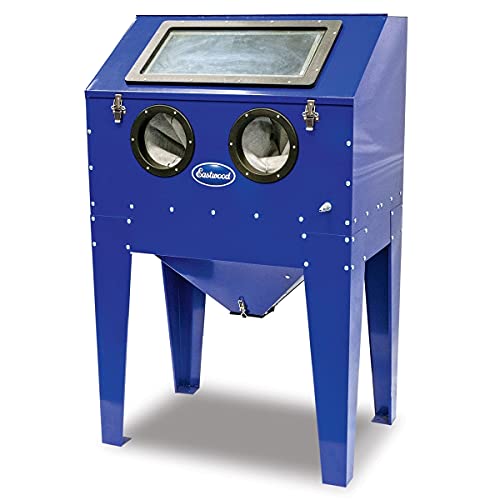
Eastwood B60 Sand Blasting Cabinet | Steel Sand Media Blaster Cabinet Kit | for Paint Removal, Metal Restoration, Rust Removal, Sandblasting | Holds Up to 120 Lbs of Abrasive Media
One of the home product options compared in this guide.
View on Amazon
Parts-Diyer 60 Gallon Air Sandblasting Cabinet
One of the home product options compared in this guide.
View on Amazon
AutoForever 25 Gallon Bench Top Air Sandblasting Cabinet,Red | Heavy Duty Steel, Sand Blaster with Blasting Gun & 4 Nozzles, 40-80 PSI, Portable, For Paint, Rust, Stain Removal
One of the home product options compared in this guide.
View on Amazon
Eastwood B120 Sand Blasting Cabinet Kit | Heavy Duty Steel Sand Blaster Media Cabinet for Paint Removal, Metal Restoration, Rust Removal, Sandblasting | Holds Up to 150 Lbs of Abrasive Media
One of the home product options compared in this guide.
View on Amazon| Model | Key point from the title | Price tier | Best for |
|---|---|---|---|
| Eastwood B120 | Holds up to 150 lbs of media, heavy duty steel | Premium | Frequent restoration work |
| Eastwood B60 | Holds up to 120 lbs of media, steel kit | Premium | Serious hobbyists |
| 90 Gallon with 1.8 Gallon Dust Collection (VEVOR brand) | 40-120PSI, stand, 4 nozzles | Mid-range | Larger parts with dust control |
| Oarlike 90 Gallon | 40-90PSI, dust collector, LED lights | Mid-range | Floor-standing shop use |
| Parts-Diyer 90 Gallon, Red | Title gives capacity and color only | Mid-range | Big cabinet on a tighter budget |
| Parts-Diyer 60 Gallon | Title gives capacity only | Mid-range | Mid-size parts |
| LOLGYM 60 Gal | 40-120 PSI, LED light, stand, 4 ceramic nozzles | Budget | Value-minded garage users |
| VEVOR 40 Gallon | Benchtop, 40-120PSI, 4 ceramic nozzles | Budget | Small and medium parts |
| VEVOR 25 Gallon | Benchtop, 40-120PSI, 4 ceramic nozzles | Budget | Tiny parts, tight spaces |
| AutoForever 25 Gallon | Benchtop, 40-80 PSI, portable | Budget | Occasional small jobs |
What is changing in this category
Blast cabinets used to be a serious-shop purchase, but a wave of low-cost steel cabinets now targets restorers, bike builders and weekend DIY users. Listings tend to follow the same template: a gallon number, a PSI range, a gun, four nozzles, sometimes LED lights and a dust collector. That sameness makes it easy to compare headline specs and easy to miss the details that determine daily usability.
Those details include gauge quality, glove material, window durability, how the door seals, and how the cabinet feeds media to the gun. Titles rarely cover them. In general, hobby cabinets use a siphon-fed approach and larger industrial systems use pressure-fed, but these listings do not say, so ask before buying if that distinction matters for your work.
It is also worth noting that several listings are close cousins. The VEVOR 25 and 40 gallon models share almost the same title, and the two 90 gallon listings with dust collectors read similarly. We have no inside information on who builds what, so we flag that these look like near-duplicates on paper and may offer very similar hardware.
If you already own a compressor, start there. Many hobby users find that the compressor, not the cabinet, sets the pace of the work, which is why the compressor question appears again in our buying guide. And because listings change, treat our tier labels as a snapshot of this set, not a lasting ranking.
How we picked these
We assembled ten cabinets spanning benchtop to floor-standing and budget to premium, then compared what each title states: capacity, pressure range, included nozzles, lighting, dust collection and media limits. We also considered general knowledge of how blast cabinets are used and patterns in buyer reviews. Nobody on the team used or measured these units. Anything the title leaves out is marked “check the listing,” and numbers are seller claims unless labeled as our estimates.
The ten cabinets, one by one
Eastwood B120 Sand Blasting Cabinet Kit
The title describes a heavy duty steel cabinet kit for paint removal, metal restoration and rust removal that holds up to 150 lbs of abrasive media. It sits at the very top of this set, well above the other listings.
A scenario: a restorer blasting suspension parts, brackets and small panels weekly would care about durability and media capacity. One oddity: the “B120” name suggests double the “B60,” yet the titles state 150 lbs against 120 lbs, so do not assume the cabinet is twice the size. Check the listing for interior dimensions and included accessories.
Who should skip it: occasional users. A cabinet this large and costly only makes sense if you blast regularly and have the floor space, a strong compressor and a safe way to handle and store up to 150 lbs of media. For a few jobs a year, a mid-range cabinet or a local blasting service would likely cost less over time.
Pros
- Highest stated media capacity in the set
- Heavy duty steel construction per the title
- Sold as a kit aimed at restoration work
Cons
- Highest price tier by a wide margin
- Title gives no PSI range, nozzle count or dust collection details
Check the listing for what is included. Question to ask: will you blast often enough to justify the premium over a mid-range 90 gallon cabinet?
Eastwood B60 Sand Blasting Cabinet
This listing describes a steel media blaster cabinet kit for paint removal, metal restoration and rust removal, holding up to 120 lbs of abrasive media. It is the smaller of the two Eastwood cabinets and still sits in the premium tier here.
The brand sells it as a kit, so it may suit someone who values a known name and parts availability. A scenario: a hobbyist who restores motorcycle parts a few times a month. The title says nothing about PSI limits, lighting or dust collection, so verify those details. Because capacity is stated in pounds of media, not gallons, direct comparison with the other listings is hard.
Who should skip it: shoppers who want a long feature list in the title. The listing leaves out the very details that many rivals advertise, such as lights and dust collection, so it reads as a bet on the brand and the steel build. If you want those features confirmed up front, the Oarlike or the 90 gallon dust-collection listing says more.
Pros
- Steel construction stated in the title
- Clear media capacity
- Aimed at restoration jobs
Cons
- Premium cost for a title with few listed features
- No stated PSI range, nozzles or lighting
Check the listing for gun, nozzle and light details. Question to ask: does the brand premium buy something you will notice, such as support and replacement parts?
90 Gallon Sandblasting Cabinet with 1.8 Gallon Dust Collection System
The listing is filed under the VEVOR brand, though the title itself does not name it. It describes a 90 gallon cabinet with a 1.8 gallon dust collection system, a 40-120PSI range, a stand, a heavy duty blasting gun and four nozzles for paint and rust removal.
The dust collection mention is the main selling point, since dust clouding the viewing window is a common frustration. A scenario: cleaning rusty wheels or larger brackets in a garage where tidy air matters. A 1.8 gallon collector sounds small, so ask how often it needs emptying.
Who should skip it: people with a single-car garage already full of tools. A 90 gallon cabinet is bulky even when it ships flat, and it asks for a proper compressor and a steady electrical and air setup. Smaller parts-only users can get by with a benchtop cabinet at a lower tier.
Pros
- Large claimed capacity with dust collection
- Wide 40-120PSI range stated
- Stand and four nozzles included, per the title
Cons
- Large footprint and weight need floor space
- Title does not say if lighting is included
Check the listing for interior dimensions and filter details. Question to ask: do you have the compressor to support the top of that PSI range?
Oarlike 90 Gallon Sandblasting Cabinet
The title names a 90 gallon cabinet with a 40-90PSI range, a dust collector, LED lights, a blasting gun, four ceramic nozzles and a floor stand, for paint and rust removal. It reads much like the previous listing but quotes a lower maximum pressure and adds lights.
LED lights are an easy way to improve visibility inside the box. A scenario: evening garage sessions where the shop’s overhead lighting does not reach inside the cabinet. The lower 90 PSI ceiling may matter if you plan heavier coatings, though many users rarely run at the maximum. Treat both as seller claims.
Who should skip it: buyers who want the widest pressure range. The 40-90PSI claim tops out below several other listings, and the brand is less known, so lean on seller support and return terms. Also compare how the dust collector is described, since the title does not give its capacity.
Pros
- Lights and dust collector both named
- Ceramic nozzles listed
- Mid-range tier for a 90 gallon unit
Cons
- Lower maximum pressure than some rivals
- Dust collector size not stated
Check the listing for glove and window quality. Question to ask: does the lower pressure range cover the work you have in mind?
Parts-Diyer 90 Gallon Sandblasting Cabinet, Red
The entire title reads “Parts-Diyer 90 Gallon Sandblasting Cabinet,Red,” so everything beyond capacity and color is unknown. We cannot say whether it includes a gun, nozzles, lights or dust collection.
That vagueness is the main issue. A scenario: someone who already has a gun and wants a large cabinet shell might look at it, but only after reading the full listing. For anyone expecting an all-in-one package, the other 90 gallon listings are clearer. We also cannot compare it with them on pressure range.
Who should skip it: anyone who needs certainty. A short title can hide a thorough listing, but it can also signal a bare-bones product, and we cannot tell which from the headline. Open the full page, read the bullet points, and look at buyer questions before deciding that this big, mid-range cabinet is the right one.
Pros
- Large claimed capacity
- Mid-range tier
Cons
- Title gives almost no features
- Hard to judge value against more detailed listings
Check the listing for everything: contents, pressure range, lighting, dust collection and warranty. Question to ask: what exactly is in the box?
Parts-Diyer 60 Gallon Air Sandblasting Cabinet
The title says only “60 Gallon Air Sandblasting Cabinet,” so it has the same information gap as its 90 gallon sibling. The word “air” suggests compressed air operation, which is standard, but nothing else is stated.
A scenario: mid-size parts such as small panels or brake components. The mid-range tier is above the LOLGYM 60 gallon listing, which names more features for less, so this one needs a clear reason to choose it, such as seller support or included extras you confirm on the page.
Who should skip it: shoppers who want lights, a stand and ceramic nozzles confirmed. The title names none of them, while the 60 gallon LOLGYM listing names several for a lower tier. If the page text matches the LOLGYM on features, the choice comes down to seller support and delivery terms.
Pros
- Mid-size capacity
- Mid-range tier
Cons
- Sparse title
- Priced above a more detailed 60 gallon alternative
Check the listing for contents and specifications. Question to ask: why choose this over a cabinet whose title spells out the gun, nozzles and lights?
LOLGYM 60 Gal Heavy Duty Sandblasting Cabinet
The title lists a 60 gal heavy duty steel cabinet with a stand and nozzles, an LED light, four ceramic nozzles and a 40-120 PSI range for rust removal, in red. For the budget tier it names a lot of extras.
A scenario: a garage hobbyist cleaning mid-size parts who wants lighting without paying for a 90 gallon cabinet. The brand is less familiar, so lean on the listed warranty and return terms. “Heavy duty” is a seller word; check gauge and weight in the listing.
Who should skip it: buyers who want a known name or a dust collector. For many hobby jobs a mid-size cabinet with light and a stand is enough, but the combination of an unfamiliar brand and no dust-handling feature in the title means you should check reviews for window clarity and door sealing before buying.
Pros
- Lighting, stand and four ceramic nozzles named
- Wide pressure range stated
- Budget tier
Cons
- Dust collection is not mentioned
- Little brand track record to lean on
Check the listing for filter or dust-handling features. Question to ask: how will you manage dust if none is included?
VEVOR 40 Gallon Sandblasting Cabinet
This benchtop cabinet is described as portable, with a 40-120PSI range, a heavy duty steel body, a blasting gun and four ceramic nozzles for paint, stain and rust removal. It is a budget-tier step up from the smallest boxes.
A scenario: someone with a workbench and a modest compressor, cleaning tools, hardware and small engine parts. Benchtop does not mean light, so confirm weight and whether the bench can carry it. The title does not mention lighting or dust collection.
Who should skip it: anyone cleaning wheels, large panels or long parts. A benchtop work area limits what fits, and a 40 gallon number does not tell you the opening width. The bench also has to carry the weight, so check dimensions and your bench rating against the product page.
Pros
- Benchtop size saves floor space
- Four ceramic nozzles and a wide PSI range per the title
- Budget tier
Cons
- Smaller work area than floor-standing models
- No stated lighting or dust collector
Check the listing for interior dimensions. Question to ask: is your largest regular part smaller than the work area?
VEVOR 25 Gallon Sandblasting Cabinet
The title is almost identical to the 40 gallon listing, with the capacity changed to 25 gallons. It is also benchtop and portable, with 40-120PSI, a steel body, a gun and four ceramic nozzles.
That makes the choice simple: it is the smaller, cheaper option for tiny parts such as screws, bolts and small tools. A scenario: a hobbyist with a small corner of a workshop. The tradeoff is limited space for gloved hands and larger objects, which is common for small cabinets.
Who should skip it: anyone who may graduate to larger projects. The difference in tier between the 25 and 40 gallon listings looks small on paper, so if you are on the fence, the larger benchtop model gives more room for a modest step up in cost. Verify the actual interior dimensions of both on the listing page.
Pros
- Smallest footprint with a wide PSI range stated
- Same nozzle set as the larger VEVOR
- Budget tier
Cons
- Cramped for anything larger than small parts
- No lighting or dust collection in the title
Check the listing for interior size. Question to ask: if you may soon want larger parts, is it worth stepping up now?
AutoForever 25 Gallon Bench Top Air Sandblasting Cabinet
The listing calls this a heavy duty steel benchtop cabinet, portable, with a blasting gun and four nozzles and a 40-80 PSI range for paint, rust and stain removal, in red. It has the lowest pressure ceiling in the set and sits at the lowest price tier.
A scenario: occasional cleaning of small tools and hardware where speed is not a priority. The lower range may cut aggressiveness, but the title gives no basis to say how well it performs. It is the one to consider only if budget and space dominate.
Who should skip it: anyone who plans to blast frequently or strip heavy coatings. The 40-80 PSI claim is the narrowest range here, and a very small chamber makes it hard to turn parts while keeping the gun at a steady distance. It suits light cleaning, not a restoration business.
Pros
- Lowest price tier in the set
- Portable benchtop size
- Includes gun and four nozzles per the title
Cons
- Lowest stated pressure range
- Small work area and no listed lighting or dust collection
Check the listing for nozzle material and glove quality. Question to ask: will you be frustrated by the lower pressure and size within a few projects?
Buying guide: how to choose a sandblasting cabinet
Start with your biggest part
Gallon numbers are loose capacity claims. Measure the largest object you expect to blast, add room for your hands and arms to move, and compare that with the interior and door dimensions. Floor-standing cabinets suit wheels and panels, and benchtop cabinets suit small parts.
Check compressor compatibility
None of the titles state air consumption. A cabinet can list a high PSI range, but the gun and nozzle determine how much air flow it needs. Compare the manufacturer’s air requirement with your compressor’s delivery rating and tank size. If the compressor runs constantly, you will be waiting more than blasting.
Plan for dust, light and visibility
Dust collection, window quality and lighting decide how pleasant the cabinet is to use. A clean window and a well lit interior prevent mistakes. Dust collectors need clean filters, and fine dust from coatings can be hazardous. Wear eye and respiratory protection suited to the media and coatings involved, and follow the manufacturer’s instructions and local codes.
Match media to the job
General patterns: glass bead for smoother finishes, aluminum oxide for faster cutting, softer media for delicate parts. Use only media the manual approves, keep it dry, and avoid silica-containing sand. Lead-based or unknown old paint needs special care, so check local rules before blasting it.
Plan the workspace around the cabinet
A cabinet also needs a workspace. Allow clearance around the door and dust collector, a stable floor or bench, a dedicated air line with a moisture trap where possible, and a place to store media away from damp. Damp media clumps and clogs the gun, which wastes time and nozzles. Keep a vacuum or brush nearby, because sweeping up spent abrasive is part of every session.
Consumables and spares
Gloves, window covers, nozzles, filters and gaskets are wear items. Before buying, check that spares for your chosen model are easy to find, and compare the cost of replacing them with the savings from a cheaper cabinet. A budget-tier cabinet can lose its price advantage if the consumables are hard to source.
Worked example: a weekend of small parts
Assume 24 small steel brackets, each about 6 inches long, and an estimated 5 minutes of blasting each. That is roughly 120 minutes of trigger time, or two hours, plus pauses for the compressor to recover. A 25 gallon benchtop cabinet fits one or two brackets at a time, while a 60 or 90 gallon cabinet gives room for repositioning. If the compressor cycles every few minutes, the weekend stretches, which is why air supply matters more than the cabinet’s gallon number. These are our planning estimates, not measurements.
| Spec concept | What to look for | Why it matters |
|---|---|---|
| Interior size | Dimensions, not only gallons | Determines which parts fit |
| PSI range | Range plus gauge and regulator | Controls aggressiveness |
| Air demand | Gun and nozzle air requirement | Must match your compressor |
| Dust control | Collector, filter access | Visibility and cleanliness |
| Gloves and window | Replaceable parts | Wear items that fail first |
Mistakes buyers make
Buying by gallon number alone is the classic error, followed by ignoring the compressor. Many buyers also skip dust and light, then struggle to see their work. Others pick sparse listings expecting a complete kit, or forget replacement nozzles, gloves, windows and media. Finally, people place cabinets in cramped, unventilated spaces. Plan floor space, power, air supply and safety gear before ordering.
A final point: sparse listings are not necessarily poor products, but they force you to do more homework. If you like a cabinet whose title says little, treat the product page, buyer questions and return policy as the real spec sheet. And if a title promises a pressure range, lights, a collector and four nozzles, confirm that they are included, not optional add-ons.
Verdict by use case
Small parts on a bench: VEVOR 25 or AutoForever 25. Mid-size parts on a budget: LOLGYM 60 or VEVOR 40. Floor-standing with dust and lights: Oarlike 90 or the 90 gallon with a dust collection system. Frequent restoration: Eastwood B60 or B120, if the brand support is worth the cost. Treat both Parts-Diyer listings as unknowns until the full page confirms what is included.
Related guides
Frequently asked questions
What size sandblasting cabinet do I need for a home garage?
Choose by the largest part you plan to blast, not by the gallon number. A benchtop cabinet handles small brackets, tools and carburetor-size parts, while a floor-standing 60 to 90 gallon style gives room for wheels or larger panels. Gallon ratings are seller claims, so look for interior dimensions and door or glove-port details, and check your floor space.
What air compressor do I need for a blast cabinet?
The listing titles here give a PSI range but not air consumption. Blast guns and nozzles vary in how much air they use, and a compressor that cannot keep up forces constant pauses. Check the manufacturer’s stated air requirement for the gun and nozzle, compare it with your compressor’s delivery rating, and expect a larger tank to help.
Is a dust collector necessary on a sandblasting cabinet?
Dust control matters because fine dust from media, coatings and rust can cloud the window and spread around the shop. A built-in dust collection system helps visibility and tidiness, but it still needs clean filters and correct installation. Wear eye and respiratory protection suited to the media and coatings involved, and follow the manufacturer’s instructions and local codes.
What abrasive media can I use in a hobby sandblasting cabinet?
Different media suit different jobs: glass bead for smoother finishes, aluminum oxide for faster cutting, and softer options for delicate parts, as a general pattern. Never assume any media is safe for every cabinet. Check the manual for approved media and particle sizes, and avoid media that your equipment or local rules say not to use, such as silica-containing sand.
Are cheap benchtop blast cabinets worth buying?
They can suit occasional small jobs such as cleaning bolts, brackets and tools, and their small footprint is a real advantage. The tradeoffs are smaller work areas, lighter-duty gloves and glass, and fewer included upgrades. If you plan weekly restoration work or large parts, a bigger floor-standing cabinet with dust collection and lighting is usually less frustrating.
Can I blast old painted parts safely?
Old coatings can contain hazardous materials, including lead in some older paints. Because we cannot give safety or legal advice, check your local rules, consider a lead-check kit or professional advice for unknown coatings, and use appropriate protection and disposal. Follow the cabinet manufacturer’s instructions and local codes, and do not blast materials the manual prohibits.