Our Top Picks
 PowerSmart 4000 Watt Portable Inverter Generator for Home1ps Pack of 2420.1 x 12.2 x 17.7 inches50.7 poundsCheck on Amazon
The quietest generators for home use are the Honda EU2200i (about 48 dB(A) at quarter load) for light backup, the WEN 56235i for the same job on a tighter budget, and the Westinghouse iGen4000DFc or iGen5000DF when you need 4,000 to 5,000 watts without a truck-engine racket. Every one of them is an inverter generator with an eco-throttle, and every one of them gets louder than its headline number once you put a real load on it.
Noise is the number-one complaint neighbors raise about backup power, and it is also the most misleading spec on the box. The figure printed on a carton is usually taken at one quarter of rated load and, in many cases, at a distance that is not stated or is closer than your property line. This guide explains how to read those numbers, how to turn them into what your neighbor will actually hear, and which models in the 1,000 to 7,000 watt range keep the sound down.
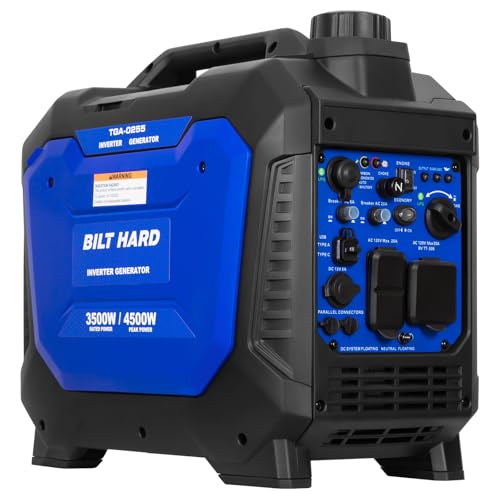
PowerSmart 4000 Watt Portable Inverter Generator for Home Use | Super Quiet <59dBA, 8H Long Runtime, Parallel Ready, Eco Mode, <3% THD Clean Power
Chosen because it specifies Super Quiet <59dBA and 8H Long Runtime.
View on Amazon
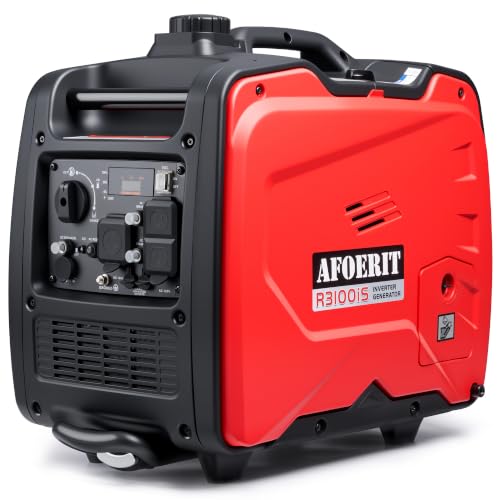
Aceup Energy 4000 Watt Gas Inverter Generator Portable Quiet for Home Use | Super Quiet, Lightweight, RV-Ready for Camping, EPA Compliant,4-stroke 149cc Power Generator
Chosen because it specifies Super Quiet and Lightweight.
View on Amazon
ERAYAK 2400W Portable Inverter Generator for Home Use, Super Quiet Small Generator for Camping Outdoor Emergency Power Backup, Gas Powered Engine, EPA, ECO Mode
Chosen because it specifies Gas Powered Engine and EPA.
View on AmazonQuick Picks at a Glance
- Quietest overall for light backup: Honda EU2200i
- Best value for quiet 2,000-watt class: WEN 56235i
- Best quiet dual fuel at a small size: Westinghouse iGen2800DFc
- Best 4,000-watt class for whole-circuit essentials: Westinghouse iGen4000DFc
- Best 5,000-watt class: Westinghouse iGen5000DF
- Best for long run times and low noise: Honda EU3000iS
- Best for 6,000-watt class demand: Honda EU7000iS
- Best light budget dual fuel: Champion 2500-watt dual fuel inverter
How We Chose
This is a research-based guide, not a first-hand evaluation. We compared manufacturer spec sheets and published decibel ratings, cross-checked them against independent buying guides, and kept only models where the rated sound level, wattage, weight and fuel type could be confirmed from at least one specification source. Where sources disagree on a figure (weight and runtime in particular), we describe the spec class instead of quoting a number we could not confirm.
Models were then grouped by what a buyer actually needs to run, because a quiet generator that cannot start your furnace blower is not a quiet solution, it is a disappointment. We favored inverter designs with variable-speed engines, a low-noise or eco mode, closed or partly enclosed housings, and parallel capability, since two small units can be quieter than one large one.
How to Read Generator Noise Ratings
Decibels are logarithmic, so small gaps matter
Every 10 dB increase is perceived as roughly twice as loud, and every 3 dB increase doubles the sound energy. A generator rated 57 dB(A) is not slightly louder than one rated 48 dB(A). It is a clear step up, close to twice as loud to the ear.
Check the load and the distance
Two conditions change the number more than anything else:
- Load. Many ratings are given at 25 percent of rated output with the eco-throttle on. At full load the engine speeds up and the number rises, often by 7 to 10 dB.
- Distance. Some ratings are measured at 7 meters, which is about 23 feet, the common reference. Others are measured closer. If the distance is not stated, assume the number is a best case.
Distance math you can do yourself
In open air, sound pressure drops about 6 dB every time you double the distance from the source. That gives you a simple way to estimate what a neighbor hears.
- Start with the rated level at 23 feet. Example: 57 dB(A).
- Measure the distance from the generator spot to the neighbor’s window or your campsite boundary. Example: 92 feet, which is 23 feet doubled twice.
- Subtract 6 dB for each doubling. 57 minus 12 gives about 45 dB(A).
- Add back 7 dB if the unit will run near full load: about 52 dB(A).
- Compare the result with the local limit or the ambient level. A quiet suburban night sits around 35 to 45 dB(A), so 52 dB(A) is still audible, while 45 dB(A) blends in.
Walls, fences and hedges help only a little in practice, and hard surfaces such as a house wall behind the generator reflect sound back. Put the unit on grass or soil, not on a deck, and aim the exhaust and the engine side away from the neighbor.
What Makes a Generator Quiet
- Inverter engine with variable throttle. The engine speed follows the load. At light loads it idles down, which is where the best decibel ratings come from.
- Eco-throttle behavior. Eco mode is where the low number lives. If a model has no eco switch or the eco mode is limited, its real-world noise at light load is higher than the brochure suggests.
- Enclosure design. Fully enclosed housings with sound-absorbing lining and a baffled muffler reduce high-frequency engine noise. Open-frame units can be 10 dB louder at the same output.
- Muffler quality and exhaust direction. A larger muffler and a side-facing exhaust lower the sharp pitch that carries furthest.
- Parallel capability. Two 2,000-watt units linked with a parallel kit often make less noise at a shared load than one 4,000-watt unit working hard, and you can run one unit at night.
Comparison Table: Quiet Generators for Home Use
| Model | Start / Run Watts | Rated Noise (quarter load) | Fuel | Parallel | Best Fit |
|---|---|---|---|---|---|
| Honda EU2200i | 2,200 / 1,800 | 48 dB(A) | Gasoline | Yes | Fridge, lights, electronics, camping |
| WEN 56235i | 2,350 / 1,900 | 51 dB(A) | Gasoline | Yes | Budget quiet backup |
| Champion 2500W dual fuel inverter | 2,500 / 2,200 class | 53 dBA at 23 ft | Gasoline or propane | Yes | Dual fuel on a budget |
| Westinghouse iGen2800DFc | 2,800 / 2,200 | 52 dB(A) | Gasoline or propane | Yes | Compact dual fuel |
| Honda EU3000iS | 3,000 / 2,800 | 50 dB(A) | Gasoline | Yes | RV, long run time |
| Westinghouse iGen4000DFc | 4,000 / 3,300 | 52 dB(A) | Gasoline or propane | Yes | Furnace fan, sump pump, fridge |
| Westinghouse iGen5000DF | 5,000 / 3,900 | 52 dB(A) | Gasoline or propane | Yes | Larger essentials, 30-amp RV |
| Honda EU7000iS | 7,000 / 5,500 | Low 50s to upper 50s dB(A) class | Gasoline | Yes | Near whole-home essentials |
Noise figures are the manufacturer or specification-source ratings at light load. Expect higher readings at full output.
Best Quiet Generators by Buyer Need
Group 1: Under 2,500 running watts (fridge, lights, internet, phones)
This is the quietest class. A 2,000-watt inverter handles a refrigerator, a few lights, a modem and phone charging at the same time, and runs at the bottom of its eco curve while doing it.
Honda EU2200i
Spec line: 2,200 starting W · 1,800 running W · about 48 dB(A) at quarter load · inverter with Eco-Throttle · parallel-ready · gasoline
Best for: Neighborhoods with strict quiet hours, HOA communities, campgrounds with quiet-hour rules, and anyone who wants the lowest published noise figure in a portable.
Skip if: You need to run a 240-volt well pump or central air; this is a 120-volt light-duty unit.
- Pro: The lowest decibel rating in this guide among generators that can power a fridge and electronics together.
- Pro: Light enough for one person to carry and lift into a vehicle.
- Con: Premium pricing for a small output.
- Con: Fuel tank is small, so refills are frequent on long outages.
WEN 56235i
Spec line: 2,350 starting W · 1,900 running W · about 51 dB(A) at quarter load · inverter · parallel-ready · gasoline · USB ports
Best for: Budget-minded buyers who still want an enclosed inverter that stays below the 55 dB(A) line at light load.
Skip if: You expect brand-level support networks or heavy daily use; entry-level units are best treated as backup, not as a primary power source.
- Pro: Rated just a few decibels above the Honda at a much lower price tier.
- Pro: Light, with USB ports and a parallel option.
- Con: Some buyer guides report that real-world readings run above the rating at heavier loads.
- Con: Build quality and parts availability trail the premium brands.
Group 2: 2,500 to 3,500 running watts (fridge plus a window AC or furnace fan)
Champion 2500-watt dual fuel inverter
Spec line: 2,500-watt class · about 53 dBA at 23 feet · inverter · gasoline or propane · light enough to carry
Best for: Buyers who want propane as a fuel option, because propane stores for years and burns cleaner than gasoline.
Skip if: Noise is your top criterion. At 53 dBA it is louder than the Honda and WEN options above, and propane output is lower than gasoline output.
- Pro: Dual fuel flexibility for storm outages when gas stations are closed.
- Pro: The 23 foot measurement distance is stated, which makes the rating easier to compare.
- Con: Propane mode reduces rated watts compared with gasoline.
- Con: Not the lowest rating in its power class.
Westinghouse iGen2800DFc
Spec line: 2,800 starting W · 2,200 running W · about 52 dB(A) · inverter · gasoline or propane · parallel-ready · three AC outlets
Best for: Small homes and RV owners who want dual fuel and a little more headroom than a 2,000-watt unit.
Skip if: You need to run an air conditioner above 5,000 BTU hours or any 240-volt load.
- Pro: Dual fuel with a quiet rating in the low 50s.
- Pro: Parallel-ready for future expansion.
- Con: Heavier than single-fuel 2,000-watt units.
- Con: Propane output is lower than gasoline output.
Honda EU3000iS
Spec line: 3,000 starting W · 2,800 running W · about 50 dB(A) at quarter load · inverter with Eco-Throttle · electric start · parallel-ready · gasoline
Best for: Long outages and RV use, where large fuel capacity and a low eco-mode rating matter more than weight.
Skip if: You need to move it often by hand. It is on wheels for a reason, and it is much heavier than the 2,000-watt class.
- Pro: Low rating for its output and very long run time at light load.
- Pro: Electric start and a useful number of outlets.
- Con: Premium pricing and a heavy frame.
- Con: Gasoline only.
Group 3: 4,000 to 6,000 watts (the quiet big-unit class)
This is where the sound jumps. Larger engines, bigger mufflers and fans mean a 5,000-watt inverter at half load is typically louder than a 2,000-watt unit at the same percent load, even when the brochure number looks similar. If your needs fit in this class, consider whether two smaller units in parallel would suit you better.
Westinghouse iGen4000DFc
Spec line: 4,000 starting W · 3,300 running W · about 52 dB(A) · inverter · gasoline or propane · parallel-ready · three AC outlets plus USB
Best for: Whole-circuit essentials through a transfer switch or interlock: refrigerator, furnace blower, sump pump, lights and a router all together.
Skip if: You want one person to carry it around. It is wheeled equipment, not a camping pocket generator.
- Pro: A rated sound level in the low 50s at a 4,000-watt class output.
- Pro: Propane option for stored fuel.
- Con: Rating is for light load; sound rises noticeably near full output.
- Con: Short run time at quarter load compared with larger tanks.
Westinghouse iGen5000DF
Spec line: 5,000 starting W · 3,900 running W · about 52 dB(A) · inverter · gasoline or propane · parallel-ready · electric start · three AC outlets plus USB
Best for: Large essentials loads such as a 30-amp RV connection, a well pump on a soft starter, or a window AC plus the kitchen circuit.
Skip if: Your real load is under 2,000 watts. You would pay for and carry capacity you will never use, and a small inverter would be quieter.
- Pro: Highest running watts in this guide among dual fuel inverter units, with a long quarter-load run time.
- Pro: Electric start and a large tank for overnight use.
- Con: Heavy and bulky.
- Con: Noise climbs quickly once the load passes half of rated output.
Honda EU7000iS
Spec line: 7,000 starting W · 5,500 running W · low to upper 50s dB(A) class depending on load · inverter · electric start · parallel-ready · gasoline
Best for: Households that need 240-volt output for a well pump, central air condenser on a soft starter, or a full set of essentials, and want it with the lowest noise a unit this size can offer.
Skip if: Strict neighborhood noise limits apply and your neighbor is within 40 feet. At this output the level at the fence line is a real consideration. Check the manufacturer sound figure for your exact serial range before buying.
- Pro: Real whole-home capacity with an inverter-grade waveform that protects electronics.
- Pro: Quietest approach to 5,000 watts and up among portable generators.
- Con: Very heavy, with a premium price tier.
- Con: Quiet only in relative terms; it is still audible across a yard.
Information Gain: Size the Generator to the Noise Budget
The quietest way to run a generator is to size it so it spends its life below one third of rated output. Use this step-by-step logic.
- List what must run. Typical assumptions for planning: refrigerator about 150 running watts with a start surge near 700; furnace blower about 600 running with a surge near 1,200; sump pump about 800 running with a surge near 2,000; lights, router and chargers about 200 combined. Use the nameplate on your own appliances instead of these examples whenever you can.
- Add the running watts. 150 + 600 + 800 + 200 = 1,750 running watts.
- Add the single largest extra surge. The sump pump adds about 1,200 on top of its running load, so the peak is about 2,950 watts.
- Pick the unit. Peak 2,950 watts is above a 2,200-watt generator and fits a 4,000-watt class unit, which then runs at about 45 percent load. That is above the 25 percent point where the rating was measured, so expect a level several decibels above the brochure figure.
- Reduce the load to stay quiet. If you stagger the sump pump and furnace blower rather than running them together, the peak falls to about 1,750 watts and a 2,200 to 2,800-watt unit does the job at a much lower noise level.
- Check the distance rule. Apply the 6 dB per doubling math above to your property line.
The pattern is simple: the smallest generator that carries your staggered load is almost always the quietest solution.
Fit Matrix: Which Quiet Generator Fits Which Place
| Situation | Target Rated Noise | Target Size | Good Fit |
|---|---|---|---|
| Dense suburb, neighbor within 25 feet | 48 to 51 dB(A) or lower | Up to 2,500 running W | Honda EU2200i, WEN 56235i |
| Detached home, neighbor 50 feet or more | Up to 53 dB(A) | 2,500 to 3,500 running W | Westinghouse iGen2800DFc, Honda EU3000iS |
| Storm backup through a transfer switch | Up to 55 dB(A) at light load | 3,300 to 3,900 running W | iGen4000DFc, iGen5000DF |
| Campground with quiet hours | Under 60 dB(A) at 23 feet | 1,800 to 2,800 running W | Honda EU2200i, EU3000iS, iGen2800DFc |
| Whole-home essentials with 240-volt loads | Lowest available in class | 5,000 running W or more | Honda EU7000iS |
HOA and Campground Noise Rules
Rules vary a great deal by location, so treat the following as a checklist, not legal advice.
- HOA covenants. Many associations restrict generator use to emergencies or limit the sound level at the property line. Read the covenants and ask whether a stated limit is measured at the source or at the line.
- Municipal ordinances. Many cities set a nighttime limit in the range of 50 to 60 dB(A) at the property line and exempt declared emergencies. Look up your municipal code by searching the city name with the words noise ordinance.
- Campgrounds and parks. Many publish quiet hours and a maximum generator sound level, commonly around 60 dB(A) at a stated distance, and some require an inverter-type unit. Confirm the measurement distance when you book.
- Be a good neighbor. Run it during the day when possible, place it as far from bedrooms as the cord allows, and tell nearby neighbors before a planned outage test.
Safety Rules That Matter More Than Noise
- Carbon monoxide kills. Never run a generator inside a house, garage, basement, crawl space or any enclosed or partly enclosed space. Keep it outdoors and well away from doors, windows and vents, and follow the manufacturer’s minimum distance, commonly at least 20 feet from the house.
- Install CO alarms. Use battery-backed carbon monoxide alarms on every level of the home.
- Do not backfeed. Connecting a generator to a household outlet with a male-to-male cord is dangerous to you and to utility workers. Use a properly installed transfer switch or interlock fitted by a licensed electrician.
- Keep it dry. Run it on a flat, dry surface under a generator-rated canopy or tent with open sides, never in the rain without protection.
- Refuel with care. Shut it off and let it cool before refueling. Store fuel in approved containers away from living spaces.
- Do not build a closed box. Home-built enclosures that restrict airflow cause overheating and carbon monoxide risk. Use a manufacturer-approved or properly ventilated design, or simply use distance and orientation.
Common Mistakes When Buying a Quiet Generator
- Buying on the headline decibel number without checking the load and distance.
- Oversizing. A bigger engine is a louder engine at the same fuel flow.
- Skipping parallel capability when a future second unit would be quieter than one large unit.
- Placing the unit against a wall that reflects sound toward the neighbor.
- Ignoring the start surge of motor loads such as sump pumps and compressors.
Frequently Asked Questions
What is the quietest generator for home use?
The Honda EU2200i is rated at about 48 dB(A) at quarter load, among the lowest figures for a portable that can power a refrigerator and electronics. Larger loads need bigger, louder units.
If you need more than about 1,800 running watts, a 3,000 to 4,000-watt inverter such as the Honda EU3000iS or Westinghouse iGen4000DFc is the next step, and parallel-ready small units are another quiet route.
How many decibels is too loud for neighbors?
There is no universal limit, but many ordinances cap nighttime sound near 50 to 60 dB(A) at the property line, and levels above about 55 dB(A) are usually noticeable.
Use the rule of 6 dB lost per doubling of distance to estimate the level at the line, and check your city code and HOA covenants for the exact figure and where it is measured.
Does eco mode really make a generator quieter?
Yes, at light loads. Eco mode lets the engine slow down, which can lower the sound level by several decibels, but the benefit disappears as the load approaches the rated output.
Most published noise ratings are taken in eco mode at about 25 percent load, so expect higher readings when you run heavy loads such as a window air conditioner or a sump pump together with a furnace blower.
Are inverter generators always quieter than conventional ones?
Generally yes. Inverter generators vary engine speed with the load and use enclosed housings, while open-frame conventional models run at fixed speed and are often 10 dB louder or more.
The gap narrows near full load, and a large inverter at high output can be louder than a small conventional unit at light load, so match the size to the job.
Can a quiet 4,000 to 6,000 watt generator run a whole house?
Usually only essentials. A 4,000 to 5,000-watt unit can carry a refrigerator, furnace blower, sump pump, lights and electronics through a transfer switch, but not central air or an electric range at the same time.
Add up your running watts and the largest motor surge, then stagger big loads. A 240-volt well pump or central air condenser calls for the 5,500 running-watt class.
Is dual fuel quieter than gasoline only?
No. Fuel type does not change noise in a meaningful way. What changes is available output, since propane usually yields fewer rated watts than gasoline in the same engine.
Dual fuel is useful for storing fuel safely for years and for cleaner burning, but pick the model by its decibel rating at your expected load, not by its fuel options.
Where should I put the generator to reduce noise?
Place it outdoors on grass or soil, as far from windows and neighbors as the cords allow, with the exhaust pointed away. Keep it at least 20 feet from the house and in the open air.
Avoid placing it near a reflective wall or on a hard deck, and never build a closed box around it. Distance and orientation reduce noise safely, while sealed enclosures create overheating and carbon monoxide hazards.
Is it worth running two small generators in parallel?
Often, yes. Two parallel-ready 2,000-watt inverters can double your output and let you run one at night, and each runs at a lower percent load than a single small unit would.
You need the matching parallel kit from the manufacturer and equal or compatible models. The combined cost can exceed a single large unit, but the noise at light and medium loads is often lower than one big engine working hard.
Bottom Line
If noise is the priority, buy the smallest inverter generator that carries your staggered load, run it in eco mode, and put distance and soil between it and the neighbor. The Honda EU2200i and WEN 56235i lead the light class, the Honda EU3000iS and Westinghouse iGen2800DFc suit mid-size needs, and the Westinghouse iGen4000DFc, iGen5000DF and Honda EU7000iS cover the larger essentials class. Use the rated decibel number as a starting point, then do the distance math before you buy.