Our Top Picks
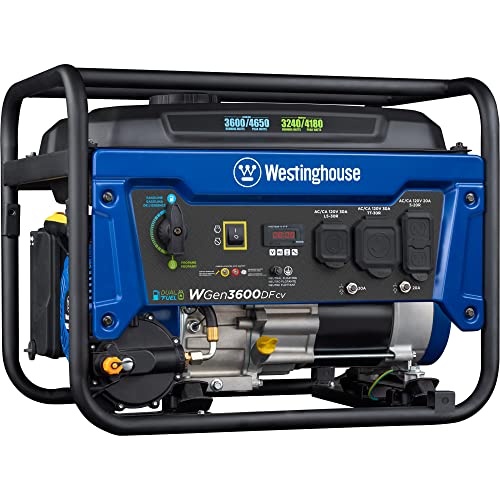 Westinghouse 4650 Peak Watt Dual Fuel Portable Generator23.3 x 18.5 x 18.9 inches108 PoundsCheck on Amazon
 Westinghouse 12500 Watt Dual Fuel Home Backup PortableWGen9500DF27.2 x 26.1 x 26.5 InchesCheck on Amazon
 Westinghouse 6500 Watt Dual Fuel Home Backup Portable21 x 18 x 19.09 inches135.6 poundsCheck on Amazon
The best propane generator for home emergency use is the Westinghouse WGen9500DF for whole-house backup, the Champion 7500-watt dual fuel for mid-size needs, and the WEN DF475T for essentials on a lower budget. A caveat up front: nearly every portable “propane generator” sold for home use is a dual-fuel unit that runs on propane or gasoline. We found no clearly verified propane-only portable in current roundups, so this guide compares dual-fuel models by how they perform on propane, and covers true propane-only options (standby units) as a class.
Propane is the favorite emergency fuel for good reasons. It does not go stale in the cylinder, it burns cleaner than gasoline and it needs no carburetor draining. But propane brings its own rules: output drops, cylinders run out faster than most people expect, and hoses, regulators and storage location all matter for safety. This guide covers all of that.
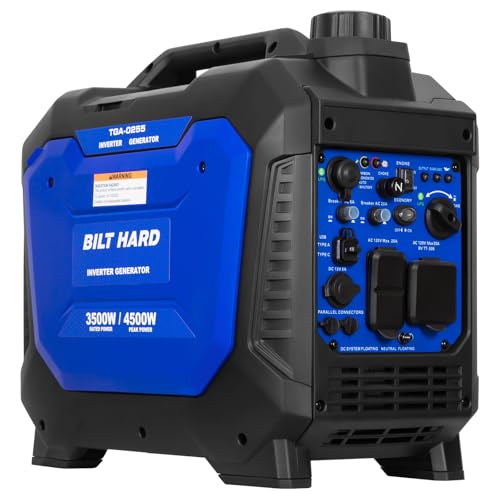
BILT HARD Dual Fuel Gas & Propane Powered Generator 4500W, Gas & Propane Powered Generator with CO Sensor, RV Ready, Parallel Capable, 4-Cycle Engine Portable Outdoor Generators for Home, Camping
Chosen because it specifies Gas & Propane Powered Generator with CO Sensor and RV Ready.
View on AmazonWestinghouse 4650 Peak Watt Dual Fuel Portable Generator, RV Ready 30A Outlet, Gas & Propane Powered, CO Sensor
Chosen because it specifies RV Ready 30A Outlet and Gas & Propane Powered.
View on AmazonWestinghouse 12500 Watt Dual Fuel Home Backup Portable Generator, Remote Electric Start, Transfer Switch Ready, Gas and Propane Powered
Chosen because it specifies Remote Electric Start and Transfer Switch Ready.
View on AmazonWestinghouse 6500 Watt Dual Fuel Home Backup Portable Generator, Transfer Switch Ready 30A Outlet, RV Ready 30A Outlet, CO Sensor
Chosen because it specifies Transfer Switch Ready 30A Outlet and RV Ready 30A Outlet.
View on AmazonQuick picks
- Best for whole-house emergency backup: Westinghouse WGen9500DF (8,500 running watts on propane).
- Best propane output retention: DuroMax 12,000-watt dual fuel (9,025 running watts on propane versus 9,500 on gas).
- Best mid-size: Champion 7500-watt dual fuel (6,750 running watts on propane) and WEN DF1100T (7,500 on propane).
- Best budget essentials: WEN DF475T (3,500 running watts on propane, hose included).
- Best quiet inverter for light loads: Pulsar 2200W dual fuel (1,600 running watts on propane), or the PowerSmart HB5040DC (3,100 on propane) when you need more power.
How we chose
This is a research-based guide, not a lab comparison. We compared published propane running and starting watts, tank and hose provisions, published runtime on a 20 lb cylinder, outlet layout and safety features. We used the propane figures rather than the gasoline headline numbers, since output on propane is lower, and we flagged specs we could not verify. Runtime figures come from published measurements and vary with load and temperature.
Why propane for emergencies
- Shelf life: Propane stored in a sealed cylinder does not degrade, so a filled spare is ready years later.
- Clean burn: It leaves fewer deposits in the engine and does not gum up a carburetor.
- Easy storage outdoors: Cylinders are standardized, easy to swap and safer to store than gasoline cans.
- Trade-off: Lower energy density per volume than gasoline, so output drops by roughly 5 to 15 percent and runtime per cylinder is limited.
Propane-only vs dual fuel vs tri-fuel
| Type | Fuel | Pros | Cons | Typical use |
|---|---|---|---|---|
| Dual fuel portable | Gasoline or propane | Fuel flexibility, output backup | Lower propane watts; some maintenance on gas side | Most home emergency use |
| Tri-fuel portable | Gas, propane or natural gas | Can use a house gas line | Heavy, more complex | Homes with natural gas |
| Propane-only standby | LP vapor or natural gas | Automatic start, permanent hookup | Professional installation, much higher cost tier | Whole-house permanent backup |
If you want a propane-only unit, it will almost always be a permanently installed standby generator, which needs a licensed installer, permits and a plumbed fuel supply. For portable use, choose dual fuel and run it on propane.
How long will a 20 lb cylinder run a generator?
Published runtime figures vary widely because load matters. Reported numbers include about 7 hours at 50% load for a Westinghouse WGen9500DF, about 5.5 hours for a Champion 7500-watt unit, about 11 hours at half load for a WEN DF475T, and up to 21 hours for a small inverter such as the Champion 200988. Some mid-size units claim 24 to 25 hours at 25% load, though independent measurements land nearer 14 hours.
Worked example: runtime from cylinder size
A 20 lb cylinder holds about 4.7 gallons of propane at its nominal fill. Propane contains roughly 91,500 BTU per gallon, so a cylinder carries about 430,000 BTU, or about 126 kWh of heat energy. Generators convert only a fraction of that to electricity.
Use the published WGen9500DF figure: 7 hours at 50% of 8,500 watts, or about 4,250 watts. That is about 29.75 kWh delivered, which implies about 24 percent efficiency. Now plan your own outage:
- Your emergency load: refrigerator, freezer, furnace blower and lights, about 2,500 watts average.
- Energy per cylinder at roughly 24 percent efficiency: about 30 kWh.
- Runtime: 30 kWh divided by 2.5 kW is about 12 hours per 20 lb cylinder.
Efficiency falls at very low loads, so treat this as an upper bound. For a 48-hour outage at that load, you need about four to five 20 lb cylinders, or one 100 lb cylinder plus a spare. This is the number most buyers underestimate.
Comparison table
| Model | Propane running watts | Propane starting watts | Published runtime on 20 lb | Hose and outlets |
|---|---|---|---|---|
| Westinghouse WGen9500DF | 8,500 | 11,200 | About 7 hours at 50% load | 4x 120V 20A GFCI, 120/240V 30A, 120/240V 50A |
| DuroMax 12,000-watt dual fuel | 9,025 | 11,400 | About 7 hours at 50% load | 120/240V 50A and 30A, 120V 30A, 2x 120V 20A GFCI |
| WEN DF1100T | 7,500 | 9,500 | About 8.5 hours at half load | 4x 120V 20A GFCI, 120V 30A, 120/240V 50A, 12V DC |
| Champion 7500-watt dual fuel | 6,750 | 8,400 | About 5.5 hours at half load | 4x 120V 20A GFCI, 120V 30A, 120/240V 30A |
| WEN DF475T | 3,500 | 4,350 | About 11 hours at half load | 47-inch hose included; 2x 120V GFCI, 120/240V 30A twist-lock |
| PowerSmart HB5040DC | 3,100 | Check label | Check label | CO Protect shutdown |
| Pulsar 2200W dual fuel | 1,600 | 2,000 | Not specified | 2x 120V 15A, USB-A |
Best propane generators for home emergency use
1. Westinghouse WGen9500DF
Spec line: 8,500 running / 11,200 peak watts (propane) · 9,500 / 12,500 (gas) · 20 lb cylinder or 6.6-gallon tank · remote start · about 75 dB.
Best for: Whole-house backup through a transfer switch, including a 240V well pump or a window air conditioner.
Skip if: You only need a few hundred watts; fuel use at low load is high. Some listings of this model show no CO shutdown, so check for the version with a CO sensor.
- Pro: Strong propane output, full outlet set including 50A.
- Con: Heavy and loud; a 20 lb cylinder lasts about 7 hours at half load.
2. DuroMax 12,000-watt dual fuel
Spec line: 9,025 running / 11,400 starting watts (propane) · 9,500 / 12,000 (gas) · CO sensor · about 7 hours on propane at half load.
Best for: Households that want the least propane power loss and a CO sensor.
Skip if: You need a lightweight unit; this one is large.
- Pro: Output barely drops on propane.
- Con: Size, weight and noise.
3. WEN DF1100T
Spec line: 7,500 running / 9,500 starting watts (propane) · 8,300 / 11,000 (gas) · about 8.5 hours at half load · 120/240V 50A outlet.
Best for: A budget-minded mid-size propane setup that runs a furnace, refrigerators and a well pump.
Skip if: You need confirmed CO shutdown; check the label.
- Pro: Large propane output for the price tier.
- Con: Open-frame noise; support network smaller than major brands in some regions.
4. Champion 7500-watt dual fuel
Spec line: 6,750 running / 8,400 starting watts (propane) · 7,500 / 9,375 (gas) · 7.7-gallon tank · about 5.5 hours on propane at half load.
Best for: A mid-size emergency load with a 240V circuit, such as a refrigerator plus a small pump.
Skip if: You plan to run overnight on a single 20 lb cylinder.
- Pro: Well-established brand, solid outlet layout.
- Con: Shortest listed runtime in this group.
5. WEN DF475T
Spec line: 3,500 running / 4,350 starting watts (propane) · 3,800 / 4,750 (gas) · 47-inch propane hose included · about 11 hours at half load.
Best for: Essentials: refrigerator, lights, phones, a furnace blower.
Skip if: You need a 240V well pump; surge capacity is limited.
- Pro: Hose included, longer runtime, lower weight.
- Con: Cannot run two large motors together.
6. PowerSmart HB5040DC
Spec line: 3,100 running watts (propane) · 3,300 (gas) · CO Protect shutdown.
Best for: Lowest entry price for real propane running watts with CO shutdown.
Skip if: Service network matters most to you.
- Pro: CO shutdown and good watts for the tier.
- Con: Parts support varies by seller.
7. Pulsar 2200W dual fuel
Spec line: 1,600 running / 2,000 starting watts (propane) · 1,800 / 2,200 (gas) · about 60 dB listed · 2x 120V 15A, USB-A.
Best for: A refrigerator and phones in a short outage with a lightweight, quieter unit.
Skip if: You need to run a furnace blower and a refrigerator together.
- Pro: Light, compact, quiet.
- Con: Very limited wattage on propane.
Small inverter option
For light loads, a small inverter dual-fuel unit is easier to handle. The Champion 200988 is a 4,500 starting-watt unit that one roundup lists with up to 21 hours of runtime; confirm on the label. Runtimes of this length are usually quoted at light loads.
Propane hoses, regulators and tanks
- Hose: Use the hose supplied or a rated LP hose of the right length. Replace it if you see cracks, abrasion or stiffness.
- Regulator: Dual-fuel generators include a low-pressure regulator at the engine. If you connect a large cylinder or bulk tank, follow the manual for the right regulator and fittings.
- Cylinder size: 20 lb cylinders are easy to swap but run out quickly under load. A 100 lb cylinder runs about five times as long.
- Leak test: Brush soapy water on each connection with the valve open. Bubbles mean a leak. Never use a flame.
- Cold weather: Propane vaporizes more slowly in the cold, so large loads may drop output. Use a larger cylinder, which has more surface to vaporize.
Propane storage safety
- Store cylinders outdoors, upright, in a shaded, ventilated spot away from ignition sources, windows and vents.
- Never store propane cylinders indoors, in a basement, in a garage attached to the house, or in a vehicle.
- Check local codes for distance rules. Many jurisdictions require cylinders to sit a set distance from building openings.
- Secure the cylinder so it cannot tip, and keep the valve closed when the generator is not running.
- If you smell gas, move away, avoid switches and flames, and call the fire department or your propane supplier.
Propane-powered does not mean carbon-monoxide-free. A running generator exhausts carbon monoxide whatever its fuel.
Generator placement and carbon monoxide
- Run the generator outdoors only, well away from windows, doors and vents. Many manufacturers advise at least 20 feet; follow your manual.
- Never run it in a garage, shed, crawl space or basement, even with doors open.
- Install battery-powered CO alarms inside the home and test them regularly.
- A CO shutdown sensor on the generator is a helpful extra, not a substitute for alarms.
- Feed circuits through a transfer switch or interlock installed by a licensed electrician. Never backfeed through an outlet.
Decision matrix
| Your emergency load | Propane watts needed | Pick |
|---|---|---|
| Fridge, phones, lights | 1,500 to 2,500 | Pulsar 2200W or a small inverter |
| Fridge, freezer, furnace blower, lights | 3,000 to 3,500 | WEN DF475T or PowerSmart HB5040DC |
| Add a 240V pump or window AC | 6,500 to 7,500 | Champion 7500-watt or WEN DF1100T |
| Whole-house essentials with central air | 8,500 to 9,000 | Westinghouse WGen9500DF or DuroMax 12,000 |
Frequently asked questions
Are there propane-only portable generators?
Almost all portable units sold for home use are dual fuel. Propane-only generators are usually permanently installed standby units.
Dual-fuel models run on propane alone just fine, so you can store only propane and still keep gasoline as a backup.
How long will a propane generator run on a 20 lb tank?
About 5 to 11 hours at half load for most units, and longer for small inverters at light load.
A 9,500-watt-class unit is near 7 hours at 50% load. Use the worked example above to estimate your own runtime.
Do generators produce less power on propane?
Yes. Output drops about 5 to 15 percent. A Westinghouse WGen9500DF goes from 9,500 to 8,500 running watts.
Size your generator by its propane rating, not the gasoline number.
Is a propane generator safe to use at home?
Yes, when run outdoors, away from openings, with cylinders stored upright outdoors and connections leak-checked.
Carbon monoxide is the major risk, so use CO alarms in the house and never run a generator indoors.
Can propane generators run in cold weather?
Yes, but output may drop in freezing temperatures because propane vaporizes more slowly. Larger cylinders help.
Keep the cylinder off the ground, and check the manual for low-temperature limits.
Does propane go bad?
No. Propane does not degrade in a sealed cylinder, which is the main reason it suits emergency storage.
Check hoses, regulators and cylinder date stamps, because those parts age even when the fuel does not.
How many propane cylinders do I need for an outage?
At a 2,500-watt average load, expect about 12 hours per 20 lb cylinder, so a 48-hour outage needs about four to five.
Consider a 100 lb cylinder or bulk tank, and keep a spare filled cylinder.
What is the best propane generator for a power outage?
The Westinghouse WGen9500DF suits whole-house backup, and the WEN DF475T suits essentials at a lower price tier.
Match the model to your load list and check the propane running watts, not the gasoline headline rating.
Bottom line
For propane emergency use, choose a dual-fuel generator and size it by its propane running watts. The Westinghouse WGen9500DF and DuroMax 12,000-watt cover whole-house needs, the Champion 7500-watt and WEN DF1100T suit mid-size loads, and the WEN DF475T and PowerSmart HB5040DC cover essentials. Plan for several cylinders, store them outdoors, leak-test every connection, and run the generator outside with CO alarms inside.