Key takeaways
- Tooth count: For most moulding, choose 60 to 100 teeth on a 10- or 12-inch blade; higher counts generally favour smoother, slower cuts.
- Tooth geometry: A crosscut or fine-finish profile is better suited to trim than an aggressive ripping blade, particularly when cutting across painted or veneered surfaces.
- Blade size and arbor: Match the blade diameter, arbor size, and maximum RPM to your saw exactly. A 12-inch blade should not be fitted to a 10-inch machine.
- Material compatibility: Solid wood, MDF, plywood, laminate, and plastic moulding can behave differently, so check the manufacturer’s intended applications before cutting.
- Kerf and stability: A sturdy blade with a controlled kerf can reduce vibration and make repeated mitres easier to keep consistent, especially on long decorative lengths.
What's inside
Choosing a blade for moulding is less straightforward than picking one for ordinary construction lumber. Trim work magnifies every flaw: a slightly rough cut can leave torn fibres, fuzzy edges, or a joint that refuses to close neatly. Tooth count, blade thickness, carbide quality, and the moulding material all affect the finished look.
This guide focuses on blades suited to clean crosscuts, picture-frame mitres, skirting boards, crown moulding, and other detail-focused work. I’ve compared the listed options from a furniture and interior-styling perspective, separating versatile value picks from high-tooth-count blades designed for especially polished results.
As an Amazon Associate we earn from qualifying purchases.


🛒 Best Price Today on Amazon
Prime members get fast, free shipping on everything above, plus member-only deals. New members get a 30-day free trial — cancel anytime.
How to Choose a Miter Saw Blade For Moulding (2026)
- Tooth count: For most moulding, choose 60 to 100 teeth on a 10- or 12-inch blade; higher counts generally favour smoother, slower cuts.
- Tooth geometry: A crosscut or fine-finish profile is better suited to trim than an aggressive ripping blade, particularly when cutting across painted or veneered surfaces.
- Blade size and arbor: Match the blade diameter, arbor size, and maximum RPM to your saw exactly. A 12-inch blade should not be fitted to a 10-inch machine.
- Material compatibility: Solid wood, MDF, plywood, laminate, and plastic moulding can behave differently, so check the manufacturer’s intended applications before cutting.
- Kerf and stability: A sturdy blade with a controlled kerf can reduce vibration and make repeated mitres easier to keep consistent, especially on long decorative lengths.
The Best Miter Saw Blade For Moulding (2026)s Reviewed
DEWALT 12-Inch 100-Tooth Fine Finish Blade
The DEWALT DWA112100 is the most natural choice here for a 12-inch saw dedicated to refined trim work. Its 100-tooth layout is aimed at fine finishing, making it a strong candidate for crisp mitres on hardwood, softwood, and general interior moulding where appearance matters more than cutting speed.
10-Inch 120-Tooth Fine-Finish Blade
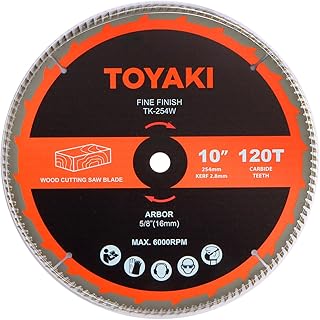
This 120-tooth blade is the detail specialist of the group, offering the densest tooth pattern for delicate, presentation-ready cuts. It should appeal to furniture makers and interior enthusiasts working with shorter moulding sections, though the extra teeth make correct feed speed and a sharp, well-aligned saw particularly important.
ANGELSWORD 10-Inch 32T/60T/80T 3-Pack
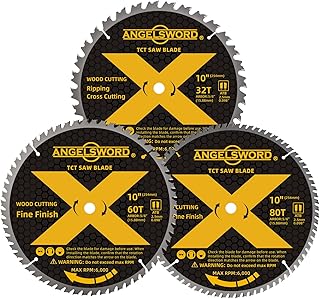
ANGELSWORD’s three-blade set is a practical way to cover several stages of a project: framing, fine finishing, and ultra-fine finishing. The 80-tooth option is the most relevant for visible moulding, while the lower-tooth blades add useful flexibility for rough sizing and less cosmetic work.
LM6300 12-Inch 100T Miter Joint Blade
With 100 teeth and a 12-inch diameter, the LM6300 is positioned for clean, controlled joinery on larger saws. Its 1-inch bore makes arbor compatibility especially important, but for a suitably equipped machine it offers the tooth density many decorators want for substantial crown moulding and wide trim.
ANGELSWORD 10-Inch 40T/60T 2-Pack
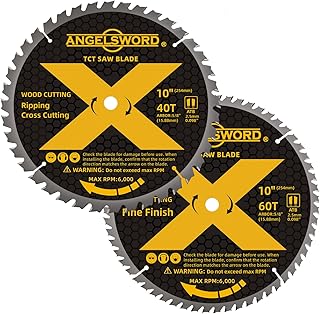
This two-pack keeps things simple with one blade for ripping and crosscutting and another for finer wood cuts. The 60-tooth blade is the sensible choice for moulding, while the 40-tooth option is handy when preparing stock or making quicker cuts that will be hidden later.
Frequently Asked Questions
How many teeth should a miter saw blade have for moulding?
A 60- to 100-tooth blade is a useful range for most moulding on a 10- or 12-inch saw. Choose toward the higher end when the cut edge will remain visible or the material is prone to splintering.
Is a 120-tooth blade better for every trim project?
Not necessarily. A 120-tooth blade can produce an exceptionally smooth finish, but it may cut more slowly and is less versatile for general workshop duties. It is best viewed as a specialist finishing blade.
Should I use a ripping blade for crown moulding?
Usually, no. Crown and decorative moulding are generally crosscut to form mitred joints, so a fine-finish crosscut blade is the more appropriate option. A ripping blade can still be useful for sizing stock before the final trim cuts.
How can I reduce tear-out on moulding?
Use a sharp, fine-tooth blade, support the work securely, and let the saw reach full speed before entering the material. A steady feed and a properly calibrated fence are just as important as the tooth count.
Final Thoughts
For the cleanest all-round trim work, the DEWALT 12-inch 100-tooth blade is a dependable first pick, while the 10-inch 120-tooth blade suits especially delicate finishing. If you want broader project flexibility, the ANGELSWORD 10-inch three-pack provides useful options without committing to a single tooth pattern.