Key takeaways
- Tooth count: Choose 24–40 teeth for fast ripping and framing, 60 teeth for versatile crosscuts, and 80–120 teeth for polished cuts in trim, plywood, and hardwood.
- Tooth design: Alternate-top-bevel teeth generally produce clean crosscuts, while combination and specialized grind patterns balance ripping speed with edge quality.
- Material: Carbide-tipped teeth stay sharper longer than basic steel teeth, especially when cutting hardwoods, plywood, laminates, and painted stock.
- Arbor and kerf: Confirm that the blade uses a 5/8-inch arbor and that its kerf suits your saw. A thinner kerf can reduce waste and required cutting power.
- Project type: Match the blade to the finish you want. A premium ultra-fine blade makes sense for visible furniture parts, while a multipack offers better flexibility for general workshop work.
What's inside
Choosing the right 10-inch miter saw blade can feel surprisingly complicated. Tooth counts, carbide quality, kerf width, arbor size, and vague “fine finish” claims all affect how cleanly a blade cuts—and whether your new furniture project ends with crisp joinery or a frustratingly splintered edge. The best blade for ripping framing lumber is rarely the best choice for a painted console, hardwood shelving, or a veneered cabinet panel.
This guide approaches blade selection from a furniture-maker’s perspective, where smooth edges, controlled tear-out, and predictable cuts matter as much as speed. We cover the most useful 10-inch options for miter and table saws, explain which tooth patterns suit different materials, and highlight where each blade fits in a practical home workshop.
As an Amazon Associate we earn from qualifying purchases.



🛒 Best Price Today on Amazon
Prime members get fast, free shipping on everything above, plus member-only deals. New members get a 30-day free trial — cancel anytime.
How to Choose a Miter Saw Blade 10 Inch (2026)
- Tooth count: Choose 24–40 teeth for fast ripping and framing, 60 teeth for versatile crosscuts, and 80–120 teeth for polished cuts in trim, plywood, and hardwood.
- Tooth design: Alternate-top-bevel teeth generally produce clean crosscuts, while combination and specialized grind patterns balance ripping speed with edge quality.
- Material: Carbide-tipped teeth stay sharper longer than basic steel teeth, especially when cutting hardwoods, plywood, laminates, and painted stock.
- Arbor and kerf: Confirm that the blade uses a 5/8-inch arbor and that its kerf suits your saw. A thinner kerf can reduce waste and required cutting power.
- Project type: Match the blade to the finish you want. A premium ultra-fine blade makes sense for visible furniture parts, while a multipack offers better flexibility for general workshop work.
The Best Miter Saw Blade 10 Inch (2026)s Reviewed
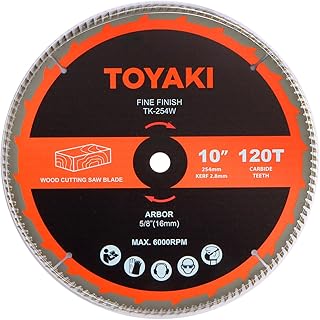
10-Inch 120-Tooth Fine-Finish Blade
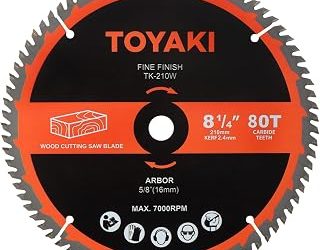
This 120-tooth blade is aimed squarely at detail-conscious furniture work, including trim, hardwood components, and veneered panels. Its dense tooth pattern favors exceptionally smooth crosscuts and reduced splintering, although the slower feed rate makes it less suitable for rough ripping or thick stock.
WEN BL1080 80-Tooth Ultra-Fine Finish Blade
The WEN BL1080 is a strong all-around choice for makers who want a refined edge without moving to an unusually high tooth count. Its carbide-tipped construction and 80-tooth layout make it well suited to miter saw work on molding, cabinet parts, and finished boards where cleanup should be minimal.
WEN BL1060 60-Tooth Fine-Finish Blade
With 60 teeth, the WEN BL1060 strikes a practical balance between smooth crosscuts and reasonable cutting speed. It is a particularly sensible workshop blade for furniture enthusiasts who move between framing lumber, hardwood boards, shelving, and painted or stained projects rather than specializing in one material.
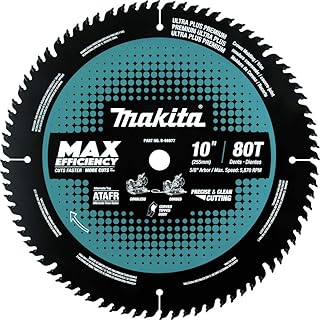
Makita B-66977 80T Max Efficiency Blade
Makita’s B-66977 combines an 80-tooth configuration with carbide-tipped construction for clean, controlled cuts on a miter saw. It is a polished option for visible furniture components and trim, especially when you value consistent results and a blade from an established tool-accessory brand.
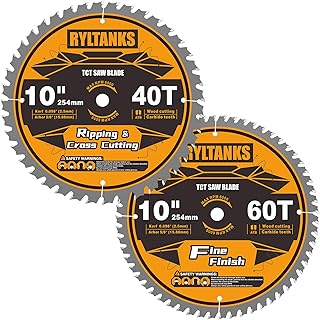
10-Inch 40T/60T Two-Pack
This two-pack is useful for a home workshop that needs both speed and finish quality. The 40-tooth blade handles quicker ripping and general construction cuts, while the 60-tooth blade is better suited to crosscutting boards and preparing furniture parts with a cleaner edge.
Frequently Asked Questions
Is a 60-tooth blade good for a 10-inch miter saw?
Yes. A 60-tooth blade is one of the most versatile choices for a 10-inch miter saw. It offers cleaner crosscuts than a low-tooth framing blade while still cutting efficiently through common softwoods, hardwoods, and sheet goods.
Is a higher tooth count always better?
No. More teeth usually improve crosscut smoothness, but they can cut more slowly and may struggle with thick material or long rips. For furniture trim and visible edges, 80 or 120 teeth can be excellent; for general work, 40 or 60 teeth may be more practical.
Can these blades cut plywood and MDF?
Most fine-finish carbide-tipped blades can cut plywood and MDF, provided the blade is compatible with your saw and the material is securely supported. Use a higher-tooth-count blade for cleaner faces, and let the blade do the work rather than forcing the cut.
When should I replace a miter saw blade?
Replace or sharpen a blade when cuts become noticeably rough, burning appears despite a suitable feed rate, or the saw requires excessive force. Chipped carbide teeth, persistent tear-out, and inaccurate cuts are also signs that the blade no longer matches the job.
Final Thoughts
For the smoothest furniture-ready results, the 10-Inch 120-Tooth Fine-Finish Blade is the specialist pick, while the WEN BL1080 offers an excellent balance of polish and versatility. If you want one dependable everyday blade, the WEN BL1060 is a strong choice; for maximum workshop flexibility, the 40T/60T two-pack covers both rougher and finer cutting tasks.