
Key takeaways
- Target Audience: Adult
- Recommended Uses For Product: Endurance, Exercise and Fitness, Speed
- Item Length: 280 Centimeters
The reason most people plateau at jumping rope has nothing to do with fitness. It is that skipping is almost impossible to track by feel. Ten minutes of continuous singles this week feels identical to ten minutes last week, and because nothing is written down, there is no signal that you should be doing something harder. Without progression, six months of skipping produces roughly the fitness of six weeks of skipping.
What fixes it is boring and effective: write down what you did. Rounds completed, total time, longest unbroken set, trip count. Those four numbers turn a vague activity into something with a trend line, and a trend line is what tells you when to shorten the rope, add weight, or extend the rounds. A written programme provides the other half — a defined sequence of sessions to work through rather than a decision to make each time you pick the rope up. Equipment supports that process rather than replacing it, and the six items below are chosen with that in mind.
Our top picks
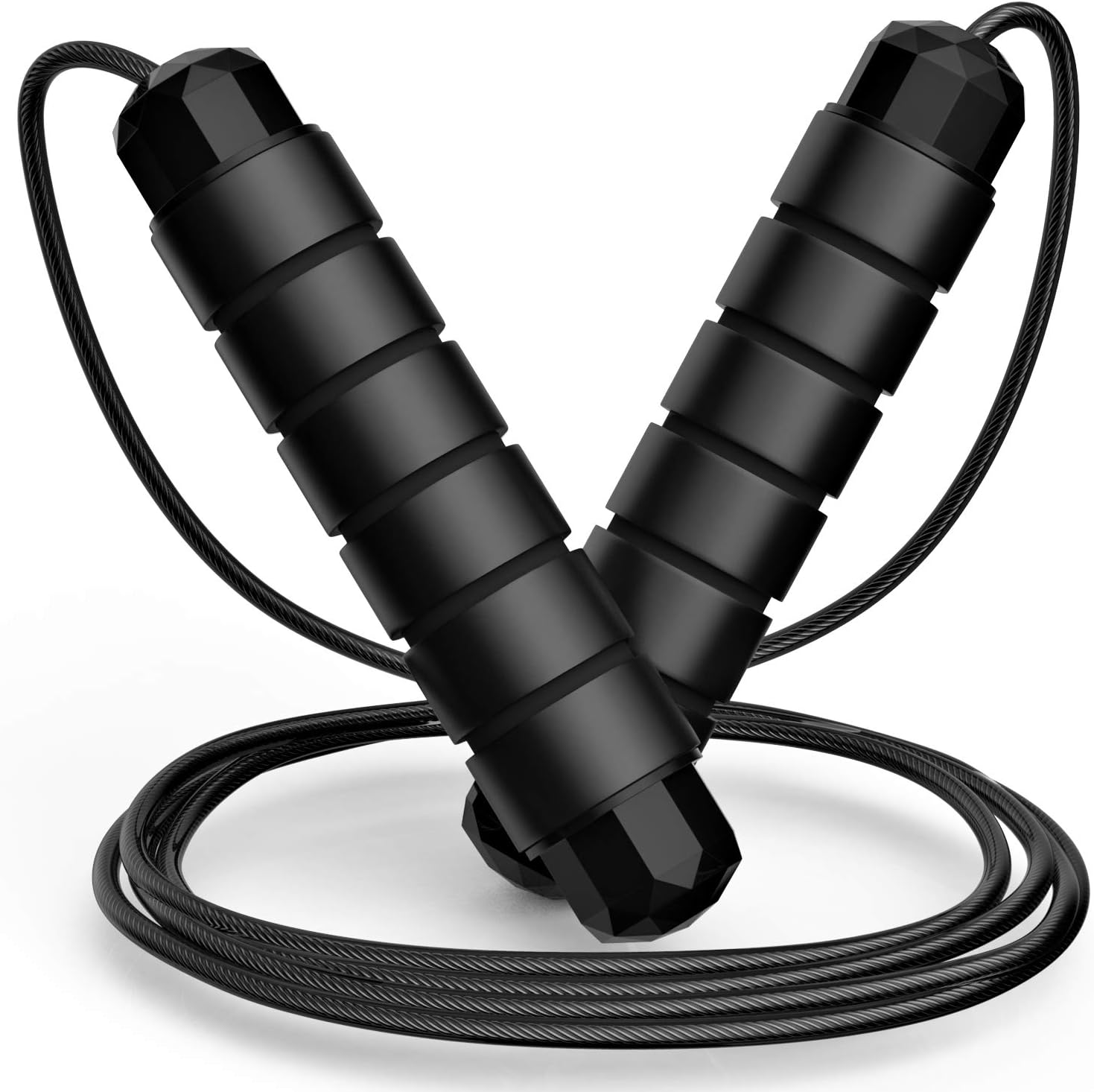 Jump Rope
- Target Audience: Adult
- Recommended Uses For Product: Endurance, Exercise and Fitness, Speed
- Item Length: 280 Centimeters

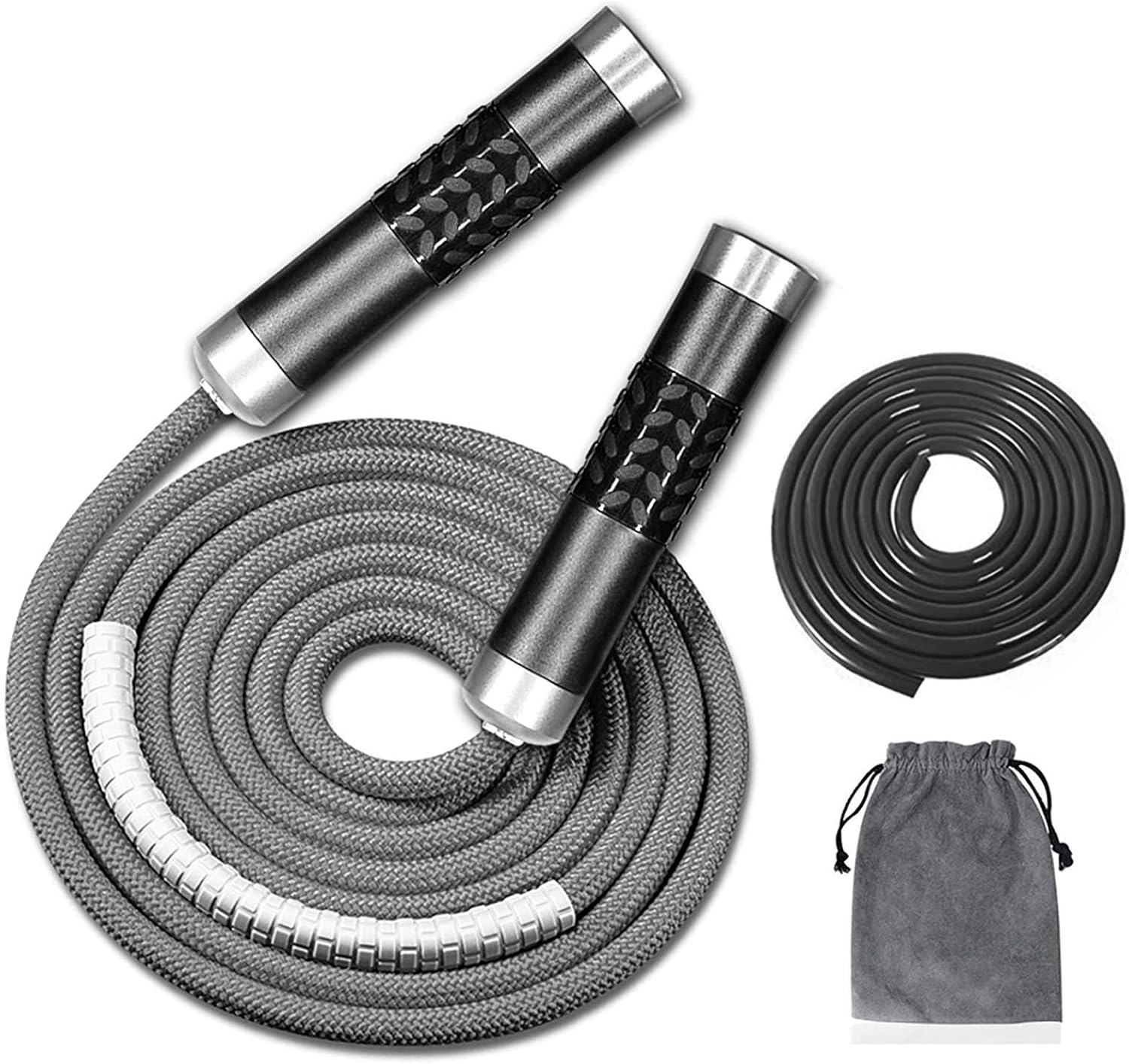 Redify Weighted Jump Rope for Workout Fitness
- Target Audience: Adult
- Item Length: 120 Inches
- Handle Diameter: 1 inches


 BOOMIBOO Jump Rope
- Target Audience: Adult, Kid
- Recommended Uses For Product: Exercise and Fitness
- Item Length: 9.2 Feet

As an Amazon Associate we earn from qualifying purchases at no extra cost to you. Ratings are shown as listed on Amazon.
Quick Comparison
| Product | Best For | Standout Feature | Watch Out For |
|---|---|---|---|
| Tangle-Free Speed Rope | Measurable speed progress | Consistent rotation for fair comparison | Trip rate rises when tired |
| 101 Best Jump Rope Workouts | A programme to follow | Sessions organised by format | No built-in tracking system |
| Redify Weighted Rope | A clear progression step | 1 lb is an obvious jump in load | Session length drops sharply |
| SPORTBIT Adjustable Rope | Baseline benchmark rope | Consistent, easy to standardise | Bearings cap top-end speed |
| High Speed Weighted Rope | Repeatable weighted sessions | Self-locking length stays fixed | Fatigue builds across rounds |
| SPORTBIT Rope, Second Pair | Keeping test conditions equal | Identical spare for fair comparisons | Must be set to the same length |
How to Choose
- Track four numbers: Total time, rounds completed, longest unbroken set and trip count. Written down each session, these show progress that feel alone will never reveal.
- Keep one rope as your benchmark: Comparing a session on a light cable to one on a weighted rope tells you nothing. Designate one rope as the standard and test on that.
- Change one variable at a time: Shorten the rope, or add weight, or extend the rounds — not all three in the same week. Otherwise you cannot tell what caused a change.
- Follow a written programme: Deciding what to do while standing there with a rope reliably produces the easiest option. A pre-written session removes that negotiation.
- Retest on a schedule: A benchmark session every four to six weeks — longest unbroken set, or reps in three minutes — gives you a hard number to compare against.
Top Picks Reviewed
Best Benchmark Rope: SPORTBIT Adjustable Jump Rope
For tracking to mean anything you need a consistent test instrument, and this rope’s predictability makes it a good one. It behaves the same way session after session, which means a change in your numbers reflects a change in you rather than in the equipment.
Its bearings limit the very fastest cadences, so if your benchmark eventually becomes a maximum-speed test you will need to switch and reset your baseline.
Best Programme: 101 Best Jump Rope Workouts
A structured collection of sessions removes the single biggest cause of plateau: doing whatever feels right on the day. Working through defined formats in order provides progression whether or not you feel like progressing.
It supplies sessions, not a tracking system. You still need a notebook or an app to record what you did, and without that the programme’s benefit is only partial.
Best Progress Marker: Tangle-Free Rapid Speed Rope
Moving to a proper speed cable is itself a milestone, and the consistent bearing-driven rotation makes speed-based benchmarks meaningful. Reps in sixty seconds is a clean metric on this rope in a way it is not on a rope that binds.
Trip rate climbs as you fatigue, which can muddy a long test. Keep benchmark efforts short enough that technique holds throughout.
Best Load Progression: Redify Weighted Jump Rope
When time-based progression stalls, adding weight is the obvious next variable. A pound is a clear, unambiguous step up, and your logged session times will drop noticeably — which is exactly the signal that the stimulus changed.
Session length falls sharply. Expect to record considerably shorter sessions for several weeks, and do not read that as regression.
Best Repeatable Weighted Rope: High Speed Weighted Jump Rope
Repeatability is what makes tracking work, and the self-locking length adjustment here means your arc is identical from session to session. Weighted training with a rope that drifts in length produces numbers you cannot compare.
Fatigue accumulates across rounds more than people expect, so early sessions with this often start strong and end poorly. Log the whole session rather than just the first round.
Best Control Rope: SPORTBIT Adjustable Rope, Second Pair
Having an identical spare set to the same length means a failed rope never invalidates a benchmark session. It also means you can leave one at a second location without changing the test conditions.
Set both to precisely the same length or the comparison breaks. A spare at a different size is a different test.
Frequently Asked Questions
How do I track progress with a jump rope?
Record total time, rounds completed, longest unbroken set and trip count after each session. Those four numbers reveal trends that are invisible when you rely on how a session felt.
How often should I retest my benchmark?
Every four to six weeks is enough. Testing more frequently produces noise rather than signal, because week-to-week variation from sleep and fatigue is larger than the real change.
What should I progress first — time, speed or weight?
Time first, until you can hold ten to fifteen unbroken minutes. Then speed, by shortening the rope and raising cadence. Weight last, since it caps session length and is best introduced once the base is established.
Why has my jump rope progress stalled?
Almost always because the sessions stopped changing. Skipping for the same duration at the same cadence indefinitely stops driving adaptation. Shorten the rope, add rounds, or introduce weight — and record the change so you can see its effect.
Final Thoughts
Progress comes from structure more than equipment, which makes 101 Best Jump Rope Workouts the most valuable item here for anyone who has plateaued. Pair it with the SPORTBIT Adjustable Jump Rope as a consistent benchmark rope, and when time-based progression runs out, the Redify Weighted Jump Rope provides the next clear step in load.







Write Your Review
No reviews yet. Be the first to share your experience!