
Key takeaways
- Warranty Description: 2 Year
- Tension Supported: 264 lb
- Strap Type: Cable/Pulley straps
The math on home gyms is brutally simple. A mid-tier gym membership runs somewhere between forty and seventy dollars a month, and the average commute to reach it eats twenty minutes on each end. Over three years that’s well past two thousand dollars and roughly a hundred hours spent in a car. A single-stack multifunction machine parked in a spare bedroom or a garage corner erases both numbers, and it does something a membership never will: it removes the decision point. You don’t decide whether to drive somewhere. You walk twelve feet.
What separates a machine that gets used from one that becomes a laundry rack is station density — how many honest movement patterns you can hit without unbolting anything. A press arm, a high pulley, a low pulley, and a leg developer covers vertical press, vertical pull, horizontal row, hip hinge accessory work, and both major arm groups. That’s a complete upper-body split plus quad and hamstring work from one seat. The pick below is built around that logic, and the sections that follow lay out exactly what to check before anything ships to your door.
Our top picks
 Mikolo Smith Machine with Weight Stack
- Warranty Description: 2 Year
- Tension Supported: 264 lb
- Strap Type: Cable/Pulley straps
Dual 128-pound stacks let two people train at the same time
Combines power rack, lat pulldown, and cable crossover in one footprint
Machine is backed by a 2-year warranty
Dual steel uprights and stacks take up real floor space
Bundled bench and cable attachments need assembly before use
 SincMill Home Gym Multifunctional Full Body Workout
- Warranty Description: 10 Years
- Tension Supported: 148 pounds
- Handle Type: Pulldown, Strap
148-pound weight stack supports progressive strength training
Leg exercise pedal targets more lower-body muscle groups
Frame is backed by a 10-year warranty
Footprint of 69 by 40.7 inches needs a dedicated room
Assembly takes close to half an hour to complete
 pooboo Multi-Functional Machine Power Cage
- Warranty Description: 2 Year Warranty Time
- Material Type: Alloy Steel, Plastic
- Tension Supported: 2000 pounds
| Product | Key specs | |
|---|---|---|
| Mikolo Smith Machine with Weight Stack | Warranty Description: 2 Year Tension Supported: 264 lb Strap Type: Cable/Pulley straps | Check price |
| SincMill Home Gym Multifunctional Full Body Workout | Warranty Description: 10 Years Tension Supported: 148 pounds Handle Type: Pulldown, Strap | Check price |
| pooboo Multi-Functional Machine Power Cage | Warranty Description: 2 Year Warranty Time Material Type: Alloy Steel, Plastic Tension Supported: 2000 pounds | Check price |
 Marcy Multifunctional Workout Station 100lbs to 200lbs Marcy Multifunctional Workout Station 100lbs to 200lbs | Material: Alloy Steel | Check price |
 Marcy Multifunction Steel Home Gym 150lb Weight Marcy Multifunction Steel Home Gym 150lb Weight | Warranty Description: 2 year limited manufacturer Tension Supported: 150 pounds Handle Type: D Type, Pulldown | Check price |
 RitFit M1 Pro Smith Machine Package RitFit M1 Pro Smith Machine Package | Warranty Description: 3 year Tension Supported: Grip Size Grip Size: medium | Check price |
 Mikolo Home Gym Mikolo Home Gym | Tension Supported: Weight Stack 154lbs (12 Levels) Item Dimensions D x W x H: 75"D x 36.3"W x 80"H Maximum Weight Recommendation: 300 Pounds | Check price |
 SincMill Home Gym Multifunctional Full Body Workout SincMill Home Gym Multifunctional Full Body Workout | Warranty Description: 10 Years Tension Supported: 160 pounds Handle Type: Fixed Handle | Check price |
As an Amazon Associate we earn from qualifying purchases at no extra cost to you.
Quick Comparison
| Specification | Marcy Multifunction Steel Home Gym (150 lb Stack) | Why It Matters |
|---|---|---|
| Resistance type | Selectorized vinyl-coated weight stack, 150 lb | Pin-select changes take two seconds, so supersets and drop sets stay fluid |
| Frame | Powder-coated tubular steel | Resists garage humidity and sweat corrosion far better than painted mild steel |
| Stations | Dual-function press arms, high pulley, low pulley, leg developer, preacher curl pad | Covers push, pull, hinge, and isolation without hardware swaps |
| Approximate footprint | Roughly 6 ft long × 3.5 ft wide, near 7 ft tall in use | Fits a standard bedroom wall; verify ceiling height before ordering |
| Adjustability | Multi-position seat and back pad, adjustable press arm start position | Lets users from about 5’2″ to 6’3″ share the same machine |
| Best suited for | Beginners through solid intermediates, general strength and physique work | Advanced lifters chasing heavy compounds will eventually outgrow the stack |
How to Choose
- Measure ceiling clearance, not just floor space. Lat pulldown towers need vertical room for the cable travel and for your arms overhead while seated. A basement with 7-foot joists and a duct run through the middle will fight you. Tape the footprint on the floor and hold a broomstick overhead in the seated position before you commit.
- Understand pulley ratios. A 150-pound stack rarely delivers 150 pounds at the handle. Depending on how the cable is routed, the load you actually feel on a pulldown or press may be a fraction of the plate weight. This isn’t a flaw — it’s mechanics — but it means you should judge a machine by how it feels at the top pin, not by the number on the box.
- Count usable stations, not advertised exercises. Marketing copy loves the phrase “over 30 exercises,” which usually counts three grip variations of the same movement separately. Ask instead: can I press, pull down, row, curl, extend, and train legs? Six real patterns beat thirty relabeled ones.
- Budget for assembly reality. These machines arrive as a heavy flat-packed puzzle. Plan on three to five hours, two people for the tower and stack sections, and a socket wrench rather than the stamped tool in the box. Leave the bolts finger-tight until the frame is square, then torque everything down in sequence.
- Check the cable and pad warranty separately. Frames often carry long or lifetime coverage while cables, pulleys, and upholstery get one or two years. Cables are the wear item on every stack machine. Confirm replacements are actually purchasable for your model before the coverage runs out.
Top Picks Reviewed
Marcy Multifunction Steel Home Gym 150lb Weight Stack Machine
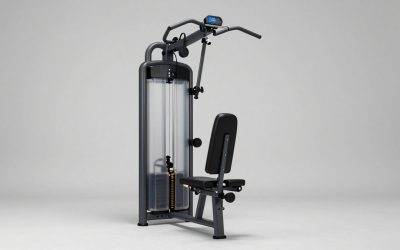
This is the machine that keeps showing up in garages for a reason: it does the boring things correctly. The tubular steel frame is stiff enough that the tower doesn’t shimmy during aggressive pulldowns, and the vinyl-coated stack runs on guide rods rather than a loose sleeve, which keeps the plates quiet instead of clanking through every rep. The dual-function press arms are the standout feature — the same arm handles a chest press from the seated position and, with an adjustment, converts to a butterfly-style movement, so you get horizontal pressing and adduction work without a second station. High and low pulleys handle lat pulldowns, triceps pushdowns, seated rows, upright rows, and cable curls, while the leg developer covers extensions and curls with a padded roller assembly. The preacher curl pad is not a gimmick here; it’s genuinely the cleanest way to isolate biceps on a machine like this. Where the honest limits show up: the 150-pound stack is generous for pressing and isolation but becomes light for pulldowns and rows within a year of consistent training, and there’s no dedicated squat or deadlift capability, so lower-body work is accessory-flavored rather than heavy. Pair it with a set of adjustable dumbbells or a kettlebell and that gap closes fast. For someone who wants five or six focused sessions a week without leaving the house, and who values a machine that will still be square and functional in a decade, this hits the ratio of cost to capability better than almost anything in its class.
Frequently Asked Questions
Is 150 pounds enough resistance for real strength gains?
For most people, yes — for a good while. Progressive overload on a stack machine comes from more than pin position: slower eccentrics, paused reps, shorter rest intervals, unilateral variations, and higher volume all drive adaptation. Where you’ll feel the ceiling first is the lat pulldown and seated row, since back muscles handle heavy loads readily. When the top pin stops being challenging on those, switch to single-arm work, which instantly doubles the relative load.
How much space do I really need around the machine?
Add about two feet of clear space behind the seat for stack access and three feet in front for the press arms and your legs. Practically, budget an 8-by-6-foot zone including the machine itself. Against a wall is fine; in a corner is workable if the pin side stays accessible.
Can two people with very different heights share it?
Yes, and this is one of the machine’s quiet strengths. The multi-position seat and back pad plus the adjustable press arm start point cover a wide height range. The one habit to build: reset the seat before each person’s first set rather than mid-workout, so nobody trains a set with their shoulders misaligned to the pulley path.
What maintenance does a stack machine actually need?
Very little, done consistently. Wipe sweat off the frame and pads after each session, since salt is what eats powder coating. Every couple of months, check that the frame bolts are still snug, inspect the cable for fraying near the swivel ends, and put a light silicone spray on the guide rods so the plates glide. That’s roughly ten minutes a quarter for a machine that should last fifteen years.
Final Thoughts
A home gym earns its keep through friction removal, not spec-sheet supremacy. The Marcy multifunction machine wins on that measure: it’s one purchase, one assembly weekend, and then a decade of workouts that start the moment you decide to train. Be realistic about the 150-pound stack — it’s a serious tool for building and maintaining strength, not a platform for chasing a heavy deadlift — and be rigorous about measuring your space before ordering. Get those two things right, and the only remaining variable is whether you sit down and pull the pin.
Write Your Review
No reviews yet. Be the first to share your experience!