
Key takeaways
- Decide whether you need a teacher or a training partner. Instructional titles stop and dissect a hinge; follow-along titles keep the clock running. Beginners almost always need the former first, then graduate to the latter for consistency.
- Match the bell weight the program assumes. Most beginner kettlebell work presumes 8–12 kg for women and 12–16 kg for men on swings, with something lighter for pressing and get-ups. A program that assumes two bells when you own one will strand you halfway through.
- Check how the swing is taught. If the instruction emphasizes hip drive, a neutral spine, and a hard exhale at the top rather than lifting with the arms, the rest of the material is usually trustworthy.
- Look for scaling and regressions. Deadstop swings before continuous swings, half get-ups before full get-ups, two-hand cleans before single-arm. Programs without a ladder of easier options force you to either stall or cheat.
- Consider session length against your real schedule. A twenty-minute routine you complete four times a week outperforms a forty-five-minute epic you abandon after two sessions. Choose the format you will still be using in three months.
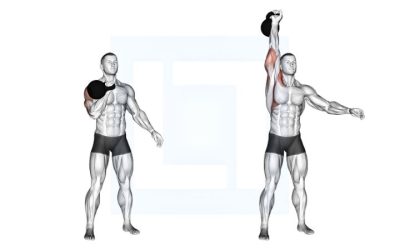
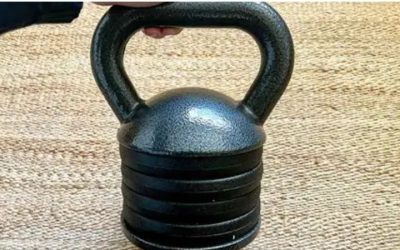
A kettlebell is a lopsided lump of iron with a handle, and that asymmetry is the entire point. Because the mass hangs below and in front of your grip, every rep forces your hips, spine, and grip to negotiate with gravity instead of simply moving a bar up and down a fixed track. That is why a single 16 kg bell can leave you breathing harder than a full rack of dumbbells: the swing trains a violent hip hinge, the goblet squat teaches an upright torso under load, the clean punishes sloppy timing, and the Turkish get-up quietly audits every stabilizer between your ankle and your shoulder. Four or five movements, learned properly, cover strength, conditioning, and mobility in one twenty-minute block.
The catch is that kettlebell technique is unforgiving of guesswork. A swing performed as a front squat with an arm raise will irritate your lower back within a week, and a bottoms-up press learned from a blurry clip teaches nothing about breathing or bracing. That is where structured instruction earns its keep. The four programs below — a beginner-focused workout collection, two entries from the Iron Core school of kettlebell training, and Amy Bento’s three-in-one absolute beginner series — approach the same tool from different angles: raw skill acquisition, athletic conditioning, and follow-along fitness. Pick based on how you actually learn, not on how many exercises are listed on the back cover.
As an Amazon Associate we earn from qualifying purchases.


Quick Comparison
| Program | Best For | Teaching Style | Experience Level | Main Emphasis |
|---|---|---|---|---|
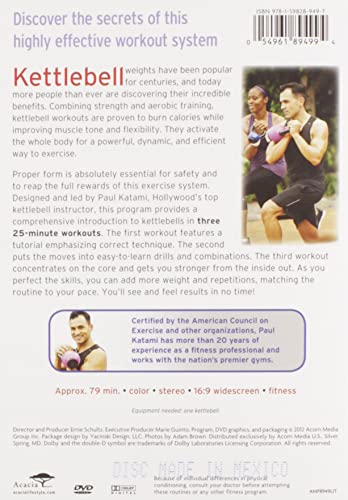
| Ultimate Kettlebell Workouts for Beginners | First-time lifters who want structure | Instructional breakdown plus set workouts | True beginner | Foundational lifts and programming |
| Iron Core Kettlebell | Athletic conditioning and core strength | Coached circuits with cueing | Beginner to intermediate | Midsection, hips, work capacity |
| Kettlebells the Iron Core Way (DVD) | Lifters wanting technical depth | Demonstration and drilling | Intermediate | Movement quality and progression |
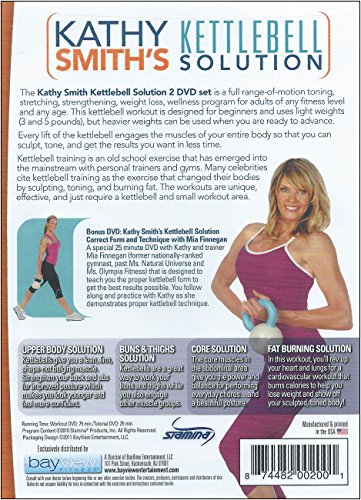
| Absolute Beginners: Kettlebell 3 in 1 with Amy Bento | Home exercisers easing in gradually | Follow-along with tiered routines | Absolute beginner | Confidence, tempo, full-body flow |
How to Choose
- Decide whether you need a teacher or a training partner. Instructional titles stop and dissect a hinge; follow-along titles keep the clock running. Beginners almost always need the former first, then graduate to the latter for consistency.
- Match the bell weight the program assumes. Most beginner kettlebell work presumes 8–12 kg for women and 12–16 kg for men on swings, with something lighter for pressing and get-ups. A program that assumes two bells when you own one will strand you halfway through.
- Check how the swing is taught. If the instruction emphasizes hip drive, a neutral spine, and a hard exhale at the top rather than lifting with the arms, the rest of the material is usually trustworthy.
- Look for scaling and regressions. Deadstop swings before continuous swings, half get-ups before full get-ups, two-hand cleans before single-arm. Programs without a ladder of easier options force you to either stall or cheat.
- Consider session length against your real schedule. A twenty-minute routine you complete four times a week outperforms a forty-five-minute epic you abandon after two sessions. Choose the format you will still be using in three months.
Top Picks Reviewed
Ultimate Kettlebell Workouts for Beginners
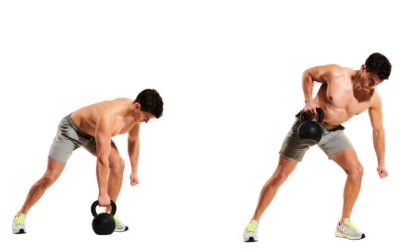
This is the most straightforward on-ramp of the four. It treats the kettlebell as a skill to be learned rather than a prop to be waved around, walking through the deadlift, two-hand swing, goblet squat, and press before assembling them into repeatable sessions. The value here is the programming: instead of leaving you to invent workouts, it gives you defined circuits with rep ranges you can log and progress. If you have just unboxed your first bell and want a plan for the next six weeks, start here and resist the temptation to jump ahead to snatches.
Iron Core Kettlebell
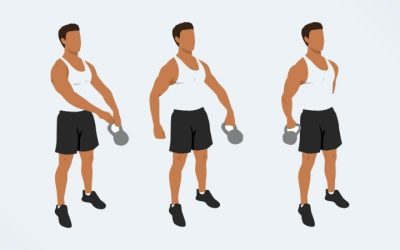
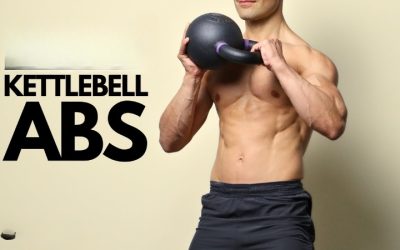
The Iron Core approach leans athletic, treating the midsection as the transmission between hips and hands rather than a body part to be isolated with crunches. Expect swing-based conditioning blended with rotational work, carries, and standing core patterns, delivered at a pace that keeps your heart rate honest. It suits someone who has the basic hinge under control and wants a session that builds work capacity while tightening up the trunk. Newcomers can use it too, provided they take the first few passes at a lighter weight and shorter work intervals.
Kettlebells the Iron Core Way (1 DVD 9) DVD
This entry digs further into technique than the general conditioning material. The emphasis falls on doing fewer things well: setting the hips, timing the float at the top of the swing, keeping the wrist stacked in the rack position, and progressing loads without breaking form. It is the natural second step after a beginner program, particularly for lifters who suspect their swing has drifted into a squat or whose cleans keep banging the forearm. Watch it once as instruction, then use it as a drilling reference rather than a daily workout.
Absolute Beginners: Kettlebell 3 in 1 With Amy Bento
Bento’s three-in-one format is the gentlest entry point, built for people exercising in a living room with limited space and a single light bell. The tiered structure lets you start with the shortest, simplest routine and layer in complexity as your coordination catches up, which solves the most common beginner failure: quitting because session one felt overwhelming. Cueing is clear and continuous, the pacing is manageable, and the routines are short enough to slot into a lunch break. Experienced lifters will find it too light, and that is exactly who it is not for.
Frequently Asked Questions
How many kettlebells do I actually need to start?
One, chosen for swings, will carry you through the first month or two. Because the swing tolerates far more load than the press or get-up, most people eventually want a second, lighter bell for overhead and unilateral work — roughly half to two-thirds of the swing weight. Buy the heavier bell first; you will outgrow a too-light one in weeks.
Are kettlebell swings safe for my lower back?
Performed as a hip hinge with a braced spine, swings tend to strengthen the posterior chain and improve back resilience. Performed as a squat-and-lift with a rounded spine, they will aggravate almost any existing issue. The mechanics decide the outcome, which is the strongest argument for learning from structured instruction rather than imitation.
Can kettlebell training alone build muscle?
It builds meaningful strength and noticeable density in the shoulders, back, glutes, and forearms, especially through presses, front squats, and heavy carries. For maximum hypertrophy you will eventually want heavier loading options, but for a lean, capable, well-conditioned physique, a couple of bells and consistent programming go remarkably far.
How often should a beginner train?
Three sessions a week, roughly twenty to thirty minutes each, with a rest day between them. Grip and forearms fatigue faster than most people expect, and swing volume accumulates quietly. Add frequency only after your technique holds up in the final set as well as the first.
Final Thoughts
Kettlebell training rewards patience with technique more than enthusiasm for volume. Learn to hinge, learn to breathe under load, learn to keep your ribs down during a press, and the rest of the toolkit opens up quickly. If you are starting cold, pair a beginner instructional program with a follow-along routine you can run on autopilot; once the swing feels automatic, move into the Iron Core material for conditioning and technical refinement. Two bells, three sessions a week, and honest attention to form will change how your body moves — and it will do it in a corner of a room, with no bench, rack, or membership required.
Write Your Review
No reviews yet. Be the first to share your experience!