
Key takeaways
- Warranty Description: 2 years
- Item Dimensions L x W: 8.82"L x 7.01"W
- Handle Diameter: 28 millimeters
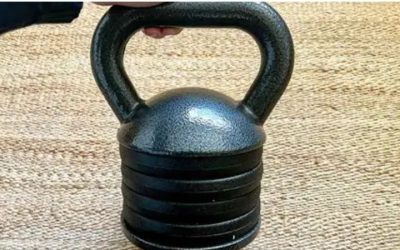
Six cast-iron kettlebells running from 8 to 40 pounds will eat roughly two feet of wall space and cost more than most people want to spend on a garage corner. The BowFlex SelectTech 840 exists to collapse that rack into one 13-inch unit with a dial at its base, and it does the job well enough that it has become the default recommendation for anyone training in an apartment, a spare bedroom, or a shared basement. The catch is that adjustable bells make compromises a solid bell never has to, and those compromises show up in exactly two places: the handle your hand wraps around, and the way the mass behaves once it starts moving.
So that is what this piece grades. Grip means handle window width, coating slickness once your palms get damp, and whether the finish chews up your forearm on a clean. Load means the honesty of the weight jumps, how confidently the plates stay locked when the bell reverses direction at the bottom of a swing, and what happens to your floor if you set it down carelessly. Everything else — app bundles, colorways, packaging — is noise by comparison.
Our top picks
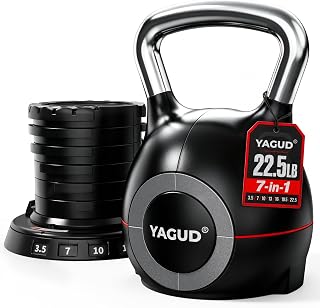
 BowFlex SelectTech 840 Adjustable Kettlebell
- Warranty Description: 2 years
- Item Dimensions L x W: 8.82"L x 7.01"W
- Handle Diameter: 28 millimeters

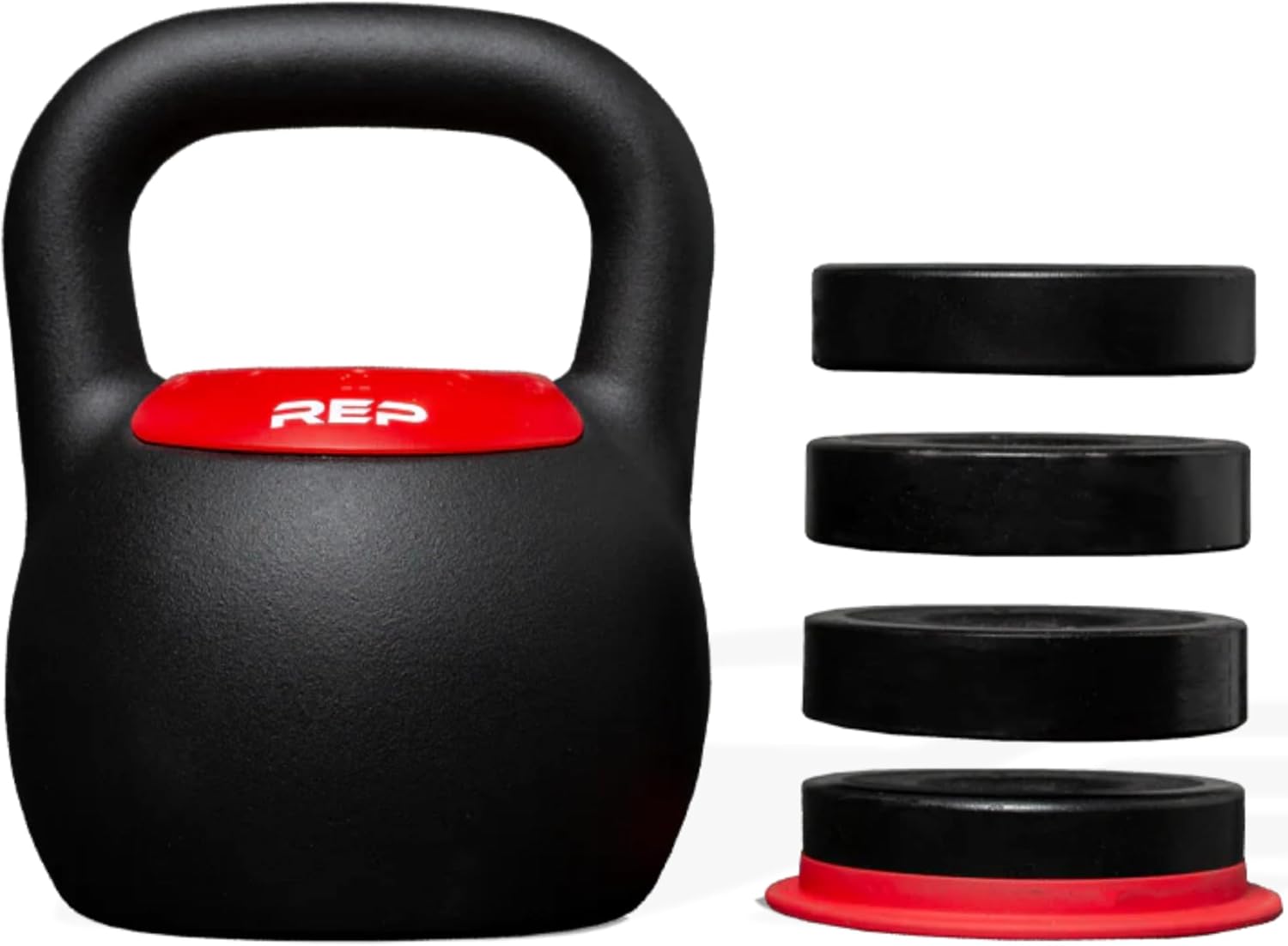 Rep Fitness Adjustable Kettlebell
- Handle Diameter: 1.3 inches
- Material: Iron
- Recommended Uses For Product: Cross Fit, HIIT, Weight Lifting



As an Amazon Associate we earn from qualifying purchases at no extra cost to you. Ratings are shown as listed on Amazon.
As an Amazon Associate we earn from qualifying purchases.

Quick Comparison
| Specification | BowFlex SelectTech 840 | Why It Matters |
|---|---|---|
| Weight range | 8 – 40 lb | Covers beginner two-hand swings through intermediate single-arm work |
| Settings | 6 (8, 12, 20, 25, 35, 40 lb) | Replaces a six-bell rack; jumps are uneven, not linear |
| Adjustment | Base-mounted dial | Weight changes in seconds between supersets |
| Handle | Wide, molded, two-hand capable | Fits both palms for swings; no knurl to shred skin |
| Footprint | Roughly 13 × 9 × 9 in | Stores under a desk or on a closet floor |
| Best suited to | Swings, goblet squats, presses, rows, carries | Ballistic volume work rather than max-load grinds |
| Not suited to | Drops, heavy snatches, loads above 40 lb | Selectorized mechanisms are not built for impact |
How to Choose
- Measure the handle window, not the handle. The dimension that decides whether a bell is usable is the open space between the grip and the body. Under about 2.5 inches of clearance, a gloved or large hand gets pinched during racked holds. The 840’s window is generous enough for two bare hands side by side, which is the real test for two-hand swings.
- Interrogate the locking mechanism under reversal, not at rest. Any adjustable bell feels solid standing still. What matters is the moment a swing changes direction and the plates want to keep traveling. Set the bell to a mid-range number, do ten hard swings, then listen. Silence is good; a repeating tick means the selector is taking load it was not designed to take.
- Check the spacing of the jumps, not just the top number. Marketing highlights the maximum. Training lives in the gaps. The 840 steps 8, 12, 20, 25, 35, 40 — that is a 4-pound jump, then an 8, then a 5, then a 10. The 25-to-35 gap is the one that stings when you are progressing presses, and there is no half-step to hide in.
- Respect the base. Selectorized bells carry their adjustment hardware on the bottom, so they need to be set down deliberately on a flat surface. If your training space is tile or thin laminate, budget for a rubber mat before you budget for anything else.
- Match the tool to the movement. Adjustable bells are excellent for high-repetition ballistics and unilateral work in a small space. They are the wrong tool if your plan involves dropping the bell on every set or loading past 40 pounds for double-bell front squats. Know which athlete you are before you buy.
Top Picks Reviewed
BowFlex SelectTech 840 Adjustable Kettlebell
The 840’s defining feature is the dial at its base. Rest the bell on the floor, twist to the number you want, lift, and the plates you did not select stay behind in the cradle. It takes about as long as reaching for a different bell on a rack, which means it actually gets used mid-workout instead of being treated as a one-time setup. That single detail is what separates a genuinely adjustable bell from a bell you set once and never touch again.
On grip, it earns high marks with one asterisk. The handle is smooth molded material rather than knurled cast iron, with a window wide enough that two palms fit comfortably for swings and a single hand has room to rotate through a clean. Nothing here tears skin, which matters if you train barehanded five days a week. The asterisk: smooth means slick. Once your hands are genuinely wet, high-rep single-arm sets get sketchy, and chalk does less for a polished surface than it does for knurl. Keep a towel within reach.
On load, the bell holds up better than the category’s reputation suggests. Through swings, goblet squats, rows, presses, and carries, the plates stay quiet and the mass sits close enough to the handle that the bell tracks predictably through the bottom of a hinge. The honest limitations are geometric rather than mechanical. The body is squarer and flatter than a traditional bell, so cleans and snatches land on the forearm with a broader, blunter contact patch — noticeable at 35 and 40 pounds, and worth some deliberate practice at lighter settings first. And 40 pounds is a real ceiling. For most people running conditioning circuits and accessory work, it is plenty for a long time. For anyone whose two-hand swing is already comfortable at 40, this is not the purchase to make.
Who it is for: someone with limited floor space who wants six usable weights, values fast changes between exercises, and trains in the 8-to-40-pound band. Who it is not for: heavy competition-style lifters, anyone doing sets that end with the bell hitting the floor, and outdoor or gym-share environments where equipment gets treated roughly.
Frequently Asked Questions
Can you drop an adjustable kettlebell?
No. Every selectorized bell, including this one, relies on plates held by a mechanism rather than a single cast piece. Impact is what loosens that mechanism. Train the habit of guiding the bell down to the floor with two hands. If your program depends on dropping, buy a cast-iron bell.
Is 40 pounds enough to keep progressing?
For a long stretch, yes — especially for presses, rows, single-leg work, and carries, where 40 pounds in one hand is substantial. Two-hand swings will outgrow it soonest. When that happens, the usual move is to shift to single-arm swings, slow the tempo, or add volume rather than replacing the bell immediately.
How does the handle compare to a traditional cast-iron bell?
Wider and smoother. The width is a genuine advantage for two-hand work and for anyone with large hands. The smoothness is a trade: kinder to your palms across high volume, less secure when sweat enters the picture. Neither is strictly better; it depends on whether you are more limited by skin or by slip.
Does the weight change quickly enough for circuit training?
Yes, and this is the strongest practical argument for the 840. Going from 20-pound swings to 35-pound goblet squats is a twist of the dial, so you can run a real circuit without stockpiling bells. It is slower than grabbing a pre-set bell off a rack, but only by a few seconds.
Final Thoughts
The BowFlex SelectTech 840 is the rare space-saving product that does not feel like a downgrade in daily use. It grips comfortably, changes weight fast enough to keep a session moving, and stays quiet through the kind of ballistic work that exposes cheaper adjustable designs. Its limits are clearly drawn: a 40-pound ceiling, uneven jumps around the 25-to-35 mark, a flat-faced body that takes some getting used to on cleans, and zero tolerance for being dropped. If those boundaries match how and where you train, it replaces a full rack for a fraction of the space and money. If they do not — if you are already swinging heavy or training somewhere the bell will get abused — spend the same budget on two or three cast-iron bells and skip the mechanism entirely.
8 Best Kettlebell Weights for Men: How to Pick the Right Size
Best kettlebell weight for men is the decision that quietly settles whether...
8 Best Kettlebell Ab Exercises: 6 Adjustable and Fixed Picks
Best kettlebell ab exercises rarely share a single weight. A loaded carry,...
Best Kettlebell Core Exercises: 6 Picks for Floor Space
Best kettlebell core exercises tend to be floor-based or overhead, which makes...
8 Best Kettlebell Exercises for Abs: 5 Bells for Long Holds
Best kettlebell exercise for abs options nearly all involve holding load away...
8 Best Kettlebell Ab Workouts: 6 Bells Sized for Circuit Work
Best kettlebell ab workout equipment is chosen for sustained rounds, not for...
Best Kettlebell Weight: How to Size It Plus 6 Top Picks
Best kettlebell weight is not one number, because a swing, a press...
8 Best Kettlebell Routines: How to Pick the Right Bell Weight
Best kettlebell routine arguments usually skip the one decision that determines whether...
8 Best Kettlebell Routines: 6 Bells Matched to Each Format
Best kettlebell routines fail more often on equipment than on programming. A...
8 Best Kettlebell Trainings: 6 Bells to Build a Progression
Best kettlebell training runs into a hardware problem early: the traditional weight...
8 Best Workout Kettlebells: 6 Bells Matched to Your Training
Best workout kettlebell choices depend entirely on the session you plan to...
Write Your Review
No reviews yet. Be the first to share your experience!