Key takeaways
- Player clearance: Leave at least 36″ in front of the cabinet so a player can stand back from the screen, and 24″–30″ on each side if two players share the control deck. In a 10×12 ft room, one 3/4-scale cabinet against the long wall works comfortably; two cabinets need the long wall plus staggered spacing.
- Doorway width: Flat-packed 3/4-scale cabinets come in a box roughly 48″ x 24″ x 8″, which fits through any standard 30″–36″ door. A pre-assembled full-size cabinet needs a 32″+ clear opening and often won’t turn a tight hallway corner — measure the path, not just the door.
- Stool height: A 3/4-scale cabinet on its riser puts the control deck around 36″–38″ high. Bar stools in the 24″–27″ seat-height range pair well if you want seated play.
The best arcade cabinets for a home game room in 2026 are three-quarter-scale machines like Arcade1Up’s lineup for most buyers, the AtGames Legends Ultimate if you want hundreds of games and trackball/spinner controls in one box, and a full-size commercial-grade cabinet only if you have a dedicated room, a 32″+ doorway, and a budget above $3,000. The right pick depends less on brand and more on four things: how much floor space you actually have, which game library you want, the controls those games need, and how much assembly patience you can spare.
Cabinet Size vs. Your Floor Space
Measure before you buy. Most home arcade cabinets fall into three size classes, and the differences are bigger than product photos suggest:
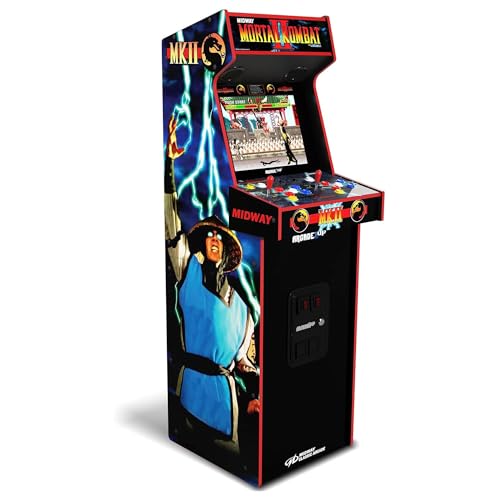
ARCADE1UP Mortal Kombat II Deluxe Arcade Machine, 14 Games
Included for 'Best Arcade Cabinets for Home Game Rooms' because the listing specifies 14 Games, details this guide uses to compare options.
View on Amazon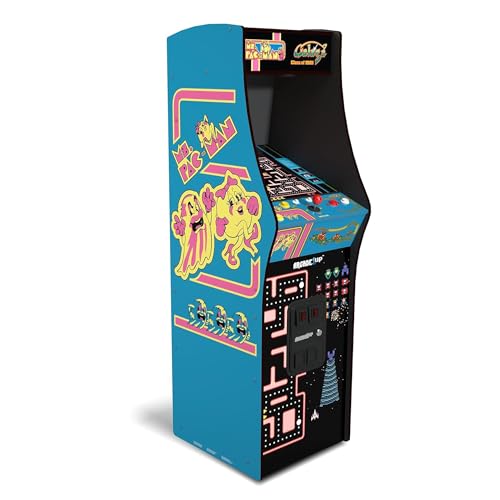
Arcade1Up Ms. Pac-Man Class of '81 Deluxe Arcade, 12 Retro Games
Included for 'Best Arcade Cabinets for Home Game Rooms' because the listing specifies 12 Retro Games, details this guide uses to compare options.
View on Amazon
Arcade1Up Pac-Man Deluxe Arcade Gaming Cabinet, 14 Classic Games
Included for 'Best Arcade Cabinets for Home Game Rooms' because the listing specifies 14 Classic Games, details this guide uses to compare options.
View on Amazon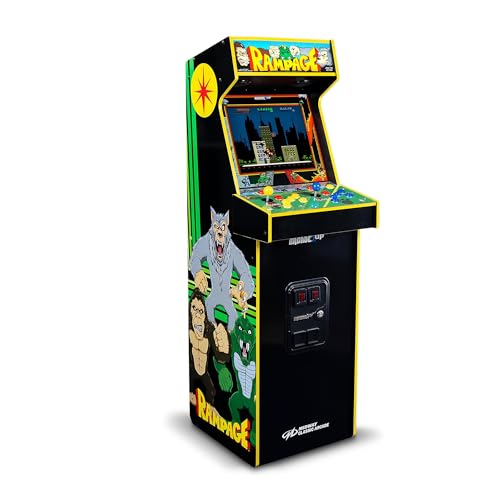
ARCADE1UP Rampage Joust Deluxe Full Size Arcade Machine, 14 Midway Games
Included for 'Best Arcade Cabinets for Home Game Rooms' because the listing specifies 14 Midway Games, details this guide uses to compare options.
View on Amazon| Type | Typical footprint (W x D) | Height | Weight | Comfortable room size |
|---|---|---|---|---|
| Bartop / countertop | 18″ x 20″ | 17″–24″ | 20–40 lbs | Any — sits on a table or counter |
| 3/4-scale upright (Arcade1Up, etc.) | 19″–22″ x 22″–25″ | 45″–48″ (58″–61″ with riser) | 60–80 lbs | 10×10 ft or larger |
| Full-size upright / commercial repro | 24″–30″ x 30″–34″ | 68″–74″ | 250–350 lbs | 12×14 ft or larger, dedicated game room |
Two measurements people forget:
- Player clearance: Leave at least 36″ in front of the cabinet so a player can stand back from the screen, and 24″–30″ on each side if two players share the control deck. In a 10×12 ft room, one 3/4-scale cabinet against the long wall works comfortably; two cabinets need the long wall plus staggered spacing.
- Doorway width: Flat-packed 3/4-scale cabinets come in a box roughly 48″ x 24″ x 8″, which fits through any standard 30″–36″ door. A pre-assembled full-size cabinet needs a 32″+ clear opening and often won’t turn a tight hallway corner — measure the path, not just the door.
- Stool height: A 3/4-scale cabinet on its riser puts the control deck around 36″–38″ high. Bar stools in the 24″–27″ seat-height range pair well if you want seated play.
Game Libraries: Licensed Depth vs. Emulated Breadth
This is the real dividing line between the two dominant ecosystems:
- Arcade1Up cabinets ship with a curated set of officially licensed titles — typically 3 to 14 games per machine. A Mortal Kombat cabinet includes the arcade trilogy; a Golden Tee Classic includes multiple course years; the NFL Blitz Legends machine covers the Blitz series. You’re buying a specific experience, not a library.
- AtGames Legends Ultimate ships with 300+ built-in games (arcade and console ports) and supports streaming services like ArcadeNet for more. Quality is uneven — some games are arcade-perfect, others are lesser console versions — but per-game cost is far lower.
- Custom/multicade builds (Raspberry Pi or PC-based) can run thousands of titles, but you’re sourcing games yourself and spending weekends configuring instead of playing.
Decision shortcut: if there’s one franchise you want to relive, buy the licensed cabinet. If you want “everything,” a multi-game platform wins — but expect to spend time tweaking controls per game.
Controls: Match the Joystick to the Games
Controls are where cheap cabinets disappoint and where mismatched expectations hurt most:
- 4-way vs. 8-way joysticks: Pac-Man-era games need a 4-way stick; fighting games need an 8-way. Most modern home cabinets ship 8-way sticks that feel slightly sloppy on 4-way games.
- Specialty controls: A trackball (Golden Tee, Centipede), a spinner (Tempest, Arkanoid), or a light gun changes which cabinet you should buy. The Legends Ultimate includes a trackball and dual spinners; Arcade1Up sells dedicated Golden Tee and Terminator 2 (light gun) machines instead.
- Deck quality: Budget machines under roughly $400 use thin plexi decks and clicky, light springs — fine for casual play, mushy for fighting games. Sanwa-style parts are the upgrade path if your cabinet allows it.
Display Quality
Nearly all home cabinets now use LCD panels in the 17″–24″ range (19″ is most common at 3/4 scale). What actually matters:
- Viewing angle: Side-mounted players see washed-out colors on cheap TN panels. IPS-style screens are worth prioritizing for two-player cabinets.
- Aspect ratio: Real arcade games ran 4:3 or 3:4 (vertical). A 16:9 screen stretching them looks wrong — check that the cabinet letterboxes properly or offers a vertical option.
- Screen door effect: At 19″+, low-resolution panels (below 720p) look soft at standing distance.
Full-size commercial reproductions sometimes offer CRT-style filters or actual scanline effects — cosmetic, but they matter to purists.
Assembly and Moving Reality
Flat-pack 3/4-scale cabinets assemble in 60–120 minutes with one person, a Phillips screwdriver, and the included cam-lock hardware — think IKEA difficulty, with the control deck wiring being the only fiddly step. Two people cut that to about 45 minutes. The box weighs 70–90 lbs, which is a one-person carry on carpet and a two-person carry on stairs.
Full-size cabinets arrive mostly assembled, weigh 250+ lbs, and need a dolly plus a helper — moving one upstairs solo is how backs and drywall both get damaged.
Durability: What Wears First
Cabinet construction is a real trade-off:
| Construction | Pros | Cons | Typical lifespan issues |
|---|---|---|---|
| MDF/particleboard (most 3/4-scale) | Cheap, light, decent finish | Swells with spills; cam locks loosen over years | Edges chip; T-molding peels in 3–5 yrs |
| Birch plywood (premium bartops, DIY kits) | Rigid, screw-holding, repairable | Heavier, costs more | Very durable; finish scratches first |
| Steel/commercial-grade | Indestructible shell | 250+ lbs, expensive to ship | Monitor and controls wear before the shell does |
In practice, the first things to wear are the joysticks and buttons (fixable for $20–$40 in parts), then the control deck overlay. The cabinet shell itself rarely fails — except MDF near a drink spill or a damp basement. Keep cabinets off concrete floors with feet or a mat.
Picks by Situation
- Small apartment / multi-use room: A bartop cabinet or an Arcade1Up without the riser, tucked into a corner. Bartops store in a closet when guests come over.
- Families with kids: A licensed Arcade1Up (Mortal Kombat, Class of ’81, or a Pac-Man machine). Simple menus, no configuration, durable enough, and the riser height works for adults while kids can stand.
- Maximum games per dollar: AtGames Legends Ultimate — usually $550–$700 — with the trackball covering control types most cabinets skip.
- Fighting game fans: Prioritize the deck: a cabinet you can upgrade with Sanwa parts, or budget for the swap at purchase.
- Dedicated game room, buyer-forever mindset: A full-size reproduction or refurbished commercial cab ($2,500–$4,000+). It’s furniture, not a toy — and it holds value accordingly.
- Renters: Anything flat-pack under 80 lbs. It disassembles in 20 minutes and moves like flat-pack furniture.
Price Ranges (2026 Market)
- Bartop kits and units: $150–$450
- 3/4-scale licensed cabinets: $400–$700 (riser often sold separately, ~$50–$80)
- Multi-game platforms (Legends Ultimate class): $550–$800
- Full-size reproductions and restored commercials: $2,500–$5,000+
FAQ
Do I need the riser for an Arcade1Up?
For adult standing play, yes — without it the deck sits around 28″, which is uncomfortable below about 5’6″. Kids and seated play are fine without one.
Can these cabinets damage my floor?
A 70-lb flat-pack won’t, but its narrow feet can dent soft vinyl over time — use furniture pads. A 300-lb commercial cabinet absolutely needs plywood or rubber matting underneath on hardwood.
Are the built-in speakers good enough?
For casual play, yes. Most cabinets offer a headphone jack or Bluetooth audio; for a serious setup, a small soundbar tucked behind the marquee is the usual upgrade.