Key takeaways
- Guests sleep over often and need a proper mattress: Joybird Briar Queen Sleeper or West Elm Harris Queen Sleeper.
- Small living room, bed needed twice a month: Burrow Shift, because its closed footprint is the slimmest of the group.
- Tight budget, storage wanted: IKEA Friheten with its under-seat or under-chaise storage.
- Frequent mover or stairs with tight turns: Sabai Eclipse, which is built around compact shipping.
- Daily sofa, occasional bed: any option with a thick, supportive seat cushion; avoid thin-cushion futon frames.
A queen sleeper sofa is worth buying only if its mattress surface comes close to 60 by 80 inches when opened, and very few products labelled “queen” actually reach that size. The most dependable picks are the Joybird Briar Queen Sleeper, the Burrow Shift, the West Elm Harris Queen Sleeper and the Sabai Eclipse, while the IKEA Friheten is the budget route that sleeps two only if you accept a narrower bed. This guide sorts seven options by the number that matters most, the real sleeping width, then shows what each one demands from your room, your doorway and your guests.
The quick answer: which queen sleeper fits which situation
Start with the situation, then read the individual sections for specs and trade-offs.
- Guests sleep over often and need a proper mattress: Joybird Briar Queen Sleeper or West Elm Harris Queen Sleeper.
- Small living room, bed needed twice a month: Burrow Shift, because its closed footprint is the slimmest of the group.
- Tight budget, storage wanted: IKEA Friheten with its under-seat or under-chaise storage.
- Frequent mover or stairs with tight turns: Sabai Eclipse, which is built around compact shipping.
- Daily sofa, occasional bed: any option with a thick, supportive seat cushion; avoid thin-cushion futon frames.
What “queen” really means on a sofa bed
A standard queen mattress is 60 inches wide and 80 inches long. Sleeper sofas almost never match that because the mechanism, frame and arms must fold inside a sofa body. Joybird lists the Briar queen mattress at 60 inches wide by 72 inches long, so it is a queen in width but about eight inches short in length. Anyone over six feet tall will feel that missing length. The IKEA Friheten is listed with a sleeping surface of about 55 inches by 80 inches, which is wider than a full bed but narrower than a queen, and longer than the Briar.
That difference is why shoppers are surprised. Two adults on a 60 inch width have 30 inches each, the same as on a regular queen bed. On a 55 inch surface each person has about 27.5 inches, roughly the share of a full bed. For a single guest the difference barely matters; for couples, it decides whether the weekend ends well.
Length matters just as much as width. A 72 inch mattress leaves a person of 6 feet with no spare room at all, so their feet press the footboard or hang over the edge. A 78 to 80 inch surface handles nearly every adult. When a listing only says “queen size”, look in the specification table for the mattress dimensions, and treat the sofa-bed label as a marketing term until you have seen the numbers.
Comparison table: sizes, sleeping surface and footprint
| Model | Open sleeping surface | Closed size (W x D x H) | Mechanism type | Best for |
|---|---|---|---|---|
| Joybird Briar Queen Sleeper | 60 in x 72 in | 80 in x 37 in x 37 in | Fold-out with foam mattress | Frequent guests |
| Burrow Shift | Queen-size foam surface | 84 in x 32.5 in x 33.5 in (as published) | Foam layers built into the sofa | Small rooms |
| West Elm Harris Queen Sleeper | Queen mattress | Varies by cover and size | Fold-out | Style-led rooms |
| Sabai Eclipse | Queen bed | Compact, boxed delivery | Convertible | Movers, renters |
| IKEA Friheten sleeper sectional | 55 1/8 in x 80 3/8 in | 90 1/2 in x 59 1/2 in x 33 7/8 in | Pull-out with chaise storage | Budget storage |
| IKEA Friheten straight 3-seat | 56 3/4 in x 78 3/8 in | 88 5/8 in x 41 3/8 in x 32 5/8 in | Pull-out with seat storage | Straight wall layouts |
| Futon-style convertible (type) | Often 54 to 60 in wide | Typically 75 to 85 in wide | Fold-flat frame | Spare rooms |
Sizes come from manufacturer pages and published retailer specifications at the time of writing; always confirm against the current product listing, since models are revised and some pages list slightly different open dimensions for the same sofa.
1. Joybird Briar Queen Sleeper: the most bed-like choice
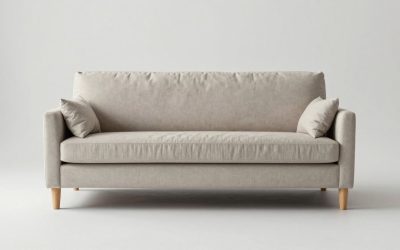
The Briar is Joybird’s best-known sleeper. The seat bench lifts and unfolds into a bed, and the sofa is offered in a wide range of fabrics and leathers with a choice of leg finishes. Joybird lists the overall size at 80 inches wide, 37 inches deep and 37 inches high, with a seating area of 72 inches wide, 22 inches deep and 20 inches high. Arm height is 29 inches and legs are 4 inches tall. The queen mattress is 60 by 72 inches, and published figures put the mattress at roughly 4.5 to 5 inches thick, built from high-density foam with a layer of memory foam on top. The brand also sells a Briar Full version with a 52 by 72 inch mattress for smaller rooms.
Who it suits: households that host guests regularly and want a sofa that looks like a designed piece rather than a utility item.
Pros:
- Genuine queen width with a foam mattress rather than a thin pad.
- Custom fabric choices and a hardwood-style frame approach typical of the brand.
- Reasonable closed depth of 37 inches for a full-size sofa.
Cons:
- Mattress length of 72 inches is short for tall sleepers.
- Heavy delivery: the shipping box is listed at about 241 pounds, so plan help for the carry-in.
- Made-to-order production means a wait of several weeks.
- The open depth is listed at about 86 inches, so leave at least seven feet and a half of clear floor behind the sofa.
2. Burrow Shift: the slimmest footprint
The Burrow Shift takes a different approach from the traditional fold-out. Rather than hiding a separate mattress inside the frame, it uses several layers of foam built into the sofa surface, which converts from seat to a queen-size sleeping area. Published specs list it at about 84 inches long, 32.5 inches in the depth dimension and 33.5 inches high, and the brand promotes tool-free assembly and a trial period. It ships in compact boxes that can pass through narrow stairwells, which is a significant advantage for city homes.
Who it suits: apartment dwellers who need a queen option in a room where a bulky pull-out would block the walkway.
Pros:
- Slim closed profile compared with most queen sleepers.
- No metal mechanism to catch bedding or pinch fingers.
- Compact boxes simplify delivery to walk-ups.
Cons:
- Some reviewers describe the seat as firm for long sitting sessions, a common trade-off with sofa surfaces that must double as a mattress.
- Fewer custom upholstery options than a made-to-order brand.
- Foam sleepers can feel warm for hot sleepers; use a breathable sheet set.
3. West Elm Harris Queen Sleeper: the style-first pick
West Elm’s Harris line is a clean-lined, mid-century inspired sofa that is available with a queen sleeper option. Comfort charts that compare sleepers often place it near the top, and the appeal is that the sofa reads as a regular living room piece when closed. Because West Elm updates fabrics and finish options regularly, check the product page for the current width, depth and mattress details before measuring your room.
Who it suits: buyers who care about the look of the room as much as the guest bed and who are comfortable with a premium tier of spending.
Pros:
- Design that suits modern and transitional rooms.
- A choice of fabrics, including performance options that resist everyday wear.
- Strong comfort reputation among sleeper comparisons.
Cons:
- Premium tier of spending compared with the budget options here.
- Large frame; measure doorways and stair turns.
- Made-to-order timelines apply to many configurations.
4. Sabai Eclipse: built for compact delivery
The Sabai Eclipse is a convertible sofa that opens into a queen bed and is marketed around sustainable materials and compact packaging. That packaging matters for readers living above the ground floor, because a sofa that arrives in smaller boxes can be carried up narrow stairs where a pre-assembled 240 pound frame cannot.
Who it suits: renters and frequent movers who need a queen bed option and expect to carry the sofa to a new address within a few years.
Pros:
- Queen bed conversion without an oversized fold-out frame.
- Designed with transport and assembly in mind.
- Attractive for apartments with elevator limits or tight stairwells.
Cons:
- Fewer fabric choices than larger upholstery brands.
- Assembly is required, so allow an hour or two.
- Firmness is a matter of taste; check the return window.
5. IKEA Friheten sleeper sectional: the storage-minded budget pick
The Friheten is IKEA’s best-known sleeper, and it sits in the budget tier. The three-seat sectional with chaise measures about 90.5 inches wide and 59.5 inches deep, with a seat depth of 30.75 inches, a seat height of 17.375 inches and a height of 33.875 inches including back cushions. The sleeping surface is 55.125 inches wide by 80.375 inches long, and the chaise hides a storage compartment large enough for bedding. A version with the Klagshamn mattress pad rolls out at bedtime and rolls into a long back cushion in the morning. The chaise can sit on either side when you assemble it.
Who it suits: students, first apartments and guest rooms where storage space matters and a bed slightly narrower than queen is acceptable.
Pros:
- Built-in storage for pillows and blankets removes the need for a separate chest.
- Flat-pack boxes are manageable on stairs; the basic sectional ships as 3 packages and the roll-out mattress version as 5.
- Reversible chaise adapts to left or right layouts.
Cons:
- Not a true queen; two adults will notice the narrower width.
- Reviewers report that the foam can feel firm and that heavy daily use shows wear within a few years.
- One owner report mentions cracks where seat cushions meet the pull-out section, and the end opposite the chaise has no armrest.
6. IKEA Friheten straight 3-seat: for layouts without a chaise
If a chaise would block a pathway, the straight version fits against one wall. At roughly 88.6 inches wide and 41.4 inches deep, it is about 18 inches shallower than the sectional when closed. Its storage sits under the seat rather than in a chaise, and the bed is about 56.75 by 78.4 inches. The trade-off is that without the chaise you lose the lounging spot, so it is better for a guest room or study than for a main family sofa.
Who it suits: narrow rooms, home offices and studio apartments.
Pros:
- Slimmer closed depth than the sectional.
- Bed length of about 78 inches handles most adults.
Cons:
- Bed width of about 56.75 inches is not a true queen.
- Less comfortable for long movie sessions than a chaise sectional.
7. Futon-style convertible queen sofas: the practical type
The last option is a category rather than one model: a frame-based futon or click-clack convertible that folds flat into a bed. These come from many brands with widely varying quality, so judge them by construction, not name. Look for a solid hardwood or thick plywood frame, metal reinforcement at the hinge, a seat cushion of at least four inches of high-resilience foam and a declared weight capacity. Surface widths of 54 to 60 inches are typical.
Who it suits: spare rooms, basements and dorm-style spaces where function matters most and the budget tier is the priority.
Pros:
- Fold-flat action takes only seconds and needs no pull-out clearance beyond the sofa’s own depth plus a few inches.
- Typically the most affordable way to reach queen width.
Cons:
- Cushion quality varies enormously; thin foam bottoms out within a year.
- Can look utilitarian in a main living room.
Mechanism trade-off table
| Mechanism | Typical mattress thickness | Floor clearance needed (open) | Durability watch point | Comfort for sitting |
|---|---|---|---|---|
| Fold-out with separate mattress | 4 to 5 in | About 80 to 90 in from the wall | Hinges and bar position | Good |
| Built-in foam layers (Burrow style) | Layered foam | Around the closed length | Foam compression | Firm |
| Pull-out with roll-out pad (Friheten) | Thin pad on slats | About 85 to 90 in | Seat and slat junction | Moderate |
| Click-clack futon | 6 to 8 in cushion | Sofa depth plus a few inches | Frame joints | Moderate |
Measure these four things before buying
A sleeper sofa fails in practice for logistical reasons far more often than comfort reasons. Check these four measurements with a tape, not by eye.
- Open depth versus room depth. A queen sleeper needs roughly 86 to 90 inches from the back of the sofa to the foot of the bed. In a room that is 10 by 12 feet, with the sofa on a 10 foot wall, the bed opens toward a 12 foot dimension, which leaves about 30 inches of walkway to the far wall. That is workable only if the coffee table moves.
- Doorway and stair width. Standard interior doorways are 30 to 32 inches wide. A shipping box with a 28 inch short side passes, but a pre-assembled sofa that is 37 inches deep needs to be tipped on end and carried through diagonally.
- Elevator interior. Many older elevators are under 48 inches deep, which rules out long, rigid frames.
- Weight on the carry. The Joybird Briar ships at roughly 241 pounds. Plan for two people plus straps, or choose a flat-pack option.
Decision matrix: match your situation to a pick
| Your situation | Best match | Why |
|---|---|---|
| Couple guests twice a month | Joybird Briar or West Elm Harris | True queen width and a real mattress |
| Studio apartment, 450 sq ft | Burrow Shift | Closed depth about 32.5 in |
| Fourth-floor walk-up | Sabai Eclipse or IKEA Friheten | Compact or flat-pack boxes |
| Tall guests over 6 ft 2 in | IKEA Friheten (about 80 in bed) | Longest bed in the group |
| Need bedding storage | IKEA Friheten | Chaise or seat storage included |
| Children and pets | Performance fabric version of Briar or Harris | Stain-resistant upholstery options |
Comfort and care realities
Mattress feel
Sleeper mattresses are thinner than regular beds because they must fold. The 4.5 to 5 inch foam in a queen fold-out is serviceable for short stays, but a mattress topper of two to three inches changes the experience noticeably. Choose a topper about an inch narrower than the mattress so the sofa still closes.
The bar-under-the-back problem
In classic pull-outs, a support bar can sit under the lower back. Foam-layer designs avoid this, while pull-outs with thicker mattresses reduce it. If a guest has back pain, lean toward foam-based designs or place a topper over the bar zone.
Daily seating durability
If the sleeper is also your daily sofa, the seat cushion is the part that wears first. Look for high-resilience foam, replaceable inserts and a frame built from kiln-dried hardwood or thick plywood. Rotate cushions monthly to even out compression, and vacuum the gap where the seat meets the mechanism, since crumbs and coins collect there.
Fabric choice
Performance weaves and tight-weave polyester blends resist snagging from pets. Leather and faux leather wipe clean but can feel cold against sleepers, so keep a throw and a fitted sheet set nearby.
Bedding storage
A sleeper that hides its bedding saves a closet shelf. If your model lacks storage, a lidded ottoman or a slim under-bed bag in a hall closet keeps the sheets, pillows and topper together so setting up the bed takes minutes, not a hunt through the house.
Frequently asked questions
Is a queen sleeper sofa comfortable for nightly use?
Most are designed for occasional use. Nightly sleeping on a 4 to 5 inch mattress over a folding frame is possible for short periods but not a substitute for a proper bed. If someone will sleep there for weeks, add a topper or consider a daybed or wall bed instead.
What sheets fit a sleeper sofa mattress?
For a 60 by 72 inch mattress such as the Briar, standard queen fitted sheets will fit but be loose at the foot; many owners use a deep-pocket sheet and tuck the extra length. For the Friheten’s roughly 55 by 80 inch surface, queen sheets are commonly recommended.
How much weight can a sleeper hold?
Capacity varies by model and is listed by each manufacturer. Typical sleeper frames are rated for two adults, but never assume; read the stated limit and avoid sitting on the front edge while the bed is open.
Can a sleeper fit a room under 12 feet long?
Yes, if the sofa sits on the long wall and the bed opens toward the room. In a 10 by 12 foot room, an 80 inch sofa opening to about 86 inches leaves around three feet of clear floor on the 12 foot axis, but you will need to move the coffee table each time.
Do sleeper sofas hurt the floor?
The mechanism drags on the way out, and casters or glides can mark hardwood. Lift the front slightly when opening, fit felt glides under legs and place a thin rug under the open zone if your floors scratch easily.
Final buying checklist
- Compare the open mattress dimensions, not the product name.
- Measure open depth, doorway width and stair turns.
- Check that the return window covers a night of actual sleeping.
- Pick fabric by household: performance weave for pets and kids, leather for easy wiping.
- Plan a topper and a deep-pocket fitted sheet set.
In short, choose the Joybird Briar or West Elm Harris for a real queen mattress, the Burrow Shift when floor space is tight, the Sabai Eclipse for easy moves, and the IKEA Friheten when storage and a modest budget matter more than full queen width.