Key takeaways
- Plan separate arrival, drying and dry-storage positions for umbrellas, using a wet-weather worksheet that preserves the apartment entrance route.
What's inside
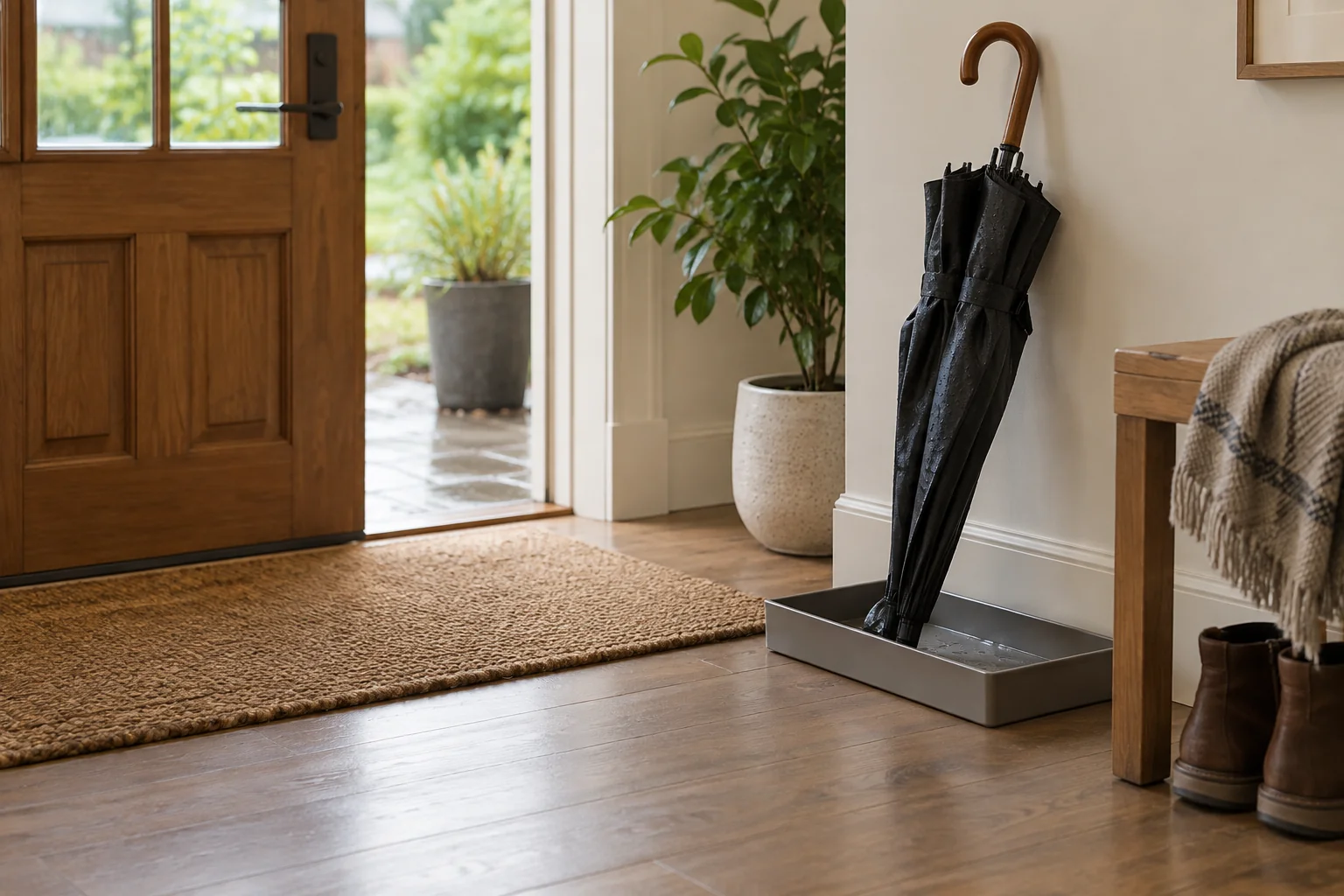
Organize wet umbrellas with three separate stages: catch the drips on arrival, dry the umbrella as its maker directs, and return it to dry storage. A narrow umbrella stand may handle the first stage well without providing enough room for the second. Plan all three positions before deciding where the stand should go.
Keep the apartment entrance usable throughout the process. An open canopy, a protruding handle or water escaping a tray can create a problem even when the container itself fits neatly against the wall. Do not use a shared corridor as overflow drying space without approval.
Count umbrella types and simultaneous arrivals
List the umbrellas that return home: long walking umbrellas, compact folding models and larger canopies. Measure the closed length and the widest handle or folded fabric bundle. A shallow container that holds a compact umbrella may let a long one tip, while a deep opaque holder can make small models hard to retrieve.
Next consider how many wet umbrellas arrive together. Use a realistic rainy-day event, not the average number by the door on a dry afternoon. Include guests if they visit frequently, but avoid purchasing a large permanent fixture for a rare situation that can be handled with an agreed temporary arrangement.
Keep a drip station separate from drying space
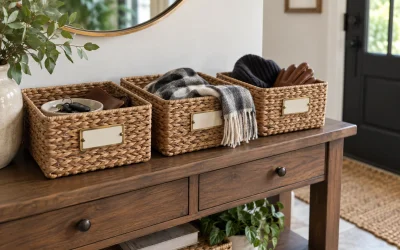
Choose a stable container intended for wet umbrellas or a suitable washable drip tray that protects the actual floor finish. Check its base, seams and removal method before relying on it to contain water. A decorative basket with open weaving is not automatically a drip container. Place the station inside your own usable area, away from the door’s movement and the main route.
The totes Premium Folding Umbrella with Tipless Ends instructs owners to leave it open to dry after use. That named product is a useful reminder that closed storage and drying are different tasks. Follow the instructions for your own model; do not assume a tightly bundled canopy in a sleeve has completed its drying routine.
Identify a separate place where the umbrella can dry in the required configuration without people stepping over it. Keep it clear of electrical items and heat sources. Protect the surface underneath and check that opening the canopy will not strike nearby objects. If the home has no suitable position, reconsider the arrangement rather than leaving an obstruction in the entrance.
Make a three-stage worksheet
| Stage | Place and action | What to check |
|---|---|---|
| Arrival | Put the wet umbrella in its drip-catching position | Handle and fabric stay inside the planned footprint |
| Drying | Move it to the maker-compatible drying position | Canopy opens without blocking movement or contacting hazards |
| Dry storage | Close and store only when dry | It can be retrieved without disturbing other umbrellas |
| Reset | Empty and clean the drip container appropriately | No standing water or leakage remains on the floor |
Add an owner or a shared responsibility beside each step. Do not assume the person who notices the water will always be available to empty it. Keep a floor-appropriate cleanup cloth nearby without leaving it spread across the walkway.
Measure the occupied space, including handles
Mark the container’s proposed position on paper or with a floor-safe temporary method. Put the actual closed umbrellas in it and look at the widest occupied outline. Curved handles may project well beyond a narrow cylindrical base. Check the position with the entrance door, adjacent cupboard and any folding shoe seat in their normal operating states.
A stand placed behind an open door can look hidden but may prevent the door from reaching its normal position. A tray directly beside a threshold may also be easy to kick when someone arrives carrying shopping. Move the trial position until ordinary entry and exit do not require special care or a rearrangement.
A worked rainy-evening example
In an illustrative two-person apartment, a 24 cm wide tray is proposed for a 30 cm niche. The spare width seems adequate until the two umbrella handles occupy a 35 cm outline. The handles project 5 cm beyond the niche, so the household rejects that placement even though the tray itself fits.
They choose a position farther inside the apartment for the arrival tray and identify a separate protected drying area. Their checklist includes moving each umbrella from arrival to drying and emptying the tray afterward. The example does not establish a standard clearance or a drying time; actual umbrellas and the room determine both the geometry and the routine.
Review the setup after a wet day
Look for droplets outside the tray, difficult retrieval, straps hanging into the route and forgotten damp sleeves. These observations show which stage needs adjustment. More absorbent material in the entrance is not a substitute for finding why water escapes or why umbrellas never reach their drying position.
Keep the final arrangement simple enough for a guest to understand: a clear place for immediate drips and a host-managed drying step. Once the umbrella is dry, restore the entrance to its normal layout and store any temporary protection. The useful result is a repeatable wet-weather routine, not a permanent collection of umbrellas occupying the doorway.