Key takeaways
- Measure the diagonal, not the wall: Run a tape between the two walls to find your usable diagonal, then subtract 3–4 inches for cables and airflow behind the unit.
- Match height to your seating: Recliners and low sectionals sit lower than dining chairs — aim for the screen’s center to land near seated eye level, which usually means a 15″ to 24″ stand.
- Decide open vs. closed storage: Open shelves make a corner feel lighter and shallower; doors hide consoles and clutter in a busy, multi-use room.
- Prioritize a built-in power outlet: Corners are almost always the furthest point from a wall socket, so an integrated outlet strip removes the extension cord running across your floor.
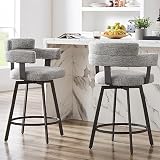
- Echo one finish you already own: Pull the wood tone from your coffee table or the metal from your bar stools so the corner reads intentional rather than leftover.
What's inside
The Garvee Corner TV Stand for TVs Up to 55 Inch is the best overall corner TV stand for awkward room layouts, with the Unikito 55” Corner Entertainment Center as a close runner-up. Both solve the same problem: they turn a dead 45-degree angle into the anchor of your seating plan.
Awkward rooms are the norm, not the exception. Radiators under windows, doors that swing into the only flat wall, a fireplace that hogs the focal point, or an open-plan space where the living zone bleeds into the dining table — all of it pushes the TV into a corner, whether you planned for it or not. The trouble is that most media consoles are designed as straight rectangles, so wedging one diagonally leaves triangular gaps, wobbling front feet, and a cable tangle nobody wants to look at. A true corner stand is cut to sit flush against two walls, which reclaims floor space, shortens the viewing distance, and lets you angle a sectional or a pair of accent chairs toward the screen without blocking a walkway. Below, I’ve assessed six corner units on footprint geometry, storage logic, cable and power management, and how each one reads visually next to the furniture you already own.
As an Amazon Associate we earn from qualifying purchases at no extra cost to you. Product prices and availability are accurate as of the date shown and are subject to change.




Quick Comparison
| Product | Best For | Standout Feature | Rating |
|---|---|---|---|
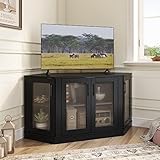
| Garvee Corner TV Stand, Up to 55″ | Most awkward layouts | Sliding barn doors + built-in power outlet | See live rating above |
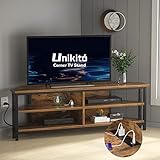
| Unikito 55″ Corner TV Stand | Budget-conscious buyers | Four open shelves on a slim metal frame | See live rating above |
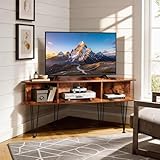
| Rustic Corner Entertainment Center, 50″ | A warmer, premium look | Enclosed storage with reclaimed-wood character | See live rating above |
| MUTUN Corner TV Stand with Power Outlet | Bedrooms and small apartments | Fits 32″–60″ screens with charging built in | See live rating above |
| Modway Render Low Profile Corner Media Stand | Low-slung modern seating | 15″ height for eye-level viewing from a sofa | See live rating above |
How to Choose a Corner TV Stand for Awkward Room Layouts
- Measure the diagonal, not the wall: Run a tape between the two walls to find your usable diagonal, then subtract 3–4 inches for cables and airflow behind the unit.
- Match height to your seating: Recliners and low sectionals sit lower than dining chairs — aim for the screen’s center to land near seated eye level, which usually means a 15″ to 24″ stand.
- Decide open vs. closed storage: Open shelves make a corner feel lighter and shallower; doors hide consoles and clutter in a busy, multi-use room.
- Prioritize a built-in power outlet: Corners are almost always the furthest point from a wall socket, so an integrated outlet strip removes the extension cord running across your floor.
- Echo one finish you already own: Pull the wood tone from your coffee table or the metal from your bar stools so the corner reads intentional rather than leftover.
The Best Corner TV Stands for Awkward Room Layouts Reviewed
Best Overall: Garvee Corner TV Stand for TVs Up to 55 Inch
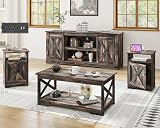
The combination of sliding barn doors and a built-in power outlet makes this the most practical choice for a real, lived-in living room. It’s ideal for families who need clutter genuinely hidden and a soundbar, console, and router all powered from one spot.
Best Budget: Unikito 55” Corner Entertainment Center
Four open shelves on a slim industrial metal frame give you display space without the visual bulk that makes small corners feel crowded. Best for renters and first apartments where an airy silhouette matters more than concealed storage.
Best Premium: Rustic Corner Entertainment Center for 50 Inch TV
The enclosed storage and warm distressed grain give this one the presence of a furniture piece rather than a media accessory. Choose it if your room leans farmhouse or transitional and you want the corner to hold its own beside a leather sectional.
Best for Bedrooms and Small Apartments: MUTUN Corner TV Stand with Power Outlet
Its flexible 32″–60″ screen range and integrated charging make it a natural fit for a bedroom corner that doubles as a nightstand-adjacent surface. Good for studios and guest rooms where every piece has to earn two jobs.
Best for Low-Profile Modern Seating: Modway Render Corner Media Stand
At just 15 inches tall with a mid-century walnut profile, it keeps sightlines low and pairs beautifully with track-arm sofas and tapered-leg accent chairs. Pick it if your aesthetic is clean and architectural rather than rustic.
Frequently Asked Questions
Do corner TV stands actually save space?
Yes. A corner unit fills a triangle of floor that’s otherwise unusable, freeing full wall runs for a sofa, sideboard, or dining setup. In rooms under about 150 square feet, that trade is usually worth more than any storage you give up.
Can I put a larger TV on a corner stand than its stated size?
Sometimes, but be careful. What matters is the base’s footprint and the stand’s weight limit — check that your TV’s feet or pedestal sit fully on the top surface, and consider a wall mount or center-pedestal base if they overhang.
Will a corner stand work against a flat wall too?
Most of these have a cut-back or angled rear panel, so they’ll sit against a straight wall with a small gap behind. It looks fine in practice and gives you extra cable clearance.
How do I hide the cables in a corner setup?
Models with built-in outlets do most of the work. Otherwise, run a single cord along the baseboard behind the stand, bundle everything in a sleeve, and use the rear cutouts to route cables down rather than sideways.
Final Thoughts
For most awkward rooms, the Garvee Corner TV Stand is the strongest all-rounder thanks to its barn doors and integrated power. Go with the Unikito 55” Corner Entertainment Center if you want an open, budget-friendly look, or the Modway Render if your seating sits low and your style leans mid-century modern.