Key takeaways
- Confirm the required water-line connection and electrical outlet before delivery day.
- Measure the refrigerator with doors, handles, and hinge covers included.
- Choose a larger ice bin if your household regularly hosts guests or fills coolers.
- Leave ventilation clearance exactly as the manufacturer specifies.
What's inside
Choosing the best refrigerator with an ice maker is about more than getting cold food and a steady supply of cubes. The right model should suit your kitchen’s proportions, daily routines, entertaining habits, and visual language. A handsome refrigerator can anchor a kitchen beautifully, but an oversized door swing, awkward freezer drawer, or disappointing ice system will quickly become a daily annoyance.
This guide compares the main features worth paying for, from ice production and storage to capacity, layout, noise, finish, and installation. It also highlights a range of suitable options, including compact apartment refrigerators, counter-depth French-door designs, and a dedicated ice machine for homes where entertaining is a priority.
As an Amazon Associate we earn from qualifying purchases.


🛒 Best Price Today on Amazon
Prime members get fast, free shipping on everything above, plus member-only deals. New members get a 30-day free trial — cancel anytime.
Our Recommended Picks
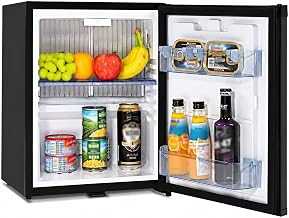
The Upstreman 7.1 Cu. Ft. Refrigerator is a sensible choice for a dorm, studio, guest suite, or compact apartment, although its smaller format is best for light ice needs. For a full-size kitchen, the 16 Cu. Ft. French Door Refrigerator with Ice Maker offers a straightforward bottom-freezer layout and frost-free convenience without an overly elaborate configuration.
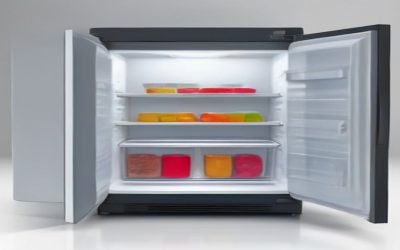
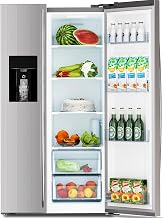
If you want more organized storage, consider the KoolMore Counter Depth French Door Refrigerator, a four-door stainless-steel model with 22.5 cubic feet of capacity. The Antarctic Star 17.5 Cu. Ft. French Door Refrigerator adds an automatic ice maker, multi-air flow, an inverter compressor, and a streamlined touch display. At the premium end, the Samsung 26 cu. ft. Mega Capacity Counter Depth 3-Door French Door Refrigerator stands out for its four ice options and generous capacity.
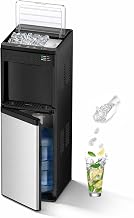
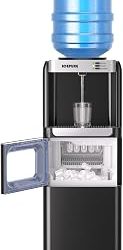
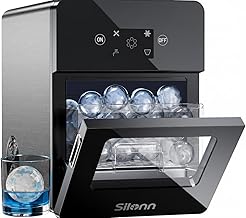
For parties, outdoor kitchens, or households that regularly fill coolers, the Commercial Ice Maker Machine 100 Lbs/24H is a different kind of solution. Its listed production rate and storage bin are considerably beyond what a built-in refrigerator ice maker is designed to provide.
Start With Your Kitchen’s Measurements
Measure the refrigerator opening, not simply the available wall. Record width, height, depth, and the location of nearby cabinets, islands, outlets, and water connections. Then check the appliance’s total depth with doors and handles included. A counter-depth model can create a more tailored, furniture-like appearance, while a standard-depth refrigerator usually provides more interior capacity.
Door and drawer clearance matter just as much. French-door refrigerators are often easier to place beside a wall because each upper door needs less swing space, but the bottom freezer still needs room to extend fully. Leave enough clearance to remove shelves and drawers for cleaning or repairs. Also confirm that the boxed appliance can pass through hallways, stairwells, and doorways before ordering.
Choose the Ice System That Matches Your Routine
Built-in ice makers are convenient, but they are not all intended for the same workload. A refrigerator ice maker is ideal for everyday drinks, family meals, and occasional guests. If you entertain frequently, look for a large ice bin, fast production, and a design that keeps stored ice accessible without opening the refrigerator repeatedly.
Pay attention to the type of ice as well as the quantity. Some models produce traditional crescent or cubed ice, while more advanced refrigerators offer multiple shapes or dispensing choices. The Samsung 26 cu. ft. model, for example, is appealing if variety is important. A dedicated machine such as the Commercial Ice Maker Machine 100 Lbs/24H makes more sense when you need a dependable reserve for parties, catering-style service, or a separate beverage station.
Remember that automatic ice makers need a compatible water supply unless the model specifically supports manual filling. Check whether a filter is included, how often it must be replaced, and whether the ice compartment can be switched off during vacations.
Compare Capacity and Interior Organization
Cubic footage is useful, but layout determines how much of that space you can actually use. French-door refrigerators keep wide shelves at eye level, making platters and large containers easier to store. Bottom-freezer drawers place frozen food below the fresh-food section, which is generally convenient for households that use the refrigerator more often than the freezer.
Four-door designs can improve organization by dividing storage into smaller zones. They are particularly useful when you want separate areas for produce, drinks, snacks, or frequently accessed ingredients. However, more doors and compartments can mean slightly less flexible shelf space. A compact model such as the Upstreman is easier to fit into a small room, but its 7.1 cubic feet will not suit a large household’s weekly grocery haul.
Look for adjustable shelves, full-width drawers, door bins that can hold tall bottles, and freezer baskets that do not allow small packages to disappear underneath larger ones. Clear organization is one of the best forms of everyday kitchen styling: it keeps counters calmer because groceries have a logical home.
Consider Cooling, Noise, and Energy Use
Features such as frost-free operation, automatic defrost, multi-air flow, and inverter compressors can improve convenience and temperature stability. Multi-air flow systems are designed to distribute chilled air more evenly, while inverter compressors can adjust their output rather than cycling only between full power and off.
Energy labels and estimated annual consumption are worth comparing, especially for a large refrigerator that runs continuously. A quieter model is also valuable in open-plan homes, where compressor noise can compete with conversation or television. Product specifications may list a decibel rating, but independent owner feedback can provide additional insight into normal operating sounds, ice harvesting, and water-valve noise.
Match the Finish to Your Interior
Stainless-look finishes are versatile and coordinate well with timber, painted cabinetry, stone, and warm metal accents. Counter-depth French-door models tend to look especially integrated because they project less into the room. If your kitchen already has several reflective surfaces, a smudge-resistant or softer satin finish may feel more considered than a highly glossy front.
Use the refrigerator as part of the room’s visual rhythm. Align its top with nearby cabinets where possible, avoid placing it beside a cramped walkway, and keep magnets or paperwork to a minimum if you want a composed appearance. A refrigerator is a major visual block, so proportion and placement often matter as much as the finish.
Tips
- Confirm the required water-line connection and electrical outlet before delivery day.
- Measure the refrigerator with doors, handles, and hinge covers included.
- Choose a larger ice bin if your household regularly hosts guests or fills coolers.
- Leave ventilation clearance exactly as the manufacturer specifies.
Frequently Asked Questions
Is a refrigerator ice maker worth having?
For most households, yes. It eliminates frequent tray filling and keeps ice available for everyday drinks. The value is lower if you rarely use ice or prefer a very compact refrigerator.
Are French-door refrigerators better than top-freezer models?
They are often more convenient for fresh-food storage and wide dishes, but top-freezer models can be simpler, less expensive, and more efficient with limited floor space. The best layout depends on how you shop and cook.
Do all built-in ice makers need plumbing?
No. Some compact appliances use a refillable reservoir, but many full-size refrigerator ice makers require a plumbed water line. Check the installation instructions before purchase.
Should I buy a separate ice machine?
Choose one when your ice demand regularly exceeds a refrigerator’s output, particularly for parties, beverage service, or an outdoor kitchen. It is usually unnecessary for ordinary family use.
Conclusion
The best refrigerator with an ice maker is the one that fits your kitchen precisely, produces enough ice for your routine, and keeps fresh and frozen food easy to organize. Prioritize measurements, capacity, water requirements, cooling performance, and finish before being drawn to extras. For everyday kitchens, a well-planned French-door refrigerator is a strong all-rounder; for serious entertaining, pair a suitable refrigerator with a dedicated ice maker.