Our Top Picks
 VASAGLE Tall Farmhouse TV Stand58.3 x 15.7 x 31.9 inches58.3 x 15.7 x 31.9 inches73.9 PoundsCheck on Amazon
The right tv stands and cabinets should be 6 to 12 inches wider than your TV, place the center of the screen at seated eye level (42 inches from the floor), and support at least 1.5x your TV’s weight while hiding cables for your specific room size.
Choosing by TV size alone leads to the two most common mistakes: a stand that looks undersized and wobbly, or a screen mounted too high that causes neck strain. Use viewing height, weight capacity, and storage footprint as your primary filters, then match the width and depth to whether you live in an apartment or a large living room.
VASAGLE Tall Farmhouse TV Stand, Entertainment Center with Door for 65'' TV
Chosen because it specifies Entertainment Center with Door for 65'' TV.
View on Amazon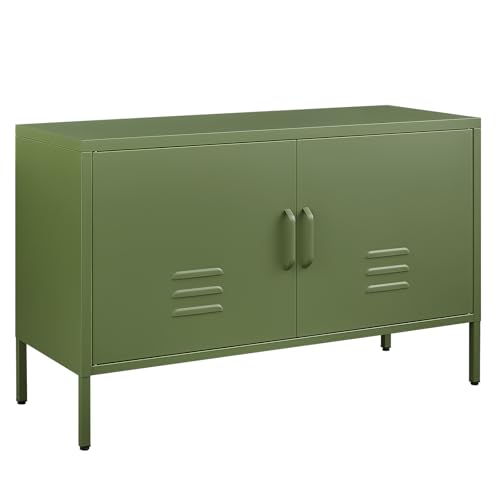
IRONFFICE Metal Storage Cabinet,Metal Cabinet with Doors and Adjustable Shelf,TV Stand with Storage,Morden TV Cabinet for Bedroom,Living Room,Avocado Green
Chosen because it specifies Metal Cabinet with Doors and Adjustable Shelf and TV Stand with Storage.
View on Amazon
YITAHOME 70" TV Stand for up to 80" TVs with 4 Fluted Doors, Natural Oak
Chosen because it specifies Natural Oak.
View on Amazon
VASAGLE 58 Inch TV Stand, Mid Century Entertainment Center with Storage
Chosen because it specifies Mid Century Entertainment Center with Storage.
View on AmazonStart With Viewing Height: The 42-Inch Rule
For comfortable viewing, the center third of your TV screen should sit at your seated eye height. For most sofas and media chairs, that is 38 to 44 inches from the floor. Most standard sofas have a seat height of 17 to 19 inches, placing the average adult eye level at 40 to 44 inches when sitting back.
Most tv stands and cabinets are 20 to 30 inches tall. This range works because TV height adds the rest. Here’s how to calculate it:
Formula: Ideal Stand Height = Seated Eye Level (42″) – (TV Height / 2)
A 65-inch TV is about 32 inches tall without its feet. Half of that is 16 inches. 42 – 16 = 26 inches. A 24 to 28-inch tall stand will put it in the perfect zone. If you use a low-profile modern sofa with a 15-inch seat height, your eye level drops to about 38 inches, so choose a shorter 20 to 22-inch stand.
- Eye level too low? If the stand is too tall, you will tilt your head up. Over 15 degrees of upward tilt for 2+ hours causes neck fatigue.
- Eye level too high? If the stand is too short and you wall-mount above it, the gap between stand and TV should be 4 to 8 inches to maintain a connected look and hide cables.
- Recliner viewing: Add 4 to 6 inches to your ideal height since you recline and your eye level rises.
Match Stand Width and Weight Capacity to Your TV Size
A stand should always be wider than your TV. A TV that overhangs the edges looks unstable and leaves no room for a soundbar or decor. You also need to check weight capacity, not just screen size compatibility. A 75-inch OLED can weigh 75 lbs, while a 75-inch QLED with a full-array backlight can weigh 95 lbs. Add 15 to 30 lbs for a soundbar, console, and books.
| TV Size | TV Width (approx.) | TV Weight (without stand) | Recommended Stand Width | Minimum Weight Capacity |
|---|---|---|---|---|
| 50 – 55 inch | 48 – 49 inches | 30 – 45 lbs | 55 – 65 inches | 80 lbs |
| 60 – 65 inch | 56 – 57 inches | 45 – 65 lbs | 65 – 75 inches | 120 lbs |
| 70 – 75 inch | 65 – 66 inches | 65 – 90 lbs | 72 – 85 inches | 150 lbs |
| 80 – 85 inch | 73 – 75 inches | 85 – 120 lbs | 80 – 95 inches | 180 lbs |
For tv stands and cabinets under $400, the top is often 3/4-inch engineered wood with a hollow core rated for 80 to 100 lbs total. For 75 inches and above, look for a solid wood top, plywood frame, or steel-reinforced legs rated for 150 lbs or more. Check if the rating is for the top surface only or distributed across shelves. Center legs or a center partition prevent sagging on stands wider than 70 inches.
Cable Management Features That Actually Work
Open shelves look clean in photos but expose every cable. Look for these specific features based on your device count:
For a Minimal Setup (TV + Soundbar + One Streaming Device)
You need at least two large oval cutouts (2 x 4 inches) in the back panel aligned with the top surface and one lower cutout near the outlet. Removable back panels are better than drilled holes because you can pass HDMI heads and power bricks through without disassembly.
For a Full Media Setup (TV + Soundbar + Game Console + Receiver)
Choose cabinets with a ventilated back and a built-in cable channel or trough along the back legs. Receivers and PS5/Xbox consoles need 4 to 6 inches of open clearance on the sides and top for heat. Glass-front or slatted doors maintain airflow while hiding devices. Avoid fully enclosed cabinets with no ventilation holes – heat will shorten electronics life and warp engineered wood.
- Power strip space: Cabinets with a deeper bottom shelf (18 to 20 inches deep) let you lay a surge protector flat behind devices.
- Soundbar fit: Measure the inside height of the open shelf. Most soundbars are 2.5 to 4 inches tall, but Dolby Atmos bars with up-firing drivers need 6 inches of clearance and cannot be placed inside a closed cubby.
Apartment vs. Large Room: Size and Storage Fit
The same 65-inch TV needs a different stand in a 10×12 ft apartment living room versus an 18×20 ft open-plan great room.
Small Apartment and Bedroom (10×12 to 12×14 ft)
Viewing distance is typically 6 to 8 feet, which is ideal for 50 to 65 inches. In this footprint, depth and visual weight matter more than width.
- Go shallow and floating: 15 to 16-inch deep stands or floating wall-mounted cabinets save 4 to 6 inches of floor space and make a 10-foot wall feel less crowded. You need 30 inches of clearance in front of the stand to open drawers and 18 inches on each side for traffic flow.
- Use vertical storage: Choose tall cabinets with two or three closed drawers instead of long, low 70-inch consoles. It stores the same volume without dominating the wall.
- Corner fits: A 45-degree corner stand with a 50-inch width can hold a 55-inch TV and frees up window walls in tight layouts. Ensure the doorway to the room is at least 29 inches wide for delivery – most boxed 65-inch stands ship in cartons 60 to 65 inches long.
Large Living Room and Open Plan (16×18 ft and larger)
Viewing distance is 9 to 13 feet, which supports 75 to 85 inches without eye strain. Here, the stand needs to anchor the wall.
- Go wide and low: An 80 to 95-inch wide, 20 to 24-inch tall stand creates a proper media wall. It should cover roughly 60-70% of the wall width it sits on for visual balance. An 85-inch stand on a 14-foot wall looks proportional; a 55-inch stand looks lost.
- Storage for collections: Use cabinets with a mix of open shelving (for display) and closed barn doors or drawers (for games, blankets, DVDs). Ideal interior shelf height is 13 to 15 inches for record crates or game console vertical storage.
- Viewing distance check: For 4K TVs, divide screen size by 0.625 to get minimum viewing distance in inches. A 75-inch TV needs about 120 inches (10 feet) for immersive viewing without seeing pixels.
Material and Construction Trade-Offs
Weight capacity, durability, and moving difficulty depend heavily on construction.
| Material | Weight Limit | Durability | Best For | Drawback |
|---|---|---|---|---|
| Solid Wood (acacia, oak) | 150 – 250 lbs | Highest; resists sagging and dents, can be refinished | Large TVs 75″+, long-term use | Heavy (100-180 lbs assembled), usually $600–$1200, sensitive to humidity |
| Engineered Wood / MDF with Veneer | 70 – 130 lbs | Moderate; prone to sagging over 65″ spans and swelling from moisture | Apartments, budget setups under 65″ | Cannot be sanded, screws strip easily if moved multiple times |
| Metal Frame + Wood/MDF Top | 120 – 200 lbs | Very strong; steel legs prevent wobble, powder coating resists scratches | Industrial style, heavy gaming setups, renters who move often | Visible welds, can feel cold/hard, may need felt pads to protect floors |
| Particleboard / Laminate | 50 – 90 lbs | Lowest; chips at edges, sags under center load | Temporary or dorm use for TVs under 55″ | Shortest lifespan (1-3 years with heavy use), weakens with assembly/disassembly |
For homes with kids and pets, avoid high-gloss laminate and glass doors that show fingerprints. Matte textured laminate or slatted wood fronts with soft-close hinges prevent slammed fingers and hide scratches. Anchoring any stand taller than 30 inches or narrower than its height to the wall with anti-tip hardware is essential if the unit is top-heavy.
Assembly, Moving and What Wears First
Beyond looks, consider the logistics of getting it into your home and how it ages.
- Box weight and doorways: A solid wood 75-inch cabinet ships in 2 to 3 boxes totaling 130 to 180 lbs. Measure your elevator (often 78 inches tall), stairwell turns, and apartment door (standard 30 to 32 inches). Engineered wood units are lighter at 60 to 95 lbs in one box but require 45 to 90 minutes of assembly with cam locks.
- What fails first: On engineered wood, the back panel staples and cam lock screws loosen first after 1 to 2 moves. On any cabinet, drawer glides are the first functional failure – look for metal ball-bearing glides rated for 50 lbs rather than plastic rollers. Shelf pins bend under heavy receivers; use fixed shelves for loads over 40 lbs.
- Floor protection: Stands with four small legs concentrate weight (up to 40 lbs per leg) and dent hardwood or vinyl plank. Choose wide base stands, add felt pads rated for 100 lbs, or place a low-pile rug underneath.
Decision Matrix: Which Type Is Right for You?
| Your Situation | Recommended Type | Key Spec to Prioritize |
|---|---|---|
| Small apartment, TV 50-65″, renter | 60″ metal frame + wood top or floating cabinet, 15-16″ deep | Shallow depth and light weight (under 80 lbs assembled) |
| Family with kids/pets, need toy/blanket storage | 65-75″ cabinet with closed drawers and soft-close, slatted doors | Anti-tip anchor, rounded edges, washable finish |
| Large room, TV 75-85″, home theater | 80-95″ solid wood or plywood low console, 20-24″ tall | 180+ lbs capacity, open center shelf 60″ wide for soundbar, vented back |
| Gamer with multiple consoles | Open-shelf media stand with wire channels and ventilation | Shelf clearance 7″+ and 5″ rear gap for airflow, 120+ lbs capacity |
| Minimalist who wants no visible cables | Cabinet with removable back panel and interior cable trough | At least 3 large cable cutouts and interior depth 18″+ |
When shopping for tv stands and cabinets, bring three numbers to the store or filter online: your TV’s exact width and weight from its spec sheet, your seated eye height, and your wall’s available width minus 36 inches for traffic flow. With those, you can immediately rule out stands that are too narrow, too weak, or too deep for the room, and focus on the models that will fit correctly for years.