Our Top Picks
Percale cotton and linen suit most hot sleepers, lightweight Tencel lyocell or bamboo-derived viscose suit people who want a smooth, cool-feeling drape, and budget cotton percale suits anyone who simply wants crisp, breathable summer bedding. Avoid brushed, flannel and heavy sateen sets in hot weather, since they tend to feel warmer.
At a glance: summer sheet types
| Fabric | Best for | What makers state | Limits |
|---|---|---|---|
| Cotton percale (Brooklinen Classic, Parachute percale style) | Crisp, airy feel | Plain one-over-one-under weave, breathable | Wrinkles; not silky |
| Linen (Parachute, Quince style) | Very hot or humid rooms | Flax fiber, airy and moisture-wicking as makers describe | Starts textured; wrinkles by design |
| Tencel lyocell | Smooth, cool-feeling drape | Wood-pulp fiber, smooth surface | Check wash guidance |
| Bamboo-derived viscose (Cozy Earth style) | Silky, slick feel | Fabric processed from bamboo pulp | Delicate care; can feel warm to some |
| Microfiber (Bedsure style) | Low-cost basics | Polyester, brushed finish | Less breathable, can trap heat |
| Jersey knit | Casual feel | T-shirt style stretch knit | Warmer than woven fabrics |
Brand names are examples of widely sold lines. Read the maker’s current product page for exact fabric, size and care details.
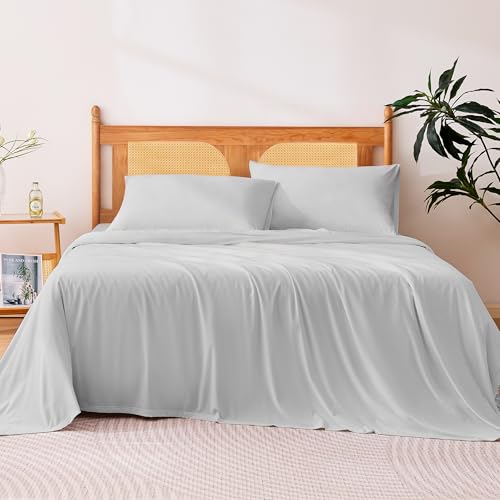
Amazon Basics Cooling Sheets, 4-Piece Bed Sheet Set for Summer, Soft and Breathable for Hot Sleepers, Bedding with 1 Deep Pocket Fitted Sheet, 1 Flat Sheet, and 2 Pillowcases, Queen, Gray
Chosen because it specifies 4-Piece Bed Sheet Set for Summer and Soft and Breathable for Hot Sleepers.
View on Amazon
LANE LINEN Queen Bed Sheets 100% Organic Cotton 4pc Percale - French Blue | GOTS Certified Organic Cotton Percale Queen Sheet Set - Naturally Cooling & Lightweight, Cool All Summer, Cozy All Winter
Chosen because it specifies French Blue and GOTS Certified Organic Cotton Percale Queen Sheet Set.
View on AmazonWhat keeps a bed cooler in summer
Weave
Percale uses a simple weave that leaves tiny gaps for air to move. That is why reviewers frequently pick percale as the standard hot-weather cotton. Sateen packs more yarn at the surface and feels smoother but can retain more warmth.
Fiber
Linen is made from flax, which makers describe as airy and quick to dry. Tencel lyocell is a wood-pulp fiber that makers describe as smooth and moisture-managing. Cotton is a familiar, breathable choice. Polyester microfiber is less breathable, so it is not a first choice for hot sleepers.
Weight and thread count
Lighter fabrics let heat escape. Very high thread counts can create a denser fabric, which may feel warmer. A moderate count in percale or linen is usually enough. Do not choose on thread count alone.
The rest of the bed
Sheets are only part of the picture. A thick mattress topper, a heavy comforter or a room with no airflow can overwhelm even the airiest sheet. Many reviewers suggest pairing light sheets with a thin cotton blanket or a lightweight duvet cover.
Fit and size notes
Check pocket depth against your mattress and topper height. Natural fibers like linen and cotton may shrink slightly on first wash, so size selection matters, and some makers recommend sizing guidance on their pages. Look for full-elastic fitted sheets for a secure fit and confirm that king, California king and split-king options exist if you need them.
Budget tiers
Budget tier
Basic cotton percale or microfiber sets from brands such as Bedsure keep costs low. Choose cotton percale over microfiber for summer if you tend to sleep warm. These suit guest rooms and kids’ beds.
Mid-range
Mid-range percale and linen sets from direct-to-consumer brands such as Brooklinen and Quince offer better fiber quality and a wider choice of colors. This tier suits most main bedrooms.
Premium
Premium linen, long-staple percale, Tencel or bamboo-derived sets from brands such as Parachute, Boll and Branch and Cozy Earth emphasize fiber quality, certifications as stated by the maker, and longer warranties. This tier suits buyers who want long-term bedding they will keep for years.
Pick X if…
| Pick this… | If you… |
|---|---|
| Cotton percale | Want crisp, breathable and easy-care sheets |
| Linen | Sleep hot or live in a humid climate |
| Tencel lyocell | Want smooth fabric that still feels light |
| Bamboo-derived viscose | Like a silky feel and will follow strict wash rules |
| Microfiber | Only need a basic set for short-term use |
| Organic cotton percale | Want a stated certification |
Care notes
Wash according to the care label. Linen softens with repeated washing and often gets better with age. Avoid heavy fabric softener, which some makers say can reduce breathability. Line drying or low-heat tumble drying helps protect fibers and elastics. Rotate two sets so each gets rest.
If you have skin conditions, night sweats or sleep problems, speak with a doctor. Bedding choice may affect comfort, but it is not a treatment for any medical condition.
Alternatives
- Cotton or linen duvet cover only: sometimes the layer on top matters more than the sheet.
- A lightweight quilt or coverlet: replaces a heavy comforter in summer.
- Mattress protector with a breathable cover: choose one with a light cotton top layer, not a thick waterproof barrier.
- A fan or room air circulation: often more effective than bedding changes alone.
How to choose in four steps
- Pick a fiber: cotton percale, linen or Tencel.
- Check mattress depth, including toppers.
- Look at the care label for wash and dry guidance.
- Check the return window in case the feel is not right.
Common mistakes with summer bedding
Choosing silky over breathable
A slick, smooth surface can feel cool at first touch, but that is not the same as staying cool all night. Breathability depends on the weave, the fiber and the other layers on the bed. Percale and linen are often named by reviewers as steadier choices for sleepers who overheat.
Leaving heavy layers on the bed
A thick duvet or a dense mattress topper can undo the benefit of light sheets. Swap to a lightweight cotton blanket or a thin coverlet in the warm months, and keep the sleeping area ventilated.
Ignoring humidity
In humid climates, fabrics that dry quickly and do not hold moisture feel better. Makers describe linen as quick drying, and cotton percale is a common alternative. Wash and dry sheets fully so they do not smell musty.
Mixing up the size or depth
Natural fibers can shrink a little, and a shallow fitted sheet can slip in the night. Match the pocket depth to the mattress plus topper, and read the maker’s note about shrinkage.
A summer sheet checklist
- Fiber and weave clearly named, with percale or linen on top of the list for hot sleepers.
- Pocket depth that matches your mattress and any topper.
- Care instructions you can follow, including drying method.
- Extra pillowcases if you swap often during hot weather.
- A return window in case the texture is not what you expected.
Some shoppers keep two sets in rotation, one for hot months and one for the cooler season. This reduces wear on each set and makes it easy to switch fabrics when the weather changes. Others buy a single linen or percale set and adjust the blankets on top. Both approaches work, and the best fit depends on storage space and how much laundry you want to handle.
Frequently Asked Questions
Is percale or linen better for hot summers?
Both are popular. Percale gives a crisp, smooth feel, while linen is more textured and often described as even airier. If you want a relaxed look and very warm nights, linen is a common pick. If you prefer smooth, easy-care cotton, percale is the usual choice.
Are sateen sheets too warm for summer?
Sateen has a denser surface, so many reviewers find it warmer than percale. It can still work in air-conditioned rooms, but hot sleepers often choose percale or linen instead.
Do cooling sheets really work?
Fabric can change how breathable a bed feels, but results depend on the room, the mattress and the other layers. Treat claims as comfort differences, not guarantees, and check the maker’s description of the fiber and weave.
Does thread count matter for summer sheets?
Less than fiber and weave. Very dense fabrics can feel warmer. A moderate thread count in percale or linen is usually enough.
How should I wash linen sheets?
Follow the care tag. Many makers advise gentle cycles and low heat, and note that linen softens with each wash. Avoid overloading the machine so the fabric can move freely.
Can I use summer sheets all year?
Yes, if you add a warmer blanket or duvet in winter. Many people keep breathable cotton or linen on the bed year-round and change the top layers with the season.