Our Top Picks
 INTEX 28427EH PureSpa Bubble Massage Spa Set Outdoor6-Person23.6 x 27.25 x 32.75 inches109.56 poundsCheck on Amazon
 INTEX 28425EH PureSpa Bubble Massage Spa Set Outdoor4-Person22.25 x 25.4 x 32.75 inches99.66 poundsCheck on Amazon
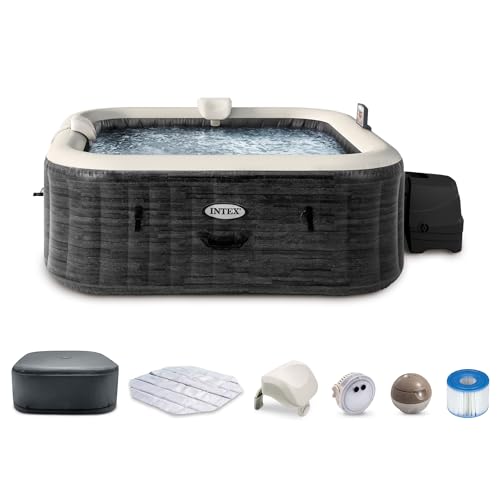 INTEX PureSpa 6 Person Inflatable Hot Tub with6 Person94 x 94 x 28 inches130.46 poundsCheck on Amazon
A salt water hot tub suits buyers who want gentler-feeling water and fewer bottles of sanitizer on the shelf, as long as they accept a bigger upfront cost and a few new maintenance habits. Buyers who want the simplest, cheapest route may do better with a conventional bromine or chlorine tub. This guide explains how salt systems work, which brands are worth checking, and where the trade-offs sit by budget tier.
What a Salt Water Hot Tub Actually Is
A salt water hot tub is not filled with seawater. It carries a small amount of dissolved salt, and a salt-chlorine generator cell converts that salt into sanitizer as the water passes through it. Makers generally describe the result as softer-feeling water with a milder odor than heavily dosed chlorine. The water is still sanitized with chlorine produced on site, so it still needs testing, balancing and regular shock treatment as the manual directs.
INTEX 28427EH PureSpa Bubble Massage Spa Set Outdoor Inflatable Portable Hot Tub, Includes Energy Efficient Spa Cover, Saltwater System Ready, 6 Person, 85in x 28in
Chosen because it specifies Includes Energy Efficient Spa Cover and Saltwater System Ready.
View on AmazonINTEX 28425EH PureSpa Bubble Massage Spa Set Outdoor Inflatable Portable Hot Tub, Includes Energy Efficient Spa Cover, Saltwater System Ready, 4 Person, 77in x 28in
Chosen because it specifies Includes Energy Efficient Spa Cover and Saltwater System Ready.
View on AmazonINTEX PureSpa 6 Person Inflatable Hot Tub with Energy-Efficient Spa Cover | 28451EP Greystone Deluxe: Built-in Hard Water Treatment, 77in x 28in - 2 Headrests & LED Light Included
Chosen because it specifies 28451EP Greystone Deluxe: Built-in Hard Water Treatment and 77in x 28in.
View on AmazonTwo common setups exist. Some tubs ship with a built-in salt system, while others accept an add-on cell kit sold by the maker. A third route is a retrofit unit from a pool-equipment company, but using a part the tub maker does not approve can affect the warranty, so read the warranty terms first.
At a Glance: Brands to Shortlist
| Brand | Best for | Salt system approach | Limits |
|---|---|---|---|
| Hot Spring (Watkins) | Buyers wanting an established dealer network | The maker offers its FreshWater Salt System as an option on many models | Mid-range to premium positioning; availability varies by model |
| Jacuzzi | Brand-conscious buyers who want familiar styling | Check which current models list a salt option | Option lists change by year and dealer |
| Cal Spas | Shoppers comparing many sizes and seating layouts | Ask the dealer whether a salt kit is offered for the specific model | Salt options differ by line |
| Bullfrog Spas | Buyers who want modular seating choices | Ask the dealer about the maker-approved sanitizing options | Confirm options per model |
| Aftermarket add-on cell kits | Owners converting an existing tub | Plug-in or inline salt cell | Warranty and compatibility depend on the tub maker |
Because option packages change from year to year, treat the table as a shortlist of makers to ask about, not a guarantee that every model carries a salt system. Ask the dealer for the current spec sheet of any model before committing.
Why People Choose Salt
- Feel of the water: Many owners and reviewers describe it as softer, with less of the sharp chemical smell. This is a comfort claim, not a health claim.
- Steadier sanitizer level: The generator produces chlorine continuously at a low rate, which can reduce the swings that come from manual dosing.
- Fewer chemical purchases: You still buy salt, balancing chemicals and shock, but routine sanitizer top-ups shrink.
The Trade-Offs to Weigh
- Higher upfront cost: The generator cell and control add to the purchase, putting salt tubs mostly in mid-range and premium tiers.
- Cell replacement: The cell wears over time. Makers typically give an expected life range, and replacement is an ongoing cost.
- Corrosion concerns: Salt can attack some metals, so use only the salt type and concentration the manual allows, and follow the maker’s guidance on stainless parts and heaters.
- Cold water limits: Many salt cells produce less chlorine in cooler water, which matters for tubs kept below normal soaking temperature.
- Not maintenance-free: You still test pH, alkalinity and sanitizer, clean or replace filters, and drain on the maker’s schedule.
Size and Seating Guide
Pick the size first, then check whether a salt option exists for it.
| Household | Typical seating | Notes |
|---|---|---|
| Couple or solo | 2 to 3 seats | Smaller volume heats fast and uses fewer chemicals, but fewer models carry salt options |
| Small family | 4 to 5 seats | The most common range; widest choice of salt-ready models |
| Entertainers | 6 or more seats | Larger volume, bigger pad and electrical demand |
Electrical, Placement and Safety Notes
Hot tubs are electrical appliances used around water. Have a licensed electrician handle the dedicated circuit, GFCI protection and any permits required by local code. Place the tub on a level pad rated for the filled weight listed by the maker. Never let children use the tub unsupervised, keep the cover locked when not in use, and follow the maker’s guidance on maximum water temperature and soak times. People who are pregnant, have heart conditions or take medication that affects heat tolerance should ask a doctor before soaking.
Budget Tiers
- Budget: Plug-and-play models rarely include salt systems. If you want salt here, an approved add-on kit on an entry tub is the usual route, so confirm compatibility.
- Mid-range: The sweet spot for factory salt options, good insulation and better jets.
- Premium: Fuller feature sets, better insulation packages and warranties, with salt as one option among many.
Pick X If… Decision Table
| Pick this if you… | Choose |
|---|---|
| Want a maker-integrated salt system and a dealer to service it | Hot Spring with FreshWater Salt System or a comparable factory option |
| Care most about seating layout variety | Cal Spas or Bullfrog Spas, then ask about salt options |
| Already own a tub | A maker-approved add-on cell, after checking the warranty |
| Want the lowest running effort and cost | A conventional sanitizer tub |
| Dislike chemical smell but want simple care | Consider an ozone or UV add-on with a low-dose sanitizer |
Alternatives to Salt
- Bromine or chlorine granules: Cheapest to start, easy to find, familiar routine.
- Mineral cartridges: Used together with a lower sanitizer dose; makers describe them as a supplement, not a replacement.
- Ozone or UV-C systems: Supplementary treatment that can lower the amount of sanitizer needed, while still needing a residual.
Care Routine in Brief
- Test water several times a week and after heavy use.
- Keep salt at the level the maker states and add salt only as directed.
- Rinse or replace filters on the schedule in the manual.
- Inspect the cell for scale and clean it as the maker instructs.
- Drain and refill on the maker’s recommended interval.
Questions to Ask a Dealer Before Buying
Because salt options, warranty terms and cell designs differ between makers, a short list of questions saves trouble later. Ask which models in the current range carry the salt system as standard or as an option, and request the maker’s written spec sheet rather than a verbal summary. Ask how long the cell is expected to last under normal use and what the warranty covers for the cell, the control board and the heater. Ask whether the maker’s warranty stays valid if you use a third-party salt product or sanitizer, and which salt grade and concentration the manual allows.
It is also worth asking about service. A salt system adds components that sometimes need a technician, so find out whether the dealer has local service staff, how long repairs usually take and whether water-care starter kits or test strips are included. Ask about delivery, pad requirements and the electrical specification the tub needs, and book a licensed electrician before delivery day rather than after.
Cost of Ownership Without the Dollar Figures
Ownership cost has several parts. The purchase price rises with the salt option and with the tub tier. Running costs include electricity for heating and pumps, which depends heavily on insulation, cover quality and local climate; water treatment, which includes salt, balancing chemicals, shock and filter cleaners; and parts, which include filters, covers and the salt cell itself. Reviewers often point out that a well-insulated tub with a good cover can matter more to the electricity bill than the sanitizer type. When comparing two tubs, compare insulation and cover specs as carefully as the salt option.
Water Care Basics for Salt Tubs
Salt tubs still depend on balanced water. Keep pH and total alkalinity in the range the maker states, because water outside that range can reduce sanitizer effectiveness and stress components. Keep calcium hardness within the manual’s guidance to limit scale on the cell. Run the filtration as directed, rinse filters regularly and replace them when they are worn. Shock the water on the schedule the maker recommends, particularly after heavy use. If the water turns cloudy, smells strongly or the control shows a cell fault, follow the troubleshooting section of the manual or call the dealer instead of guessing with extra chemicals.
Is a Salt System Right for Your Usage?
Salt systems tend to pay off for people who soak several times a week and want steady sanitizer levels. If you use the tub only occasionally, especially in cooler months, a conventional sanitizer routine may be simpler, since many cells make less chlorine when the water is cold and a tub that sits idle needs attention either way. Households with several soakers or frequent guests may find the continuous production helpful, while a solo user on a small tub may see little difference. Consider your climate, how often you will use the tub and how comfortable you are with routine testing before paying for the option.
Frequently Asked Questions
Is a salt water hot tub chemical-free?
No. The generator makes chlorine from salt, so the water is still chlorine-sanitized. You still need to balance pH and alkalinity and shock the water periodically.
Can I convert my existing hot tub to salt?
Often yes, using an add-on cell kit, but compatibility depends on the tub. Check the maker’s manual and warranty first, because an unapproved part can void coverage.
Does salt damage hot tub parts?
Used at the concentration the maker specifies, salt systems are designed for the tub. Too much salt or poor water balance can speed corrosion, so test regularly and follow the manual.
Is salt water gentler on skin?
Many owners describe the water as softer-feeling, but individual reactions vary. If you have sensitive skin or a skin condition, talk to a doctor before regular soaking.
How long does a salt cell last?
Makers give an expected life range that depends on usage and water balance. Plan for eventual replacement as part of running costs.
Do salt tubs cost more to run?
Upfront cost is higher, and the cell adds a replacement cost. Routine sanitizer purchases can drop, so the overall difference depends on how often you soak and the tub you choose.