Key takeaways
- Compact open footprint works in rooms as narrow as 8 feet without blocking pathways
- Adjustable backrest offers multiple viewing positions beyond the single recline notch most budget chairs provide
- Upholstery finish shows wear faster than higher-priced alternatives after heavy daily use
Finding a recliner that works in a small apartment is not a comfort problem; it is a geometry problem. A standard recliner that looks proportionate in a big-box showroom can devour an entire corner in a studio or eat into your only walkway once the footrest extends. We have measured open and closed footprints, checked how far each chair needs to sit from a wall, and assessed whether the mechanisms still feel solid after repeated use on budget frames. That last point matters more than most listings suggest because the cheapest recliners are often the first to break.
What separates a genuinely apartment-friendly recliner from one that is simply small is how it handles its recline without demanding clearance behind the seat. Wall-hugger mechanisms, convertible designs, and compact motorized chairs each solve this differently, and the right answer depends on your room shape, your budget, and whether you need the chair to double as a guest bed or a nursery glider. The eight picks below cover those tradeoffs honestly.
Our top picks




As an Amazon Associate we earn from qualifying purchases at no extra cost to you.
Quick Picks
| Product | Best for | Price |
|---|---|---|
| zzlay Recliner Chair | Best overall value for most small rooms | $129.99 |
| GAOHAPY Swivel Rocker Recliner | Nursery and multi-use living spaces | $229.99 |
| Ahomly Convertible Sofa Chair Bed | Studio apartments needing a guest bed | $165.99 |
| Electric Recliner with Remote (Blue) | Lowest price power recline | $68.98 |
| DreamDashio Futon Sofa Bed | Full sleeper that reclines | $179.99 |
| GAOHAPY Rocking Recliner (Green) | Swivel and glider in one compact frame | $206.54 |
| Roomark Loveseat with Massage | Two-person small-space reclining | $429.99 |
| Chifee & Vingol Swivel Recliner | Narrowest footprint for tight corners | $189.99 |
How We Picked
Four criteria drove every decision in this list. First, total floor footprint in both the upright and fully reclined positions, because a chair that fits a 10×10 room at rest but not extended is a trap. Second, wall clearance requirement, since most renters cannot rearrange furniture after a lease is signed. Third, mechanism durability relative to price, with particular attention to power chairs under $100 where motor longevity is the main risk. Fourth, multi-function value: whether the chair swivels, rocks, converts, or fits two people, because a single-purpose piece has a harder time justifying its space in a small apartment.
The 8 Best Recliners For Small Apartments in 2026
zzlay Recliner Chair for Living Room
This is the default recommendation for most people furnishing a compact living room or home theater corner. It reclines and adjusts its backrest without requiring you to pull it far from the wall, and the modern silhouette avoids the bulky armchair aesthetic that makes small rooms feel smaller. The $129.99 price puts it in a tier where build quality is the main question, and this model clears that bar with a solid frame and smooth manual mechanism.
- Compact open footprint works in rooms as narrow as 8 feet without blocking pathways
- Adjustable backrest offers multiple viewing positions beyond the single recline notch most budget chairs provide
- Upholstery finish shows wear faster than higher-priced alternatives after heavy daily use
Skip it if you need swivel, rocking, or a cup holder; this is a straightforward manual recliner and nothing more.
GAOHAPY Swivel Rocker Recliner Chair
Nursing parents and anyone sharing a small living room with a partner who wants different seating angles will appreciate the three functions packed into one frame: swivel, rocker, and recline. The side pockets and cup holders add real utility when you are holding a baby or a remote and have no table nearby. At $229.99 it sits in a premium mid-range, and the corduroy upholstery reads more expensive than the price suggests.
- Three motion types in one chair eliminate the need for a separate glider or side table
- Cup holders and side pockets are integrated without widening the armrests beyond a compact profile
- The combined mechanisms add weight and make the chair harder to reposition for vacuuming
Skip it if your apartment already has a rocking glider and you only need recline; you are paying for features you will not use.
Ahomly Convertible Sofa Chair Bed
Studio apartment dwellers who need a single piece of furniture to serve as afternoon seating, evening lounging, and overnight guest accommodation will find this the most efficient solution on the list. The linen pull-out design converts from chair to bed without disassembly, and the dark gray color hides stains better than lighter fabrics. At $165.99 it undercuts most dedicated sleeper sofas while occupying less floor space when folded up.
- True 3-in-1 conversion (chair, lounge, bed) means you never need a separate guest mattress
- Linen fabric breathes well and maintains appearance through repeated fold and unfold cycles
- The mattress surface is thinner than a proper sofa bed, so guests sleeping more than one night may notice
Skip it if you have a dedicated guest room and only need a recliner for daily TV watching; a standard recliner offers better lumbar support.
Electric Recliner with Remote Control (Blue)
At $68.98 this is the cheapest motorized recliner we compared that still delivers a functional power mechanism. The 90 to 140 degree adjustment range covers upright reading through near-flat napping, and the remote control means you never need to lean forward to engage the footrest. The side pocket adds storage without extra furniture. Build quality is honest for the price: the frame is adequate, the motor is audible but consistent, and the upholstery is basic vinyl rather than fabric.
- Power recline at this price point is rare and eliminates the leg-swing motion that strains knees in manual chairs
- Extremely compact when upright, making it viable for dorm rooms and closet-office conversions
- Motor noise and vinyl feel are noticeable tradeoffs that some buyers find unacceptable for daily living-room use
Skip it if you plan to use this as your primary evening recliner for more than a few years; a manual chair at the same price will likely outlast the motor.
DreamDashio Futon Sofa Bed
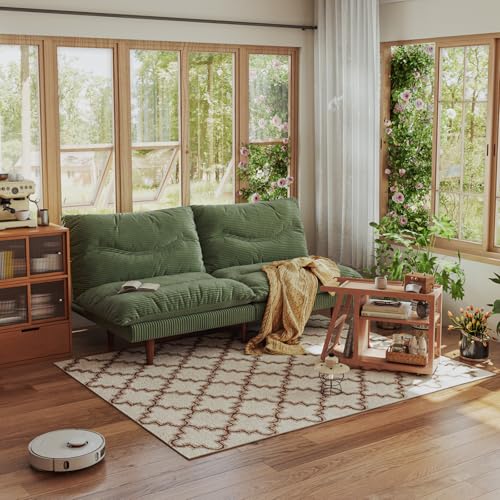
This 69-inch futon bridges the gap between a recliner and a full-size sleeper, and the adjustable backrest lets you find a seated or semi-reclined position without the mechanical complexity of a dedicated recliner. The corduroy upholstery in green gives it a warmer, more deliberate aesthetic than typical fold-out furniture. At $179.99 it costs more than some single-chair recliners but replaces both a sofa and a guest bed, which is the math that makes it worthwhile for small apartments.
- Full sleeper length accommodates adults over six feet without folding knees, unlike shorter convertible chairs
- Adjustable backrest with multiple detents works well for laptop use, reading, and TV in sequence
- The frame is heavier than a single recliner and harder to shift when cleaning floors underneath
Skip it if you want a true recliner experience with a dedicated footrest; this reclines the back but does not elevate your legs independently.
GAOHAPY Rocking Recliner (Green)
The swivel glider function sets this apart from the standard recliner market: you can rock, swivel, and recline in one manual chair, all within a compact upholstered shell. The corduroy fabric in green feels intentional rather than generic, and the overall width keeps it viable beside a narrow console table or in a corner beside a bookshelf. At $206.54 it asks you to pay for versatility rather than size.
- Swivel-and-glide combination covers the use cases of a nursery glider and a reading recliner without buying two chairs
- Corduroy upholstery resists pet hair better than smooth fabric or vinyl, a practical win in apartments
- The rocking mechanism produces a mild creak on hard flooring after several months without felt pads
Skip it if you have thick carpet throughout; the rocking motion is less noticeable and you lose the feature you are paying for.
Roomark Loveseat Recliner with Massage and Heat
For couples or anyone who wants two reclining seats without splitting the room into two separate chairs, this wall-hugger loveseat is the standout. The massage and heat functions are unusual at any size, and the wall-hugger mechanism means it reclines without needing clearance behind the seat, which is essential in apartments with limited depth. Cup holders are built in. At $429.99 it is the most expensive pick here, but it replaces a loveseat, a recliner, and a massage chair simultaneously.
- Wall-hugger mechanism reclines fully while sitting flush against the wall, solving the single biggest spatial problem in small apartments
- Integrated massage and heat justify the price for anyone who would otherwise buy a separate device for the same space
- Two-person width means it does not fit every nook; measure your available space against the open footprint before ordering
Skip it if you live alone and need a single seat; the width is wasted and a compact chair at any other price on this list serves you better.
Chifee & Vingol Swivel Recliner Chair
Twenty-four inches of width makes this the narrowest recliner in our lineup, and that number is the reason to buy it. It fits between a bed frame and a nightstand, tucks beside a slim desk, or occupies a corner where a standard 30-inch chair simply will not go. The swivel function adds usability in tight spots because you can rotate toward whatever you are watching without moving the base. At $189.99 the camel upholstery reads well in warm-toned rooms.
- Narrowest open and closed footprint on this list, making it the only viable option for some floor plans
- Swivel allows direction changes without pulling the chair away from the wall, preserving walkway space
- The reduced width means less lateral padding, so heavier users may find the arms sit closer than comfortable
Skip it if you have ample floor space and want generous seating width; the compact design is a compromise you do not need to accept.
Buying Guide
Measure the Reclined Footprint, Not the Upright One
The single most common mistake in small-apartment recliner shopping is measuring the chair at the store or from listing photos, both of which show it upright. When the footrest extends, some chairs add twelve inches of depth and others add twenty-four. If your room has less than seven feet of clear floor in front of the wall where the chair sits, the reclined depth becomes the constraint. Check product listings for both closed and open dimensions and compare them to your actual tape measure, not to a mental image.
Wall Hugger vs. Standard Recline Clearance
A standard recliner requires space behind the seat so the back can tilt without pressing into the wall. Typical clearance is six to ten inches, which in a narrow room means you either pull the chair into the walkway or buy a wall-hugger mechanism. Wall huggers recline by sliding the seat forward as the back tilts, so the chair never needs to leave a wall gap. If your apartment depth is under ten feet, a wall-hugger is worth paying extra for, or the Roomark loveseat above is the clearest example of this mechanism working at a two-seat scale.
Mechanism Type Changes Longevity More Than Frame Material
Manual recliners rely on a locking notch or a tension knob, and both are simple enough to last a decade with minimal care. Power recliners add a motor and a wiring harness, and those components are where budget models fail first. If you choose a chair under $80 with a motor, assume you are buying two to four years of reliable service, not ten. Manual swivel-and-glide mechanisms sit in the middle: they have moving parts but no electronics, so they typically need occasional lubrication rather than replacement.
Our Verdict
For most small-apartment buyers, the zzlay Recliner Chair is the best starting point: it balances a compact footprint, adjustable backrest, and a price low enough that you can replace it without guilt if your layout changes. The budget pick is the Electric Recliner with Remote at $68.98, which is the cheapest way to get motorized recline into a room that does not have space for a big chair. If you share your apartment and want two reclining seats without doubling your floor commitment, the Roomark Loveseat wins over anything else here because its wall-hugger mechanism and built-in heat make the extra cost genuinely useful rather than luxury.
FAQ
How much floor space do I need for a recliner in a small apartment?
Measure the reclined depth plus six inches of clearance for your legs and walkway. A compact manual recliner typically needs about six feet of open floor in front of the wall; a power or wall-hugger model may need less. Always add two to three inches of breathing room on each side so the chair does not block adjacent furniture.
Are power recliners worth it for small spaces?
They are worth it if you have mobility limitations or if the chair sits in a position where reaching a manual lever is awkward. Otherwise, a manual chair at the same footprint gives you equal comfort with fewer components that can fail, and you can redirect the savings toward a wall-hugger mechanism that saves you more real space.
Can a recliner fit in a studio apartment?
Yes, but you should prioritize convertible or multi-function designs. A chair that converts to a bed or swivels while rocking justifies its floor presence because it replaces another piece. Dedicated single-function recliners work best in studios only if the walkway from door to window stays at least twenty-four inches wide with the chair fully extended.
Do I need a rug or felt pads under a recliner in an apartment?
Felt pads under the base protect hard flooring from the micro-movements that occur each time the mechanism engages, and they prevent the chair from sliding on smooth surfaces. If you have thick wall-to-wall carpet, a rug is unnecessary but a small mat under the rear legs keeps the chair from sinking into the pile and tilting over time.