
The floor is the one piece of gym equipment you buy exactly once, and it decides how everything else in the room behaves. A 45-pound plate dropped onto bare concrete chips the slab, rings through the house at 100+ decibels, and eventually cracks the plate’s collar. That same plate landing on three-quarter-inch rubber makes a dull thud and leaves nothing behind. Meanwhile a squat rack sitting on quarter-inch foam will rock under load, and a treadmill on unprotected garage concrete will grind dust into its belt bearings within a season.
Most home gym floors fall into one of four material families — vulcanized rubber mats, interlocking rubber tiles, rolled rubber, and closed-cell EVA foam — and the right pick comes down to two numbers: what you drop, and how you plan to get the material into the room. A 4×6-foot stall mat weighs roughly 95 pounds and does not bend politely around a stair landing. A box of foam tiles weighs 12 pounds and fits in a hall closet. Below is how the options compare on cost per square foot, install effort, and what they actually survive.
Our top picks



As an Amazon Associate we earn from qualifying purchases at no extra cost to you.
Quick Comparison
| Flooring Type | Typical Thickness | Approx. Cost / sq ft | Install Difficulty | Best For |
|---|---|---|---|---|
| Rubber stall mats (4×6) | 3/4 in | $1.50 – $2.75 | Hard (weight, not skill) | Barbell lifting on a budget |
| Interlocking rubber tiles | 8 mm – 1 in | $2.50 – $4.50 | Easy | Basements, upstairs rooms, odd shapes |
| Rolled rubber | 6 mm – 1/2 in | $2.00 – $3.75 | Moderate | Large open floors, seamless look |
| EVA foam tiles | 1/2 – 3/4 in | $0.60 – $1.40 | Very easy | Bodyweight, yoga, kids’ overflow space |
| Heavy drop pads | 2 – 3 in | $5.00 – $9.00 | Easy (spot placement) | Deadlift and Olympic lift zones |
| Vinyl plank + underlayment | 5 – 8 mm | $2.25 – $4.00 | Moderate | Rooms that double as living space |
How to Choose
- Match thickness to your heaviest drop. Under 135 pounds and no dropping: 8 mm is plenty. Regular deadlift lockout releases: 3/4 inch minimum, with a 2–3 inch pad layered where the bar lands.
- Measure the delivery path, not just the room. Stall mats arrive rolled or flat and weigh 90–100 pounds each. If your gym is down a switchback stairwell, tiles or rolls you can cut in place will save you an argument with a wall corner.
- Check the subfloor for slope and moisture. Garage slabs are often pitched a quarter-inch per foot toward the door. Rubber conforms to that; rigid vinyl plank telegraphs it. Tape a plastic sheet to the slab overnight — condensation underneath means you need a moisture barrier before anything goes down.
- Decide whether you want seams. Interlocking edges collect chalk, dust, and hair, and they can creep apart when you drag a sled. Rolls and glued-down mats stay put but demand precise cuts and a sharp utility knife with a lot of spare blades.
- Budget for 8–10% overage. Cuts around door jambs, rack feet, and floor drains eat material. Ordering exactly your square footage is the most common regret in a first gym build.
Top Picks Reviewed
Three-Quarter-Inch Rubber Stall Mats — Best Value for Barbell Work
Agricultural stall mats remain the cheapest way to get real impact protection under a rack. They’re vulcanized recycled rubber, dense enough that a dropped kettlebell doesn’t dent them, and heavy enough that friction alone holds them in place with no adhesive. Two caveats: they smell strongly for the first two to three weeks — air them outside or run a fan — and the pebbled top surface can be slightly uneven at the seams. Lay them pebble-side down for a smoother, easier-to-sweep face.
Interlocking Rubber Tiles — Easiest Install in Awkward Rooms
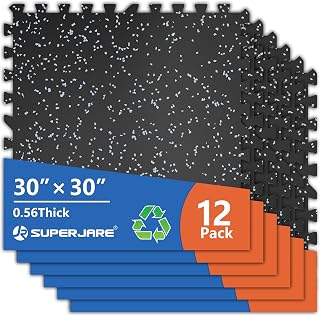
Puzzle-edge rubber tiles in the 2×2-foot range hit the sweet spot for basements and spare bedrooms. Each tile weighs 15–25 pounds depending on thickness, so one person can carry the whole floor in over several trips, and the interlocking teeth mean no glue and no tape. They shine in rooms with support columns, closet bump-outs, or radiators, since you cut only the perimeter tiles. Expect to pay 40–70% more per square foot than stall mats for that convenience.
Rolled Rubber Flooring — Best Seamless Surface
A 4-foot-wide roll covers ground fast and gives you a continuous surface with only a handful of seams. This is the option for sled pushes, agility work, or anything on wheels, because there are no tile edges to catch. Rolls are sold in 6 mm through 1/2 inch; 6 mm is a treadmill-and-dumbbell floor, while 3/8 to 1/2 inch handles moderate barbell use. Unroll and let it relax for 48 hours before trimming — the material has memory and will shrink slightly as it settles.
High-Density EVA Foam Tiles — Best for Bodyweight and Recovery
Foam gets unfairly dismissed. For mobility work, mat-based circuits, stretching, and light dumbbell sessions, three-quarter-inch high-density EVA is warmer underfoot than rubber, cheaper than everything else, and completely odorless. Its limits are real, though: heavy rack feet and bench posts will emboss permanent dimples, and dropped iron cuts it. Use plywood squares under equipment feet to spread the load.
Two-Inch Drop Pads — Best Targeted Upgrade
Rather than thickening an entire floor, build a two-pad landing zone where the bar hits. High-density rubber pads two to three inches thick absorb Olympic lifts and heavy deadlifts, protect your bumper plates, and dramatically reduce the sound transmitted through joists. Two pads cost less than upgrading 200 square feet, and they can be moved when you rearrange the room.
Vinyl Plank Over Foam Underlayment — Best for Shared Spaces
If the gym is also a guest room or finished basement, click-lock vinyl plank over a 3 mm foam underlayment gives you a floor that looks like flooring. Pair it with a discrete rubber mat under the rack and dumbbell rack. It handles cardio equipment and light free weights well, but it is not a dropping surface — a single plate corner will gouge the wear layer.
Frequently Asked Questions
How thick does home gym flooring need to be for deadlifts?
Three-quarter-inch rubber over a concrete slab handles controlled lowering and occasional drops. If you release the bar from lockout regularly, add a two-inch drop pad in the landing zone. Over a wood-framed floor, go thicker and lift as close to a load-bearing wall as you can.
Do I need to glue rubber flooring down?
Usually not. Three-quarter-inch mats and 1-inch tiles are heavy enough to stay put through normal training. Glue or double-sided seam tape is worth it for thin rolled rubber, for sled work, or in high-traffic areas where edges lift.
How do I get rid of the rubber smell?
Air new rubber outdoors or in an open garage for a week if you can, then scrub with a diluted simple-green-type cleaner and warm water. Ventilation and airflow do more than any product. Most of the odor fades within a month; low-odor and virgin-rubber options exist at a premium if you’re sensitive.
Will gym flooring damage my concrete or existing floor underneath?
Rubber can leave faint discoloration on light-colored vinyl or sealed concrete over time, especially in warm rooms. A cheap builder’s-grade plastic sheet or felt underlayment between the two prevents staining and adds a moisture barrier on slabs.
Final Thoughts
Spend your flooring budget where the force is. A practical build for most home gyms is stall mats or interlocking rubber across the main training area, a pair of thick drop pads in the platform zone, and something cheaper — foam or bare slab — under storage and cardio equipment. That layered approach costs less than uniformly thick rubber, installs in an afternoon, and protects your slab, your plates, and your relationship with everyone else in the house.

Write Your Review
No reviews yet. Be the first to share your experience!