
Key takeaways
- Set Name: GOIMU Adjustable Dumbbells
- Item Dimensions L x W: 23.62"L x 11.42"W
- Material: Cast Iron
Ask ten people who train at home what they wish they had bought first, and the answer is rarely a heavier dumbbell. It is usually a smaller one. Beginners consistently overestimate pressing strength and underestimate how much shoulder and arm work happens between 5 and 15 lb, which is why so many garages contain a 40 lb pair gathering dust next to a yoga mat that gets used four times a week.
The second thing people learn late is that exercise variety, not equipment quality, drives results in the first year. A complete dumbbell routine needs roughly twelve movements: a horizontal press, an overhead press, two rows, a squat pattern, a hinge, a lunge, and a handful of isolation lifts. The sets below are grouped by how far into that list they can carry you, from a light neoprene pair for someone starting cold to a 600 lb rack for a lifter who already knows their numbers.
Our top picks


 Adjustable Dumbbells
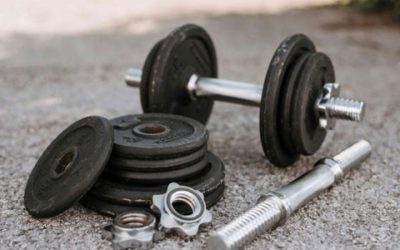
- Set Name: GOIMU Adjustable Dumbbells
- Item Dimensions L x W: 23.62"L x 11.42"W
- Material: Cast Iron


As an Amazon Associate we earn from qualifying purchases at no extra cost to you. Ratings are shown as listed on Amazon.
Quick Comparison
| Product | Best For | Standout Feature | Watch Out For |
|---|---|---|---|
| Amazon Basics Neoprene Weights | Absolute beginners | Grippy coating, floor-safe | Outgrown within a few months |
| Dial Adjustable 25LB Pair | Three-day full-body routines | Ten weights per hand in one dial | Stops at 30 lb per hand |
| 20–90lb 4-in-1 Connector Set | Squats, hinges and heavy rows | Barbell mode up to 90 lb | Slow to reconfigure mid-workout |
| GOIMU 4-in-1 Adjustable Set | One-room gym consolidation | Kettlebell and push-up bar modes | Collar threads need frequent checks |
| HANDBODE Hex Set with Rack | Dedicated training space | Grab-and-go fixed pairs on a rack | Large footprint, hard to relocate |
| Palace Learning 3-Pack Posters | Building a routine solo | Three volumes of laminated charts | Illustrations only, no tempo cues |
How to Choose
- Start from your weakest lift: Your lateral raise weight, not your row weight, determines the bottom of the range you need. If you can only raise 8 lb cleanly, a set starting at 20 lb leaves half your routine unusable.
- Prioritize adjustment speed over top-end weight: Beginners change weight constantly between exercises. A dial that snaps between settings gets used; a threaded collar that takes half a minute quietly encourages you to skip the accessory work.
- Measure the storage spot before the workout space: Adjustables need about two square feet in a corner. Racks need a permanent home with clearance on three sides. Whichever you cannot allocate is the one you should not buy.
- Think in twelve-month terms: Strength on pressing lifts commonly doubles in a first serious year of training. Buy the tier you will need in month twelve, not the one that feels right in week one.
- Add a reference source deliberately: Movement variety is the cheapest progression tool there is. A wall chart or exercise book costs less than a single 25 lb plate and expands what you can do with the weights you already own.
Top Picks Reviewed
Best Starter Pair: Amazon Basics Neoprene Weights
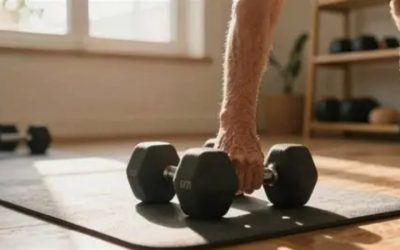
These fixed neoprene pairs handle the entire light end of a routine: rear delt flyes, front raises, external rotations, weighted step-ups and warm-up sets. The coating grips well when hands get damp, and dropping one on a laminate floor is a non-event.
The catch is obvious and worth stating plainly. You will outgrow the pressing and rowing applications quickly, and buying three separate pairs to keep up costs more than a single adjustable set. Treat these as the permanent light corner of a collection, not the collection itself.
Best All-Rounder: Dial Adjustable 25LB Pair
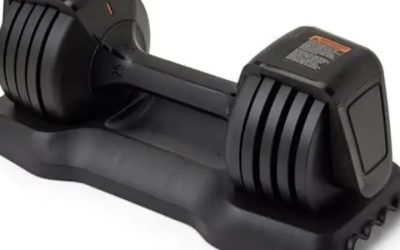
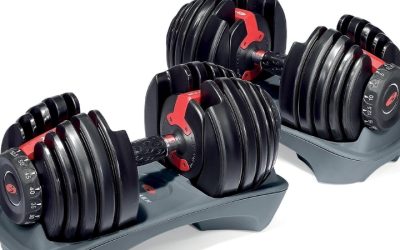
A single dial covers 5 to 30 lb per hand in ten increments, which is precisely the band where most home routines actually live. The anti-roll design is a small detail that matters more than it sounds — these stay put on tile instead of drifting under a bench.
Where they fall short is the lower body. Goblet squats and Romanian deadlifts get too easy at 30 lb per hand faster than any other movement, so plan on adding a heavier option eventually rather than expecting this pair to be a permanent solution.
Best for Heavy Progression: 20–90lb 4-in-1 Connector Set
Configurations at 20, 33, 45, 70 and 90 lb mean this set spans a beginner’s first month and a strong lifter’s third year. Joining both handles into a barbell unlocks bent-over rows and floor presses that are otherwise impossible without a rack.
Reconfiguration is the compromise. Adding or removing plates and re-torquing collars is not something you want to do between sets, so structure workouts around two or three weight settings rather than changing on every exercise.
Best Multi-Tool: GOIMU 4-in-1 Adjustable Set
With 32, 54, 76 and 94 lb configurations plus barbell, kettlebell and push-up bracket modes, this replaces roughly four separate purchases. Swings, cleans and presses all come from the same box of plates, which is a real advantage in a bedroom or apartment corner.
Multi-tools always trade refinement for coverage. The kettlebell mode has a squarer grip feel than a dedicated bell, and the collar threads deserve a check before any overhead work. Neither is a dealbreaker, but neither should be a surprise.
Best Long-Term Buy: HANDBODE Hex Set with Rack
Fixed rubber-coated hex dumbbells on an A-frame rack are what commercial gyms use because nothing about them fails. Grab, lift, replace. The 100 to 600 lb options let you match the set to your current strength instead of paying for pairs you cannot yet use.
The honest limitation is that this is furniture. It needs a permanent spot, it is a two-person job to move, and the heavier configurations concentrate serious weight on a small area. Ground floors and concrete are strongly preferred.
Best Routine Builder: Palace Learning 3-Pack Posters
Three laminated volumes on a wall turn a pair of dumbbells into a structured program. The value is behavioral: seeing forty movements at eye level makes people rotate exercises instead of repeating the same three lifts for months.
They cannot teach form. Static drawings show the start and end position but not bracing, tempo or the common errors that cause shoulder pain, so use them for programming and look elsewhere for technique coaching.
Frequently Asked Questions
How many dumbbell weights do I need to train the whole body?
Three usable loads is the practical minimum: a light pair for shoulders and rotator work, a moderate pair for presses and curls, and something heavy enough for squats and rows. Adjustable sets cover all three in one purchase, which is why they dominate small spaces.
Are adjustable dumbbells worth the extra cost over fixed pairs?
If you would otherwise buy more than three pairs, yes. Below that threshold fixed hex dumbbells are cheaper, faster to use and effectively indestructible. The break-even point is space as much as money.
Can I build muscle with dumbbells alone?
Yes, provided the weight is heavy enough that you reach genuine difficulty within twelve reps. The usual failure is not the equipment but stalling at a comfortable load, which is exactly why an upgradeable range matters more than the starting weight.
Do I need a bench as well?
Not immediately. Floor presses, standing presses, rows and lunges cover a full routine without one. A bench becomes necessary when you want incline pressing and a fuller range of motion on chest work, usually a few months in.
Final Thoughts
Someone starting from scratch is best served by the Dial Adjustable 25LB Pair, with the Amazon Basics Neoprene Weights filling the light end for shoulder and rehab work. If you already train and know your numbers, the 20–90lb 4-in-1 Connector Set is the more honest purchase, since it covers heavy hinges and rows that a 30 lb ceiling never will.
Write Your Review
No reviews yet. Be the first to share your experience!