Our Top Picks
Best cork flooring: choose a moisture-appropriate construction first
The best cork flooring is an engineered click-lock plank with a factory-applied wear layer for most living rooms and bedrooms; choose glue-down cork tile for a flatter, more repairable floor in dry rooms, and avoid either format where standing water or frequent leaks are likely. The right pick depends less on a “solid versus engineered” label than on the wear surface, installation method, room conditions, and the manufacturer’s moisture requirements.
Compare the main cork flooring types
| Format | Typical construction | Best fit | Main trade-off |
|---|---|---|---|
| Floating click-lock plank | Cork surface over a compressed cork or fiberboard core, sometimes with an attached backing | Bedrooms, living rooms, and many DIY projects | Fast installation, but perimeter expansion space and carefully joined seams matter |
| Glue-down cork tile | Solid cork tile adhered directly to a smooth, prepared subfloor | Small rooms, apartments, and layouts where individual tiles may need replacement | Can be patched tile by tile, but demands more subfloor preparation and adhesive work |
| Unfinished cork tile | Unsealed cork installed first and finished on site | Projects needing a continuous, custom-finished surface | More control over the finish, but more installation steps and downtime |
“Solid cork” and “engineered cork” are not a simple quality ranking. A floating plank can contain a genuine cork wear layer, while a glue-down tile can be made from cork throughout. Compare the thickness and composition of the surface layer, the finish, the core, and the installation instructions rather than relying on the label alone.

QEP 72000Q Natural Cork Underlayment Roll - 4 ft. Wide x 50 ft. Long x 6 mm Thick - 200 sq. ft.
Chosen because it specifies 4 ft. Wide x 50 ft. Long x 6 mm Thick and 200 sq. ft..
View on Amazon
CAPITOL Premium Cork Underlayment Roll - 6 mm - 200 sq. ft. (4' x 50')
Chosen because it specifies 6 mm and 200 sq. ft. (4' x 50').
View on Amazon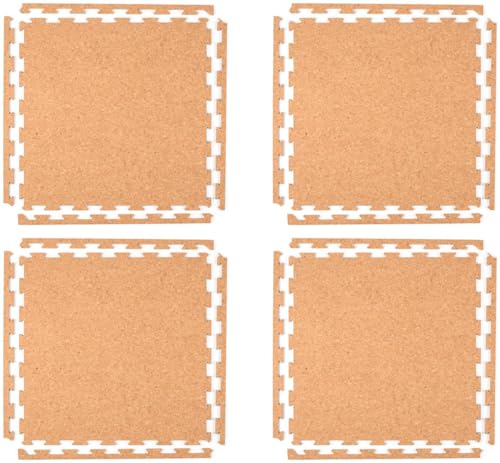
Displays2go Interlocking Cork Floor Tiles, 10' x 10'
Chosen because it specifies 10' x 10'.
View on AmazonChoose the wear layer for the way you use the room
The wear layer is the surface that takes scuffs, grit, chair movement, and routine cleaning. Some cork floors use a factory-applied polyurethane or similar protective finish; others are sold unfinished and need a compatible finish applied after installation. Confirm what the product includes and whether the maker permits recoating.
- Quiet adult bedroom: A standard factory-finished surface is often sufficient if you remove shoes and keep grit off the floor.
- Busy living room or home office: Look for a durable, repairable finish and ask the manufacturer how scratches and worn areas are addressed. Use broad chair casters or a protective mat approved for cork.
- Children or pets: Prioritize a finish with clear care and repair instructions, plus a color or pattern that disguises small marks. Cork can dent under concentrated loads; it is not scratch-proof.
- Unfinished tile: Consider it only if you are prepared to apply the specified finish and keep the room out of service for the required curing period.
A thicker surface layer may allow more scope for refinishing, but cork products vary and some thin veneers should not be sanded. Don’t assume a floor can be refinished: get the manufacturer’s written guidance before buying.
Plank or tile? Match the format to the project
Click-lock planks are usually the easier choice when you want a floating installation and a familiar plank appearance. They can go over an approved, flat subfloor, but the finished floor still needs the expansion gaps specified by its maker. Hiding those gaps under trim is part of the installation, not an optional detail.
Glue-down tiles suit a level, smooth subfloor and can work well around complex room shapes. Because each tile is adhered, a damaged tile may be easier to replace individually, though matching the color and pattern of an older floor can be difficult. Surface imperfections tend to show through, so preparation is critical.
For a 10-by-12-foot room (120 square feet), buy enough material to cover the measured area plus the manufacturer’s recommended allowance for cuts and waste. A simple rectangular room may need less extra material than one with alcoves, closets, or angled walls. Check carton coverage and weight before ordering: boxes are often awkward to carry, and a delivery may need to pass through narrow hallways or stairs. Have a second person help move heavy cartons, and store flooring flat in the room only if the installation instructions call for acclimation.
Use this decision matrix to narrow the choice
| Your situation | Likely best starting point | What to verify |
|---|---|---|
| Small apartment or DIY installation | Click-lock plank | Subfloor compatibility, expansion gaps, sound-underlayment rules, and doorway transitions |
| Home office with a rolling chair | Durable finished plank or tile | Chair-mat compatibility, caster type, and the finish’s scuff-repair procedure |
| Room with an unusually shaped layout | Glue-down tile | Subfloor flatness, adhesive, and the installer’s plan for replacement tiles |
| Children or pets | Factory-finished cork with a documented care routine | Scratch and dent expectations, spill cleanup, and whether the finish can be renewed |
| Bathroom, laundry room, or leak-prone area | Usually choose a more water-tolerant flooring instead | Only consider cork if the exact product is approved for the room and its installation system seals the edges as specified |
Understand cork’s moisture limits
Cork is not waterproof. A protective finish can help with brief surface spills, but water may enter at seams, edges, cutouts, or damaged areas and affect the cork, adhesive, or plank core. Standing water, plumbing leaks, and repeated wet mopping are different risks from an occasional wiped-up spill.
For kitchens, check the specific product’s written approval and follow its sealing instructions; do not assume every cork floor is suitable. For bathrooms, laundry rooms, or below-grade spaces with moisture concerns, another flooring type is generally the safer choice unless the manufacturer explicitly approves that installation. Keep indoor humidity within the product’s stated range, and address leaks promptly.
Installation details that affect comfort and durability
Cork feels resilient and warmer underfoot than many hard surfaces, but its softness means heavy furniture can leave indentations. Put wide felt or non-staining protective pads under furniture legs, lift pieces rather than dragging them, and replace pads when they collect grit. Avoid very narrow feet beneath heavy cabinets or loaded bookcases; ask the flooring maker for any stated point-load limits.
Before installation, check subfloor flatness against the product’s tolerance, not just by eye. Remove protruding fasteners and fix dips or ridges as required. Floating floors need the specified expansion clearance at walls and fixed objects; the exact gap depends on the product, so follow its instructions rather than applying a generic number. Glue-down installations need compatible adhesive and a properly prepared surface.
Doorways and transitions deserve attention, too. Measure clearance beneath doors with the new floor and underlayment included; a thicker assembly may require trimming a door. Plan transitions at adjacent flooring and leave room for the floor’s required movement. Poorly fitted transitions or trapped edges can lead to buckling or gaps.
Maintenance: simple habits, important limits
- Sweep or vacuum with a hard-floor setting to remove grit that can abrade the finish.
- Wipe spills promptly with a soft cloth. Use a damp—not soaking—mop and a cleaner approved for that finish.
- Avoid steam mops, abrasive pads, harsh solvents, and wax or polish unless the manufacturer specifically recommends them.
- Use entry mats that do not trap moisture or discolor the floor, and keep pet nails trimmed.
- Protect sun-exposed areas with curtains or blinds; cork color can change with light over time.
Keep a few spare tiles or planks from the same batch if possible. Cork’s natural variation means a later replacement may not match perfectly, but spare material gives you a better chance of a close repair.
Bottom line
For a dry bedroom or living area, a factory-finished click-lock cork plank is a practical starting point for comfort and a relatively approachable installation. Choose glue-down tile when a smooth subfloor and more localized repair matter more than installation speed. In every room, verify the wear surface, moisture approval, subfloor requirements, furniture protection, and maintenance instructions before choosing the best cork flooring for your home.