Our Top Picks
 LIKIMIO 30" Bathroom Vanity with Sink30" W x 18" D x 34" H18.3 x 30 x 34.1 Inches95.57 PoundsCheck on Amazon
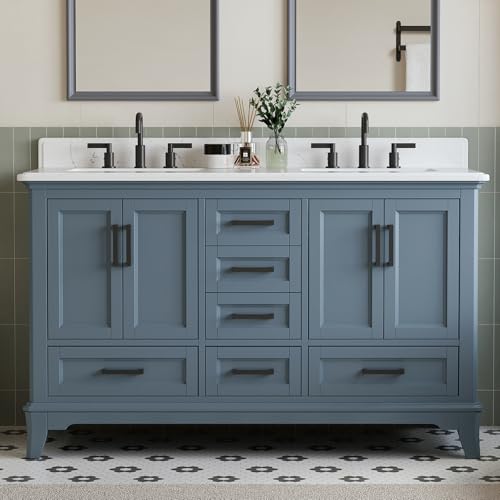 DELUXE LIVING 60 Inch Bathroom Vanity Double Sink60 Inch22 x 61 x 34.5 inches285 PoundsCheck on Amazon
 LUXOAK 30" Farmhouse Sliding Barn Door Bathroom Vanity30"18.31 x 29.3 x 33.66 inches151 PoundsCheck on Amazon
 IRONCK 30" Bathroom Vanity with Ceramic Sink and30-Inch18.3 x 30 x 34 inches94 poundsCheck on Amazon
The best bathroom vanities for most homes in 2026 are freestanding units between 30 and 36 inches wide with a plywood cabinet, a quartz or cultured marble top, and a single undermount sink — that combination balances storage, durability, and cost (usually $400–$900). But the right pick depends on your room width, plumbing position, and who uses the bathroom daily. This guide breaks down every decision criterion so you can match a vanity to your actual space.
Start With Width: What Actually Fits
Vanities come in standard widths — 24, 30, 36, 48, 60, and 72 inches — and choosing the right one is a math problem, not a style choice. Measure your wall, then subtract:
LIKIMIO 30" Bathroom Vanity with Sink, 2 Soft-Close Drawers & 1 Door, White
Chosen because it specifies 2 Soft-Close Drawers & 1 Door and White.
View on AmazonDELUXE LIVING 60 Inch Bathroom Vanity Double Sink, Steel Blue
Chosen because it specifies Steel Blue.
View on AmazonLUXOAK 30" Farmhouse Sliding Barn Door Bathroom Vanity with Sink, Brown
Chosen because it specifies Brown.
View on AmazonIRONCK 30" Bathroom Vanity with Ceramic Sink and 2 Drawers, Black
Chosen because it specifies Black.
View on Amazon- Side clearances: Building codes typically require at least 15 inches from the center of the sink to any wall or obstruction, so a vanity needs roughly 4 inches of breathing room on each side to look and function right.
- Door swing: A standard bathroom door needs 28–32 inches of clear swing arc. In a narrow bath, check that drawers can open fully without hitting the door or the toilet.
- Toilet clearance: Keep at least 15 inches from the toilet centerline to the vanity edge — 18 inches is more comfortable.
For a typical 5×8 ft hall bathroom, a 30-inch vanity is the sweet spot. Powder rooms under 20 sq ft usually need a 18–24 inch unit or a wall-mounted model. Primary bathrooms wider than 6 ft can handle 60–72 inch double vanities.
Quick Fit Guide by Room Size
| Bathroom type | Typical room size | Recommended vanity width | Sink setup |
|---|---|---|---|
| Powder room | Under 20 sq ft | 18–24 in | Single, vessel or drop-in |
| Small full bath | 5×7 to 5×8 ft | 24–30 in | Single undermount |
| Shared hall bath | 5×9 to 6×10 ft | 36–48 in | Single wide or offset double |
| Primary bath | Over 60 sq ft | 60–72 in | Double undermount |
Cabinet Materials: What Survives Humidity
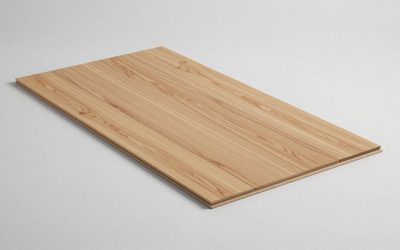
The cabinet box is where cheap vanities fail first — bathrooms cycle between steamy and dry daily, and the material determines whether yours lasts 5 years or 20.
| Material | Moisture resistance | Expected lifespan | Typical price tier | Watch out for |
|---|---|---|---|---|
| Solid wood (oak, maple, birch) | Good if sealed; can warp at joints | 15–25 years | $700–$2,000+ | Expansion gaps around plumbing cutouts |
| Plywood (furniture-grade) | Very good; resists swelling | 15–20 years | $400–$1,200 | Veneer quality on faces |
| MDF / engineered wood | Poor when edges get wet | 5–10 years | $200–$600 | Swelling at the toe-kick and door edges |
| Metal frame + panels | Excellent | 15+ years | $300–$900 | Less enclosed storage, industrial look |
Plywood is the value pick: it handles splashes far better than MDF yet costs much less than solid hardwood. If you buy MDF (common under $400), seal any exposed edges around the plumbing cutout with polyurethane before installation — that’s where water sneaks in.
Countertops: Quartz, Cultured Marble, and the Rest
- Quartz: Non-porous, never needs sealing, shrugs off cosmetics and toothpaste. Usually $80–$150 of the vanity’s cost when bundled; the best all-around choice.
- Cultured marble: One-piece molded top with integral sink — no seams to caulk, easy to clean, and the cheapest option. It scratches and can yellow over a decade.
- Natural marble/granite: Beautiful but porous; needs sealing yearly and stains from hair dye and nail polish remover. Better in adult bathrooms than kids’ baths.
- solid surface / porcelain: Repairable scratches, mid-range price; porcelain tops are thin-profile and modern but chip at edges.
Sink Configuration: Single vs. Double
A double sink needs at least 60 inches of width — squeezing two basins into 48 inches leaves each user under 20 inches of elbow room and almost no landing space between sinks. Below 48 inches, choose a single sink; one generously sized basin beats two cramped ones. Undermount sinks are easiest to wipe down; vessel sinks save counter depth but splash more and sit 4–6 inches higher, which matters for kids — a vessel on a standard 32-inch cabinet puts the rim at adult chest height for a six-year-old.
Storage: Drawers Beat Doors
Measure what you actually store. A hair dryer, a straightener, and a toiletry bin need about 2.5 cubic feet. Drawer-based vanities (or door-plus-drawer combos) use space roughly 30% more efficiently than door-only cabinets because you don’t lose the back of the cabinet to unreachable dead space. Look for U-shaped drawers that wrap around the plumbing trap — a well-designed 30-inch drawer vanity can out-store a 36-inch door cabinet.
Installation: Freestanding vs. Floating
Freestanding vanities are the DIY-friendly choice: set in place, level, connect plumbing, caulk. Plan for the unit’s weight — a 36-inch plywood vanity with a stone top often ships in 2–3 boxes totaling 120–200 lbs, and the cabinet alone fits through a standard 30-inch doorway only if it’s under about 28 inches deep.
Floating (wall-mounted) vanities make small bathrooms look bigger and simplify floor cleaning, but they must anchor to studs or blocking — expect to open the wall or add bracing if your stud spacing doesn’t align. They’re also limited to roughly 100–150 lbs of loaded weight depending on the bracket system, so heavy stone tops can be a problem.
Decision Matrix: Match Your Situation
| Your situation | Best choice | Why |
|---|---|---|
| Powder room under 20 sq ft | 18–24 in floating or pedestal-style vanity | Preserves floor space and door swing |
| Kids’ shared bathroom | 36–48 in, plywood, cultured marble top, standard height | Seamless top survives toothpaste; 32-in height works for kids |
| Couples sharing a bath | 60–72 in double sink, drawer base | Separate zones; drawers divide storage fairly |
| Renter / temporary install | 24–30 in freestanding under $500 | No wall damage; easy removal |
| Tall users / back pain | “Comfort height” 34–36 in vanity | Standard 30–32 in heights cause stooping; most brands now offer taller lines |
| Aging in place / wheelchair access | Wall-mounted with open knee space, top at 32–34 in | Roll-under clearance of about 27 in needed below |
Frequently Asked Questions
How much should I budget?
Serviceable MDF vanities with tops run $200–$500; solid mid-range plywood units with quartz tops are usually $500–$1,200; premium solid wood or designer floating vanities run $1,200–$3,000+. Add $150–$400 for plumber installation if you aren’t DIYing.
Can I keep my existing plumbing location?
Almost always, yes — vanities are designed around standard drain positions roughly 18–21 inches off the floor. Moving supply lines or the drain adds real cost, so pick a vanity whose sink offset matches your current rough-in.
What wears out first?
Drawer slides and door hinges, typically around year 7–10 on budget units. Soft-close hardware with metal (not plastic) slides is worth the small upcharge — replacement slides are cheap but matching discontinued hardware is a headache.
Bottom line: measure clearances first, choose plywood construction and a non-porous top for longevity, and let sink count follow width — not the other way around. Explore the full range of sizes and finishes at homestylzz.com to find the vanity that fits your bathroom on the first try.