
Our Top Picks
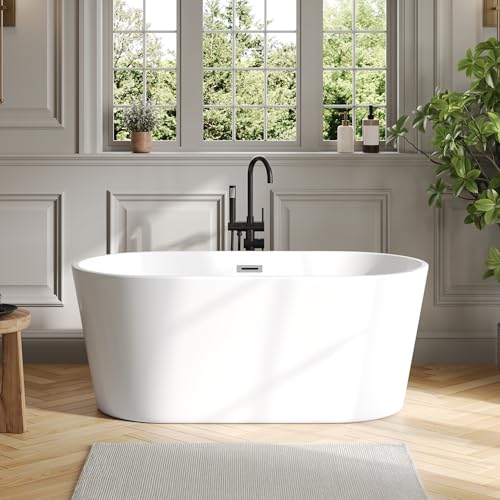
 WOODBRIDGE 67" Acrylic Freestanding Bathtub Contemporary Soaking Tub67 Inch67 x 31.5 x 22.8 inches104 poundsCheck on Amazon
 WOODBRIDGE 67" Acrylic Freestanding Bathtub Contemporary Soaking White67 Inch67 x 31.5 x 22.8 inches104 poundsCheck on Amazon
For most bathrooms, a mid-length acrylic freestanding tub of roughly 59 to 67 inches suits a standard remodel, a longer 67 to 71 inch tub suits those who want to stretch out and have the floor space, and a compact model under about 59 inches suits small bathrooms and secondary baths. Acrylic is popular because makers describe it as lighter than cast iron, warm to the touch and easy to keep clean, but quality varies, so the details of the shell, reinforcement and fittings matter. This guide compares the main styles, what makers typically list and what to check before buying.
At a Glance: Freestanding Acrylic Tub Types
| Type | Best for | Key stated features | Limits |
|---|---|---|---|
| Classic oval (e.g. Woodbridge, Empava, Vanity Art) | Most bathrooms, simple style | Gloss white acrylic, reinforced shell, overflow and drain often included | Needs clearance around the tub for cleaning and plumbing |
| Slipper tub (e.g. Kingston Brass, Signature Hardware) | Reclining comfort, traditional look | One raised end, deeper soaking profile | Longer and heavier when filled, often needs more floor space |
| Double-ended tub (e.g. American Standard, Kohler) | Soaking from either side, central faucet | Symmetrical shape, backrest on both ends | Drain placement and faucet position need careful planning |
| Compact freestanding (under 59 inches) | Small baths, condos | Shorter length, lower water volume | Less leg room; check interior length, not just exterior |
| Modern rectangular or pill-shaped | Contemporary design | Straight sides, minimalist profile | Angled interiors may be less comfortable for some |
| Whirlpool or air-bath acrylic | Jetted soaking | Built-in jets or air system, requires power | Needs electrical work, more upkeep, more cost |
Why Acrylic?
Acrylic tubs are made by heating an acrylic sheet and forming it, then reinforcing the back with fibreglass and resin. Makers say this process produces a lighter tub than cast iron, with a surface that retains heat better than metal and can be buffed to remove light scratches. Compared with solid-surface or stone-resin tubs, acrylic is typically less heavy, though that also means thinner shell options exist. Reviewers commonly note that sheet thickness and reinforcement quality differ among brands, which can affect flex underfoot and long-term durability.
DeerValley 55" Acrylic Freestanding Bathtub, Deep Soaking Tub with Center Drain & Integrated Overflow, White Standalone Shower Tub Ergonomic Design, DV-1T0582
Chosen because it specifies Deep Soaking Tub with Center Drain & Integrated Overflow and White Standalone Shower Tub Ergonomic Design.
View on Amazon
59" Acrylic Freestanding Bathtub, Deep Soaking Tub, High Back | Ergonomic high backrest for ultimate neck support, non-slip base, cUPC certified modern bathroom tub with chrome drain.
Chosen because it specifies Deep Soaking Tub and High Back.
View on AmazonWOODBRIDGE 67" Acrylic Freestanding Bathtub Contemporary Soaking Tub, White Acrylic (Matte Black Drain/Overflow), B0013-MB-Drain &O
Chosen because it specifies White Acrylic (Matte Black Drain/Overflow) and B0013-MB-Drain &O.
View on AmazonWOODBRIDGE 67" Acrylic Freestanding Bathtub Contemporary Soaking White Tub with Brushed Gold Overflow and Drain,B0013-BG
Picked as a relevant option in this category.
View on AmazonKey Specifications to Compare
Length, width and depth
Most freestanding acrylic tubs run between roughly 55 and 72 inches in length. Exterior dimensions are what you plan the space around, but interior length and water depth determine comfort. Makers usually list the overflow depth, which is the real water capacity limit. A taller person should check the interior length, not just the overall size.
Water capacity and weight
Many makers list a capacity in gallons. A full tub with a bather can weigh several hundred pounds, so check that the floor structure, especially on upper storeys, can support the load. A structural engineer or contractor can confirm this if you are unsure.
Drain and overflow
Some tubs come with a built-in overflow and a pop-up drain; others require you to buy these separately. Drain location (centre or end) must match your rough-in plumbing, and the drain size should be compatible with the supplied hardware. Confirm what is included before purchase.
Faucet options
Freestanding tubs typically use a floor-mounted tub filler or a wall-mounted spout. Tubs rarely include faucet holes; confirm the maker’s spec if a deck-mounted faucet is planned.
Certifications and warranty
Look for makers that state compliance with relevant plumbing and building standards in your region, such as cUPC listing for the North American market, and read the warranty terms. A longer stated warranty on the shell can signal confidence from the maker, but check exclusions.
Installation and Fit Notes
- Floor clearance: allow space around the tub for cleaning and for a comfortable walkway; many designers suggest leaving a clear margin on all sides.
- Plumbing: a freestanding tub often needs a floor-mounted drain assembly. Confirm the floor depth and whether the drain connects at the centre or the end.
- Doorway and stair access: measure the route into the bathroom, since large tubs can be awkward to carry through narrow turns.
- Floor support: check that the subfloor is level and strong enough.
- Professional help: have a licensed plumber handle supply, drain and venting connections, and an electrician for any jetted or heated option.
Care and Maintenance
Acrylic can scratch or dull when cleaned with abrasive powders or harsh solvents. Makers generally advise non-abrasive cleaners and soft cloths, rinsing after use, and avoiding strong chemicals. Do not leave metal objects sitting in the tub, and follow the manufacturer’s guidance on bath oils and bubble products, since some warn about certain additives. Light scratches can sometimes be polished out with a product the maker approves.
Trade-offs by Budget Tier
- Budget: basic oval and compact acrylic tubs. They offer the freestanding look, but shells can be thinner and fittings often sold separately.
- Mid-range: slipper and double-ended tubs from known plumbing brands. Typically better reinforcement, clearer specifications and stronger warranties.
- Premium: large or designer models from established makers such as Kohler. More refined shape, finish and support, at a significantly higher outlay.
Pick X If… Decision Table
| Pick this | If you… |
|---|---|
| Classic oval, 59 to 67 inches | have a standard master bath and want a simple, flexible choice |
| Slipper tub | want a reclined soak and have the floor space |
| Double-ended tub | share the bath or want a central faucet arrangement |
| Compact freestanding | have a small bath and need to save floor space |
| Modern rectangular | prefer a contemporary style and have confirmed interior comfort |
| Whirlpool acrylic | want jets and have access to electrical work and upkeep |
Alternatives
- Cast iron tubs: heavy, long-lasting and warm-retaining, but require strong floor support.
- Solid-surface or stone-resin tubs: dense with a premium feel, usually heavier and costlier than acrylic.
- Alcove or drop-in acrylic tubs: save space and cost where a freestanding look is not required.
Questions to Ask Before You Buy
- What is the interior length and depth? Exterior dimensions do not tell you how comfortable the soak will be.
- What is the overflow capacity? The overflow height sets the working water volume, which matters for your water heater and floor load.
- What is included? Confirm whether the drain, overflow and any pop-up assembly are in the box, and whether the finish matches your faucet.
- How is the shell reinforced? Makers sometimes describe layers of fibreglass and resin or a supporting frame. Check descriptions and reviews on flex and creaking.
- What does the warranty cover? Shell cracks, finish defects and leaks may be treated differently, and installation by an unlicensed person may void it.
- Does the water heater keep up? A large tub can empty a small water heater, so check your capacity.
Delivery and Handling
Freestanding tubs are bulky and the acrylic surface can be damaged during moving. Inspect the tub on delivery before signing, keep the protective wrap on until installation is nearly done, and avoid dragging it across the floor. Two people are usually needed to position it, and a level base matters because a tub that rocks can stress the shell and the drain connection.
Style and Layout Tips
A freestanding tub can anchor a bathroom, but it works best when the room allows space to walk around it and to reach the controls. Placing it beneath a window or in front of a feature wall is a common layout, though plumbing positions can limit options. A floor-mounted filler looks clean but needs a supply line routed through the floor; a wall-mounted filler is simpler when the tub sits close to the wall. Matching finishes across the faucet, drain and other bathroom fixtures helps the room feel consistent. If unsure, a bath designer or plumber can sketch the layout with real measurements before you commit.
Frequently Asked Questions
How long should a freestanding tub be?
Many people choose between 59 and 67 inches for a standard bath, and 67 inches or more for a long soak. Check the interior length and depth the maker lists, as the exterior size can overstate the usable bathing space.
Are acrylic freestanding tubs durable?
Makers describe acrylic as durable and easy to repair for minor scratches, but quality depends on sheet thickness and reinforcement. Reviewers suggest checking warranty terms and reading feedback on flex and finish for the specific model.
Does an acrylic tub keep water warm?
Makers say acrylic retains heat better than metal or stone-resin tubs because it conducts heat less readily. Real-world results depend on tub size, water volume and room temperature.
What do I need to buy besides the tub?
Often a drain and overflow set, a faucet or filler, and possibly supply lines and a floor-mounted drain assembly. Check the product listing to see what is included, and consult a plumber about connections.
How do I clean an acrylic tub safely?
Use a non-abrasive cleaner and a soft cloth, rinse well, and avoid harsh solvents and scouring powders. Follow the maker’s care guide, as some additives and cleaners can dull or damage the surface.
Will my floor hold a freestanding tub?
A full tub with a bather can weigh several hundred pounds, so structural support matters, especially above ground level. Ask a contractor or structural engineer to confirm that the floor is adequate before installation.
