
Our Top Picks
 Brio Commercial Grade Bottleless Ultra Safe Reverse Osmosis14.3 x 12.2 x 41.4 inches51.1 PoundsCheck on Amazon
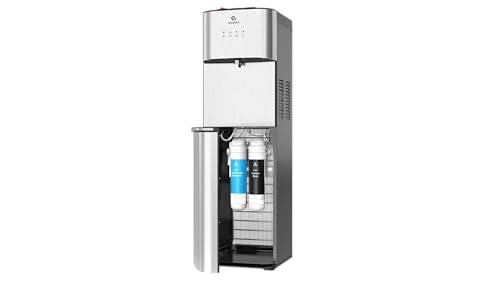 Avalon Self Cleaning Bottleless Water Cooler Water Dispenserfull size14 x 12 x 41 inches44 poundsCheck on Amazon
For offices, gyms and schools, a bottle-filling water cooler from Elkay or Oasis, or a plumbed-in bottleless unit from Avalon or Brio, is the usual commercial-grade choice, while buyers who prefer not to run water lines look at bottled-water dispensers from Primo or Culligan. The right pick depends on traffic, whether plumbing is available, and the accessibility and hygiene requirements of your site.
Commercial Water Coolers at a Glance
| Type / brand | Best for | Key stated features | Limits |
|---|---|---|---|
| Elkay bottle-filling stations (EZH2O line) | Schools, offices, gyms, public buildings | Makers list a touch-free bottle filler, filtered water and refrigerated options on some models | Needs plumbing and drainage; installation is by a qualified plumber |
| Oasis coolers and filling stations | Offices and healthcare-adjacent areas | Hot and cold or chilled models, some with filtration | Plumbing and electrical requirements vary by model |
| Avalon bottleless coolers | Small offices and break rooms | Point-of-use dispensers connected to the water line, with filter options per the maker | Filter changes; plumbing required |
| Brio bottleless coolers | Offices, clinics, waiting rooms | Connects to the water line and offers hot, cold or room-temperature options | Smaller capacity per hour than heavy-duty models |
| Primo bottled-water dispensers | Locations without plumbing | Top-load or bottom-load designs for 5-gallon bottles, per the maker | Bottle lifting, storage and supply logistics |
| Culligan commercial systems | Larger sites wanting service contracts | Offers dispensers and service programs, per the company | Service terms and availability depend on the region |
Commercial lines are revised by makers, so check the specific model’s data sheet for flow rate, cooling capacity and electrical needs before you buy.
Brio Commercial Grade Bottleless Ultra Safe Reverse Osmosis Drinking Water Filter Water Cooler Dispenser-3 Temperature Settings Hot, Cold & Room Water - UL Approved – Point of Use
Chosen because it specifies Cold & Room Water and UL Approved.
View on AmazonAvalon Self Cleaning Bottleless Water Cooler Water Dispenser - 3 Temperature Settings - Hot, Cold & Room Water, Durable Stainless Steel Cabinet, NSF Certified Filter- UL Listed
Chosen because it specifies 3 Temperature Settings and Hot.
View on AmazonWhat Makes a Cooler Commercial-Grade?
Commercial units are built for higher throughput and longer duty cycles than household models. They typically carry more robust compressors, stainless or heavier housings, vandal-resistant features in public settings, and published performance data such as gallons per hour of chilled water. They may also be certified to standards such as NSF/ANSI for materials, ADA-compliant dimensions for accessibility, and local electrical safety marks. Look for what the maker states and for the standards cited in the data sheet.
What to Look For
Plumbed or bottled
Plumbed units connect to your water line, avoid heavy bottles and can add filtration. They need a water supply, sometimes a drain and a qualified installer. Bottled units are simpler to place, but staff must lift and store bottles and manage supply. A bottle-filling station is the best match for refillable-bottle culture in schools and gyms.
Capacity and throughput
Makers list how many gallons of chilled water per hour a unit supplies, and how quickly hot water is produced. A busy office or gym needs more than a small break room does. Match this to peak usage rather than average usage.
Filtration
Many commercial coolers support filters for taste and odour, and some filters are certified for specific contaminants. Do not assume a filter treats every contaminant; read the maker’s performance data and follow replacement intervals. For water of uncertain quality, consult your local water supplier or a water-testing service.
Accessibility
Public buildings often require ADA-compliant units, including height, reach and operation. Bi-level units provide both standing and wheelchair-accessible spouts. Check local regulations before purchase.
Hygiene features
Touch-free sensors, antimicrobial surface claims and splash-resistant designs are listed by some makers. These are maker claims and do not replace regular cleaning according to the manual.
Hot water safety
If hot water is dispensed, look for child-safety locks and clear labeling. Never place hot-water dispensers where unsupervised children can reach them without the safeguards the maker describes.
Power and installation
Check voltage, plug type and clearance requirements. Plumbing and electrical connections should be handled by a qualified professional in line with local codes.
Budget Tiers
| Tier | Typical choices | Trade-offs |
|---|---|---|
| Budget | Basic bottled-water dispensers | Lower upfront cost; bottle handling and supply recurring |
| Mid-range | Bottleless point-of-use units (Avalon, Brio) | Plumbing and filter upkeep; steady supply |
| Premium | Elkay or Oasis bottle-filling stations, heavy-duty coolers | Highest durability and accessibility features; professional installation |
Pick X If …
| If you … | Pick | Why |
|---|---|---|
| Run a school, gym or public building | Elkay bottle-filling station | Designed for high traffic and refillable bottles |
| Need a small office or clinic unit | Brio or Avalon bottleless | Compact, water-line connected |
| Have no plumbing access | Primo bottled-water dispenser | No water-line connection |
| Want managed service and filters | Culligan commercial system | Service programs and replacement schedules |
| Need hot and cold for a break room | Oasis or Avalon hot and cold model | Dual-temperature options |
Care and Safety Notes
- Follow the maker’s cleaning and sanitising schedule; scale and biofilm can develop in any water system.
- Replace filters on schedule, and keep a log for commercial sites.
- Have plumbing and electrical connections installed by licensed professionals and in line with local codes.
- Place hot-water units out of children’s reach and use the safety locks.
- If the water tastes or smells unusual, stop use, check the filter and sanitation, and consult the maker or a water-quality professional.
- Ensure drip trays and floors are kept dry to reduce slip risks.
Alternatives
- Under-sink filtration with a tap. Space-saving for small offices but lacks chilled water.
- Countertop dispensers. Low-footprint options for small teams, usually lower volume.
- Refillable pitchers or fridge dispensers. Informal but sometimes enough for tiny spaces.
- Managed water service. Leasing and servicing from a provider can reduce maintenance work.
Planning an Installation
Start with site conditions. Identify where the water supply, drain and electrical outlet are, and whether the wall or floor location meets accessibility requirements. Public spaces often have rules on clear floor space and reach height, so ask your facilities manager or local authority. Where several coolers are planned, think about traffic flow so queues do not block corridors.
Consider water quality and supply. Hard water leads to scale on heating and cooling components, so a filter or softener may help, depending on the maker’s guidance. A local water report or test can tell you what to expect. For sites that serve vulnerable people, such as clinics or care settings, ask the maker and your local health authority about suitable filtration and sanitation schedules rather than relying on general claims.
Plan maintenance before you buy. Decide who will change filters, clean spouts and look for leaks, and how it will be logged. Some suppliers offer service contracts that cover filter changes and sanitising visits, which can suit sites without in-house facilities staff. Look at whether replacement filters are widely available and how long the maker supports a model. Finally, read the warranty terms for commercial use, since some makers limit coverage for heavy-duty applications or require professional installation to maintain it.
Cleaning and Compliance Basics
Water coolers are food-contact equipment, so regular cleaning matters. Makers usually describe a schedule that includes wiping spouts and drip trays often, sanitising reservoirs or lines at intervals, and replacing filters on time. Commercial sites may also keep a written log of these tasks for inspections. Cleaning products should be those the maker approves, because some chemicals can damage seals or leave residues.
Standards matter too. Look for units whose data sheets cite NSF/ANSI listings for materials and, where relevant, for filter performance, as well as electrical safety marks accepted in your region. Rules differ between countries and between building types such as schools, healthcare settings and food businesses, so ask your local authority or facilities consultant which requirements apply. A certificate on a data sheet is a useful starting point, but it covers only the claims listed, so read which contaminants or components are included.
Frequently Asked Questions
What is the difference between bottleless and bottled coolers?
Bottleless coolers connect directly to the water line and filter incoming water, so nobody has to lift or store bottles. Bottled coolers use 5-gallon bottles and need no plumbing. Choose based on whether you have a water line and how much handling you want.
Do commercial coolers need professional installation?
Plumbed models and stations usually do, as water and electrical connections must meet local codes. Follow the maker’s installation instructions and use licensed trades where required.
How often should filters be changed?
Follow the maker’s stated interval, which is often based on time or gallons. Commercial sites with heavy use may need to change filters more often than the minimum.
Are bottle-filling stations ADA compliant?
Many models are designed to meet accessibility dimensions, but compliance depends on the model and installation. Check the data sheet and local requirements.
Do water coolers make water safe to drink?
Filters can improve taste and reduce certain contaminants as listed by the maker, but they do not make any water supply automatically safe. If you have concerns, contact your water supplier or a certified testing service.
How much capacity do I need?
Estimate peak demand, such as the number of people refilling at the same time, and compare it with the maker’s listed chilled-water output per hour. Heavy-traffic sites benefit from units designed for continuous use.
