Key takeaways
- Modular storage, wall-hung or floor: IKEA Bestå
- Solid-wood style under a 55 to 63 inch TV: IKEA Havsta
- Farmhouse look, TVs up to 65 inches: Walker Edison Barn Door
- Value storage with a 70-inch rating: Ameriwood Carson or Bush Salinas
- Room with a spare corner: Sauder Palladia Corner
The best TV stand for a living room is one at least 4 to 6 inches wider than the TV’s own width, rated for the TV’s weight, and about 20 to 24 inches high so the screen center lands near eye level when you sit. A 65-inch TV is roughly 57 inches wide, so it needs a stand about 60 inches or more. For 2026, six stands cover the common needs: IKEA Bestå for modular storage, IKEA Havsta for solid pine looks, Walker Edison’s Barn Door stand for a farmhouse feel, Ameriwood Carson and Bush Salinas for budget storage with a 70-inch TV rating, and Sauder Palladia for corner rooms. Below are their measurements, who each one suits, and how to choose by TV size and room.
Quick picks by TV size and need
- Modular storage, wall-hung or floor: IKEA Bestå
- Solid-wood style under a 55 to 63 inch TV: IKEA Havsta
- Farmhouse look, TVs up to 65 inches: Walker Edison Barn Door
- Value storage with a 70-inch rating: Ameriwood Carson or Bush Salinas
- Room with a spare corner: Sauder Palladia Corner
Specs at a glance
| Stand | Width | Rated TV size | Top load | Materials and notes |
|---|---|---|---|---|
| IKEA Bestå (drawers and door set) | 70 7/8″ | Depends on configuration | 66 lb | Modular system, 3 drawers and 1 cabinet in the version checked |
| IKEA Havsta (63″ unit with base) | 63″, 18 1/2″ deep, 24 3/8″ high | Up to 63″ | 66 lb (US listing), 68 lb per shelf | Solid pine style; ships in 2 packages of about 23 kg each |
| Walker Edison Barn Door | 58″ | Up to 65″ | Not published in the source checked | MDF with laminate, sliding barn doors, adjustable shelves |
| Ameriwood Carson | 63″ | Up to 70″ | About 120 lb | Laminate board, open center shelves, 2 side cabinets, cable cutouts |
| Bush Salinas | 60″ | Up to 70″ | 80 lb | Anti-tip anchor, open center, 2 side cabinets |
| Sauder Palladia Corner | 61.1″ | Corner placement | Check listing | Corner design for rooms with unused corners |
1. IKEA Bestå: the modular system
Bestå is less a single stand than a system of boxes, doors, drawers and legs that can be arranged to fit a wall. The configuration commonly listed as the budget modular option is 70 7/8 inches wide, combines 3 drawers with a cabinet and has a 66-pound top load. Reviewers have catalogued setups ranging from simple low benches to wall-hung combinations spanning most of a wall.
Who it suits
People who want to match storage to their equipment: a streaming box, a console, a soundbar and stacks of media. Wall-hung setups suit tight rooms because the floor stays visible, which makes small rooms look bigger.
Pros
- You choose the widths, heights and front styles, which means the stand can grow if you add a second cabinet later.
- Drawers hide cables and clutter that open shelves expose.
- Wall-mounting frees floor space for a robot vacuum.
Cons
- The 66-pound limit is fine for most modern TVs but matters for older models and for loading the top with speakers.
- A planner or careful sketch is needed, because compatible parts vary by size.
- Wall-hung installations need correct anchors for your wall type.
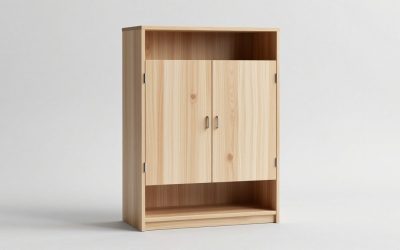
2. IKEA Havsta: the sturdy pine-style option
The US Havsta TV unit with base is 63 inches wide, 18 1/2 inches deep and 24 3/8 inches high. It suits TVs up to 63 inches. The US listing gives 66 pounds as the maximum TV weight and 68 pounds per shelf, while UK and NZ listings quote 30 kilograms, so check your region. It ships in two packages of about 23 kilograms each and needs two people to assemble. Wider Havsta combinations reach 241 centimeters, or about 95 inches, for a wall unit.
Who it suits
Living rooms where the TV is 55 to 63 inches and you want a traditional, solid look. The plinth base gives visual weight and keeps cords and routers hidden from the eye line.
Pros
- Deeper at 18 1/2 inches than many slim stands, so a soundbar or console has space.
- Shelves carry up to 68 pounds in the US listing, which can handle a heavy receiver.
- Larger combinations add glass-door cabinets for a display look.
Cons
- Two heavy packages mean the stairs need a plan.
- The listing’s maximum TV size of 63 inches is a guideline, since weight is the real limit.
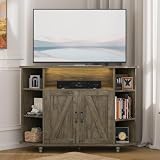
3. Walker Edison Barn Door: farmhouse style
The Modern Farmhouse Barn Door TV stand is 58 inches wide and handles TVs up to 65 inches. It uses MDF with laminate, sliding barn doors and adjustable open shelves in the center. A Walker Edison Scandinavian-style console is also praised for its concealed storage, though one review reported minor chipping after months of use.
Who it suits
Renters who want a familiar farmhouse look and a TV stand that fits under a 55-inch or 65-inch set without stretching the room. Sliding doors save floor space compared with swing doors, because they do not need clearance to open.
Pros
- Sliding doors hide clutter without a swing path.
- Adjustable shelves fit different boxes and consoles.
- A 58-inch width suits a 7-foot sofa and 55 to 65 inch TVs.
Cons
- A 65-inch TV is about 57 inches wide, so the TV nearly equals the stand’s width. Check stand feet position before placing.
- Laminate over MDF can chip at corners if bumped.
4. Ameriwood Carson: the budget storage stand
The Carson is 63 inches wide and supports TVs up to 70 inches with a top load of about 120 pounds. The open center shelves house a console or cable box, two side cabinets store discs and remotes, and cable cutouts keep wires tidy.
Who it suits
Households with a 65 to 70 inch TV and a tight budget tier. The 120-pound top rating is the highest of the budget picks, which gives headroom for a heavy older set.
Pros
- Wide top surface handles large TVs.
- Open center shelves keep a gaming console cool.
- Cable cutouts shorten assembly time for wiring.
Cons
- Laminate over particleboard does not tolerate water or heavy moves.
- Assembly instructions are long. Allow a couple of hours.
5. Bush Salinas: compact with anti-tip hardware
The Salinas is 60 inches wide, with a stated 80-pound top rating and a 70-inch TV recommendation. It has an open center compartment, two side cabinets and an anti-tip anchor. The anti-tip is a safety feature that matters in homes with children or pets.
Who it suits
Families with kids, because the anchor lowers tipping risk, and smaller rooms that still need cabinet storage.
Pros
- Built-in anti-tip hardware is a safety bonus.
- A 60-inch width fits most standard walls without crowding the sofa.
Cons
- An 80-pound top limit is lower than the Carson’s, so check your TV’s weight.
- A 70-inch TV is about 61 inches wide, which overhangs a 60-inch stand slightly. Use the stand for sets up to about 65 inches for a balanced look.
6. Sauder Palladia Corner: when the corner is free
The Palladia corner TV stand is 61.1 inches wide and designed to sit across a corner. Corner placement uses space that otherwise stays empty and moves the screen away from window glare on a side wall.
Who it suits
Rooms where the main wall is occupied by windows or doors, and where a corner offers the only clear line of sight.
Pros
- Frees the main walls for art or shelves.
- Angled viewing suits sofas arranged in an L.
Cons
- A corner stand leaves a triangular dead space behind it, so cables need careful routing.
- The effective depth into the room is larger than a straight stand.
How to match a stand to your TV
The two measurements that matter are the TV’s actual width and its weight, not the diagonal screen size alone. As a rule, a 16:9 TV’s width is about 87 percent of its diagonal.
| TV diagonal | Approximate width | Minimum stand width | Comfortable stand width |
|---|---|---|---|
| 43 inches | 37.5″ | 40″ | 42 to 48″ |
| 55 inches | 48″ | 52″ | 54 to 60″ |
| 65 inches | 57″ | 60″ | 63 to 70″ |
| 75 inches | 65.5″ | 68″ | 70 to 80″ |
| 85 inches | 74″ | 77″ | 78 to 90″ |
Check the TV’s foot spacing. Some sets have feet at the far edges, which need a surface nearly as wide as the TV. Others have a center pedestal and fit on a narrower stand. If the TV is wall-mounted above the unit, the stand can be shorter than the TV, but a stand narrower than the screen still looks top-heavy.
Viewing height and distance
Ideal eye level for the screen’s center is about 40 to 42 inches from the floor when seated on a standard sofa. For a 65-inch TV, with a screen height of about 32 inches, the bottom edge should sit about 24 to 26 inches from the floor. That puts a stand height of around 18 to 24 inches in the right range, depending on the TV’s base. A viewing distance of 1.2 to 1.6 times the screen diagonal works for 4K; for a 65-inch TV, about 6.5 to 8.5 feet.
Material and construction trade-offs
| Material | Strengths | Weaknesses | Best for |
|---|---|---|---|
| Solid pine or hardwood | Strong, repairable, heavy | Heavier to move, can dent | Long-term homes |
| MDF with laminate or veneer | Smooth finish, affordable | Swells when wet, edges chip | Dry rooms, rentals |
| Particleboard | Lowest cost tier, light | Weakest screws, less durable | Starter setups |
| Metal and glass | Light, airy look | Glass shelves have limits, fingerprints | Small rooms |
The practical point is that stated top loads of 66 to 120 pounds cover almost any modern TV, but older plasma and big-frame sets can exceed them. Always read your TV’s weight in its manual.
Cable management and heat
Electronics generate heat, and a closed cabinet traps it. Leave open shelves or ventilated backs for game consoles and receivers. Plan cable routes before assembly: feed power and HDMI cords through back cutouts, bundle with Velcro ties and leave a few inches of slack so devices can be pulled out. A power strip mounted inside the cabinet reduces the number of cords that must exit. If you are mounting the TV on a wall, run the cables through a cord cover or an in-wall kit rated for power.
Decision matrix
| Your situation | Pick | Why |
|---|---|---|
| Small room, want floor visible | IKEA Bestå wall-hung | Modular and floating |
| 55 to 63 inch TV, traditional look | IKEA Havsta | Solid look and 18 1/2-inch depth |
| Rental, farmhouse style | Walker Edison Barn Door | Sliding doors, 58 inches wide |
| 65 to 70 inch TV, budget tier | Ameriwood Carson | 120-pound top rating |
| Kids and pets | Bush Salinas | Anti-tip anchor |
| Window glare or a free corner | Sauder Palladia Corner | Uses the corner |
Safety: anchoring a TV stand
Tip-over accidents involve TVs and furniture, and young children are the most at risk. Anchor the stand to the wall stud with the supplied bracket, strap the TV to the stand if it has top-heavy proportions, and place heavy items low. If a stand has no anti-tip hardware, buy a furniture anchor kit and follow the instructions for your wall type.
Assembly and durability realities
Expect two hours or more for stands with doors and shelves. The IKEA Havsta arrives in two packages of about 23 kilograms each, so two people are needed. Take care when tightening cam locks on particleboard, because over-tightening strips the hole and weakens the joint. After the first month, re-tighten fasteners, because wood and board settle. The first things to wear are door hinges, drawer glides and veneer edges. Avoid sliding the unit across the floor; lift it or use sliders.
For longer life, keep the unit away from heating vents and direct sun, wipe spills quickly and avoid stacking heavy items on the top that exceed the rating.
Room scenarios and what to choose
Apartment living room, 11 by 13 feet
A 55-inch TV is about 48 inches wide and fits a 54 to 60 inch stand. Of the picks above, the 58-inch Walker Edison or the 60-inch Bush Salinas is the closest match. Leave 30 inches in front of the stand for walking and keep the sofa 7 to 9 feet from the screen. If the room has a window on the TV wall, put the screen away from the glass or hang curtains that block reflections.
Family room with a 65 to 75 inch TV
A 65-inch TV needs about 57 inches of surface and a 75-inch set needs about 65.5 inches, so the 63-inch Ameriwood Carson and the 63-inch Havsta suit the 65-inch size, while a 75-inch set needs a longer Bestå combination, which can be built to roughly 70 inches or more. Choose storage with doors so game controllers and kids’ media stay out of sight.
Bedroom or den
Lower stands suit the eye level of someone sitting on a bed, usually about 28 to 32 inches high at the center of the screen. A low unit of around 14 to 18 inches in height, such as a Bestå on legs, lets the TV sit lower. Keep the top clear so heat can escape, and leave room around streaming devices for their remotes to work.
Open-plan space
Here, the back of the stand may be visible, so look for a finished back panel or place the stand against a wall rather than floating it in the room. A floating or wall-hung Bestå helps zone the area without blocking sight lines.
Common mistakes to avoid
- Buying by screen diagonal only. A 65-inch TV with wide feet can overhang a 58-inch stand.
- Ignoring weight. Large modern TVs are lighter than older ones, but premium models with big stands and soundbars can add up to the 66-pound limit.
- Sealing electronics in a closed cabinet. Heat shortens the life of consoles and receivers.
- Skipping the anchor. Even a heavy stand can tip if a child climbs the doors.
- Forgetting cord length. HDMI and power cables should reach the back of the unit without stretching.
Frequently asked questions
Should the stand be wider than the TV?
Yes. Aim for at least 4 to 6 inches wider overall, or 2 to 3 inches on each side, for a balanced look and so the TV does not tip.
Can I put a soundbar on the stand?
Yes. A soundbar usually sits in front of the TV base, so you need at least 3 inches of space between the TV’s bottom edge and the stand top, or you must mount the soundbar below the screen.
What height is best?
Choose the stand height so the TV’s center is at your seated eye level, around 40 to 42 inches from the floor. Lower stands suit low sofas and bedrooms.
Is a corner stand a good idea?
Yes when the corner is the only free place, but plan for wiring and for the dead space behind the stand.
Do I need to mount the TV on the wall instead?
Not necessarily. A stand is simpler for renters and provides storage. Wall-mounting is neater if you can drill into studs.
Final recommendation
Pick by measurement first. Find your TV’s width and weight, add 4 to 6 inches for the stand’s width, check that the top rating is higher than the TV’s weight, and decide how much storage you need. For a 55 to 63 inch TV with a traditional look, the IKEA Havsta is a good fit. For a flexible, wall-hung design, use Bestå. For 65 to 70 inch TVs on a budget tier, the Ameriwood Carson or Bush Salinas works, with the Salinas adding anti-tip hardware. For a farmhouse room the Walker Edison Barn Door fits, and for a free corner, the Sauder Palladia uses space well.